Speciale Frankfurt
Inside Frankfurt's Römer and Whether the Kaisersaal Is Worth It
The Emperor's Hall is free, and it can close without warning, so a morning on the Römerberg is worth planning around both.

Di Robin van DijkThe city read on foot, one district at a time
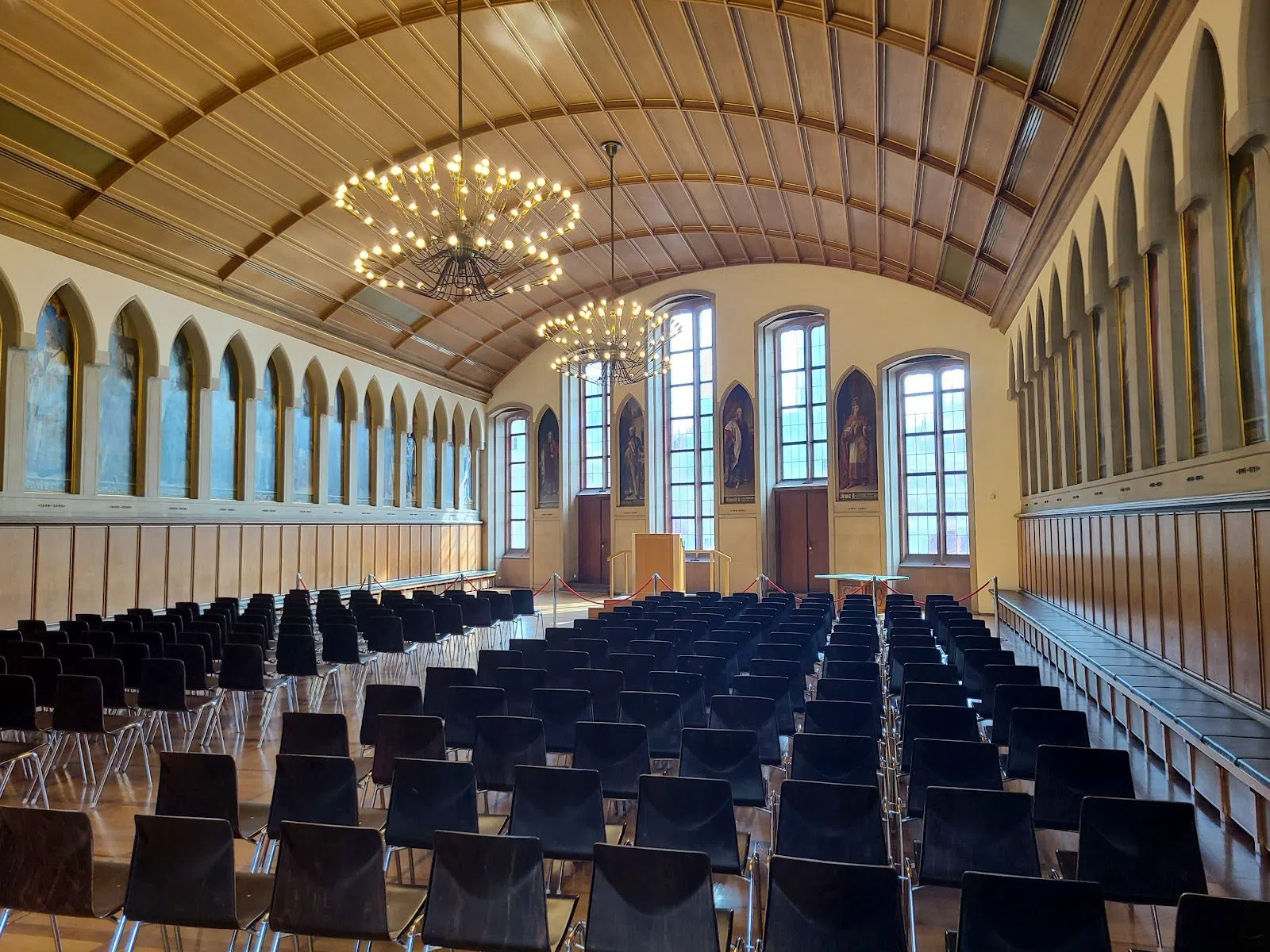
Entry to the Kaisersaal inside Frankfurt's city hall is free, daily from 10:00 to 17:00. It shuts without warning when the city needs the room for an official function. The square it opens onto costs nothing at any hour, and glass banking towers stand directly behind the half-timbered gables.
What you see inside the Kaisersaal
The Römer (Frankfurt City Hall) gives the square its front: three stepped-gable medieval houses in warm cream render under red-tiled roofs, with a long first-floor balcony flying the city flags. Individuals walk in off the cobbles, and nobody sells a ticket.
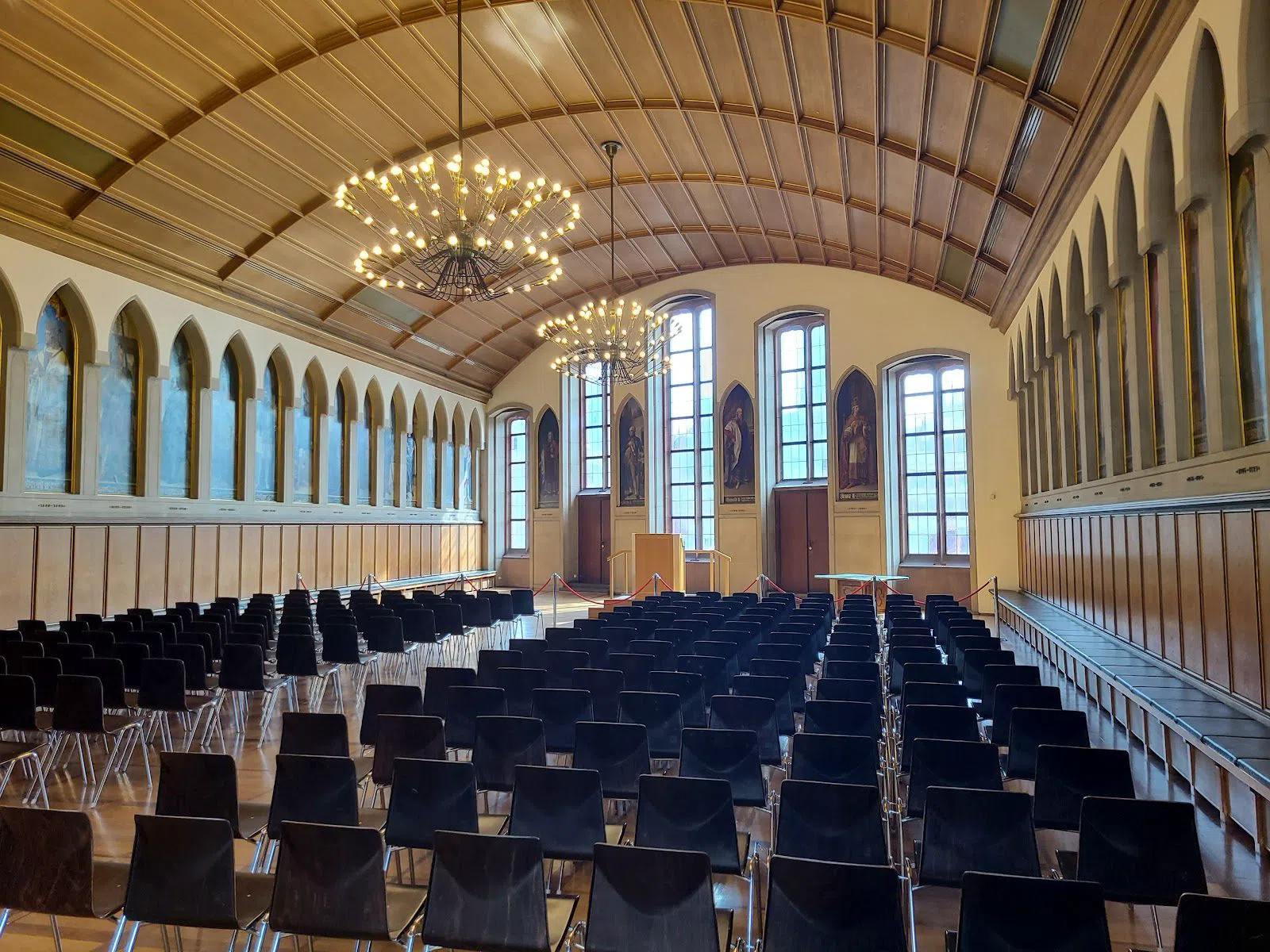
The hall is one long barrel-vaulted stone room with a red carpet down it and iron chandeliers overhead. Along the walls hang 52 full-length painted portraits of Holy Roman emperors in gilt frames. One room, one circuit, and that is the whole of what you came up the stairs for.
This is a working civic room, so a reception can empty it of visitors on any day of the week. Groups go through the city protocol office or a licensed guide, and short-notice closures are not negotiable. Keep a second stop in hand before you climb.
Organizza il tuo viaggio a Frankfurt
Prezzi in tempo reale dai nostri partner di prenotazione.
Cancellazione gratuita su molte camere. Potremmo ricevere una commissione quando prenoti.
The square and the church on it
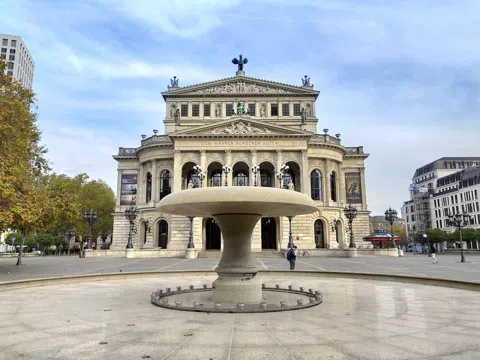
Römerberg and the Ostzeile (Samstagsberg) is an irregular cobbled square ringed by six narrow reconstructed half-timbered houses, dark oak beams above overhanging upper floors. The red sandstone Fountain of Justice stands in the middle, a blindfolded bronze Justitia on top. The square has no door policy and no closing time, and it is free.

Stand with the fountain between you and the gables for the frame that puts medieval timber in front and banking glass behind.
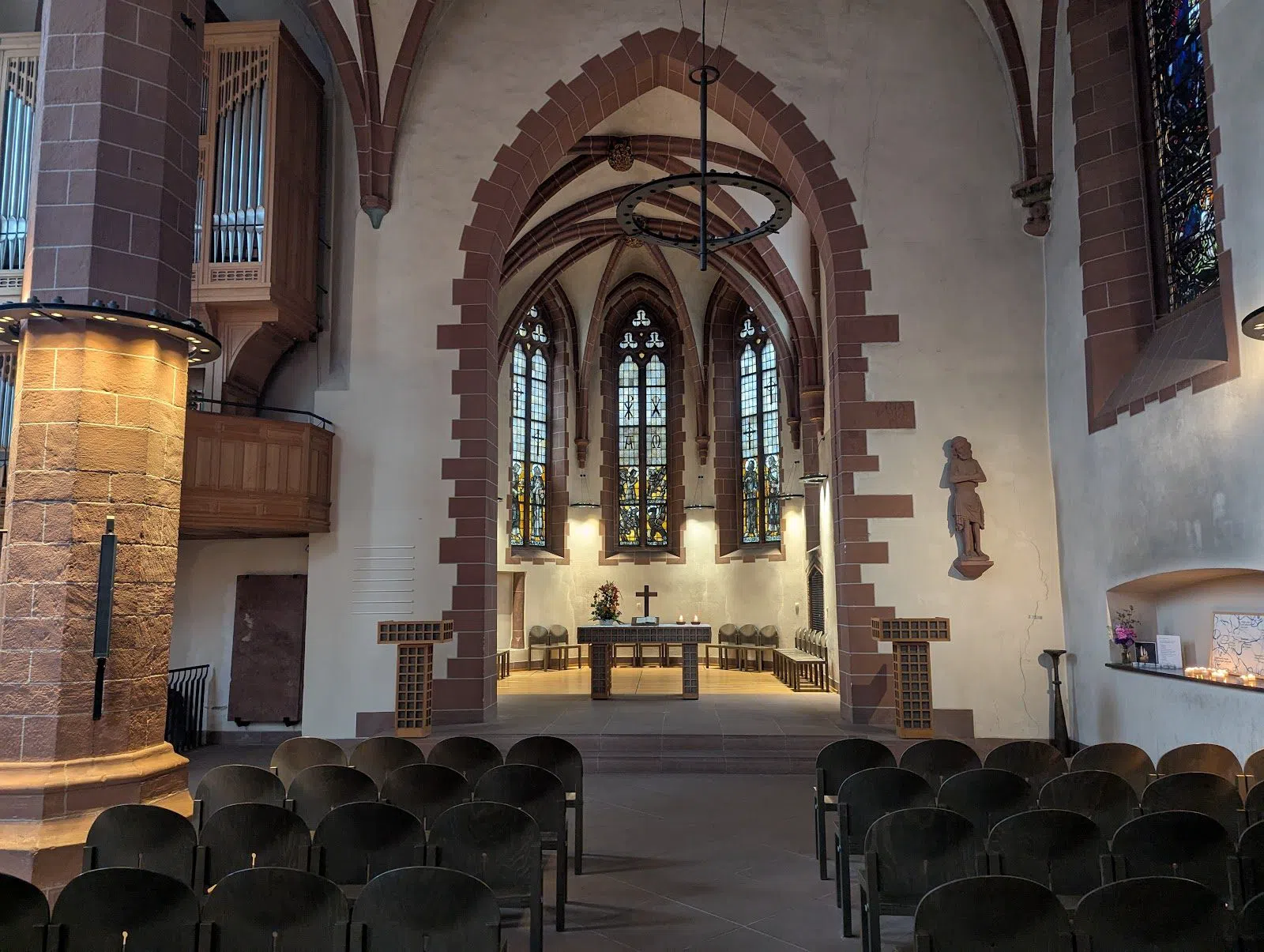
Alte Nikolaikirche (Old St Nicholas Church) holds the south side of the square, small and red sandstone under a steep slate spire with a tiny rooftop gallery. Entry is free. The nave is plain whitewash with a low wooden ceiling and modern stained glass, and two minutes covers it. The 47-bell carillon plays at 09:05, 12:05 and 17:05, so time a pause on the cobbles for one of those.
Best time of day on the Römerberg
Photograph the square before 09:30 or after 18:00. Midday is tight, and tighter during the winter market.
Walk the square first and try the hall after. If the doors are shut for a function, two roofed stops below absorb the hour.
The cathedral and the 328-step Domturm
Kaiserdom St. Bartholomäus and the Domturm is 400m from the Römer, enormous red sandstone Gothic under a bulbous lantern-topped tower. Entry to the church is free, and 10 emperors were crowned inside. The vaults run pale and high over the floor, with the small election chapel off to one side.
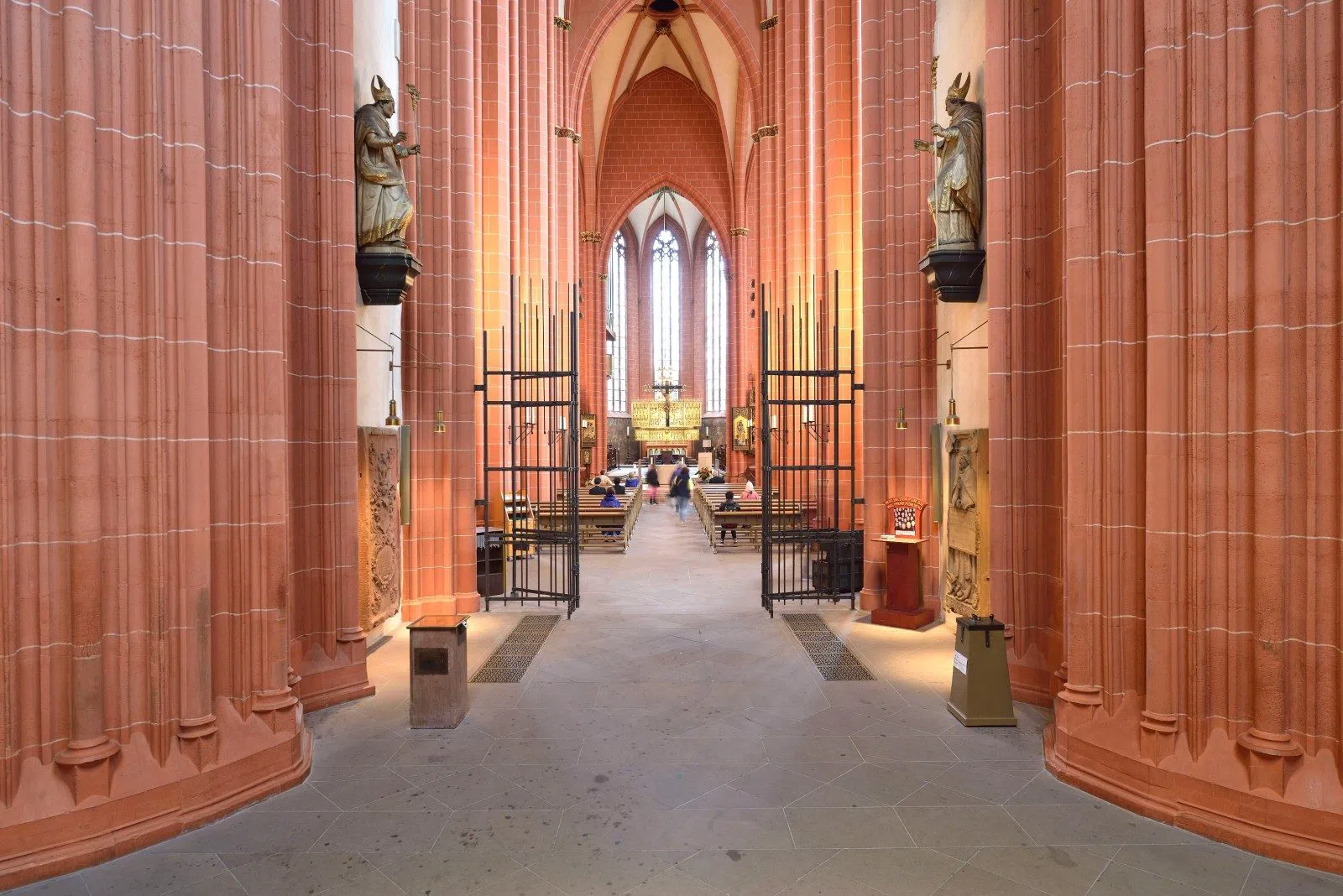
The climb is 328 steps of tight spiral stone with no lift at any point, ending in a caged platform that looks straight down onto the old town roofs. Last ascent is 30 minutes before closing. The staircase is single file, and it is a hard no for limited mobility. This is the cheapest proper view of the old town and the skyline together.
Roman foundations under the Stadthaus
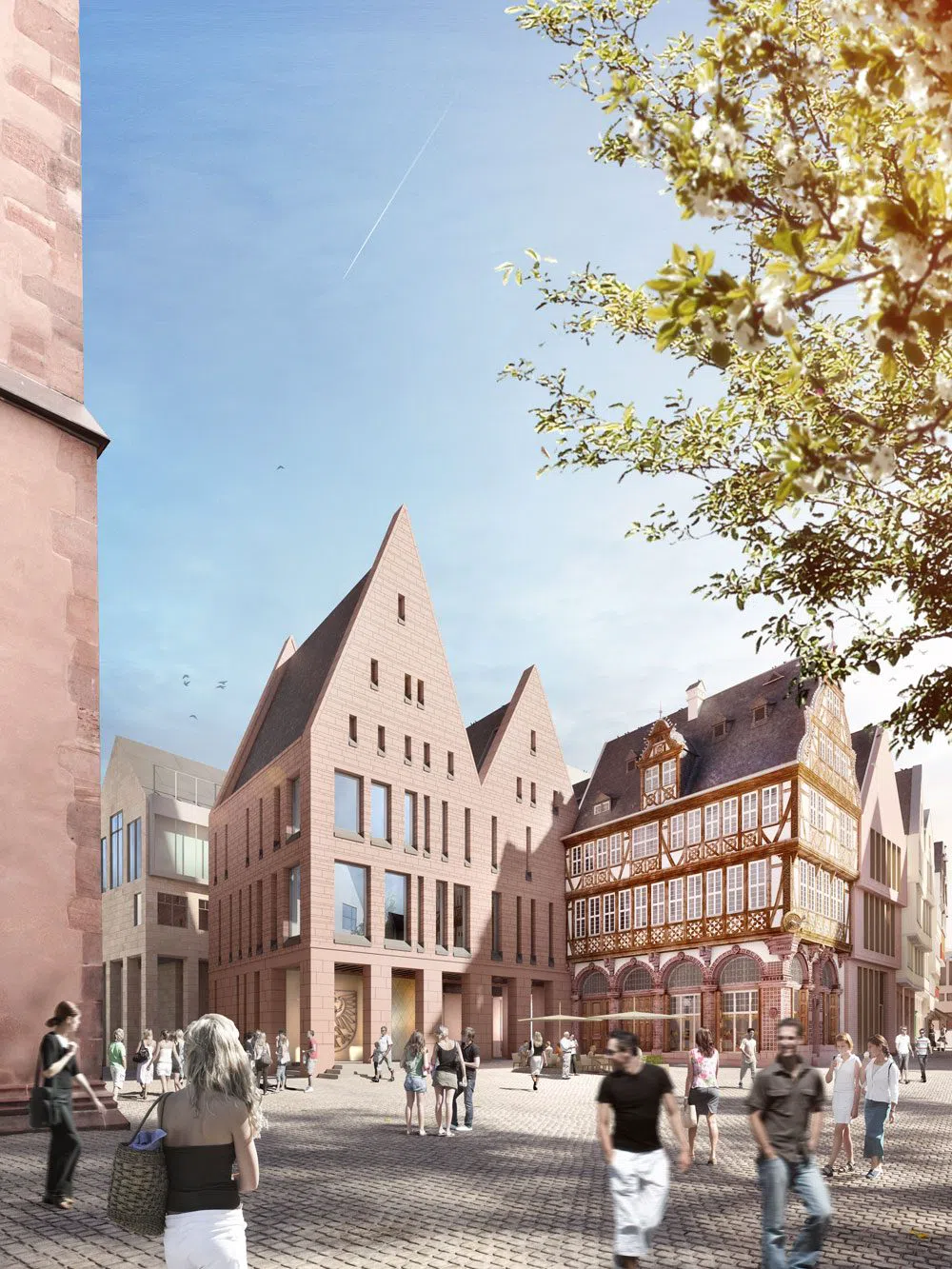
Archäologischer Garten at the Stadthaus am Markt sits two minutes from the Römer, freely accessible all day and almost empty. Roman and Carolingian stone foundations are sunk below street level under a wide modern pale-stone canopy, low walls lit by spotlights, viewing galleries and glass panels looking down into the dig. These are the Roman baths and the royal palace Frankfurt grew out of.
The site is covered and step-free. When the Kaisersaal is closed or the rain comes in, this is where to wait it out.
The Goldene Waage and its roof loggia
Haus zur Goldenen Waage (Belvederchen roof garden) is the finest building in the rebuilt old town, an ornately carved dark-timbered merchant's house with a projecting oriel window and a gilt scales sign. On top sits the Belvederchen, a small enclosed loggia garden with clipped greenery, a stone fountain and a framed view of the cathedral's red tower. It is the only rooftop view inside the old town.
Entry is by timed slot, 30 people at a time. The guided house-and-roof-garden tours run on set Saturdays and need booking well ahead. In summer the Belvederchen is free without booking on Wednesdays and Fridays, 11:00 to 14:00. €€.
Museums on and around the square
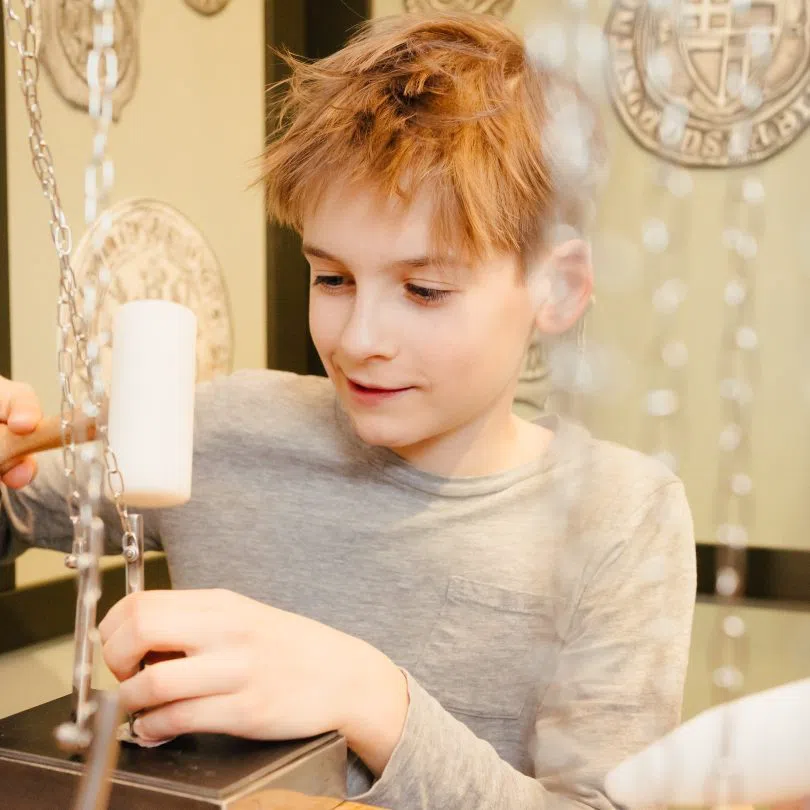
Historisches Museum Frankfurt sits directly on the Römerberg, an angular pale-stone modern wing with slanted roofs grafted onto the medieval Saalhof keep on the river side. It explains what you have been looking at outside better than anything else here. €8 covers the permanent collection and €12 covers everything. Inside is a vast walk-around model of old Frankfurt built in wood. The snow-globe installation is away for repair. The building is large and step-free, and guided tours need booking ahead.

Museum MMK für Moderne Kunst (Domstraße 10) is five minutes from the square, a sharp wedge-shaped postmodern building in pale stone with strip windows, nicknamed the slice of cake, on a corner by the cathedral. White galleries stack over several levels with daylight slots cut into the ceiling. Admission is free for everyone on the last Saturday of the month. €€ on other days. It earns the walk once patience for half-timbering has run out.
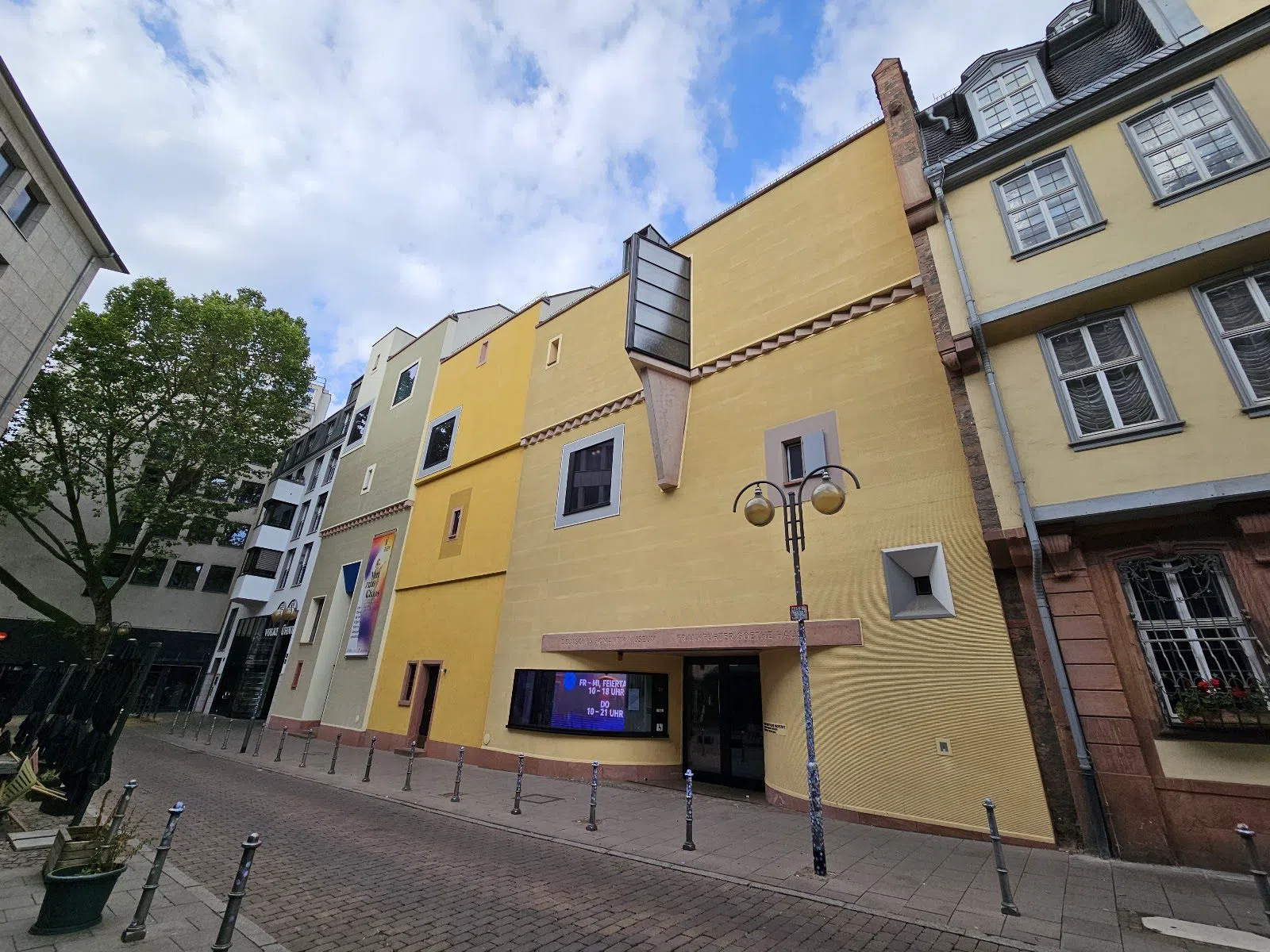
Frankfurter Goethe-Haus and Deutsches Romantik-Museum is a tall ochre-and-white 18th-century townhouse with green shutters and a wooden astronomical clock in the hall. The period rooms are restored, silk wallpaper on the walls and a pale puppet theatre among them. Next door, a modern museum climbs a steep blue-lit staircase. €12 covers both houses. Entry to the historic house is timed and its stairs are narrow.
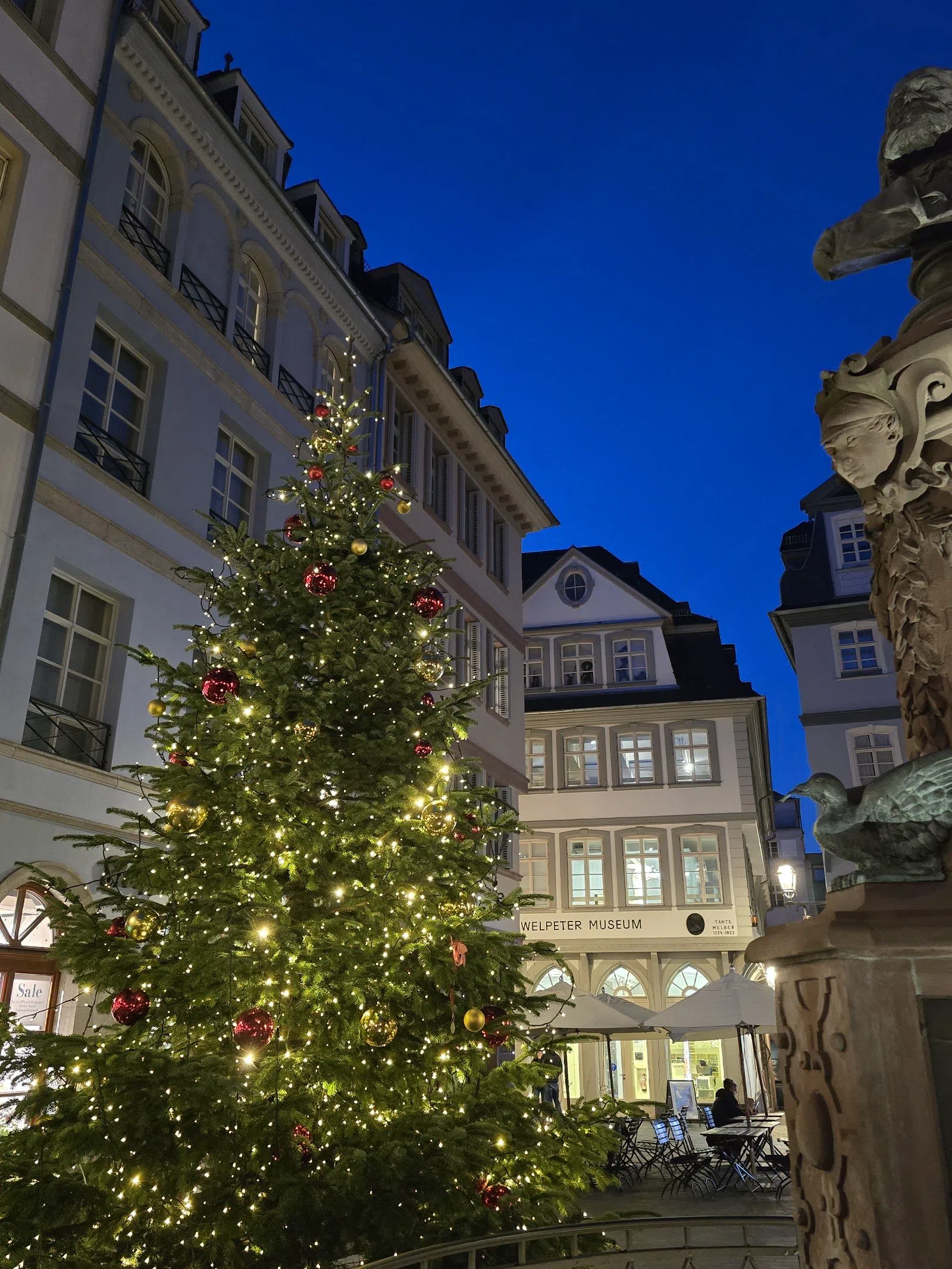
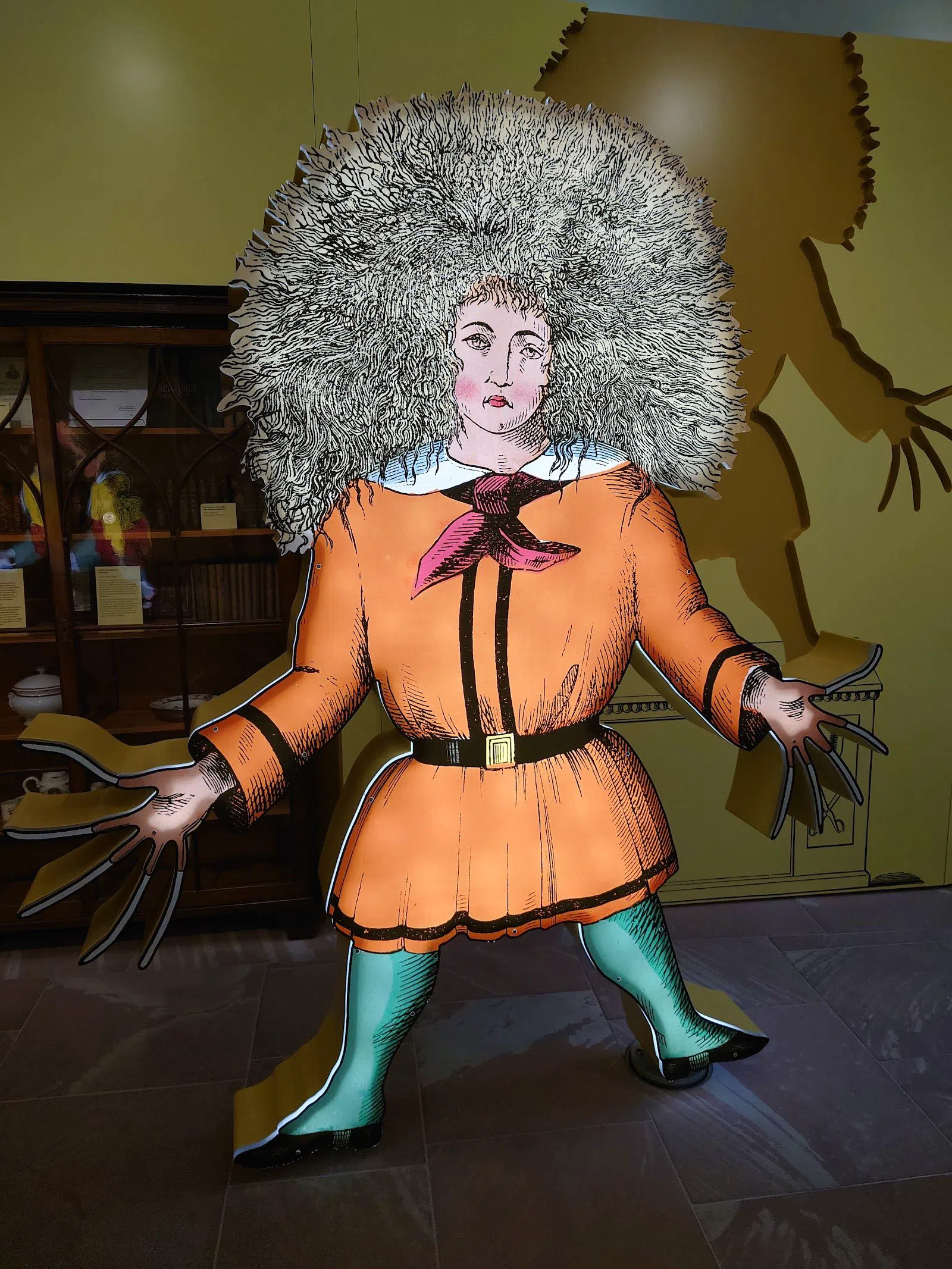
Struwwelpeter Museum (Heinrich-Hoffmann-Museum) sits behind a reconstructed old-town facade on a narrow lane. Inside it is bright and modern, with hands-on play stations and the wild-haired Struwwelpeter himself, long yellow hair and enormous uncut fingernails, recurring on the walls. €8 for adults. Booked visits can start at 10:00, and tours run in English on request. With children along it buys a steady hour.
The Historisches Museum, the MMK and the Struwwelpeter all close on Mondays.
Views over the Main
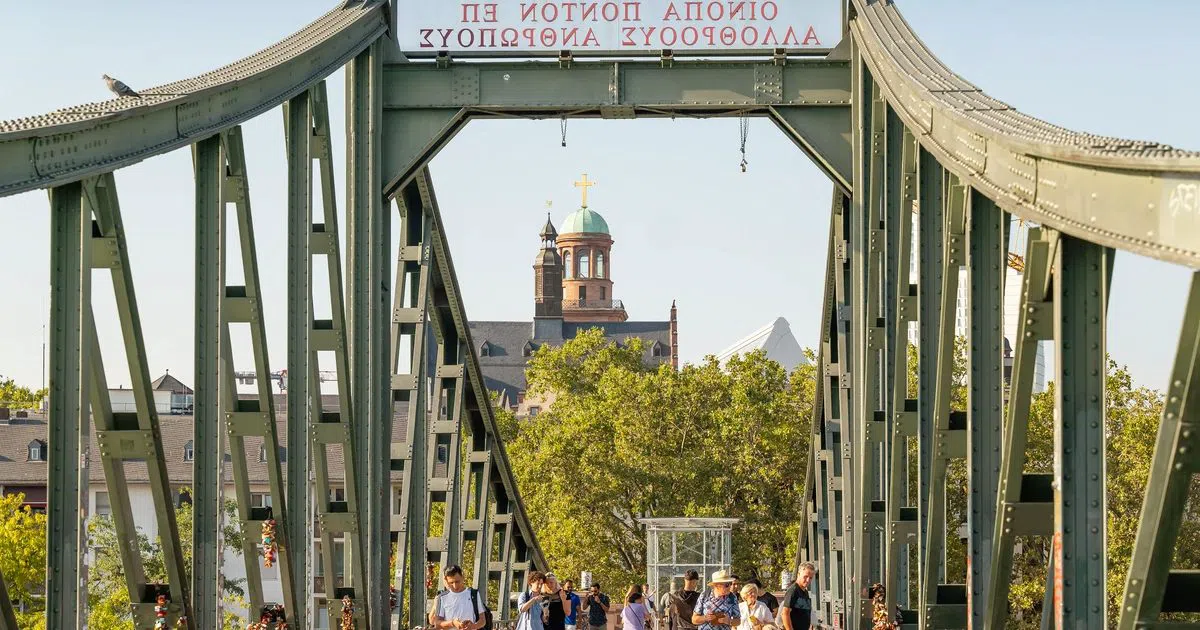
Eiserner Steg is three minutes downhill from the Römerberg, a green-painted iron lattice footbridge with handrails solid with padlocks and a Greek inscription over the portal. Banking towers stand on one bank and the museum villas on the other. It is free, open at all hours, with lifts at both ends for wheelchairs and pushchairs. Cross it around sunset for the best free frame of skyline and old town at once.
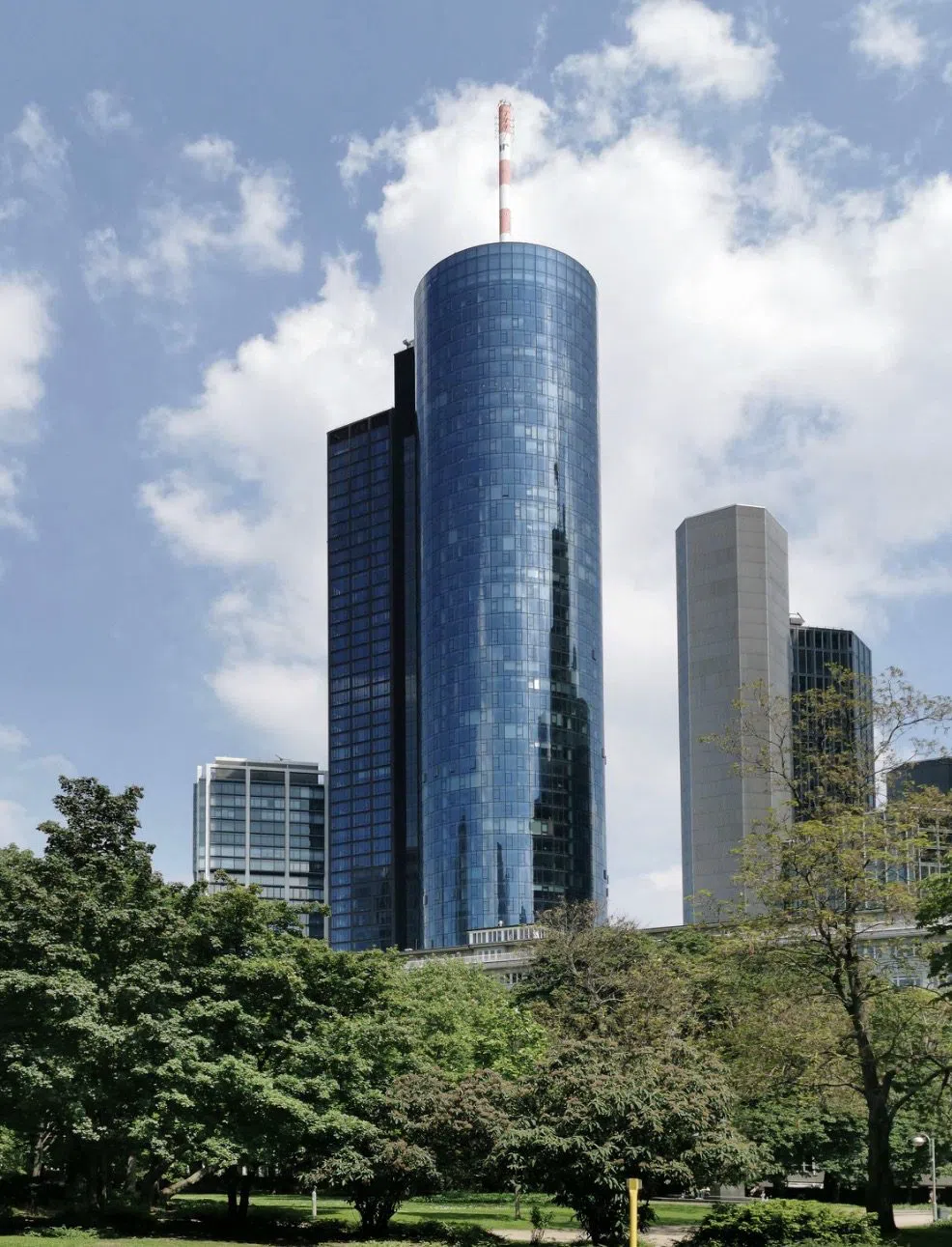
Main Tower observation deck is a 15-minute walk from the Römer and €9, a circular open-air platform 200m up behind a tall mesh safety screen. The glass towers of the banking district ring it, the Main curls away below and the old town reads as a small red-roofed patch. Entry runs through airport-style security and two lifts. Weather closes the open deck without notice. Take it alongside the old town, on the same day.
Eating and drinking within 10 minutes
Kleinmarkthalle is 10 minutes from the Römer, a 1950s glass-and-steel market hall on two levels with an iron balcony running round the upper floor. Dense rows of stalls carry hanging sausages, cheese counters and flower buckets, and people eat standing at the counters. Open Monday to Friday 08:00 to 18:00 and Saturday to 16:00, closed Sunday. The renovation under way keeps the hall open throughout. The aisles are narrow. €€.

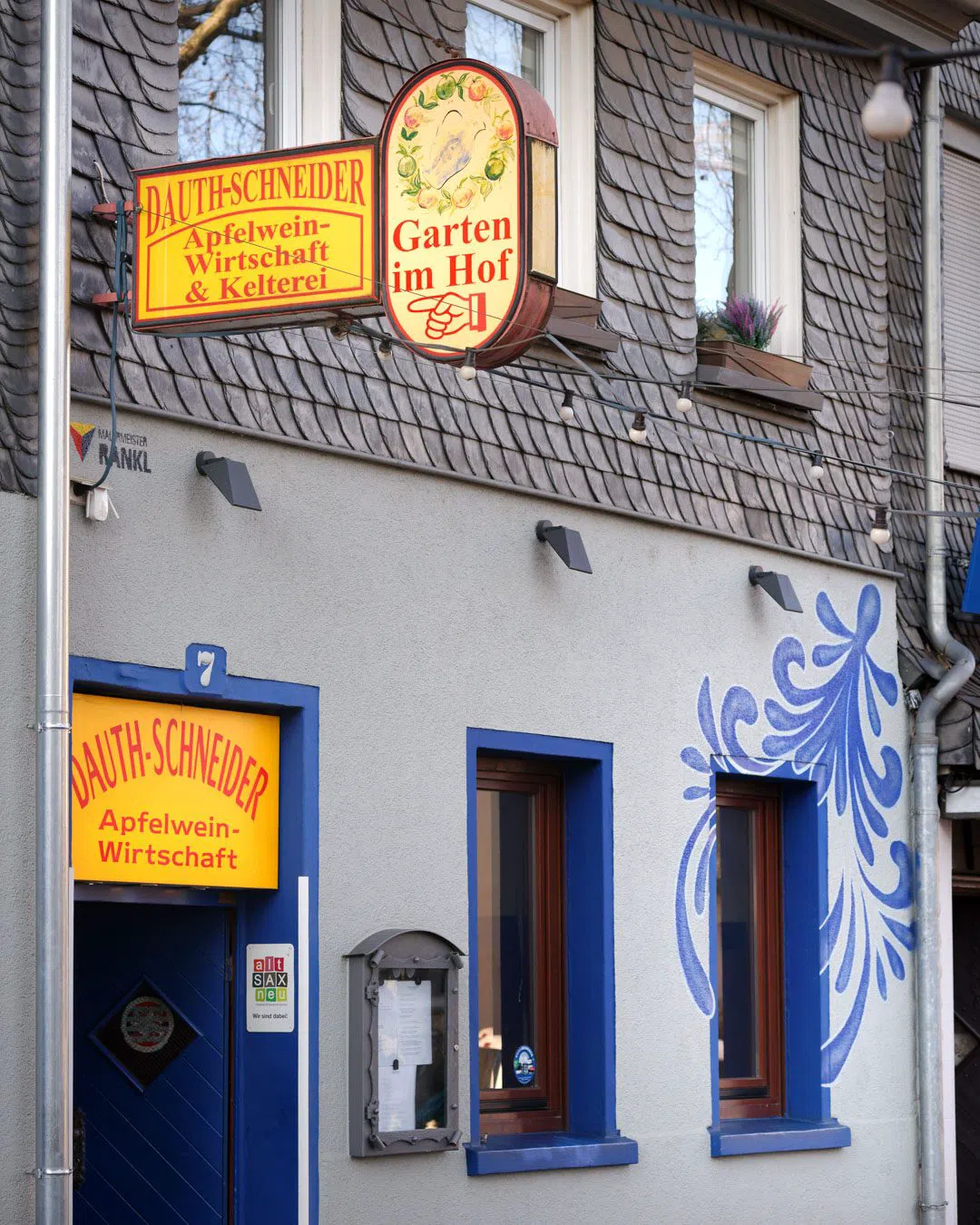
Haus Wertheym stands two minutes off the square at the corner by the river gate, a crooked half-timbered house from 1479 with dark beams and leaded windows. It came through the 1944 bombing intact and is Frankfurt's oldest restaurant, the rooms crammed floor to ceiling with pewter, antlers, old prints and hanging lamps. Open daily 11:00 to 23:00, and reservations are taken. The rooms are small and low-ceilinged, so phone ahead for anything over about eight.
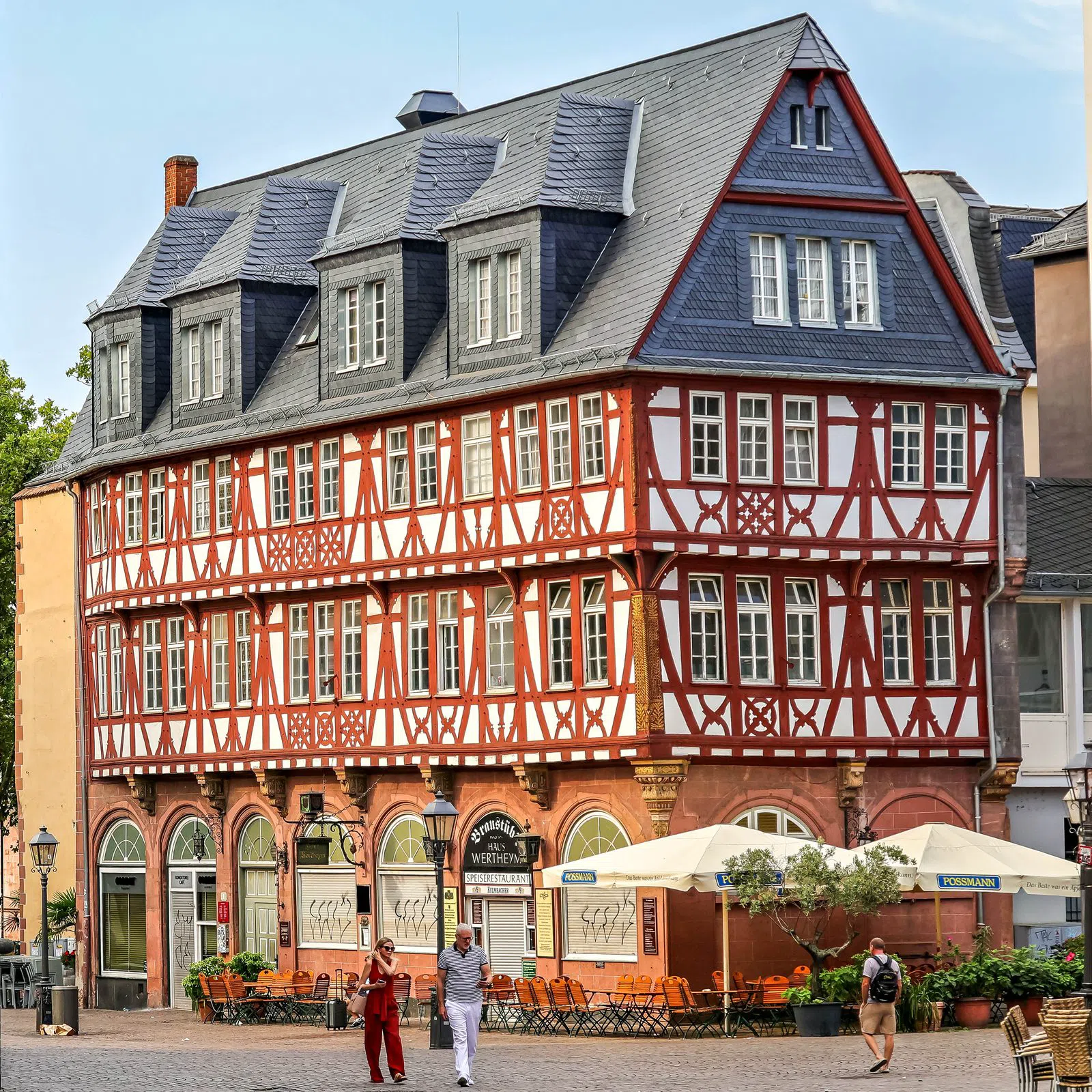
Wacker's Kaffee (Kornmarkt) is five minutes from the Römer and has roasted its own beans since 1914. A dark wood-and-brass counter runs across a tiny corner room, sacks and bean bins behind the staff, and customers drink from small cups out on the pavement. It is standing room and closed on Sundays. Two or three people fit. Don't expect a table.
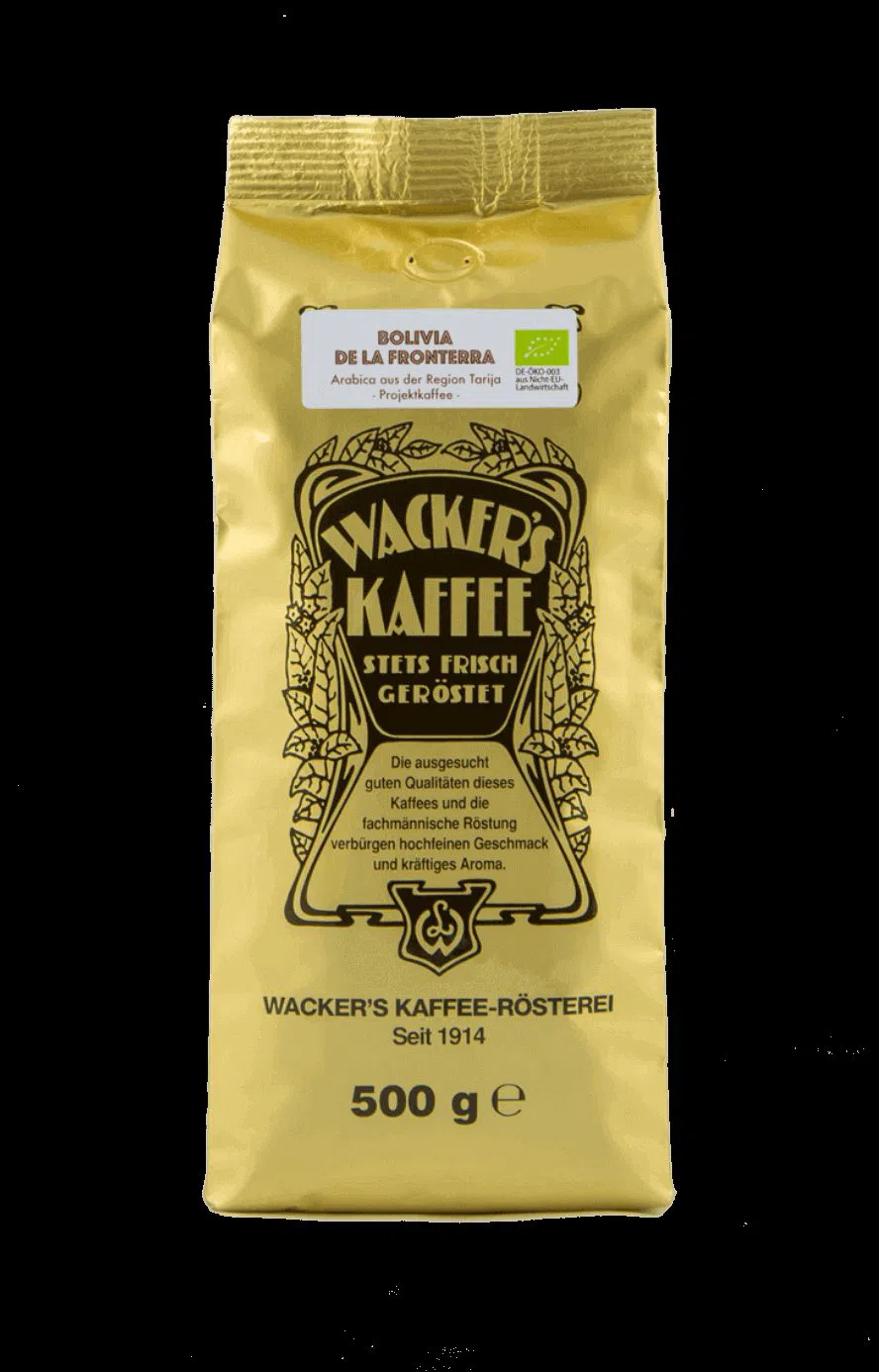
Apfelweinwirtschaft Dauth-Schneider is a 10-minute walk over the Eiserner Steg into Sachsenhausen, a big cider house on a cobbled lane with a huge chestnut-shaded courtyard of long wooden benches. Apple wine has been poured here since 1850, out of grey-and-blue ribbed stoneware jugs into ridged Bembel glasses. Open daily 11:30 to 00:00. The courtyard seats 250. €€.
Booking ahead and what a guide adds
Six of the stops here cost nothing at the door and take no booking: the hall, the square, the church, the cathedral nave, the ruins and the bridge. The paid ones are walk-up, with the Goldene Waage the exception on its timed slots.
A private guided walk of the old town runs seven days a week. The top one is confirmed by hand by the operator and that can take up to 48 hours. It cannot be booked last-minute. Fix it before you travel.
Paying for a guide covers the arranging: the protocol office route into the civic rooms, and a place on the set-Saturday house tour at the Goldene Waage. Neither is available to a walk-in on the day.
Whether the Kaisersaal is worth the detour
The Römer rewards a visitor who is in the old town anyway and wants one room of painted emperors with the square thrown in. Stay flexible about the morning a reception takes the hall. It suits a half-day on foot, with the church, the ruins and the cathedral tower all a short walk off the cobbles.
Closed days and what to book
Book the private walk days ahead for its manual confirmation, and the Goldene Waage house tour for one of its set Saturdays. Nothing stops a reception closing the Kaisersaal on the morning you planned it, so keep the roofed ruins in reserve.
See the Frankfurt guide and the Frankfurt hotel search.
Prima di partire
Is the Kaisersaal in the Römer free to visit?
Yes. Entry to the Emperor's Hall is free daily from 10:00 to 17:00, and individuals walk in without a ticket. It can close without warning for official functions, so keep another stop in reserve.
How long does a visit to the Römer take?
The Kaisersaal is a single barrel-vaulted room lined with 52 emperor portraits, and one circuit covers it. Add the square outside, two minutes inside the Alte Nikolaikirche, and the Archäologischer Garten two minutes from the door.
When is the best time to photograph the Römerberg?
Before 09:30 or after 18:00. Midday is crowded, and the winter market makes it worse. For the skyline and the old town in one frame, walk three minutes down to the Eiserner Steg at sunset.
Can I book a private Frankfurt old-town tour at short notice?
Private walks run seven days a week, but the top one is confirmed by hand by the operator, which can take up to 48 hours, so it will not work last-minute. Groups who want the Kaisersaal itself book through the city protocol office or a licensed guide.
What should I do if the Kaisersaal is closed when I arrive?
Two minutes away, the Archäologischer Garten is free, roofed and step-free. The Historisches Museum is on the same square (€8 permanent, €12 for everything, closed Mondays). For a view, the Domturm is 328 steps with no lift, and the last ascent is 30 minutes before closing.