Frankfurt-numret
How to Get Inside Frankfurt's Alte Oper Without the Crowds
Frankfurt's old opera house sells no museum ticket and has no opera company. Getting through the door takes some planning, the tour suits some visitors more than others, and the square outside is empty only at certain hours.

Av Robin van DijkThe city read on foot, one district at a time
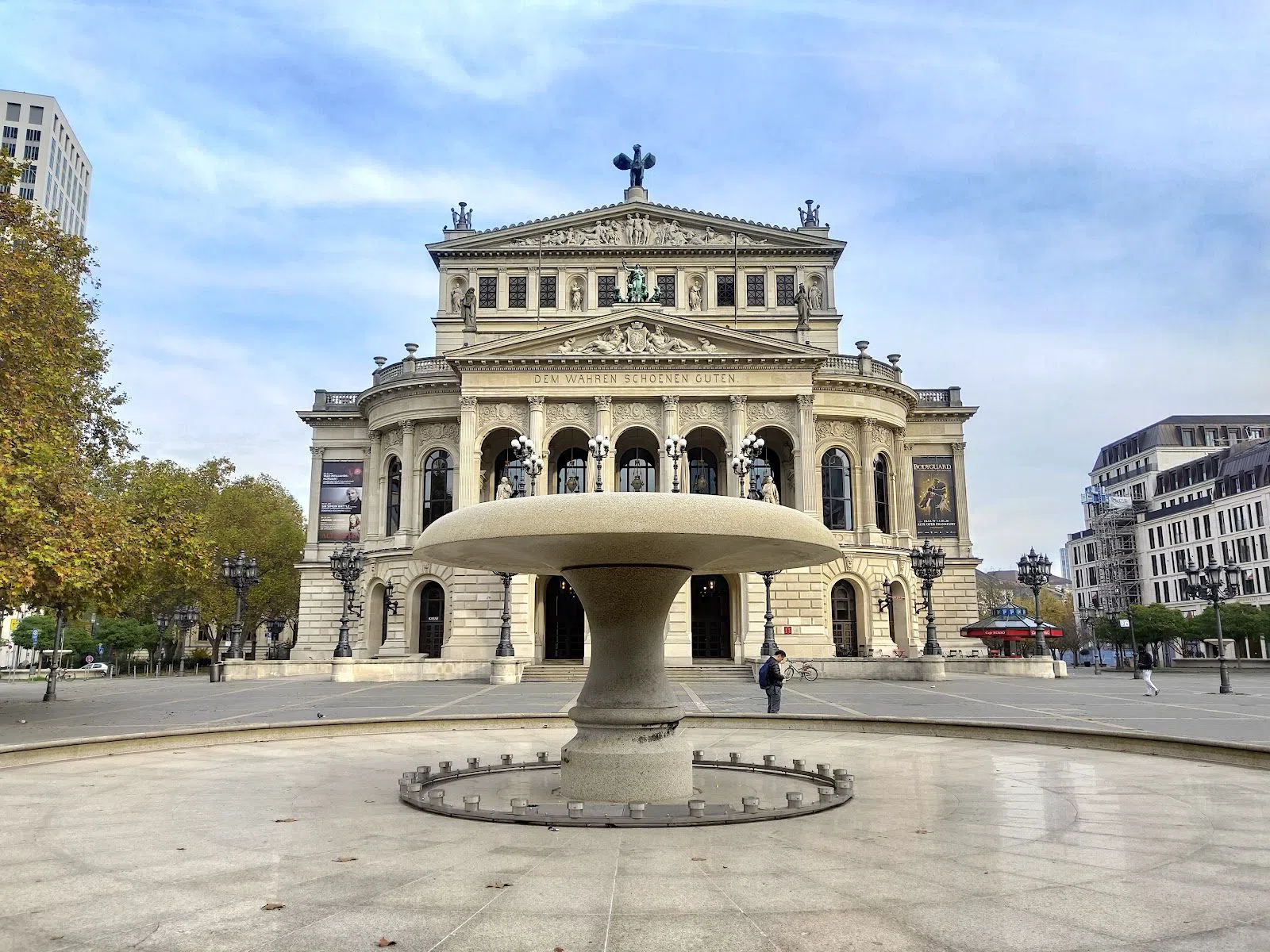
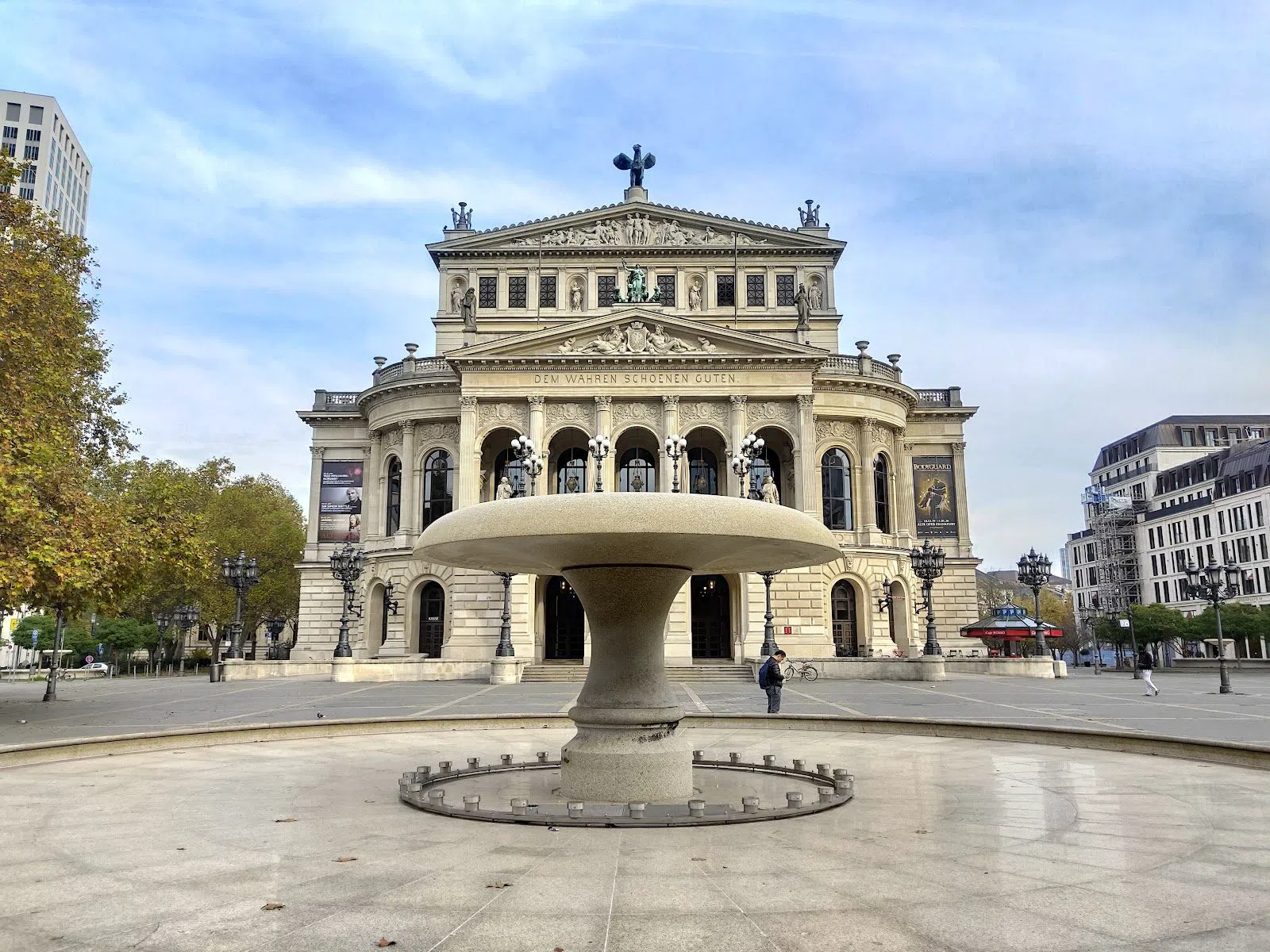
The Alte Oper Frankfurt (Innenstadt, at the western end of the pedestrian core) is the building everyone in this city photographs and almost nobody walks into. Sandstone, columns, the names of Mozart and Goethe cut above the portico, a fountain running in front of it. Behind that front there is no opera company, no visitor desk and no all-day ticket. Seeing the inside comes down to one of three doors, and two of them are nearly empty.
What sits behind the facade
The house opened in 1880 as Frankfurt's opera, burned out in the war, then stood as a shell for decades while the city argued about whether to clear the site or rebuild it. What finally went up behind the restored stone is a concert and congress house rather than a theatre: a large hall, a smaller one, deep foyers, a stage sized for orchestras rather than scenery. Frankfurt's opera company performs elsewhere in the city, which is why the name misleads visitors who turn up expecting a staged Tosca and a cloakroom queue.
That also settles the thing most people get wrong before they arrive. There is no ticketed museum visit here, no self-guided circuit, no audio guide, no permanent exhibition to drift through on a Tuesday afternoon. You see the interior on a booked guided tour or with a ticket for whatever is on that night, and the house opens one hour before each event. Outside those windows the doors are shut and the lobby is dark, however many people are standing on the square taking pictures of it.
Planera din resa till Frankfurt
Aktuella priser från våra bokningspartner.
Gratis avbokning på många rum. Vi kan få provision när du bokar.
The square is the free half
Opernplatz and the Lucae-Brunnen (Innenstadt) is a public square with no door policy and no reason to rush. It is also the one position from which the whole facade fits into a single frame, which is why every walking group in the city musters here and why the middle of the day looks busier than it is. The crowd is forty people on a step, not a queue for anything.
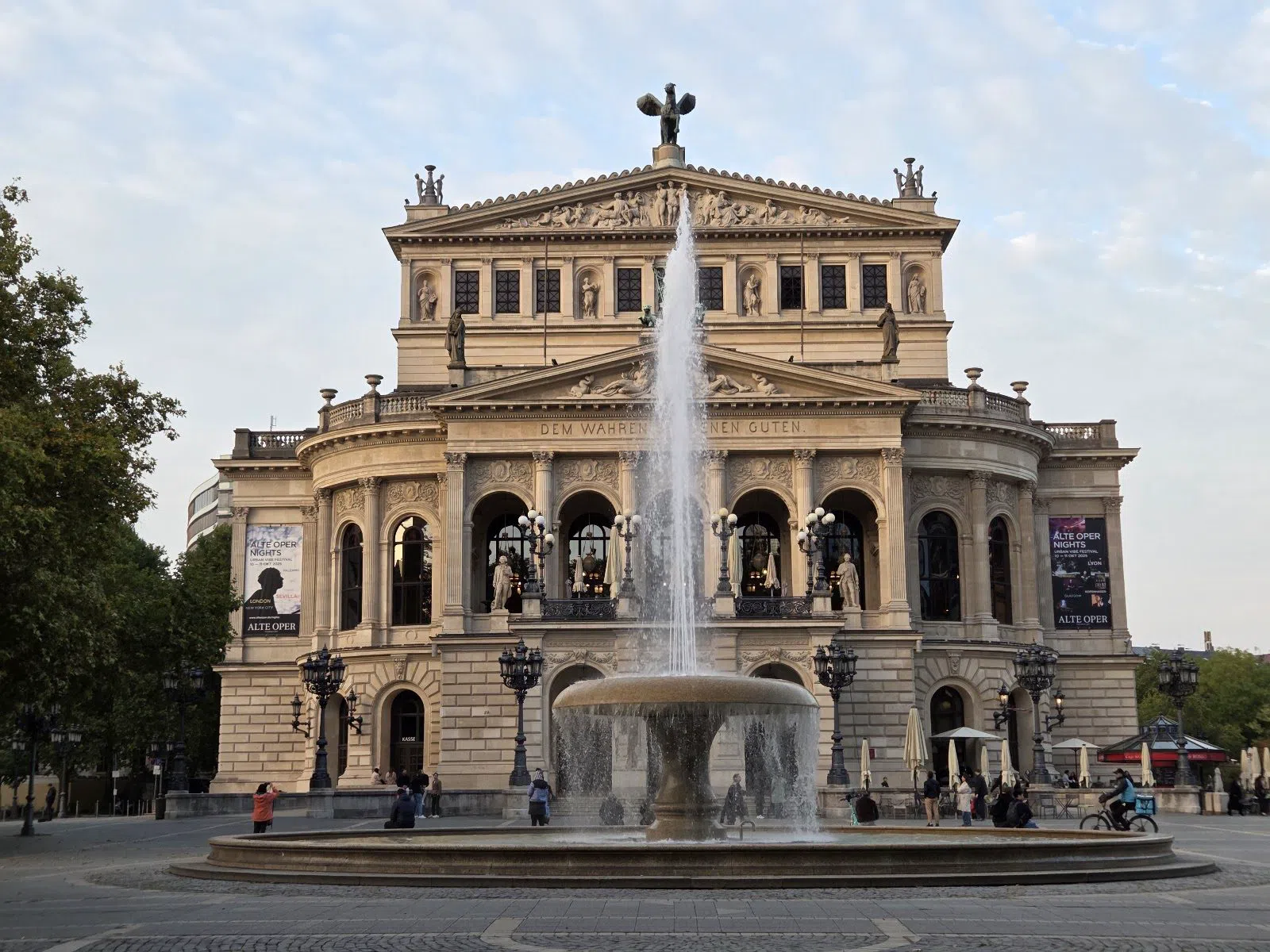
The fountain is seasonal. Frankfurt switches its fountains on for the warm months and opened the 2026 season at this one on 15 April, so a January visit means a dry stone basin and a very different photograph. If you want water, columns and low light in the same shot, come between mid-April and the autumn, early, before the terraces are set.
Three ways through the door
The first is the building tour, the cheapest cultural hour in central Frankfurt: €10, or €11 for the English-language version. Public dates are open to anyone who books a place. Beyond those, exclusive tours are arranged through the house's request form, with a minimum of 12 and a maximum of 20 people, and English tours run by individual arrangement rather than on a fixed schedule. If your group needs English, ask when you request it, not on the day. The cap matters: twenty is a group you can hear a guide in, rather than the fifty-strong shuffle you get in a palace.
The second is a concert ticket, which runs from roughly €20 to over €100 depending on the hall and the artist. The cheapest seat buys you the same foyers, the same staircases and the same hour before the music as the expensive one. Arrive when the house opens, an hour ahead, and you get the building nearly to yourself while everyone else is still eating.
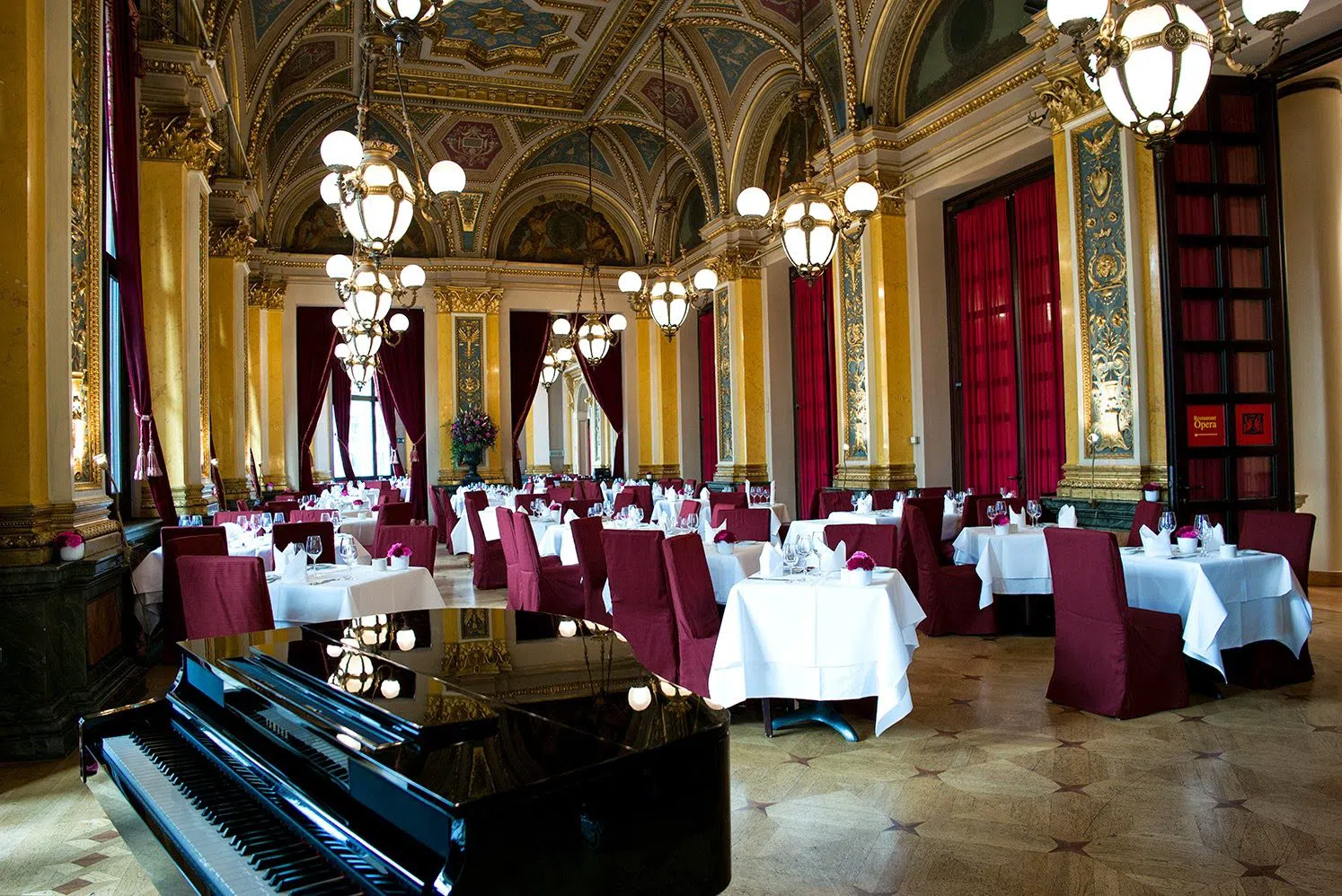
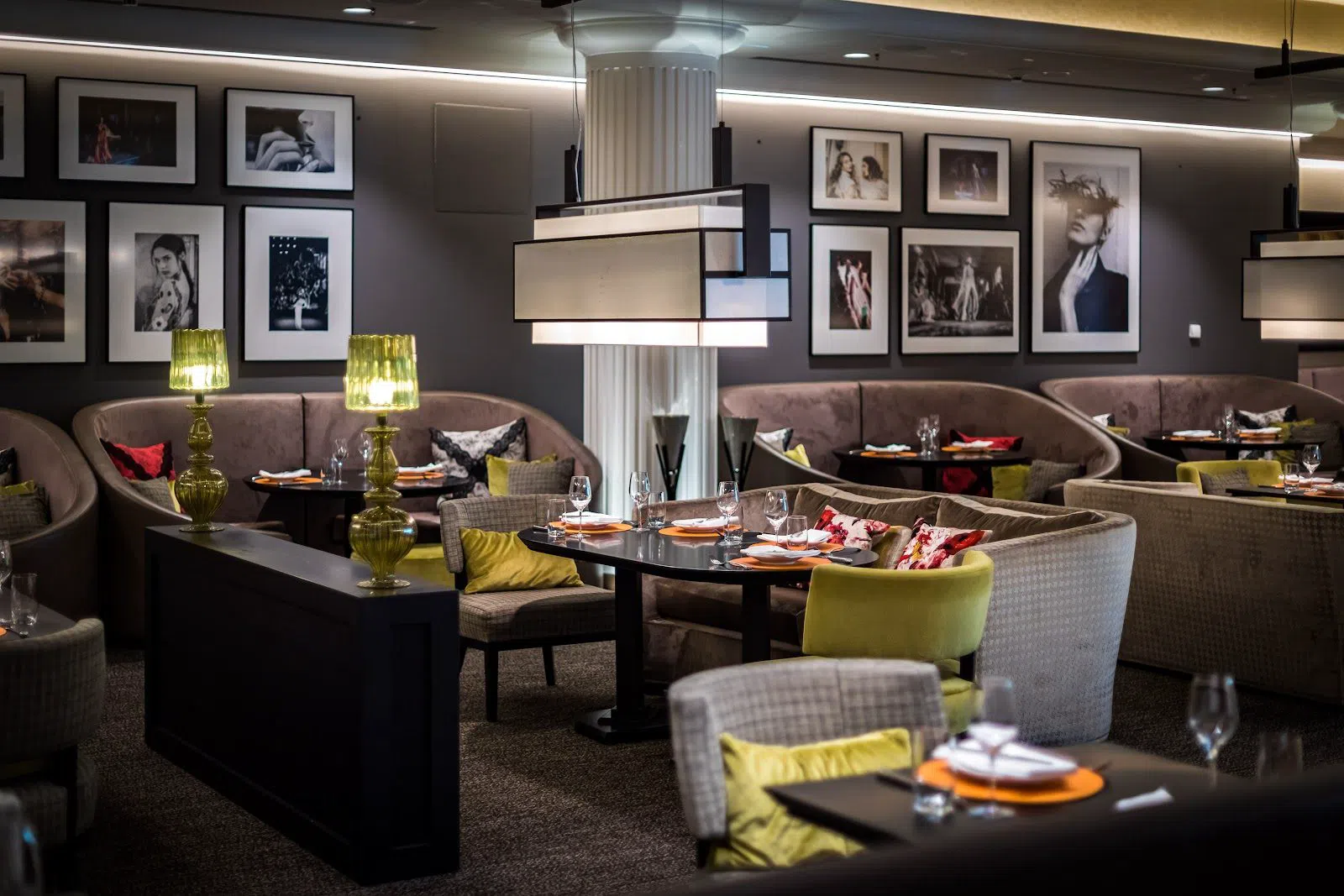
The third is lunch. Restaurant Opéra (inside the opera house, Opernplatz) is the only way to sit inside the building without a tour or a concert ticket. It serves lunch and dinner Monday to Friday plus Sunday brunch, mains land around €30 to €45 and set lunches lower, and it takes a summer break, closed 18 July to 4 August in 2026. Check before you build a day around it. For groups it is the most capable room on the square: up to 140 in the dining room, 100 on the terrace, and with adjoining Alte Oper rooms a private party can run to 400.
How long it takes and when the building is quiet
Treat the inside as a two-hour block rather than a slot. The tour is a walk through a working building, so its length depends on what the house is doing that day, and nothing published commits to a fixed finish time. Leave the hour afterwards free instead of booking a table hard against it.
On concert nights the quiet window is the first twenty minutes after doors open. The crush is the interval and the five minutes before the downbeat, both of which you can decline to take part in. Weekday mornings are the calmest time on the square itself; by six in the evening the terraces are full and the facade has an audience.
Booking ahead rather than turning up
There is no walk-up option for the interior, and that is the most common wasted journey here. Tour places and concert seats are booked in advance, and the restaurants take reservations by phone. If you want to see inside on a specific day, fix it before you fly.
If you would rather have the opera house explained as part of a wider half-day with a guide, private guided options exist and are attached to this page as a separate card. The top-rated one is confirmed manually by the operator, with up to 48 hours allowed, so it cannot be booked last minute or arranged on the same day. Prices start from 330 USD per person, a long way from a €10 building tour, and what you get is a guide and a vehicle rather than access the house does not otherwise sell. These tours do run seven days a week, so no day of the week is a dead end.
Access, age and the stage door rules
You meet at the stage entrance 15 minutes before the start, and latecomers are turned away rather than seated late. The building tour is not wheelchair accessible, and it is not recommended for children under ten; the route involves stairs and back-of-house corridors rather than a gentle gallery loop. Families with small children are better served by the square, a terrace and one of the indoor stops further down this piece.
Eating and drinking on the square without a ticket
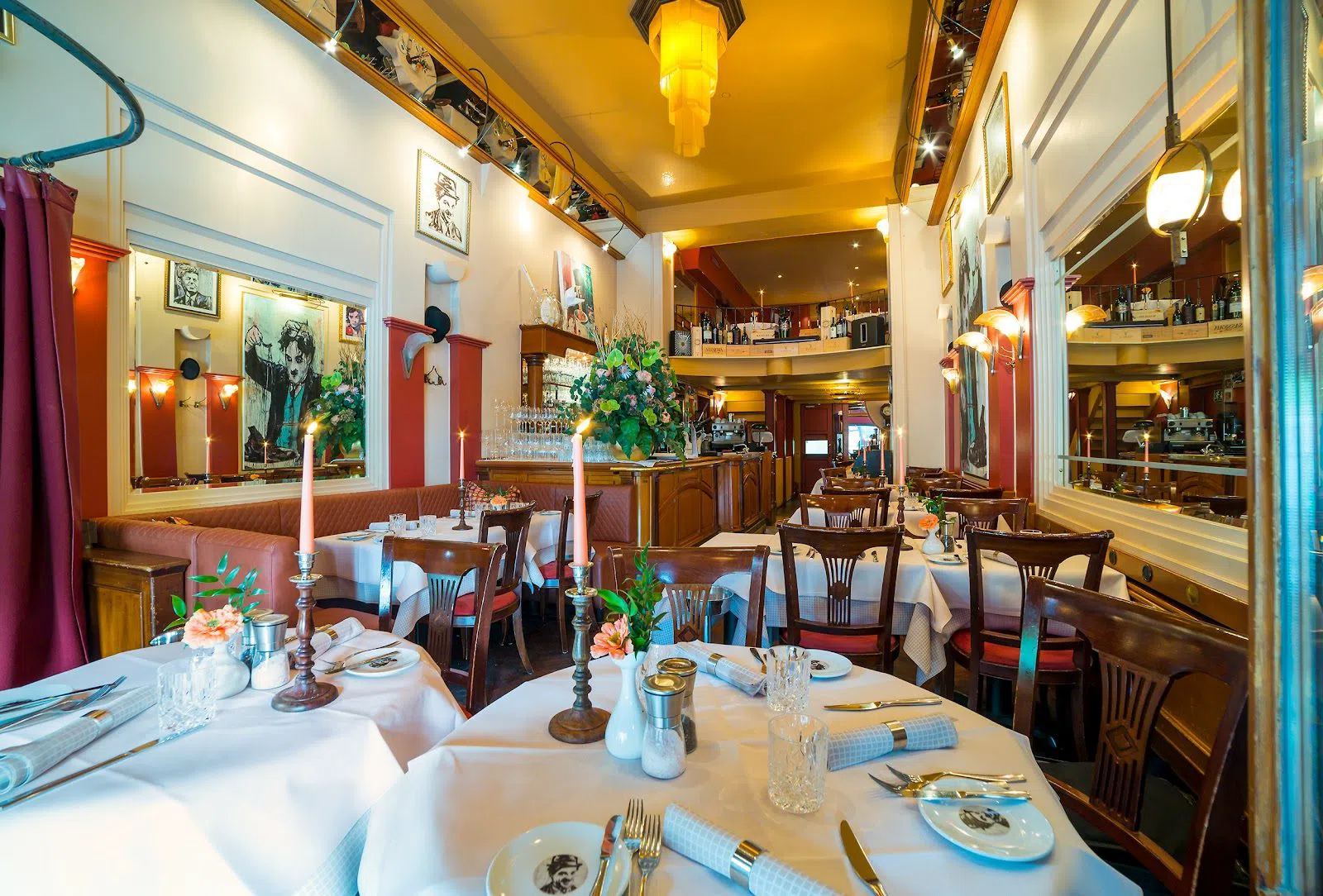
Restaurant O/C Operncafé Charlot (Opernplatz) has been on this square since 1980 and opens daily from 11:30 until 1am, which makes it the reliable fallback when the opera house is shut between events. Cake and coffee run around €10 to €15, mains €20 to €35. It takes groups readily, up to 70 inside and 55 on the terrace, with set menus for private celebrations, and reservations go through the phone.
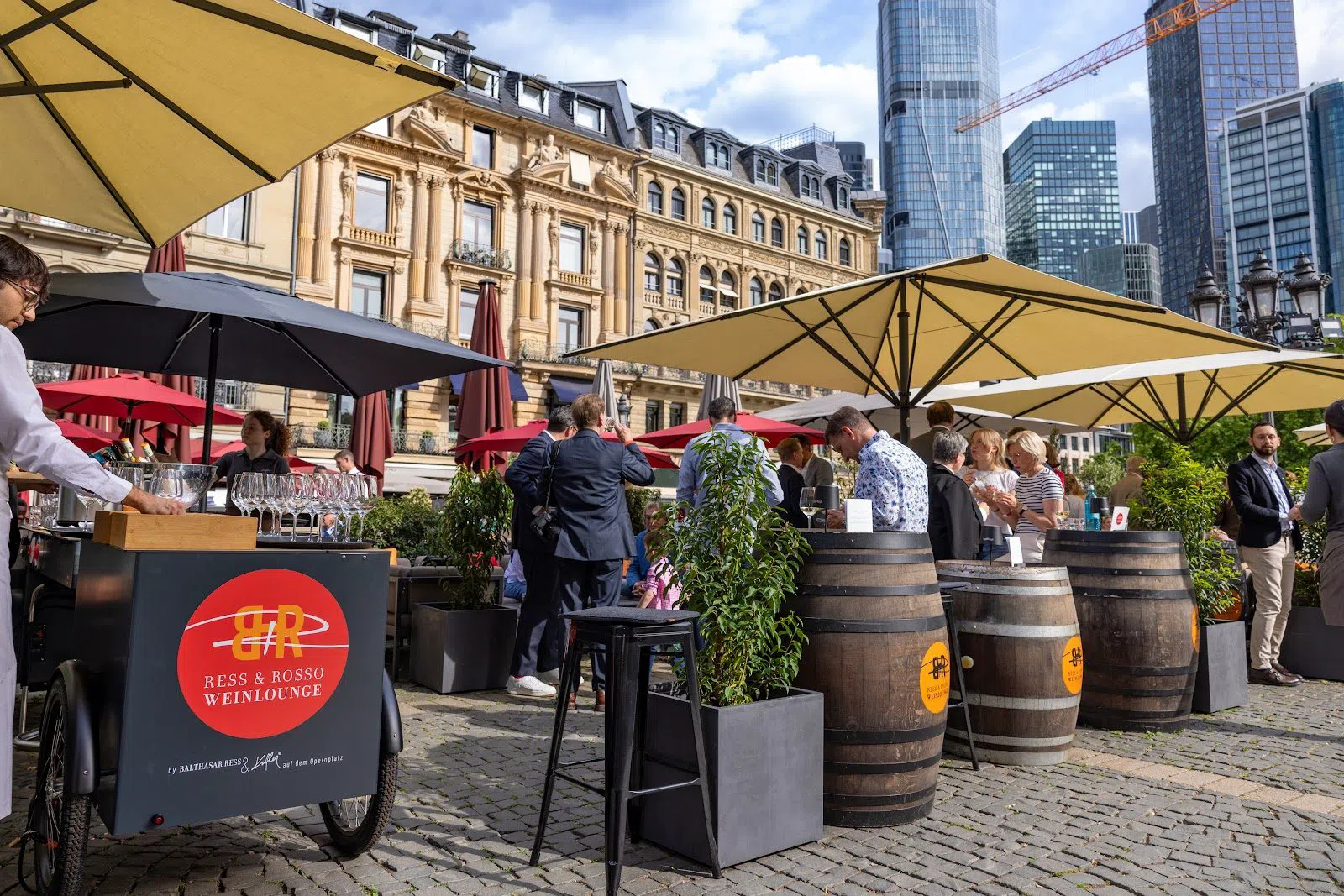
Ress & Rosso Weinlounge (Opernplatz) is the newest thing here, opened on 23 May 2026 by the Rheingau estate Balthasar Ress together with the Kuffler group. It is an outdoor lounge rather than a restaurant: glasses of Rheingau wine at roughly €7 to €12, Monday to Friday from 15:00, weekends from 12:00, until midnight. The whole 60-seat lounge is exclusively bookable for private and business events, including outside normal hours, so it suits a company dinner better than a couple looking for a quiet corner on a Friday.
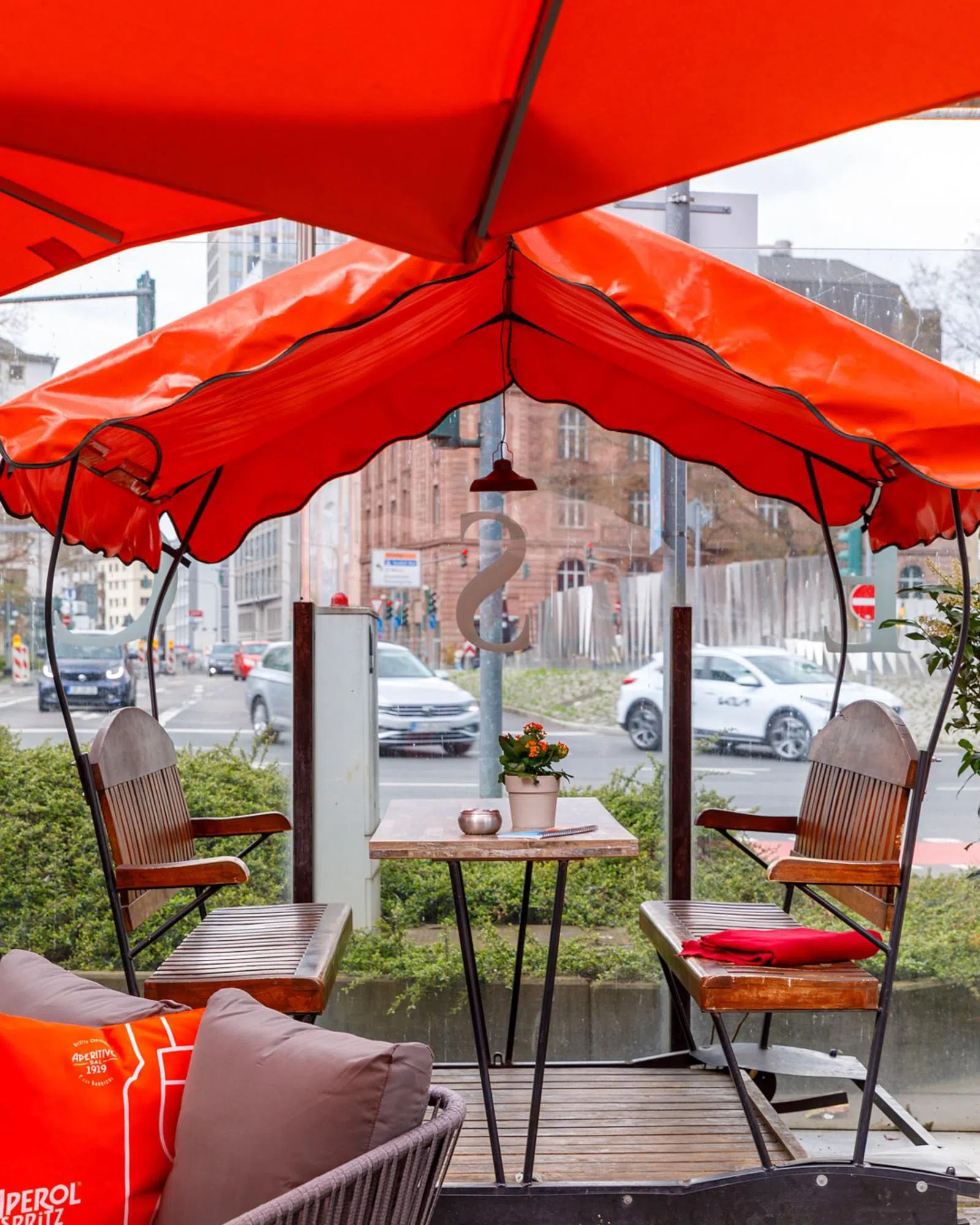
Restaurant Schönemann & Lili's Bar (Sofitel Frankfurt Opera, Opernplatz) is the grown-up pre- or post-concert address, named after Goethe's Lili Schönemann and listed among Germany's top 50 hotel bars in 2026. Tasting menus are €159 to €199 per person and there is a business lunch; bar drinks cost far less, and the bar doubles as a small performance space. The kitchen closes daily between 15:00 and 17:00, which catches people out after an afternoon tour. Private reservations for 10 or more go by phone or email. If you want to stay on this square rather than commute to it, start with a Frankfurt hotel search and work outwards from Opernplatz.
The walk out from Opernplatz
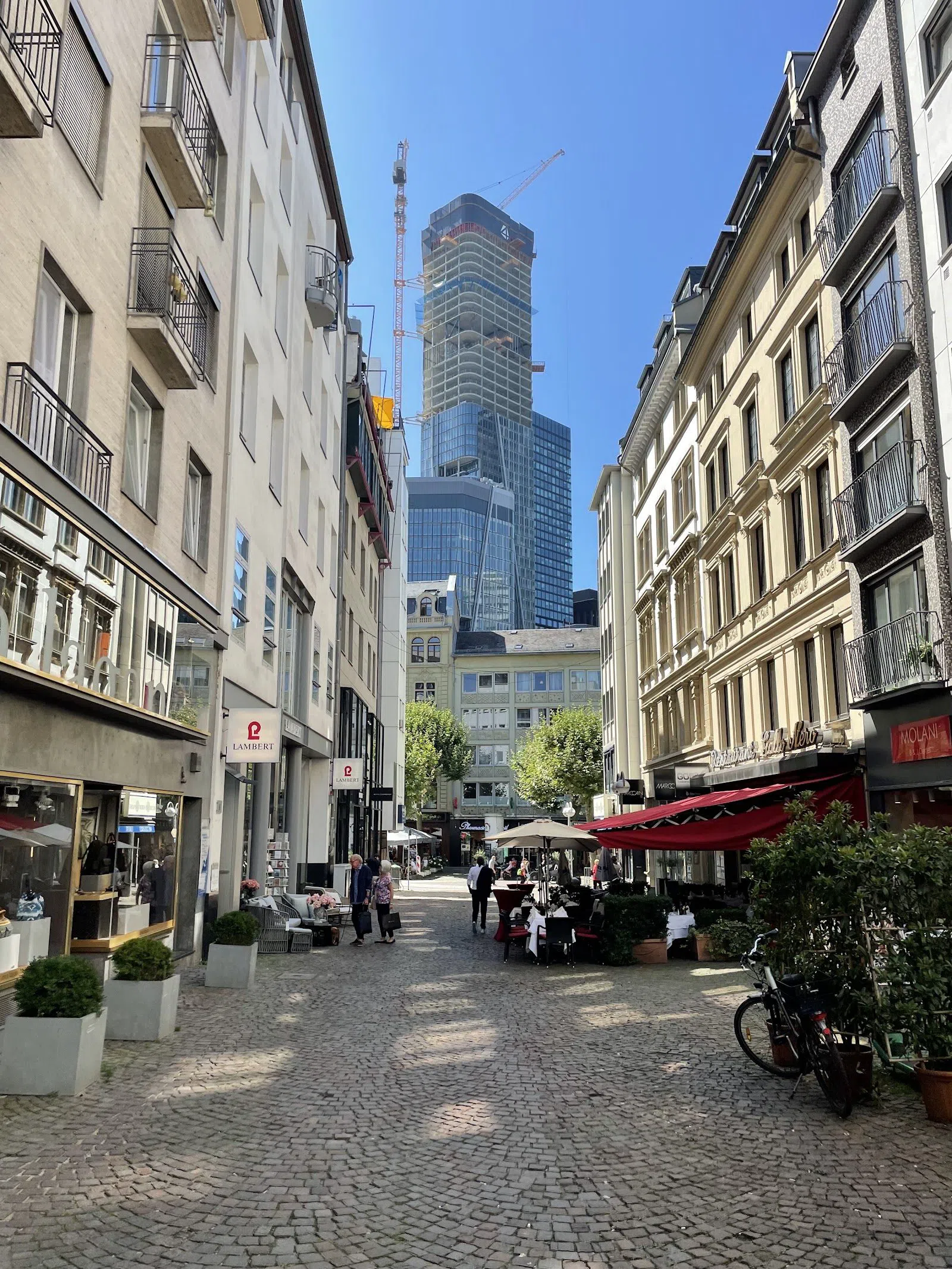
The opera house is a starting point more than a destination, and the geography is kind. Freßgass (Große Bockenheimer Straße) (Innenstadt) is the three-minute pedestrian link east into the shopping core, Frankfurt's old 'feeding street', free to walk, with food and drink from a few euros upward. It hosts the Freßgass festival, 13 to 22 May in 2026 with free entry, and the Rheingau Wine Festival, when stands fill the street from midday to 23:00. Lively, and loud enough that a quiet dinner nearby is not the plan that week.
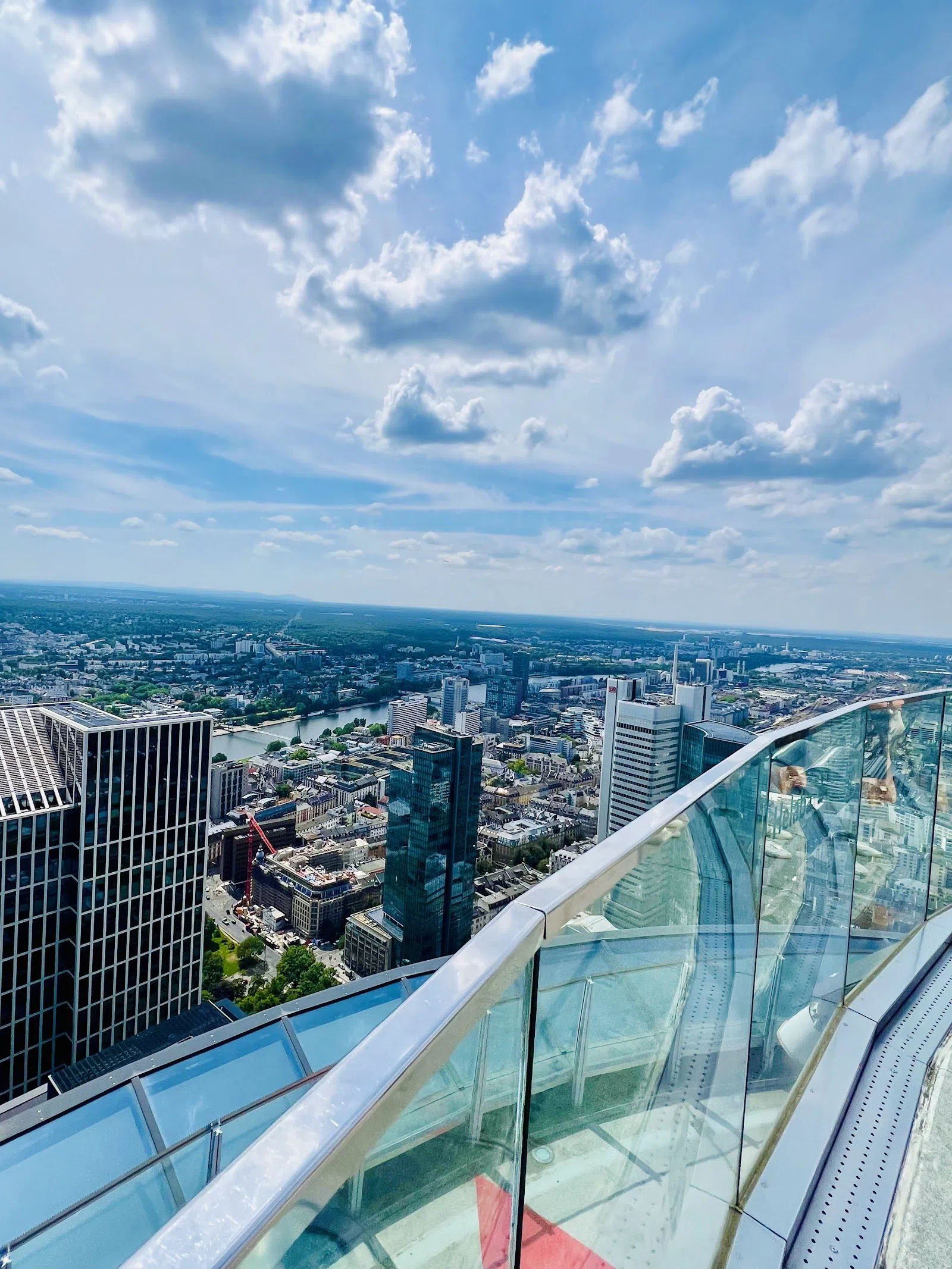
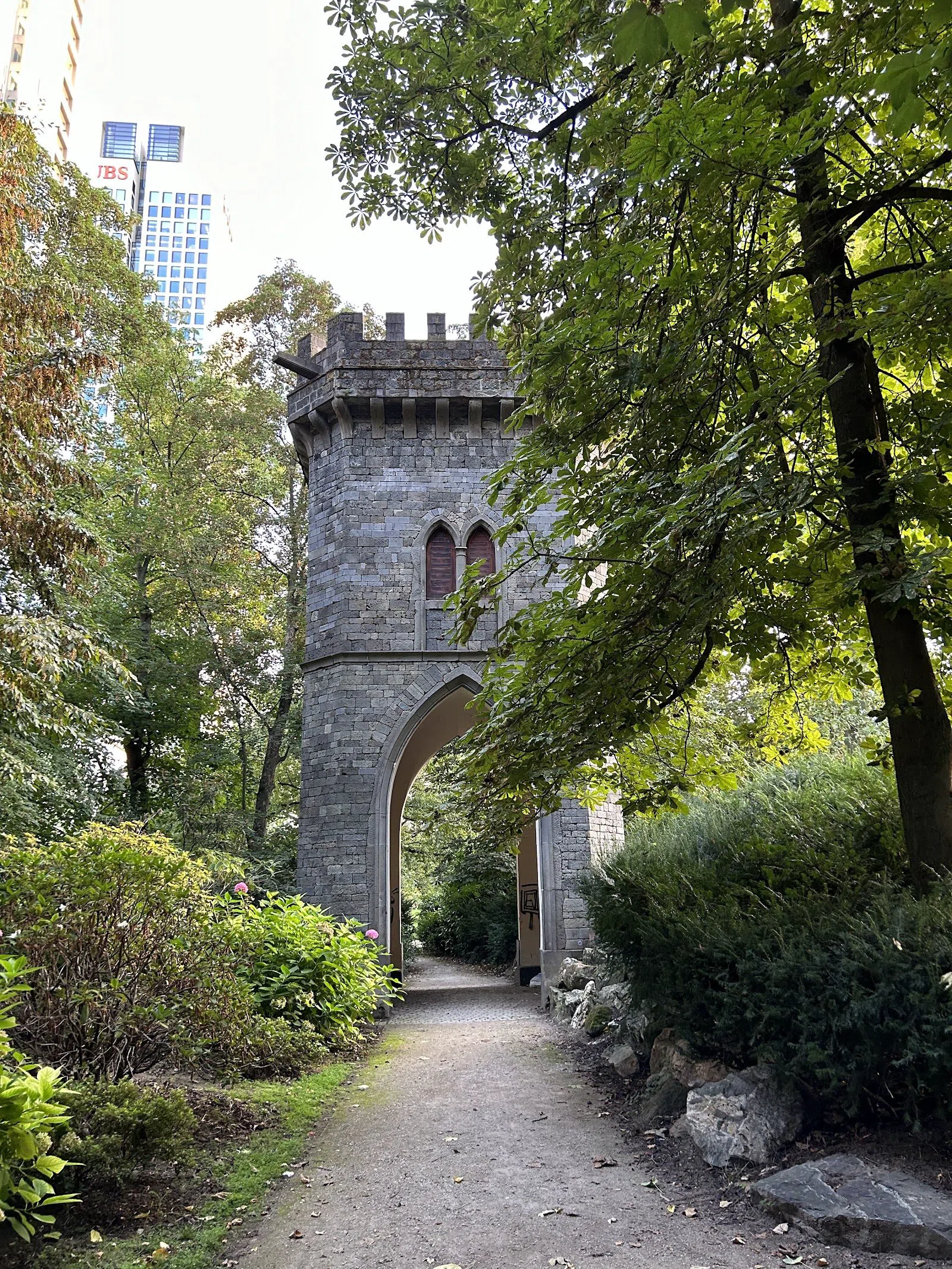
Three minutes the other way, Rothschildpark (Westend) is the best free place in the area to get old Frankfurt and the glass banking city into one frame. Laid out from 1832 on Rothschild land, with playgrounds if you have children in tow. Ten minutes south, the Main Tower Observation Deck (Bankenviertel) is the only genuinely high open platform in the city: €9 adult, €6 reduced, €20 family, with 20% off using the Frankfurt Card, and reduced and family tickets sold only at the on-site box office. Last ascent is 45 minutes before closing. In summer the deck runs to 21:00 Sunday to Thursday and 23:00 on Friday and Saturday, shorter in winter, so go late and watch the towers light rather than at midday.
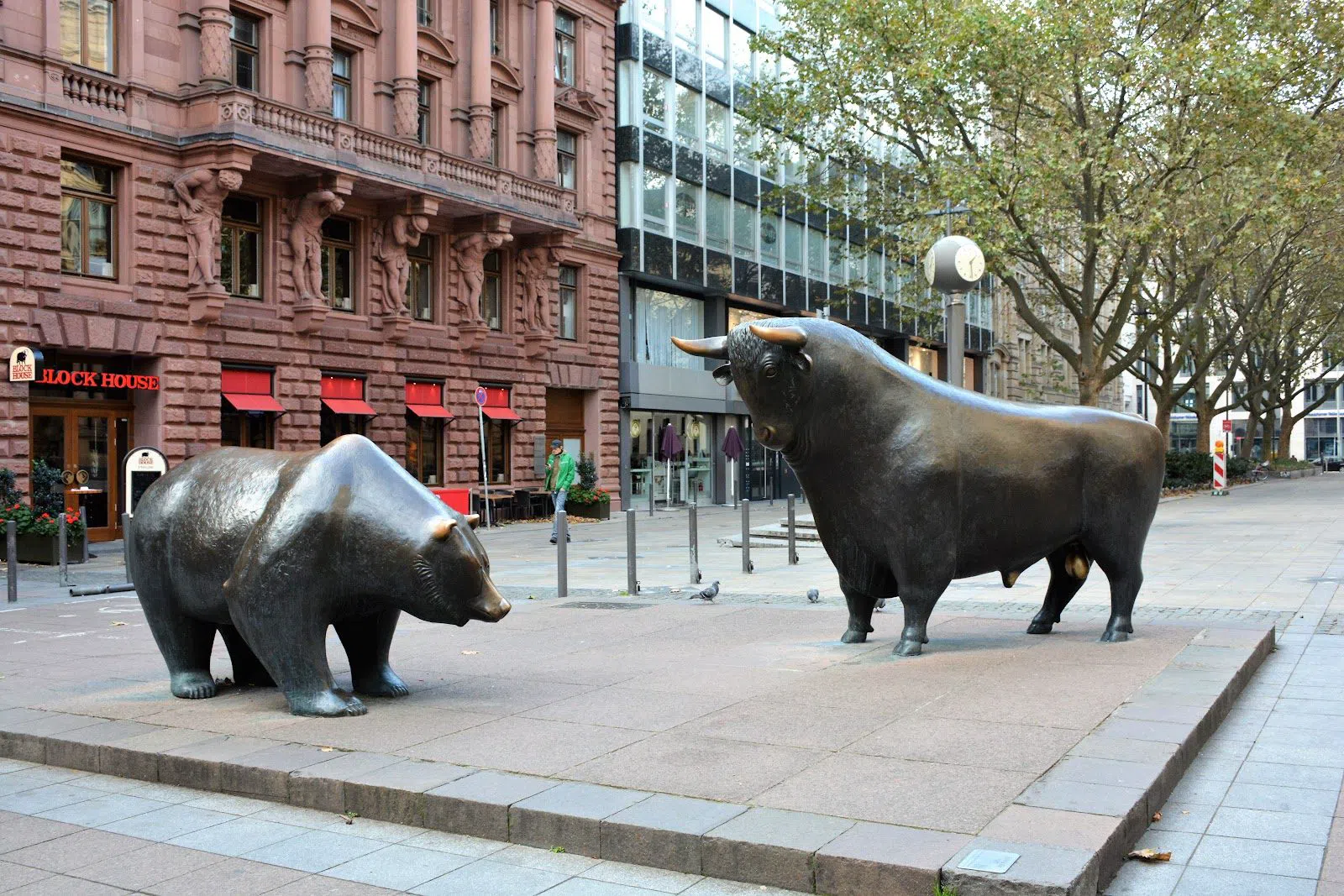
Five minutes from the square, Bulle und Bär at Börsenplatz (Innenstadt) explains why an opera house sits in a banking district. Cast by Reinhard Dachlauer in 1985 for the exchange's 400th anniversary, free and always accessible; expect to wait your turn for the photo, and note that the stock exchange itself has no public visitor gallery, so this is a street-level stop only. North-east, Eschenheimer Turm (Innenstadt) is the best-preserved piece of the medieval wall, now wrapped in a walk-in café-restaurant serving Flammkuchen, pizza and beer at roughly €10 to €20, with food running to 1am Sunday to Thursday and 3am at weekends. It is the area's late option.
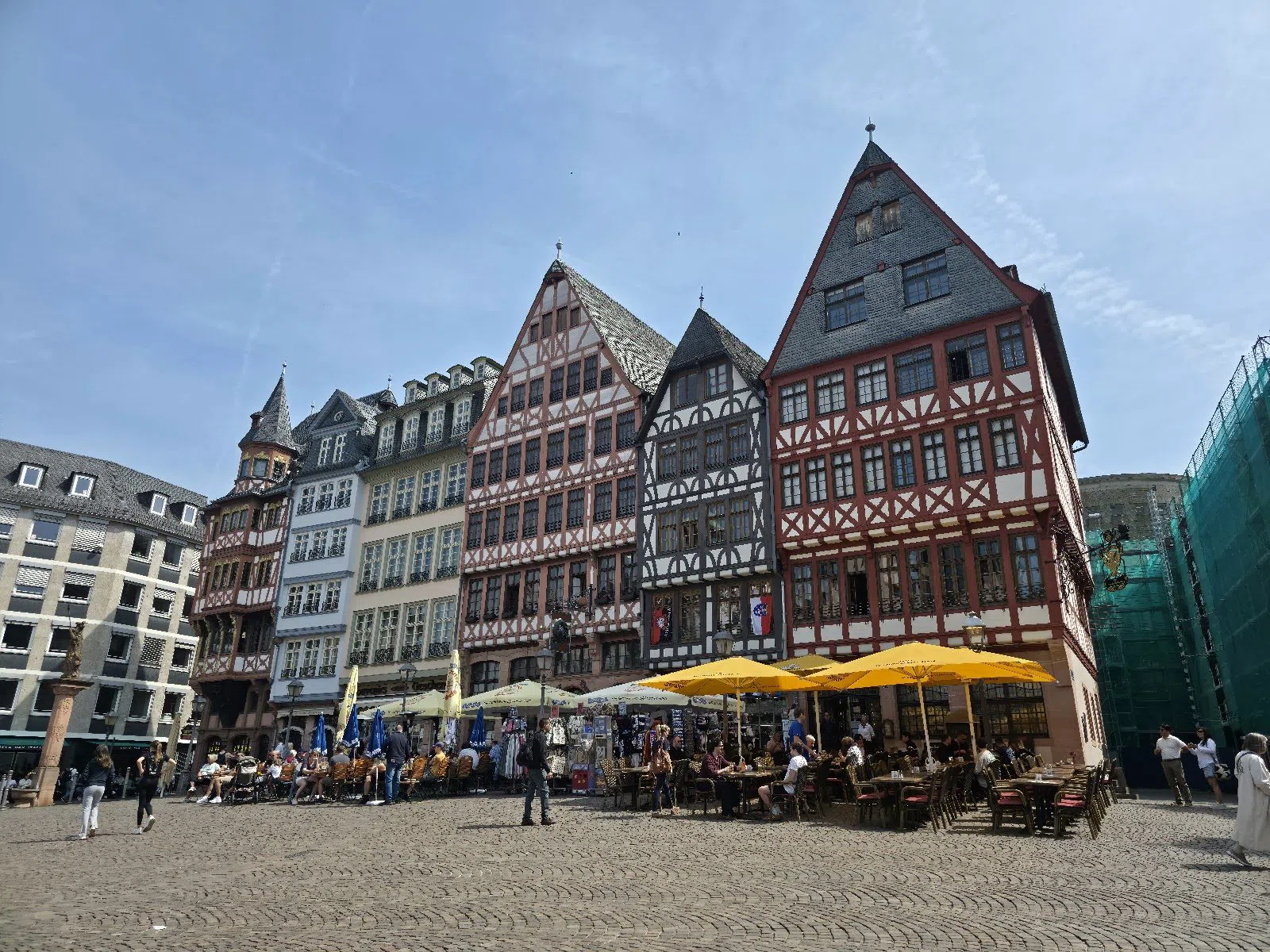
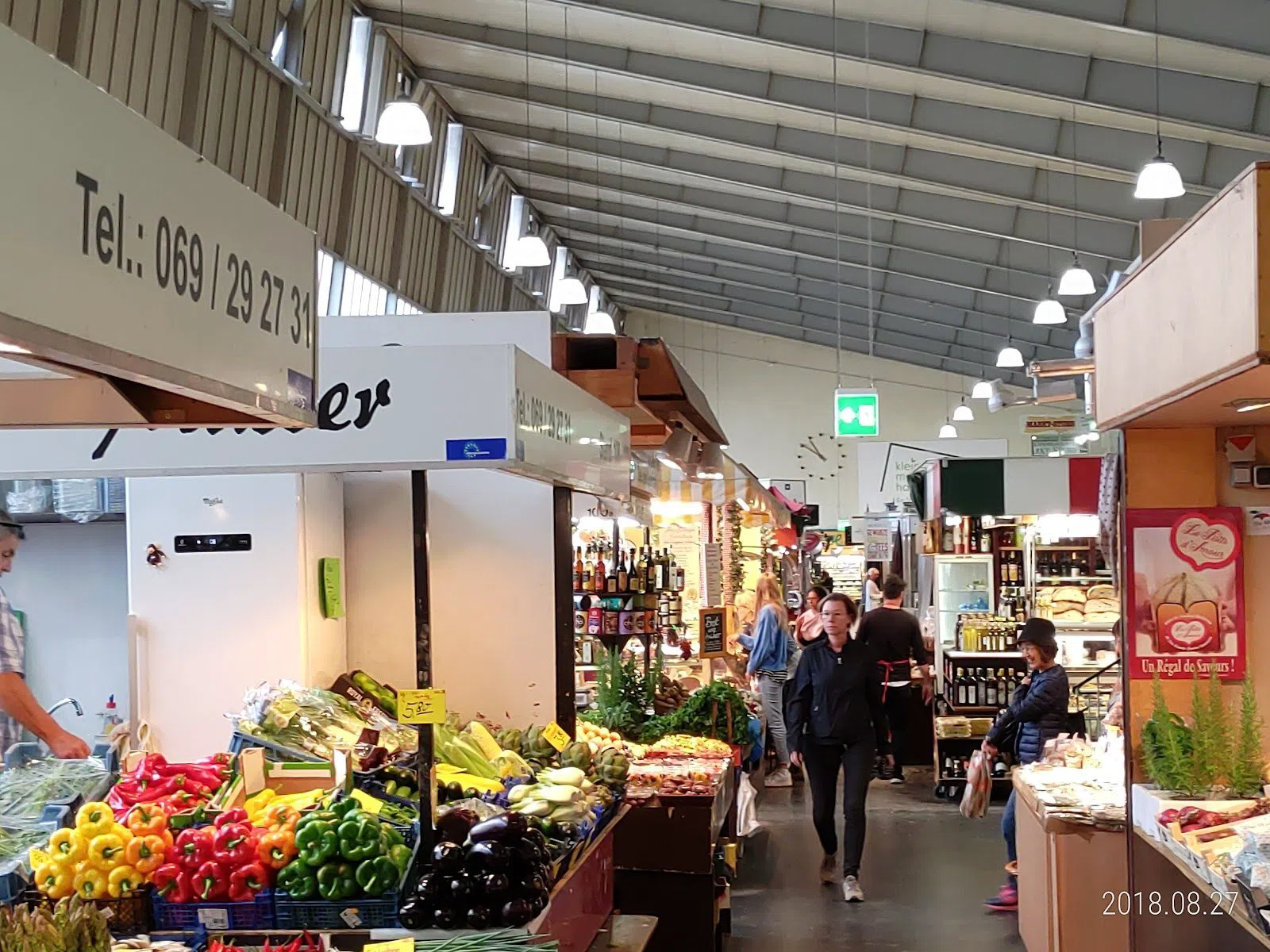
For lunch with no pretension, Kleinmarkthalle (Altstadt) is 15 minutes away: free to enter, snacks and sandwiches around €5 to €15, closed Sundays and public holidays, and shutting at 18:00 (16:00 on Saturdays). Aisles are narrow, so split a group rather than march it through; the upstairs Schlemmermarkt terrace suits a small party. Building work started in 2025 but the hall has stayed open throughout. Twenty minutes on foot, or a few minutes by U-Bahn, Römerberg with the Ostzeile (Altstadt) closes the loop: free to walk at any hour, with the Römer's Imperial Hall on its own access rules and civic closures. The Ostzeile is an early-1980s reconstruction, which is worth saying plainly rather than selling as original. More routes out of the centre are in the Frankfurt guide.
If the weather turns
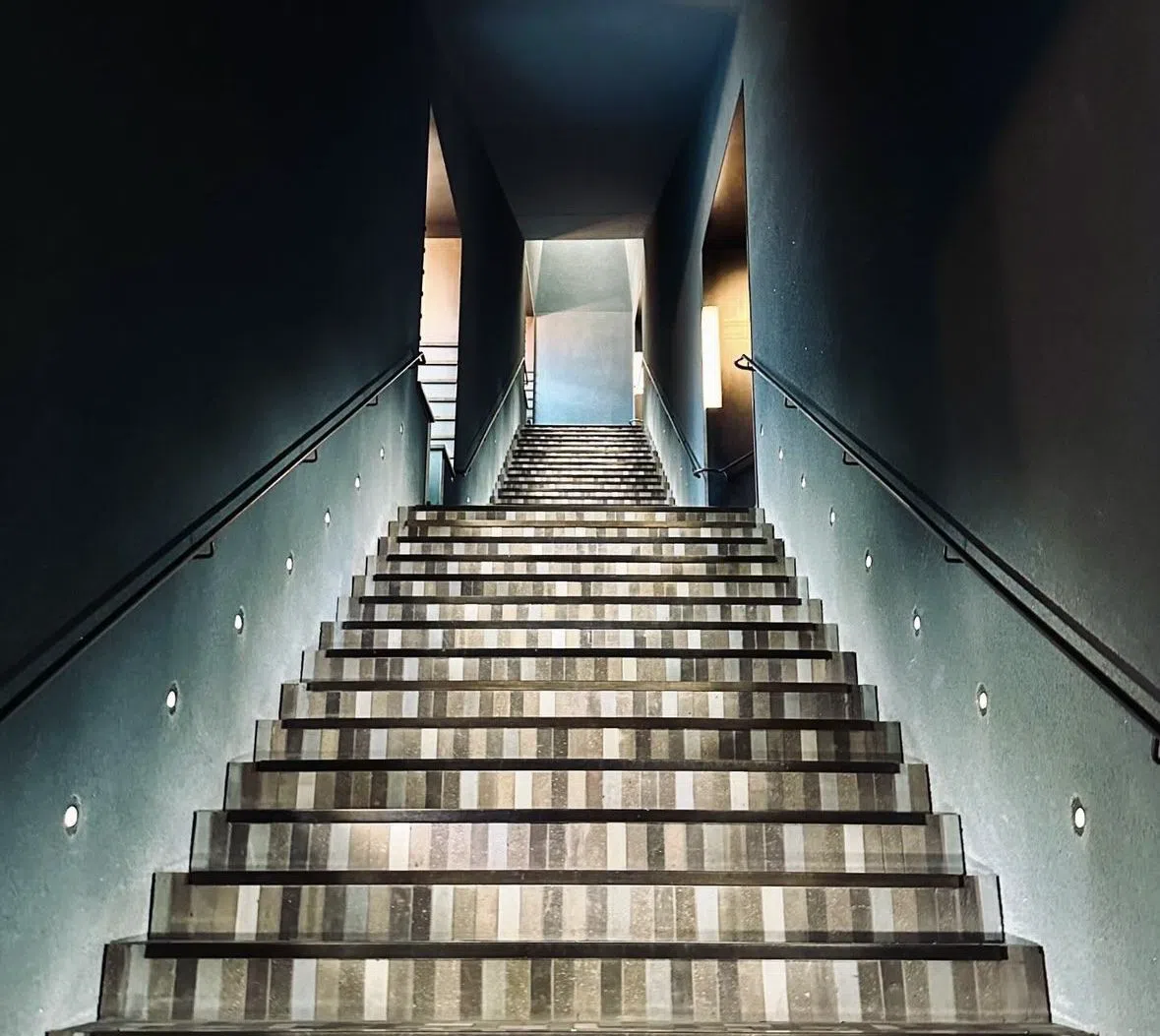
Deutsches Romantik-Museum and Frankfurter Goethe-Haus (Altstadt) is the indoor pairing that gives the opera house its cultural context: €12 standard, €15 with the special exhibition, €7/€9 students, family €18/€23. Tickets are sold at the box office on site only, with no online reservation, so a group should arrive early. It opens 10:00 to 18:00 most days and until 21:00 on Thursdays, which is the quietest slot in the week. Guided and group visits run through the Freies Deutsches Hochstift.
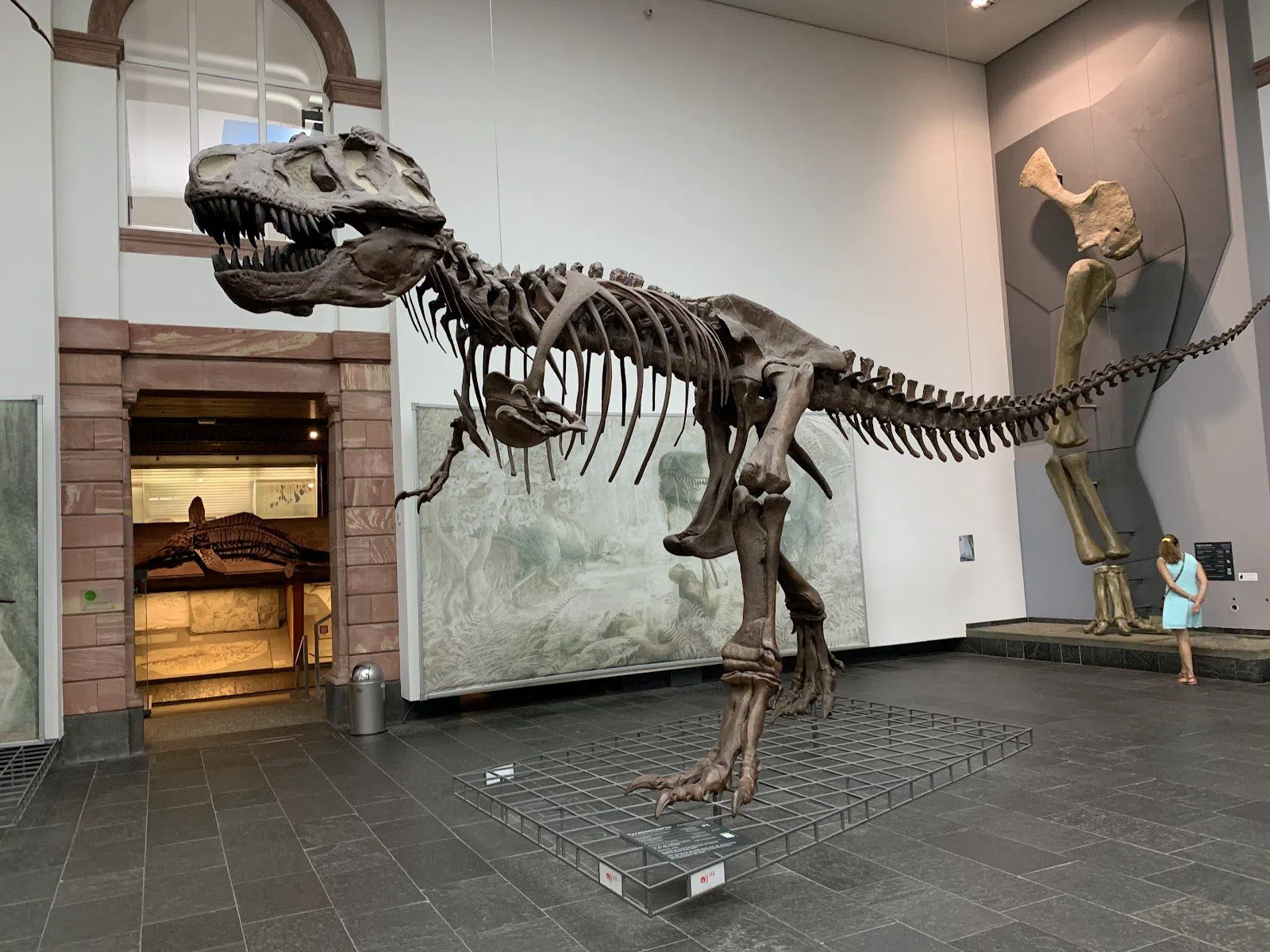
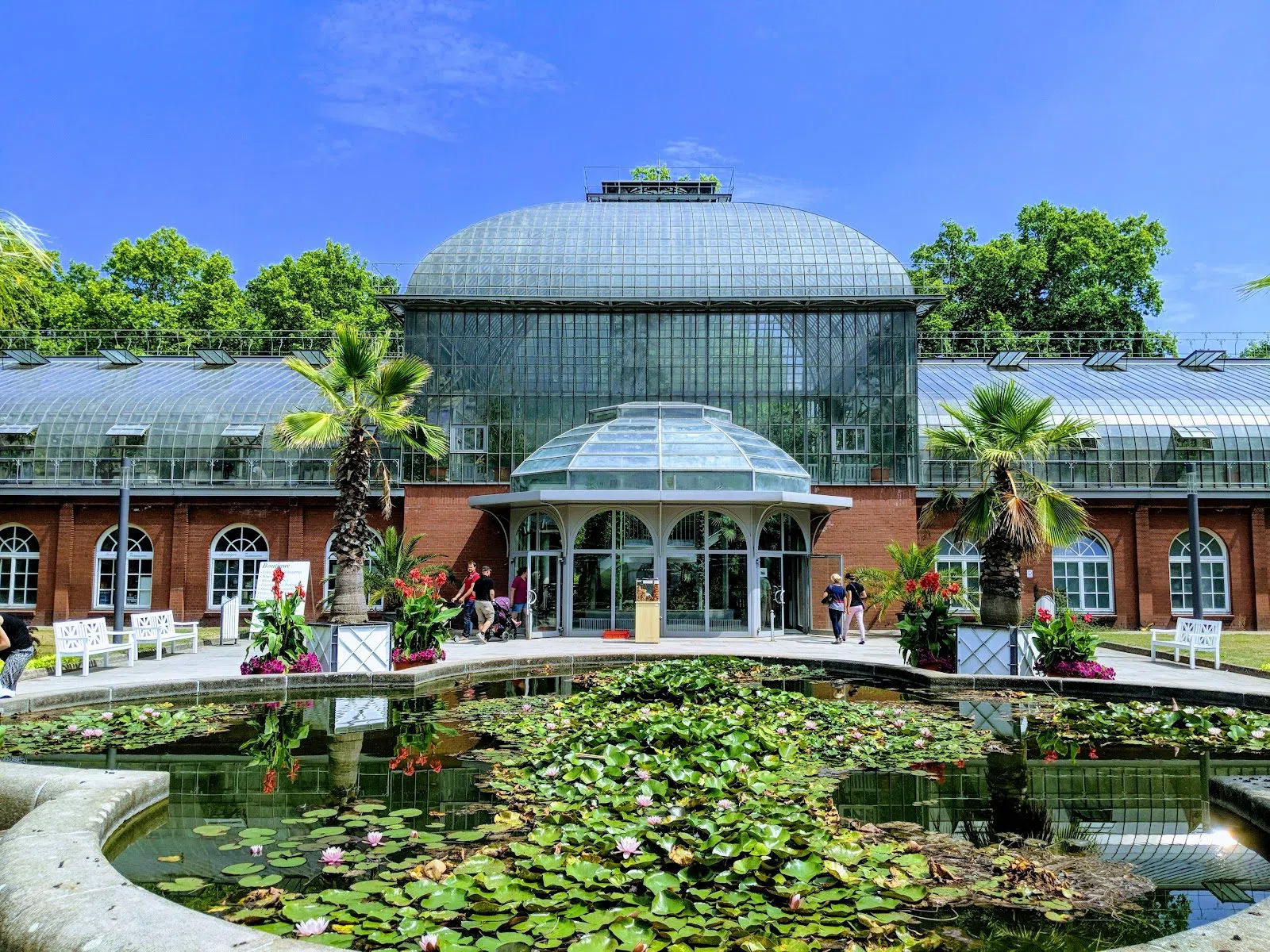
With children, Senckenberg Naturmuseum Frankfurt (Bockenheim, by the Westend) is the strongest wet-weather stop within walking distance: €12 adult, €6 for ages 6 to 17, under-6s free, family €30, open 09:00 to 17:00 on weekdays, to 20:00 on Wednesdays, and 09:00 to 18:00 at weekends. Step-free routes have been limited while the first-atrium lift replacement ran into October 2026, so check if that matters to you. If the sky clears instead, Palmengarten (Westend) is a 15-minute walk up through the villa streets: €9 adult, €5 reduced, under-18s free, a €5 after-work ticket from 18:30 on weekdays, €8 for groups of 20 or more adults, and free entry for wheelchair users and blind visitors. Open 09:00 to 19:00 March to October, 09:00 to 16:00 in winter.
Is it worth it
For anyone who cares about buildings, acoustics or postwar German history, yes. The €10 building tour is the best-value hour in the city centre, and the small group cap means you can hear the guide and ask a real question. For a general sightseer with two days in Frankfurt, the square, a coffee at the Operncafé and a walk down Freßgass give you most of what the opera house has to offer, and a concert ticket from around €20 gives you the foyers as a bonus on top of an evening out.
The private guided option is a different product. It suits a family or a small group who want a driver, a guide and the city stitched together in half a day, and who are comfortable with a start from 330 USD per person. It does not suit a solo traveller on a budget, and it is not a way into the opera house that the house itself does not sell.
Best time to go
Early morning for the square, when the facade faces into clean light and the steps are empty. Mid-April onward for the fountain, since the 2026 season here started on 15 April and winter means a dry basin. Weekdays if you want Restaurant Opéra, which closes at weekends apart from Sunday brunch, and not between 18 July and 4 August 2026. Evening for the inside: book the concert, arrive when the house opens an hour before, and skip the interval scrum. If you want the skyline as well, put the Main Tower after dinner rather than before lunch. Avoid planning a quiet dinner near Freßgass during the May festival week unless noise is the point.
Practical notes
The opera house has its own U-Bahn stop directly under the square, and Hauptwache, three minutes east along Freßgass, is the main S-Bahn interchange and the direct run in from the airport, so almost nothing here needs a taxi. Everything in this piece is within a 20-minute walk except Römerberg, which is a single short U-Bahn hop if your feet have had enough.
Cards are widely accepted, but carry €30 to €50 in cash for market traders, festival stands and small café bills. Build the budget from admissions: €10 or €11 for the building tour, €9 for the Main Tower, €12 for the Romantik-Museum, €9 for the Palmengarten, so four paid stops still comes in under €45 a head. Lunch is €5 to €15 in the market hall or €30 to €45 inside the opera house. The two timing rules worth writing down are the 15-minute stage-door deadline, which is enforced, and the 48-hour manual confirmation on the top private tour, which means it cannot be arranged on the day.
Innan du åker
Can you go inside the Alte Oper without a concert ticket?
Yes, in two ways. You can book a place on a behind-the-scenes building tour, with public dates open to anyone, or reserve a table at Restaurant Opéra inside the building, which serves lunch and dinner Monday to Friday plus Sunday brunch. There is no all-day museum ticket and no walk-in visit. It is a concert hall rather than an opera company, and the doors open an hour before each event and close again afterwards.
How much is the Alte Oper tour, and can I do it in English?
The building tour costs €10, or €11 for the English version. Public tour dates are open to all; for anything else, the house arranges group tours through its request form, minimum 12 people and maximum 20. English tours run by individual arrangement rather than to a fixed timetable, so ask for English when you send the request rather than assuming it on the day.
Is the Alte Oper tour suitable for wheelchair users or young children?
No on both counts. The behind-the-scenes tour is not wheelchair accessible, and it is not recommended for children under ten: the route runs through stairs and back-of-house areas rather than a flat gallery. With small children, Opernplatz and a terrace on the square work better, along with an indoor stop like the Senckenberg natural history museum, which has family tickets and is a short walk away.
How far ahead should I book a private guided tour that includes the opera house?
At least two days. The top-rated private option is confirmed manually by the operator, which can take up to 48 hours, so a same-day request will not go through. It runs seven days a week, so the lead time matters more than which day you pick. Prices start from 330 USD per person, against €10 for the house's own building tour.
When is Opernplatz quietest, and will the fountain be running?
Early on a weekday morning is the calmest the square gets, and the light on the facade is at its best then too. The Lucae-Brunnen runs only during the city's fountain season, and Frankfurt opened the 2026 season here on 15 April, so a winter visit means a dry basin. Midday looks crowded because walking groups muster here, but nothing on the square needs a ticket or a queue.