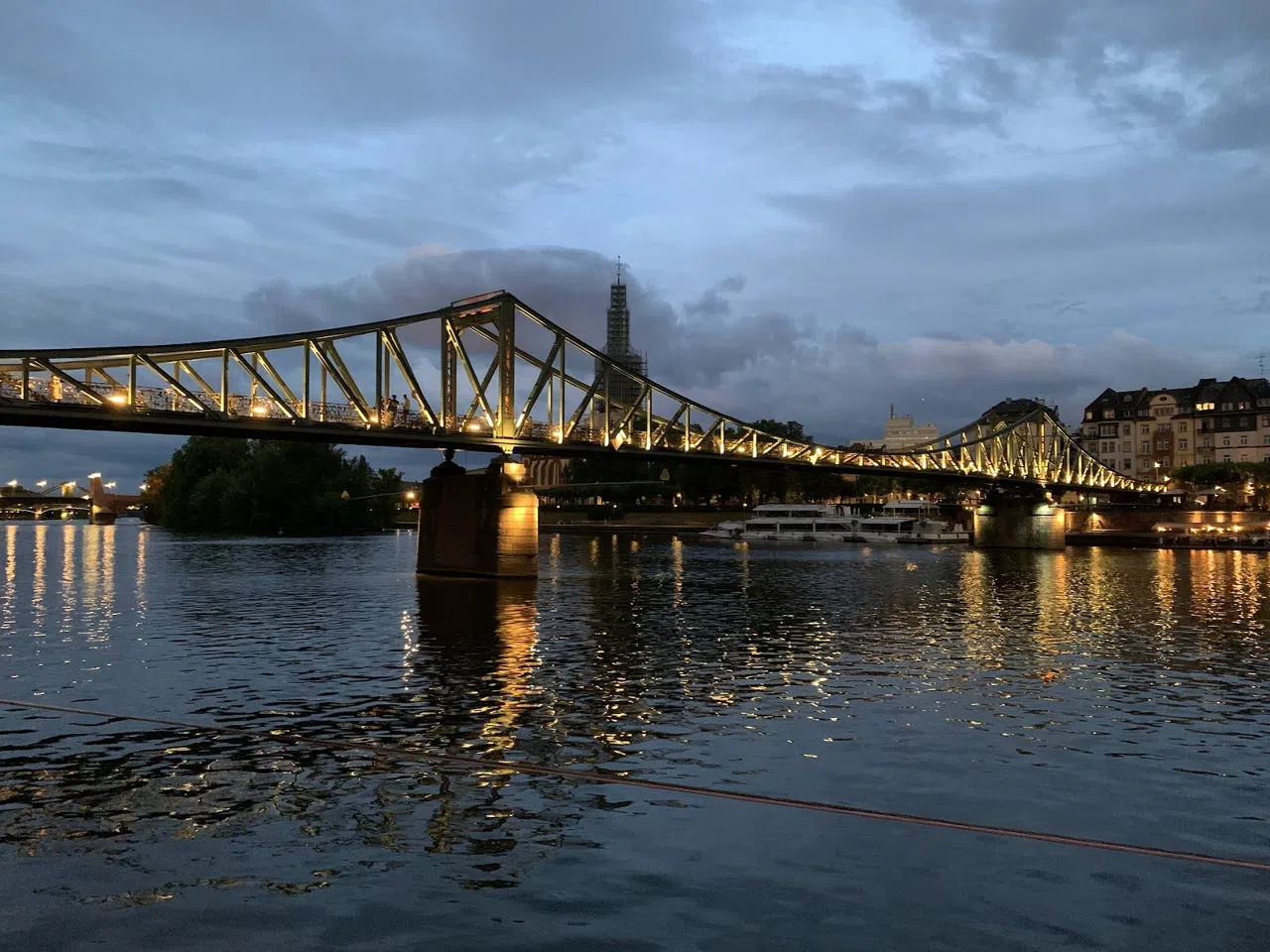

Stand on the Eiserner Steg (Altstadt/Sachsenhausen crossing) at seven in the evening and watch the light go copper over water that used to be Frankfurt's working spine — barges queuing for the Osthafen, cranes swinging cargo onto the quay, a whole city's goods moving because the river was the only road wide enough for them. That industry hasn't vanished; go far enough east and freight trains still rattle overhead. But the Main itself has quietly changed jobs, from infrastructure to backdrop, from a route goods took to a route people take — on foot, on a bike, in a canoe, or with a glass of Apfelwein in hand.
The bridges: where industry first let go
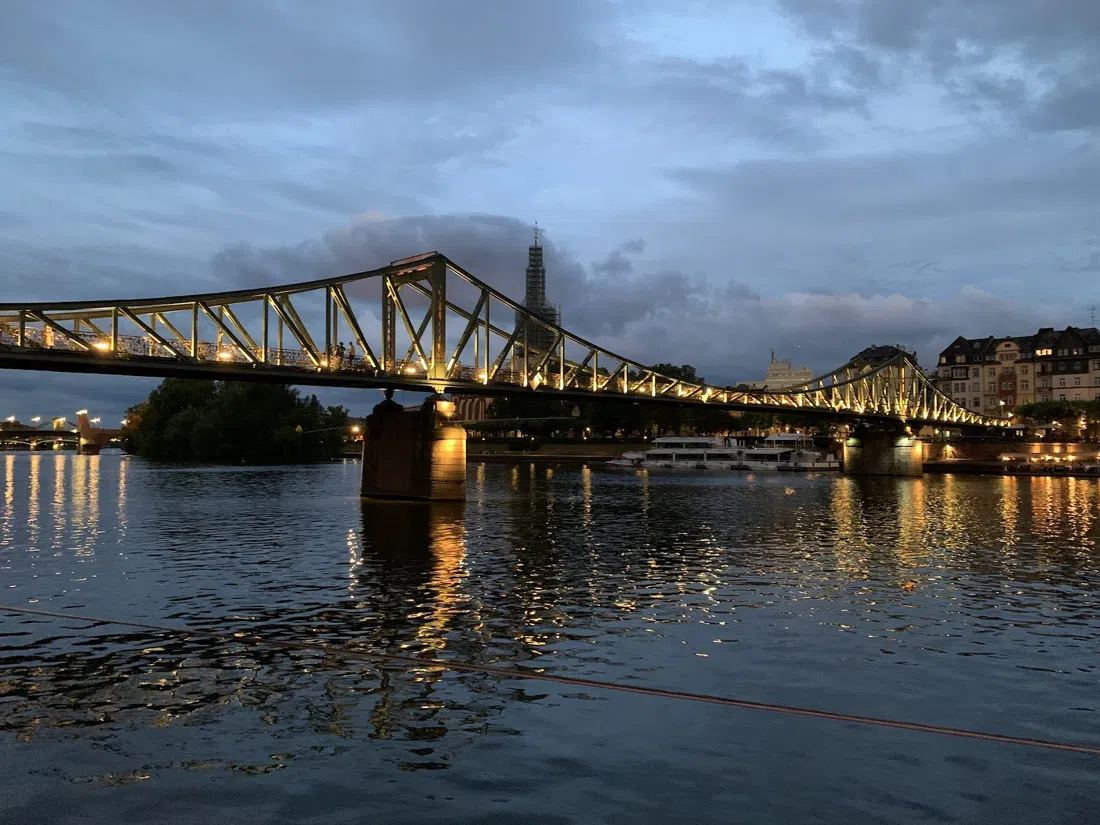
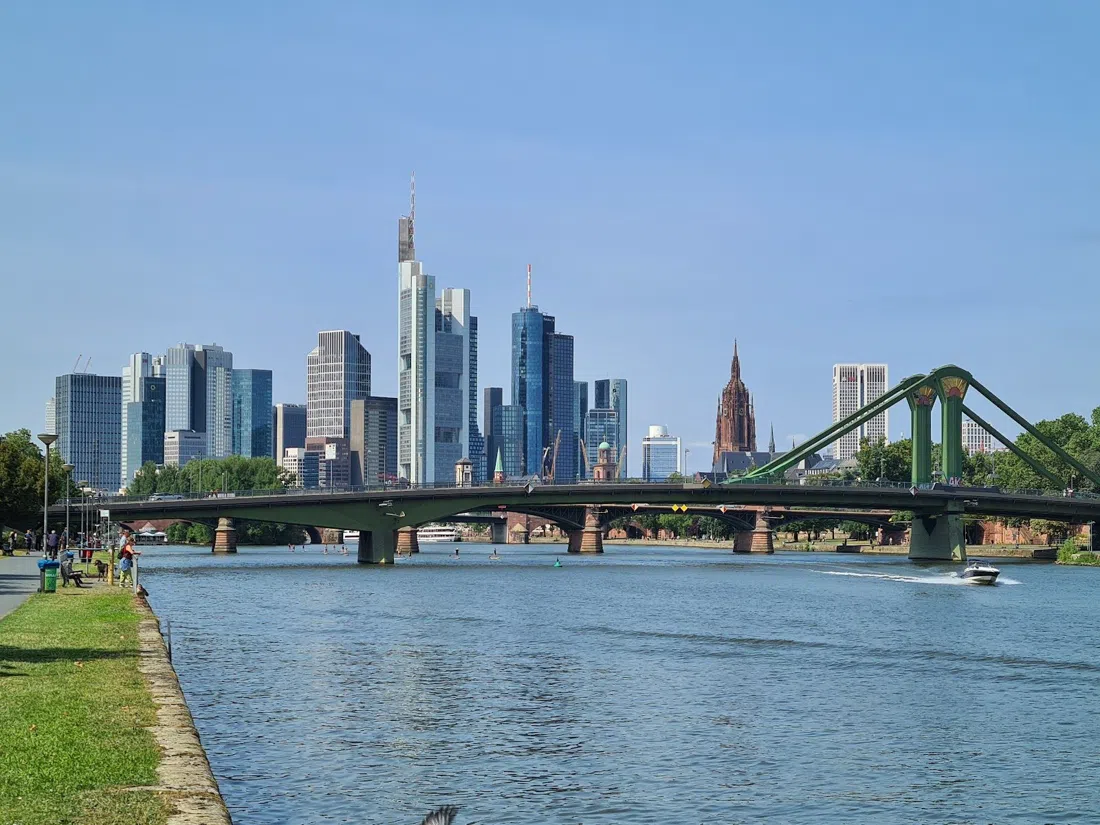
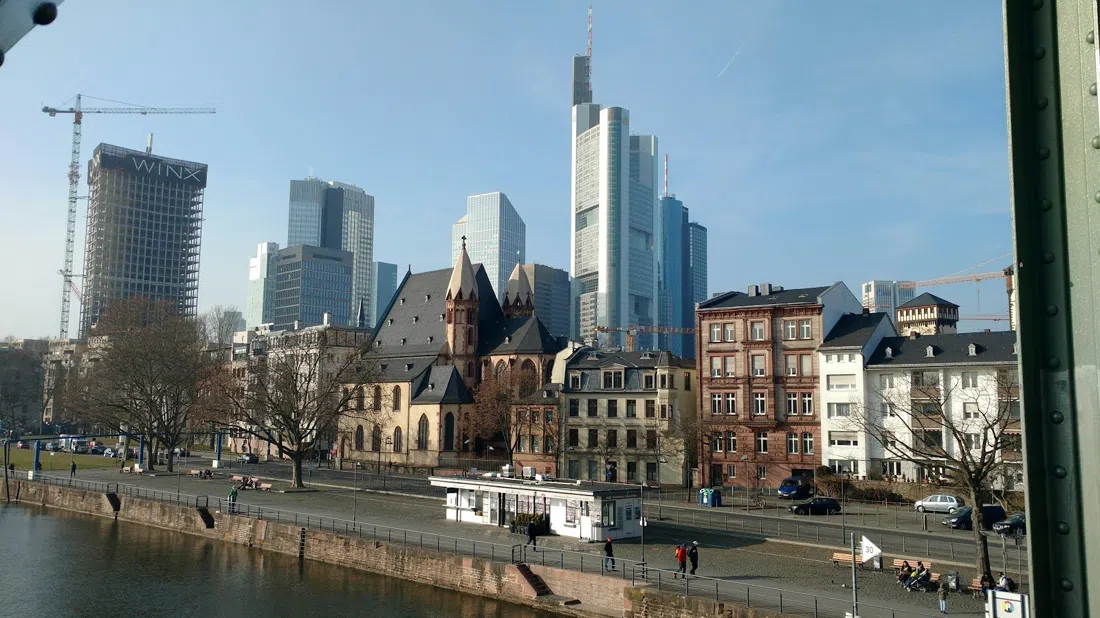
The Eiserner Steg is the image the whole piece keeps coming back to. Built in 1912 to get dockworkers and shoppers across the river without paying a ferryman, flattened in the retreat of 1945, rebuilt by public subscription the following year, it is now pure infrastructure with nothing left to carry but people standing still. No door, no ticket, no group cap — it holds a wedding party and a stag do and a lone photographer at the same railing without friction. Go at golden hour, when the sun drops behind the Römer skyline and the ironwork throws long shadows across the deck; go again after dark, when the love-locks catch streetlight. It's free, it's open all night, and it's the one stop on this walk you shouldn't skip even if you skip everything else.
A ten-minute walk upstream (west) gets you to the Holbeinsteg, near the Städel museum on the south bank. It went up in 1990 as a temporary replacement while the Eiserner Steg was under restoration, and nobody ever got around to taking it down — which is the quiet joke of it: a stopgap that outlasted its excuse and became a permanent fixture of the cyclist and pedestrian route along the embankment. Structurally it's less romantic than its older neighbour, a cable-stayed span rather than a Victorian truss, but it does the same job and does it without the crowds. Free, unpoliced, good for a quieter crossing when the Eiserner Steg is thick with tour groups.
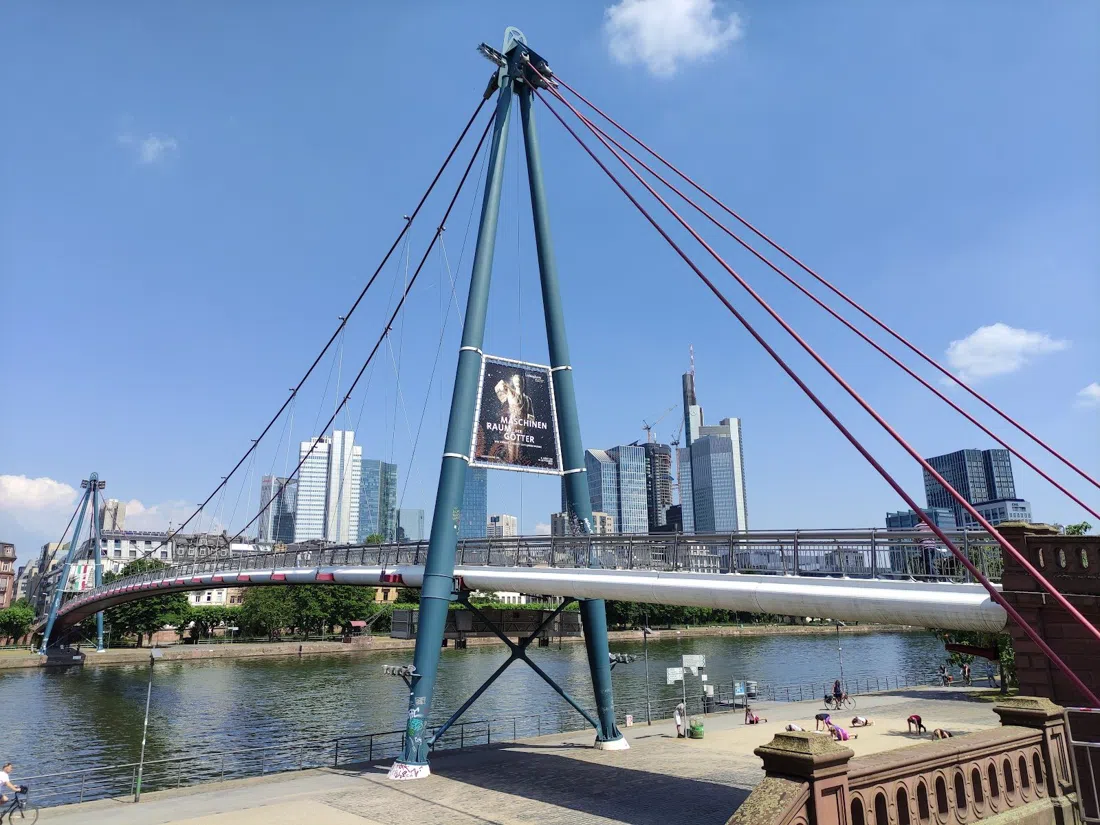
Head the other direction, east past the Museumsufer, and the story gets more literal. The Honsellbrücke & Osthafenbrücke (Ostend) once formed the harbour entrance for MAN-built barges working the Osthafen docks — a working gateway, not a promenade. Fully restored between 2011 and 2013, it's now a cyclist and pedestrian link and, of the whole set, the clearest single hinge between the Main's cargo past and its leisure present: you're standing on a structure that was engineered for freight tonnage, and its only traffic now is joggers and dog walkers. It suits a short group stop — five minutes, a photo, a look at the ironwork — rather than a destination in itself. Free, always open.
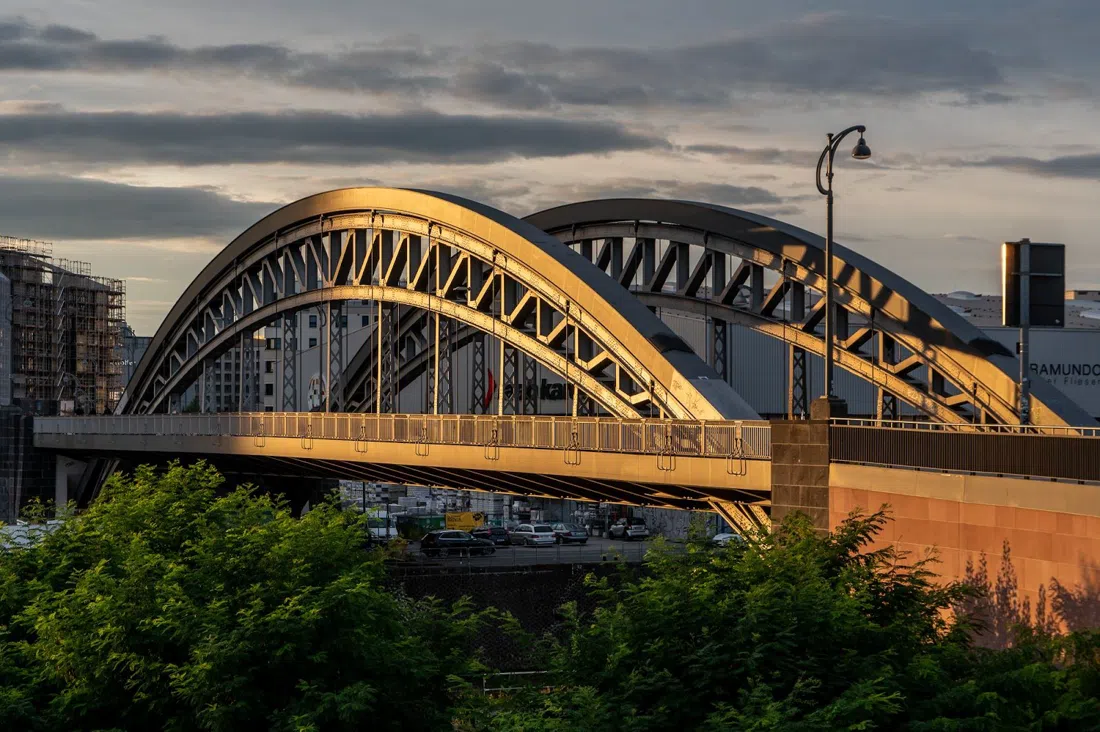
Further east again, the Deutschherrnbrücke (linking Sachsenhausen and the Ostend) is the one place on the river where the old job and the new job are stacked, literally, on the same structure. Freight and S-Bahn trains still cross on the upper deck; underneath, pedestrians walk through an ambient sound-art installation built into the lower level. It's become one of the more reliable sunset photography spots for groups precisely because nothing else on the Main puts industry and leisure in the same frame without a caption. Free, no booking, best visited in the last hour of daylight when the trains overhead are silhouetted and the sound piece is at its most atmospheric.
The reclaimed banks: parks where docks and yards used to be
Cross back to the south bank and you reach Nizza Park (Nizza-Gärten, Sachsenhausen), the oldest act of reinvention on this river by a wide margin. It's a nineteenth-century quay wall replanted with citrus trees and palms — a genuine microclimate suntrap that predates the current wave of Main-side leisure development by about a century and a half. If the thesis of this piece is that the river stopped being infrastructure and started being a park, Nizza Park is the proof that it happened here first. It's an open public garden: no booking, no gate, fine for a group picnic or a solo read on a bench, free to enter, best in the late morning before the benches fill.
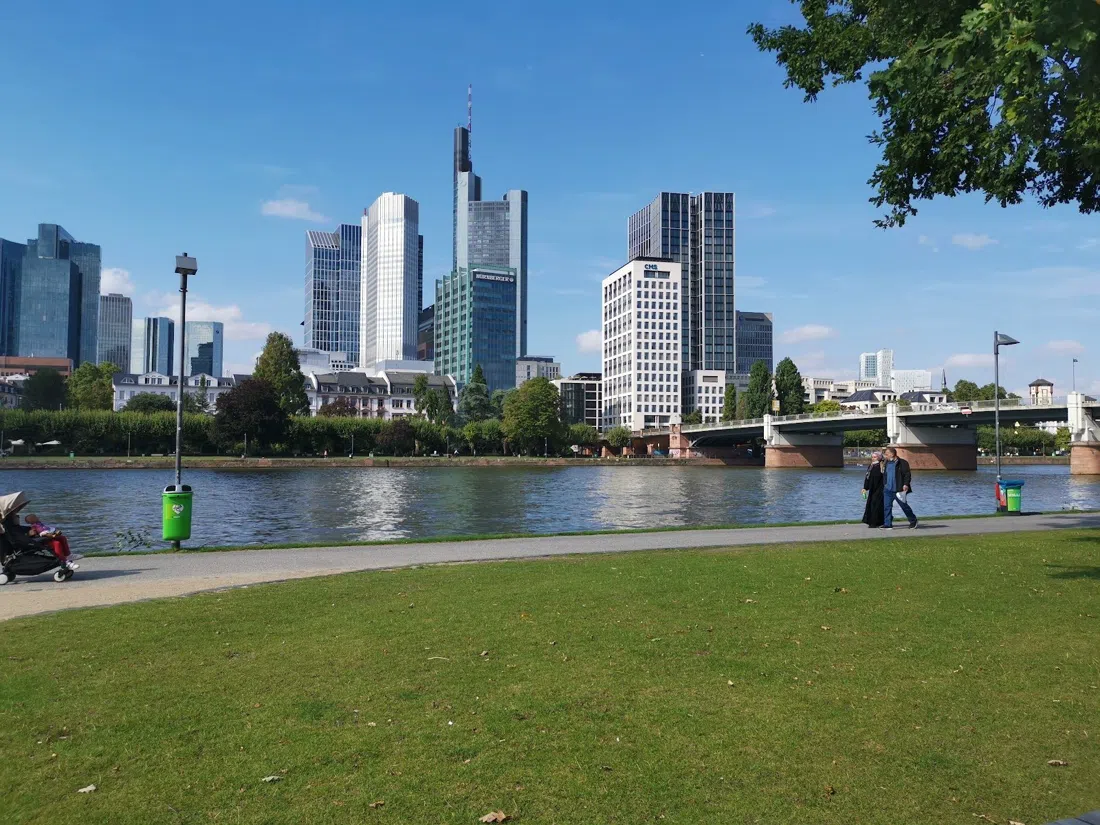
A few minutes further along, Deutschherrnufer (Sachsenhausen) does the same trick with a harder edge. Through the 1990s this stretch was a car park and a slaughterhouse yard; today it's open lawn running down to the water, used for football, for sunbathing, for people just sitting with their feet near the river. It's the most straightforward case in the whole feature of the bank being taken back from industrial use for daily recreation — no interpretive plaque needed, the transformation speaks for itself. Free, open, good for groups and families, busiest on warm weekend afternoons.
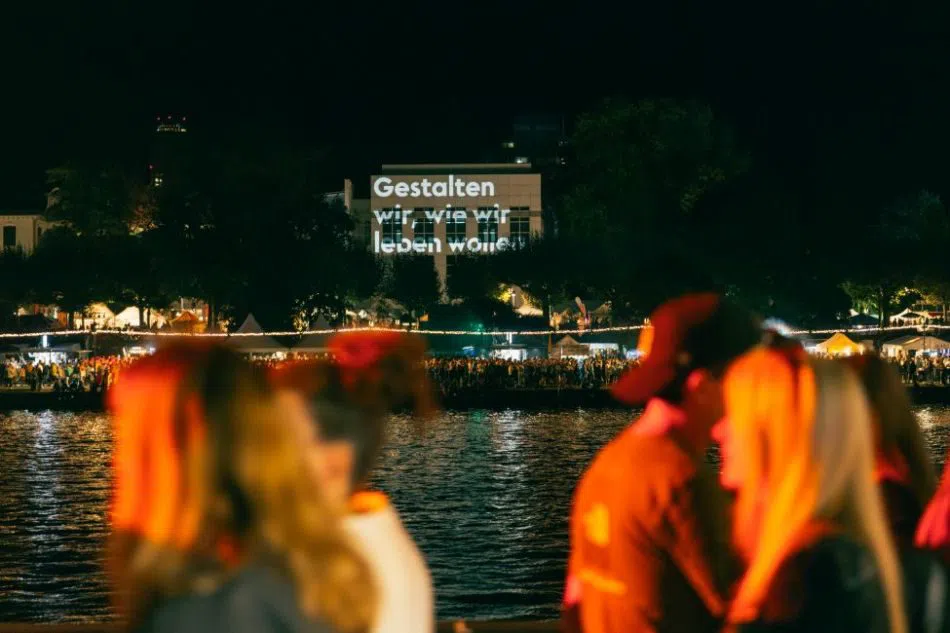
The biggest single act of repurposing on the river, though, is the Museumsufer (the south bank running roughly from the Eiserner Steg to the Friedensbrücke). What was warehouse and dock frontage into the 1970s was rebuilt from the 1980s onward into Europe's densest museum strip — the Städel, the Liebieghaus, the Film Museum and others, standing shoulder to shoulder along a promenade that used to be working quay. Walking the Museumsufer itself costs nothing and suits any group size; the individual museums run roughly €10–16 each, and a Museumsufer Card at around €24 covers a broad swing through them if you're staying more than a day. Go on a Saturday for the flea market that runs along the north-bank Schaumainkai side, or on a weekday morning if you actually want to get into the buildings rather than just admire the frontage.
The unfinished edge: Mainkai
Not every part of this story has a tidy ending, and that's worth saying plainly rather than papering over. Mainkai (the road along the north bank near the Römer) is the city's live, unresolved fight over exactly this transformation — a stretch of riverside street that campaigners want closed to cars and turned fully over to pedestrians and cyclists, and that keeps getting partially closed, contested in court, and reopened depending on the political weather in any given year. It's still a public street, still walkable by a group of any size, still free — but it's the one entry on this list that shows the process isn't finished. The bridges and the parks are done deals; Mainkai is the argument still in progress, and it's worth walking precisely because you can see, in the traffic cones and the temporary bike lanes, what the rest of the embankment looked like before it settled into its current form.
On the water: active leisure
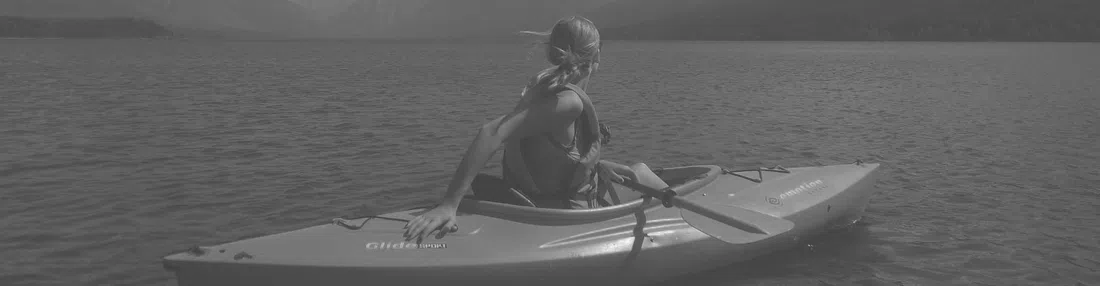
Everything so far is something you look at from the bank. The Frankfurter Kanu-Verein 1913 (FKV, based near Sachsenhausen) is the one place on this list where you get onto the water and do the river's old job in reverse — using it for movement, just not cargo movement. It's one of Germany's oldest canoe clubs, still training and racing a dragon-boat team on the same stretch that once carried barge traffic, and it takes groups, including dragon-boat sessions, though you should enquire ahead rather than turning up expecting a rental on the spot. Rentals run roughly €10–25 an hour depending on boat and duration. This is participatory leisure rather than a sightseeing cruise, and it suits people who want to feel the current rather than just photograph it — check ahead for water levels and club availability before building a whole afternoon around it.
Where to eat and drink along the bank
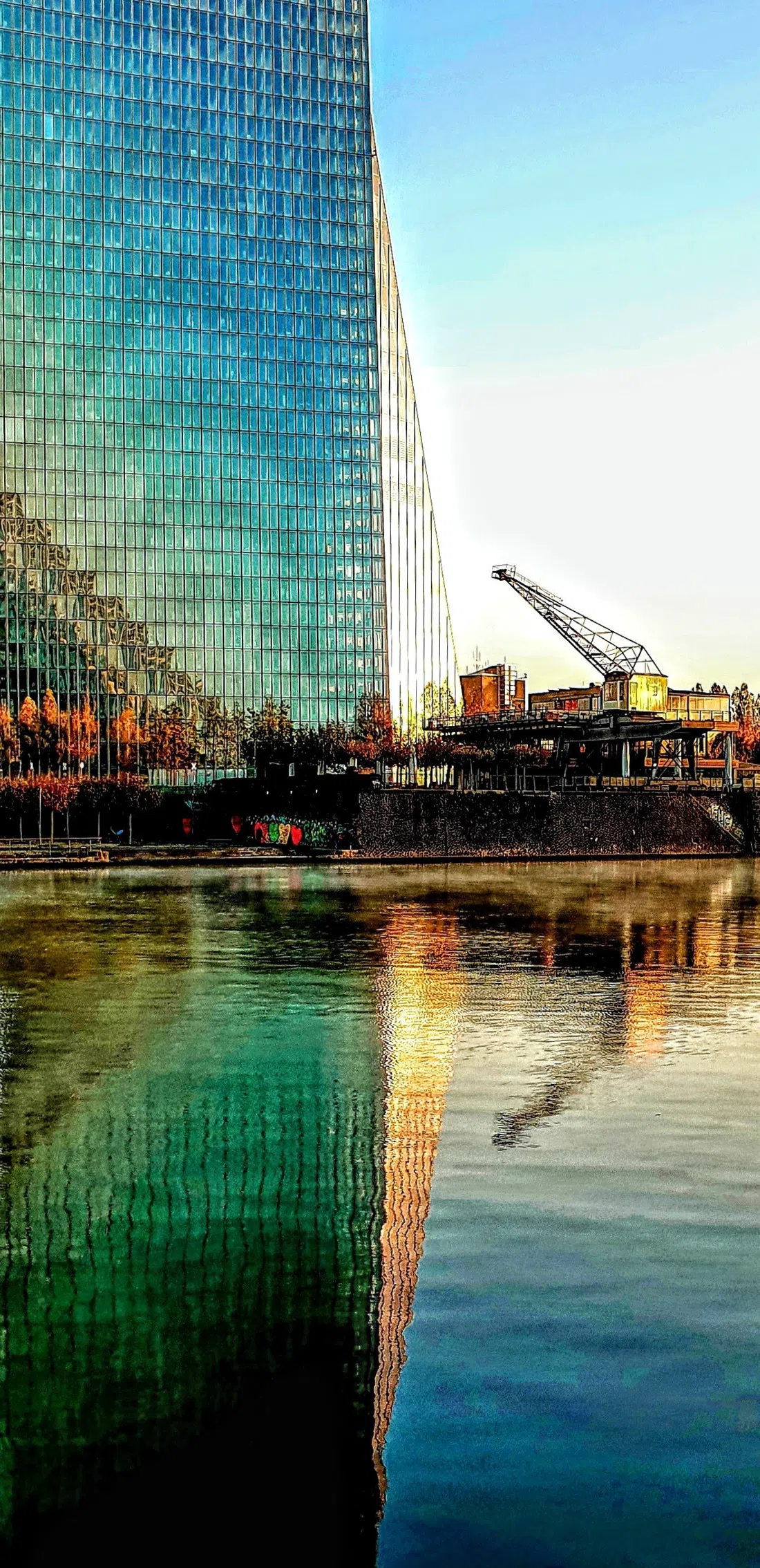
For the most on-the-nose visual of the whole feature, go to Oosten (Ostend, on the river near the Osthafen), a riverside restaurant and bar built around a literal cargo crane repurposed as the centrepiece of its terrace. It's hard to find a better single image of a working waterway turned leisure spine anywhere on the Main. The terrace holds around 160, and it does take groups, but book ahead for anything beyond a handful of people — the crane and the river view mean it fills fast on any evening with decent weather. Expect €€€: mains roughly €18–32, cocktails €12–14. It suits an evening out rather than a quick stop, and the door isn't strict but a booked table beats a walk-in on a Friday.
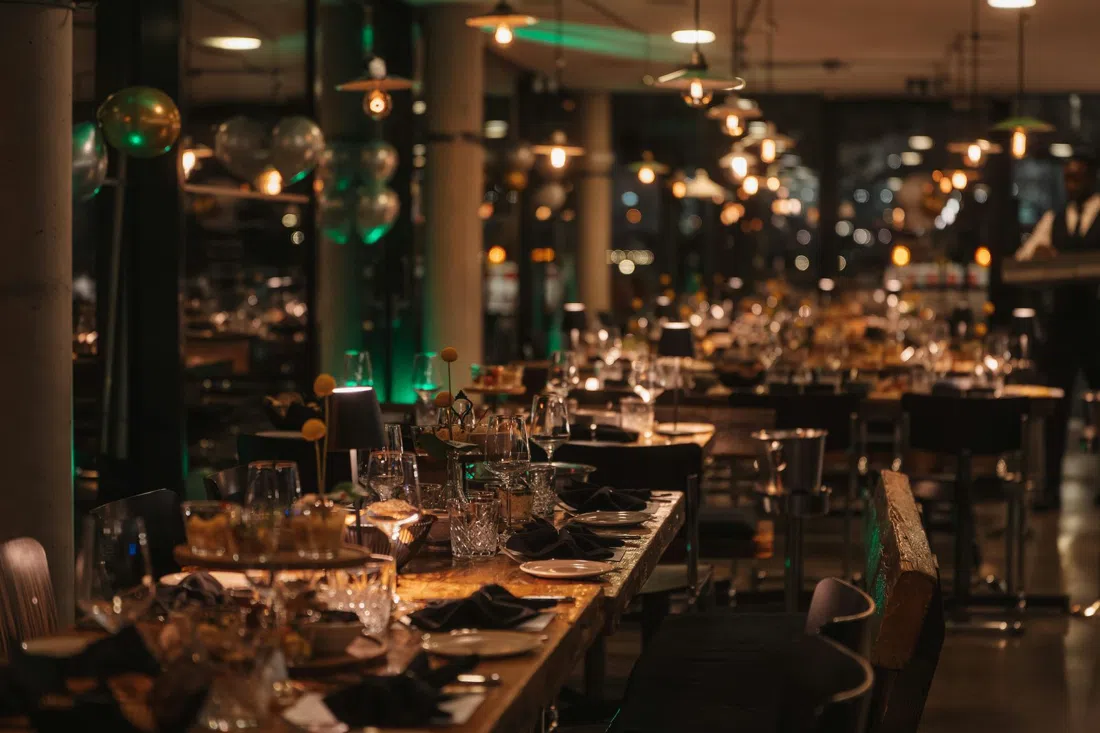
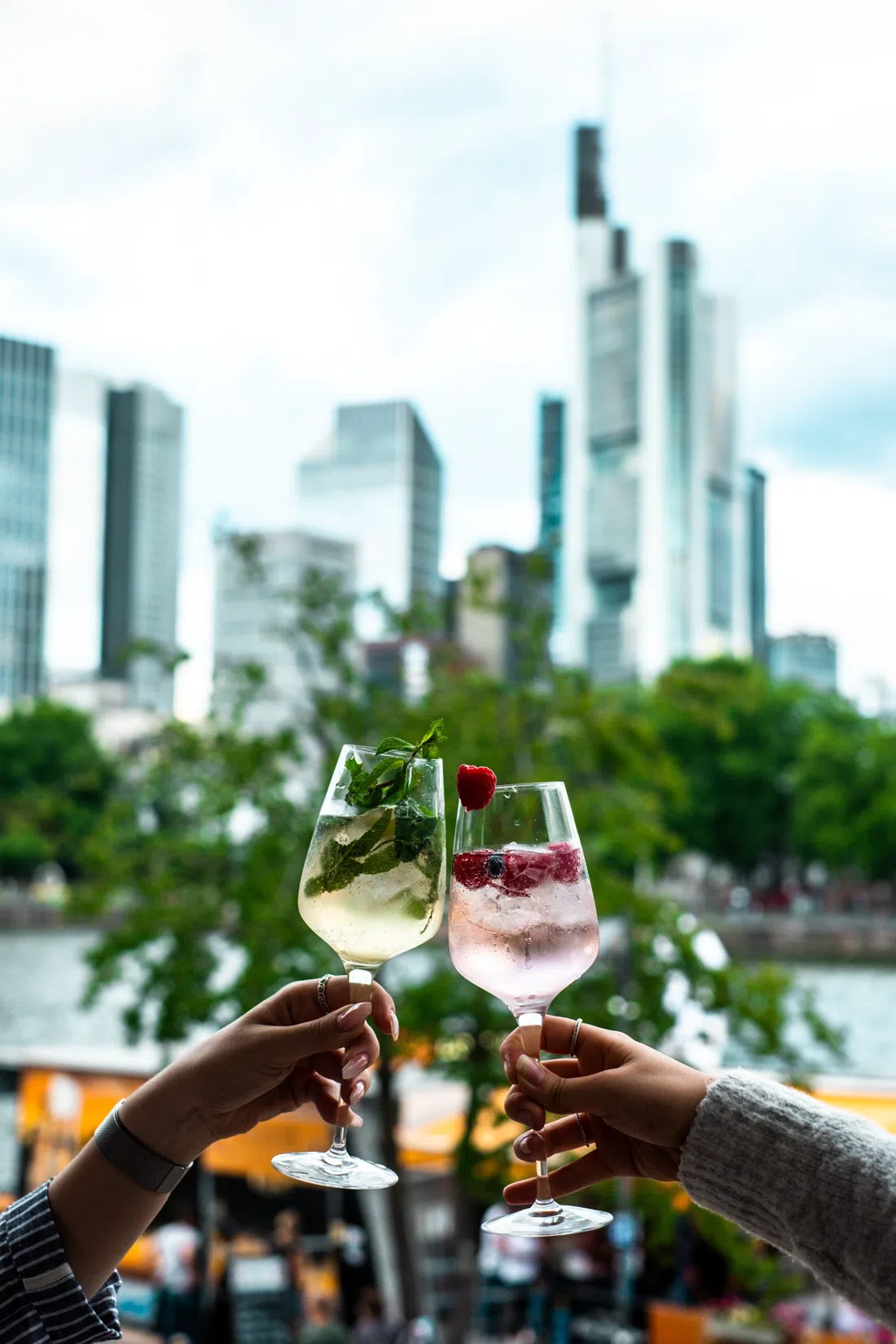
Closer to the centre, Main Terrasse (also trading as Open Sky Bar, on the quayside long known locally as Main-Strand) is a beach-bar-style lounge with walk-in seating that gets properly busy on summer evenings. Branding here has rotated before — this stretch of riverside pop-ups changes hands and names more than most, so it's worth checking what's actually operating on-site when you go rather than trusting a screenshot from last year. Groups are fine, no booking required, but arrive early on a warm evening or expect to wait for seats. €€: cocktails around €11–13, small plates €8–14.
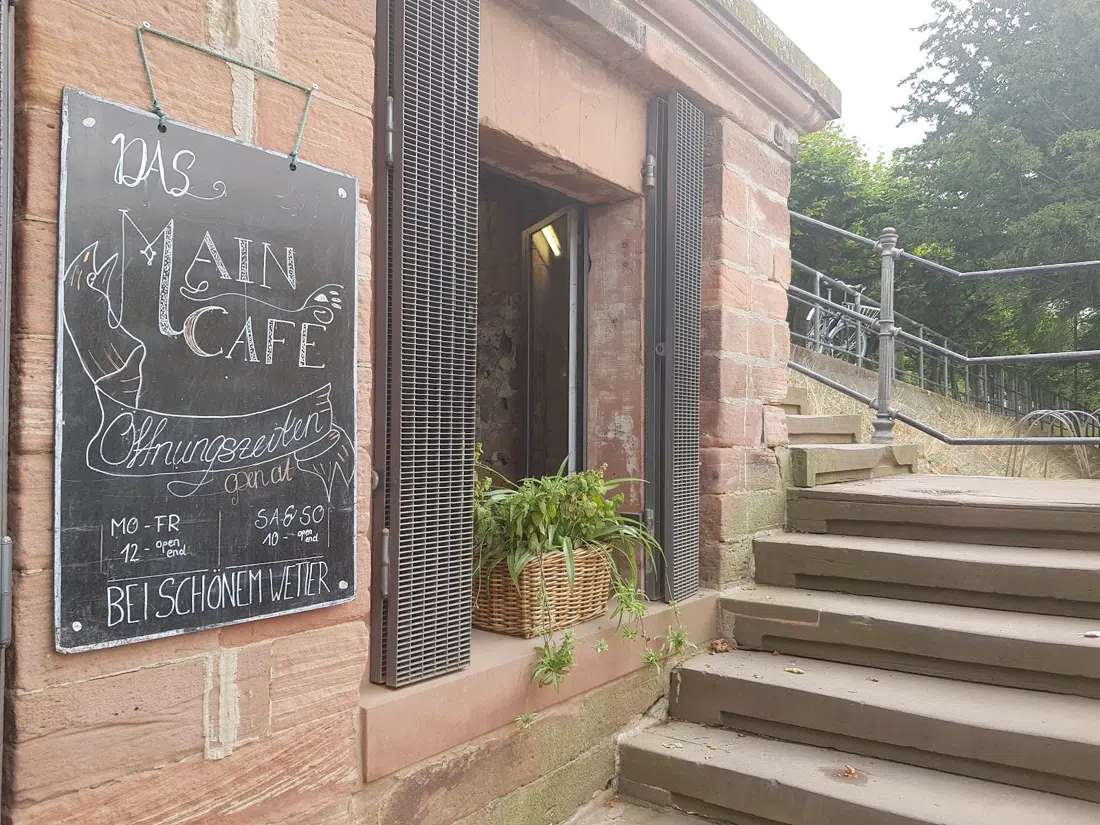
For something lower-key, Maincafé (riverside, central embankment) is a walk-in, casual café-bar that only really makes sense because the embankment stopped being a working quay — it's the kind of unhurried, all-day riverside hangout that industrial infrastructure never had room for. Groups are fine outside peak weekend afternoons, no booking needed, and it's a useful contrast if Oosten or Main Terrasse feel like too much production for what you want, which is just a coffee or an Apfelwein by the water. €: roughly €4–9.
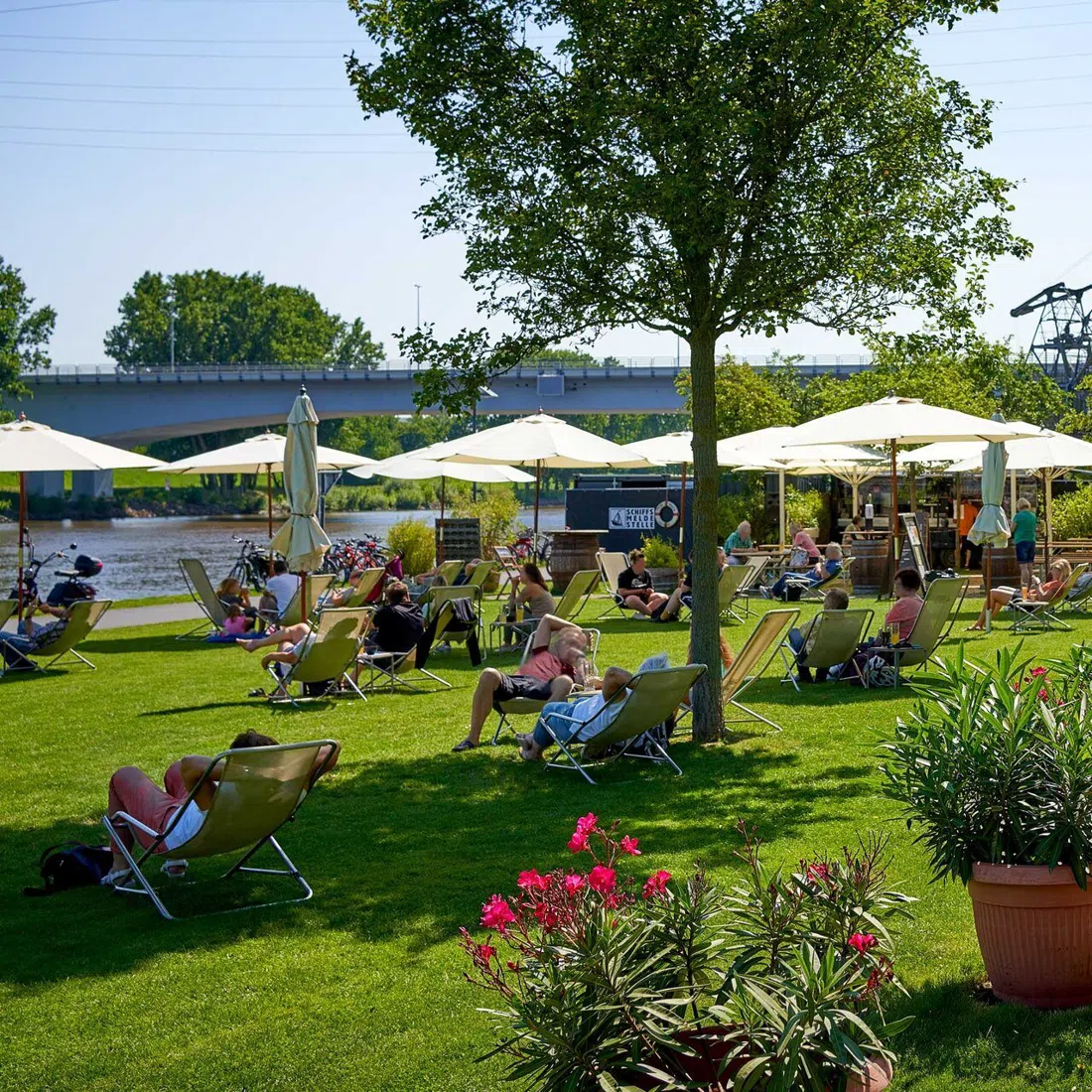
Out in Höchst, a district worth the extra tram ride specifically for this, the Schiffsmeldestelle (riverside, Höchst) is the most literal embodiment of this whole article's argument anywhere on the Main: a former river-traffic control post — the building that once managed barge movements — now running as a beach garden with drinks and snacks. It's seasonal, open roughly April to early October and weather-dependent, so check the site before you make the trip out. It takes groups and drinks/snacks run €€, roughly €5–15. If you only have time for one stop that makes the industrial-to-leisure argument without needing it explained, make it this one.
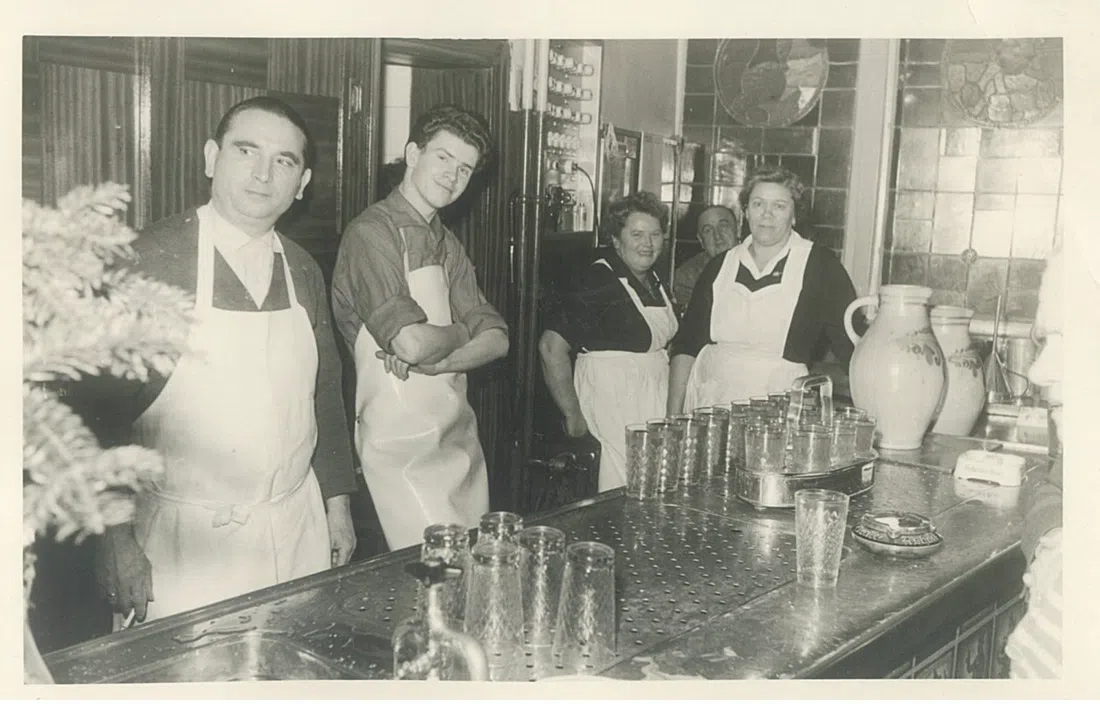
And for the human thread running under all of it, Zum Gemalten Haus (Sachsenhausen, a few streets back from the river) is the tavern where dockworkers actually drank. It's poured the same Apfelwein, from the same kind of stoneware jugs, since 1936, at communal tables where you sit next to strangers whether you like it or not. No booking needed for small groups, and it's the connective tissue between the old river-trade district and the waterfront crowds outside — the culture that grew up around the working river, still going after the work itself moved elsewhere. €€: mains roughly €12–20, Apfelwein about €2.50 for 0.3 litres.
Planning the walk: practical notes
Transport. The whole route described here — Holbeinsteg to Deutschherrnbrücke — is walkable in an unhurried couple of hours along the south bank, and the U- and S-Bahn both have stops within a few minutes of most of these points (Schweizer Platz and Lokalbahnhof cover the Sachsenhausen end; Ostbahnhof covers Oosten and the Osthafen bridges). Höchst, for the Schiffsmeldestelle, needs its own trip — take the S1/S2 out and treat it as a separate half-day rather than an add-on. Cycling is genuinely the better way to cover the full stretch from the Museumsufer out to the Osthafen bridges in one go, and the path is well surfaced the whole way.
Cash. Card is accepted almost everywhere on this list, including Zum Gemalten Haus, but Frankfurt's older Apfelwein taverns still run more comfortably with a bit of cash on hand for small rounds, and seasonal spots like the Schiffsmeldestelle can be slower with card machines on a busy evening.
Timing. Golden hour — roughly the hour before sunset — is when the Eiserner Steg and Deutschherrnbrücke earn their reputations; both are noticeably less atmospheric at midday. The parks (Nizza Park, Deutschherrnufer) are better in the morning before the crowds and the heat build. Riverside bars fill fast on the first warm evenings of the year, so if you're set on Oosten or Main Terrasse on a Friday or Saturday in summer, book or arrive before 7pm.
Budget. A full day covering the bridges, the parks, and the Museumsufer promenade costs nothing beyond transport and whatever museums you choose to enter. Add a paddling session with the FKV and an evening at Oosten or Zum Gemalten Haus, and you're looking at maybe €60–90 per person for a genuinely full day and night on the water — modest by the standard of what river cruises and water-bike rentals charge for a fraction of the access.
If you're planning the trip properly, start with a Frankfurt guide for the wider city context, and sort accommodation early — riverside-adjacent rooms near Sachsenhausen or the Museumsufer book out fast in summer, so it's worth starting a Frankfurt hotel search before you fix your dates.