
Six and a half square metres, eighteen aluminium drawers with RICE and SEMOLINA stamped into the metal, and cupboard fronts painted a cold blue-green because someone had decided that flies avoid the colour. Frankfurt fitted roughly ten thousand of these kitchens into workers' flats between 1926 and 1930, and the rest of the world has been buying a version of it flat-packed ever since. One of them is still in place in the flat it was built for, on a curving street of white terraces in the north-west of the city, and you can walk in on a Tuesday morning for €6.
The five years that changed the kitchen
In 1925 the city hired Ernst May as its planning chief and handed him something close to a free hand over a housing shortage that had turned into a scandal. In five years he put up around twelve thousand flats. The programme was called Neues Frankfurt and it had its own magazine, its own typeface and its own colour system, and the ambition ran all the way down from the site plan to the drawer pulls.
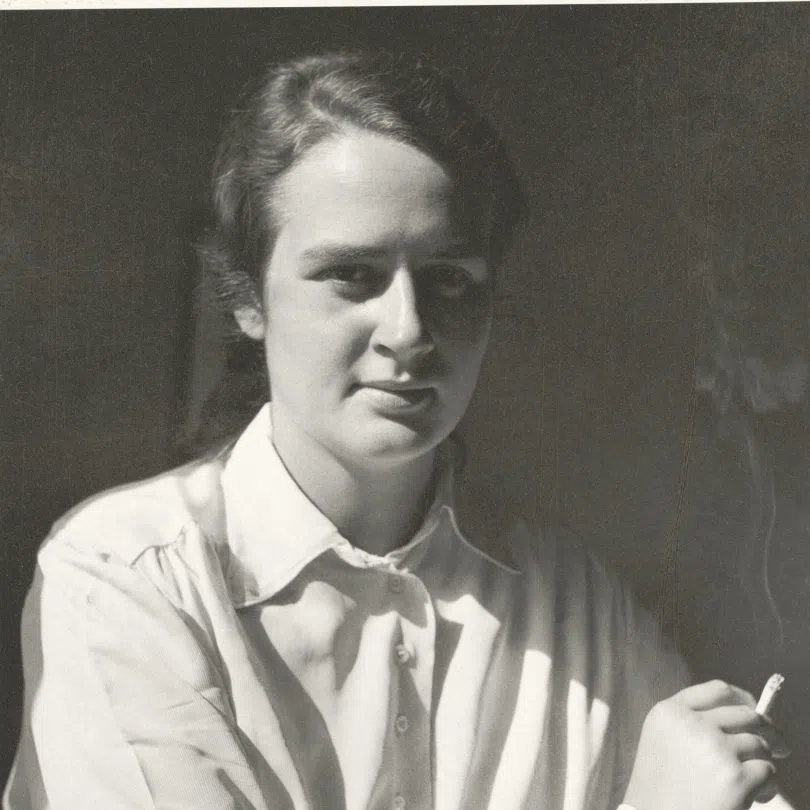
The kitchen came from Margarete Schütte-Lihotzky, an Austrian architect in her late twenties when she drew it. She worked from the galley of a railway dining car: a narrow room where one person can reach everything without walking, because walking is time and time is money nobody in these flats had. She timed steps. She fixed the worktop height, ran the sink, stove and preparation surface in one continuous line, hung a drying rack above the sink, folded an ironing board into the wall and put a revolving stool at the centre so the cook could pivot rather than pace. It was cheap enough to install as standard, and small enough that it had to be a separate room.
That last point is the argument the kitchen started and never finished. By turning cooking into an efficient workroom sealed off from the living space, the design also sealed off the person doing the work, and everyone involved assumed that person was a woman. Schütte-Lihotzky lived to 103 and grew visibly tired of being asked about a kitchen she had drawn in a few months as a young woman. Frankfurt's museums no longer duck any of this, which is what makes the trail worth a day rather than a photograph.
A morning on the south bank of the Main
Museum Angewandte Kunst (Sachsenhausen, on the river at Schaumainkai) is the obvious first stop and the one place that puts the object in front of you as a designed thing rather than a curiosity. Through 2026 it doubles as the central WDC Hub for World Design Capital Frankfurt RheinMain, so there is walk-in programming all year on top of the permanent story. Entry is €12, €6 concessions, and free on the last Saturday of the month, which is the cheapest day to run this itinerary if you can time it. There is no door policy: school parties and group tours go through the education desk, and a couple can just turn up.
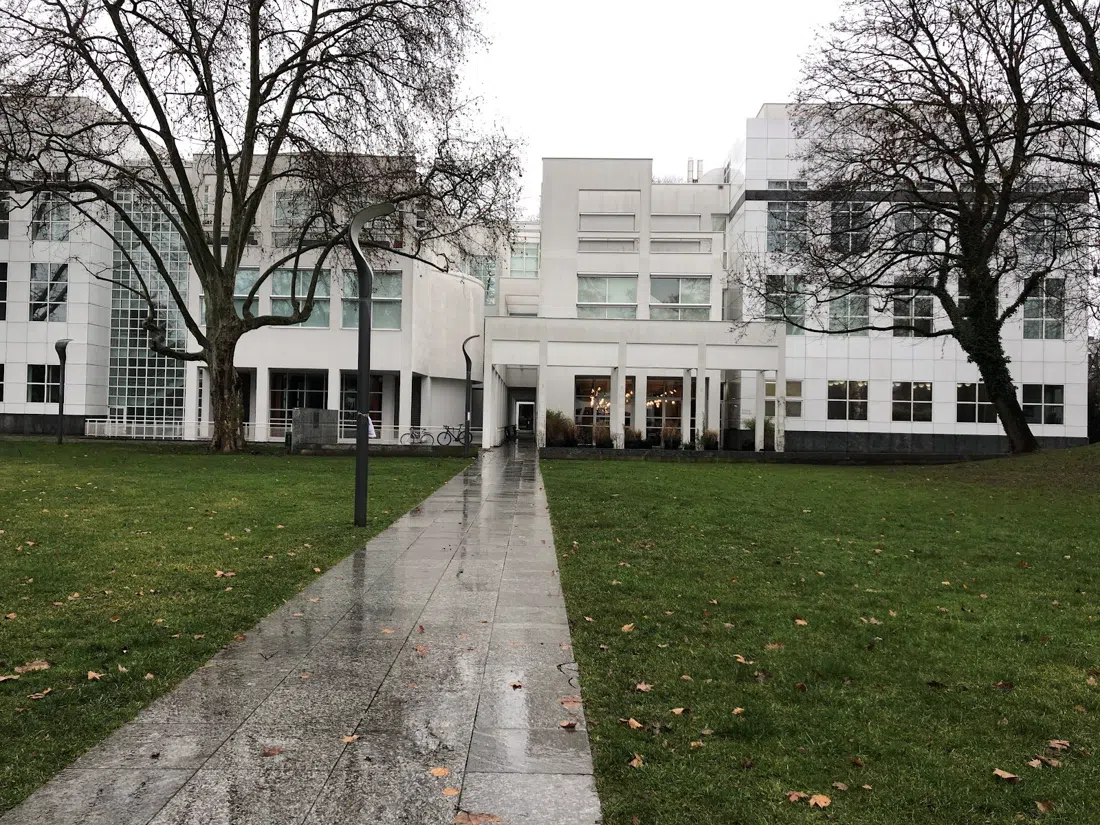
Lunch is unusually easy here, because Restaurant Emma Metzler (Sachsenhausen, inside the museum building) is a serious kitchen rather than a museum café: seasonal regional cooking in a room that takes design as seriously as the collection does. It opens Tue to Sun, 12:00 to 22:00, mains land at roughly €26 to €38 and set menus go higher. It is small, so book ahead, and book well ahead for a group; it takes groups alongside private events. If you want the cheap version of the day, eat later at a Sachsenhausen Apfelwein house instead and keep the money for entries.

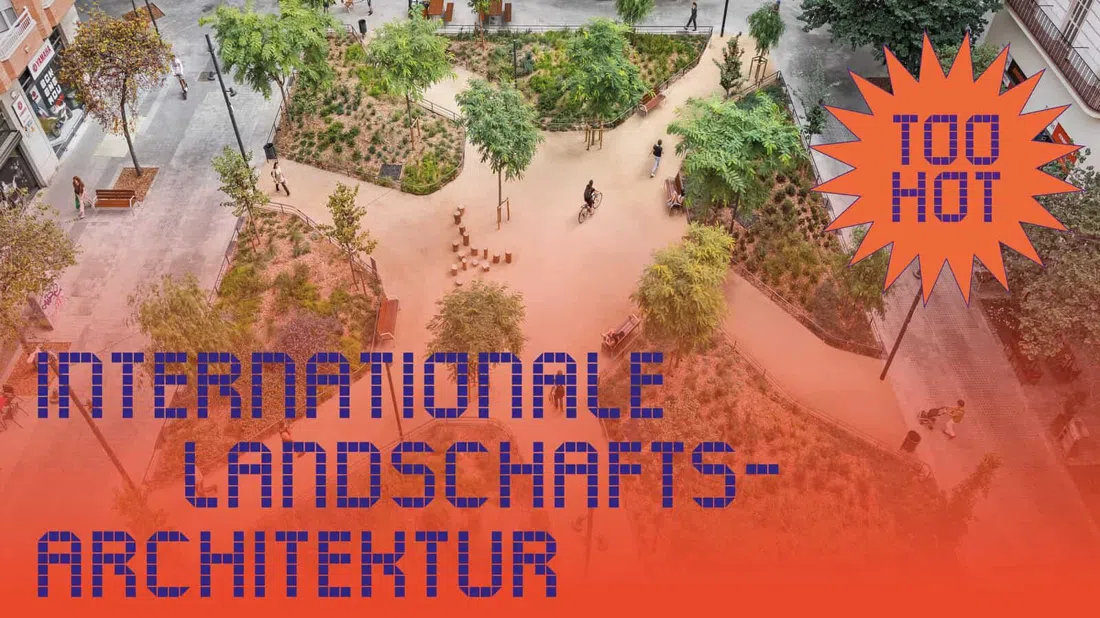
Ten minutes west along the embankment path is the Deutsches Architekturmuseum (Sachsenhausen, Schaumainkai), the Ungers house-within-a-house, itself worth the ticket. It reopened in June 2025 after a four-year refit, but the permanent collection display has stayed shut for renovation into 2026, with reopening pencilled for around August. Confirm on the day before you pay, and go for the temporary shows and the building: SUBURBIA runs to 18 October 2026, and Too Hot opened on 20 June. Tickets run roughly €7 to €12 depending on the exhibition; groups and school parties book through [email protected].
The city's own version, across the footbridge
Cross the Eiserner Steg and you are five minutes from Historisches Museum Frankfurt (Altstadt, on the Römerberg). This is the kitchen shown as a piece of the city rather than a design relic: rents, tenant lists, the politics of who got a flat and who did not. In 2026 the museum is marking one hundred years of Neues Frankfurt with programming around it, including the awkward question of who exactly the kitchen was designed to keep in it. Open Tue to Sun, 11:00 to 18:00, with the new building running to 21:00 on Thursdays; €8 to €12 depending on ticket, under-18s free. Large groups are welcome and English guided tours can be booked in advance, which is worth doing. The labels are good, but the tour is where the uncomfortable material gets said out loud.
The only kitchen still standing where it was installed
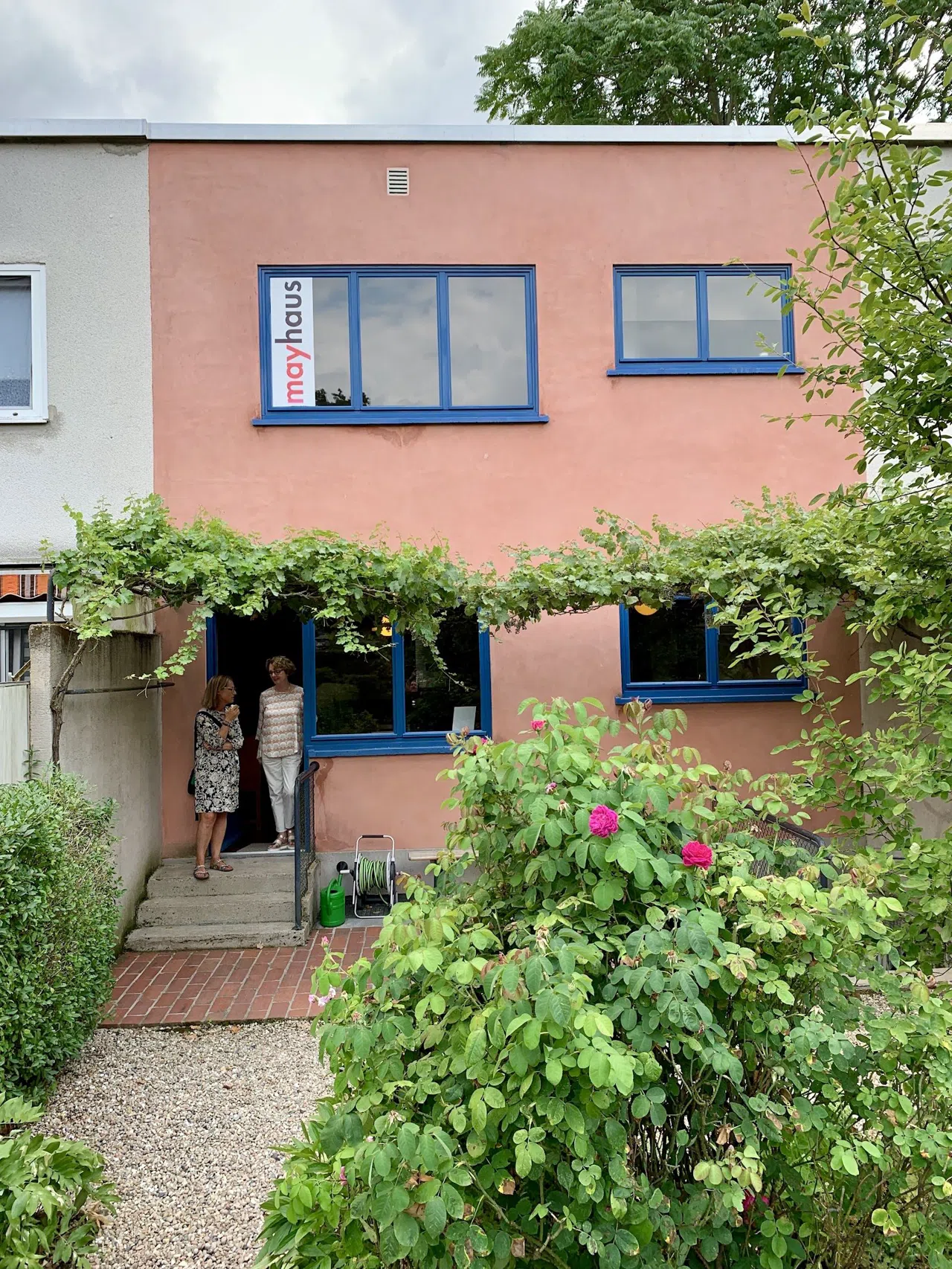
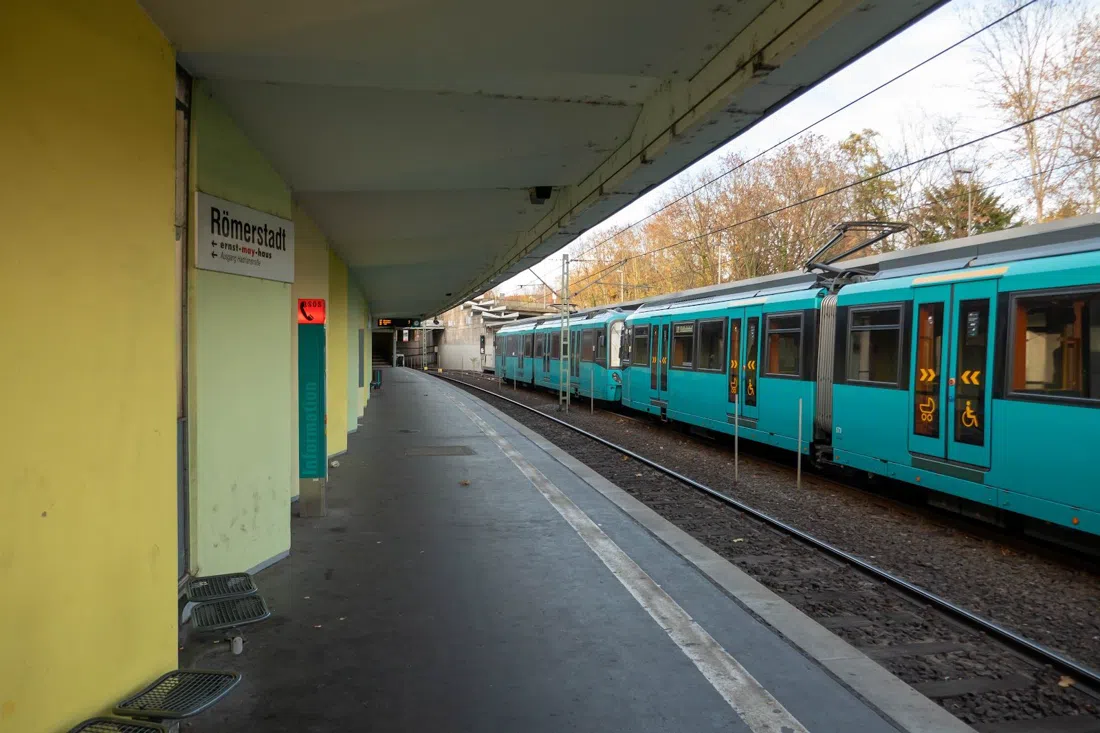
Take the U1 north-west to Römerstadt. A few minutes from the platform, on Im Burgfeld, is Ernst-May-Haus (Römerstadt), the single most important address in this story and the only complete Frankfurt Kitchen still standing in the flat it was built for, inside the estate May built around it. The whole house has been returned to its 1928 condition, which means you see the kitchen the way a tenant met it: the room you would have stood in every day rather than an exhibit under glass, with the fold-out stool and the labelled bins and a window over the sink.
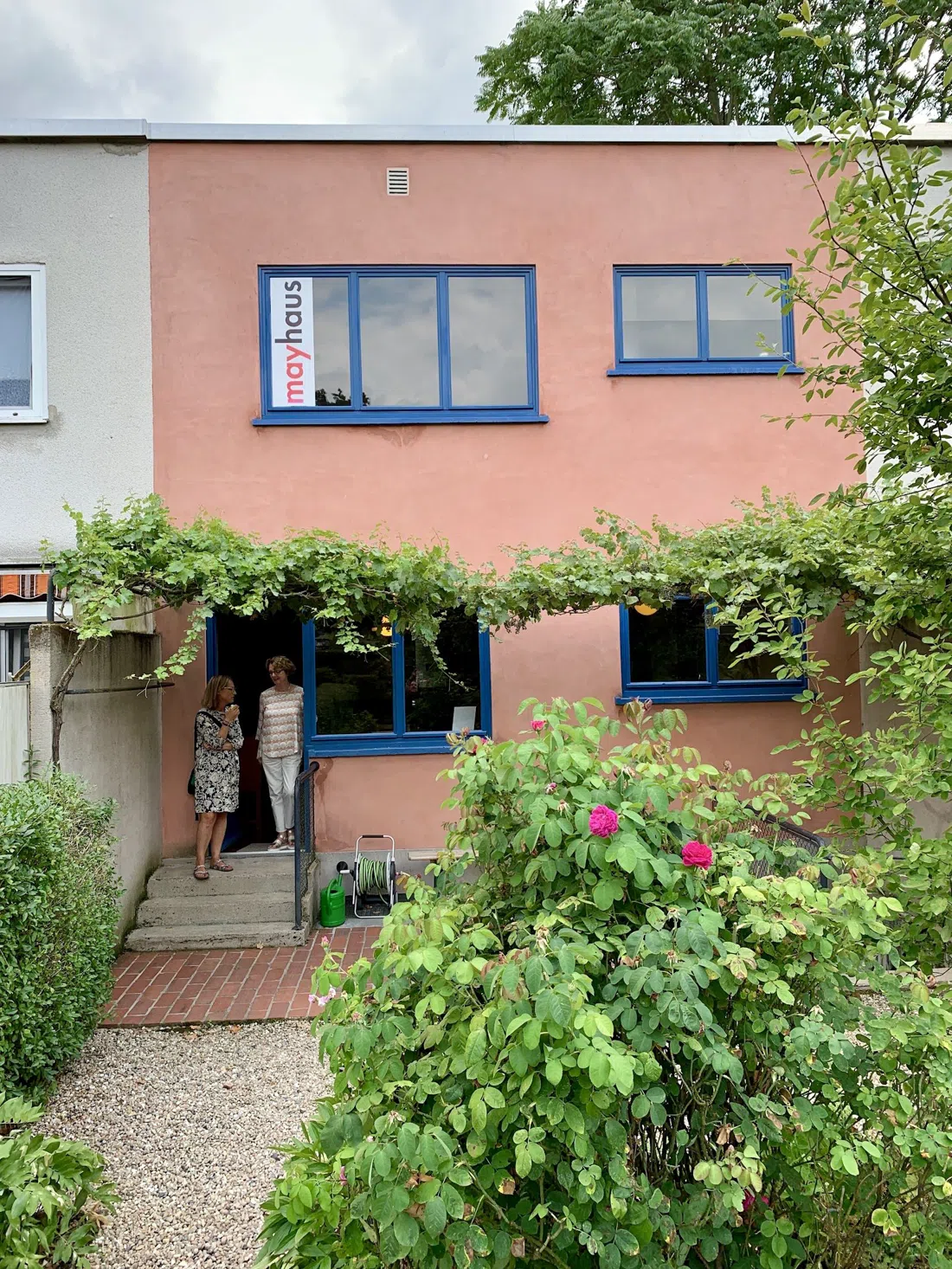
Walk-in hours are Tue to Thu, 11:00 to 16:00, and Sat to Sun, 12:00 to 17:00; €6 adults, €4 students and apprentices. The house is genuinely tiny, perfect for two people and hopeless for ten. Groups must book a guided tour well in advance with the ernst-may-gesellschaft on +49 69 15343883. It also shuts for short periods without much fanfare (it was closed from 10 to 20 April 2026), so check dates before you build a day around it.
Then walk. Siedlung Römerstadt (Römerstadt, same U1 stop) is public street, free, open at any hour, and it is the reason the kitchen exists at all: mass housing designed as a complete system, right down to the cupboard drawers. Follow the long white terraces along Hadrianstraße and Mithrasstraße as they step down towards the Nidda meadows, look at how the bastions on the valley edge hold the estate's back to the fields, and notice how consistently the windows sit. Groups can walk it unaccompanied without asking anyone; a guided estate tour through the same society runs about €10 to €15 per person and is the better option if you want the tenant history rather than the elevations. People live here. Keep your voice down and your lens out of their windows.
Gropius a few stops down the line
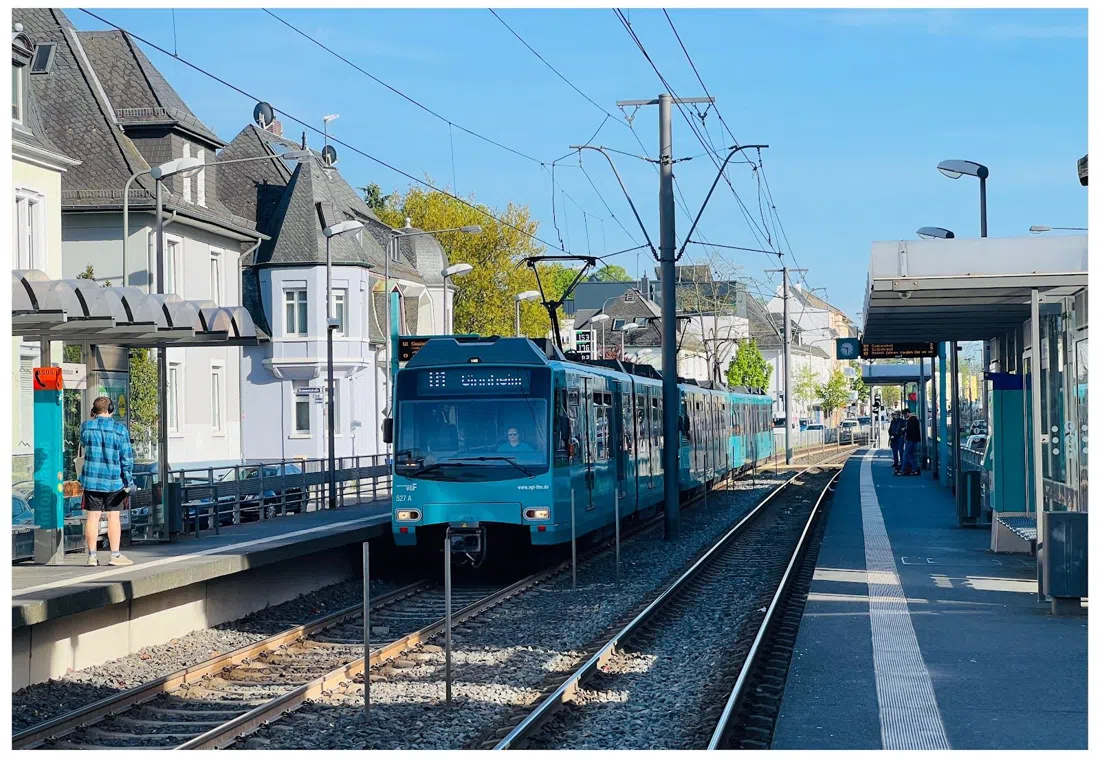
Back on the U1 heading in, get off at Lindenbaum for Siedlung Am Lindenbaum (Eschersheim, north Frankfurt). Walter Gropius built this between 1929 and 1930 as part of Neues Frankfurt: the founder of the Bauhaus working to May's brief, following his own rule of enlarging the windows and reducing the rooms for tenants with the least money. It is free, unrestricted public street, nothing to book, and it suits a small walking group with an hour to spare. Half an hour here is enough to see what the brief did to a strong architect: less floor, more light, and no ornament anyone had to pay for.
Elsaesser's public Frankfurt
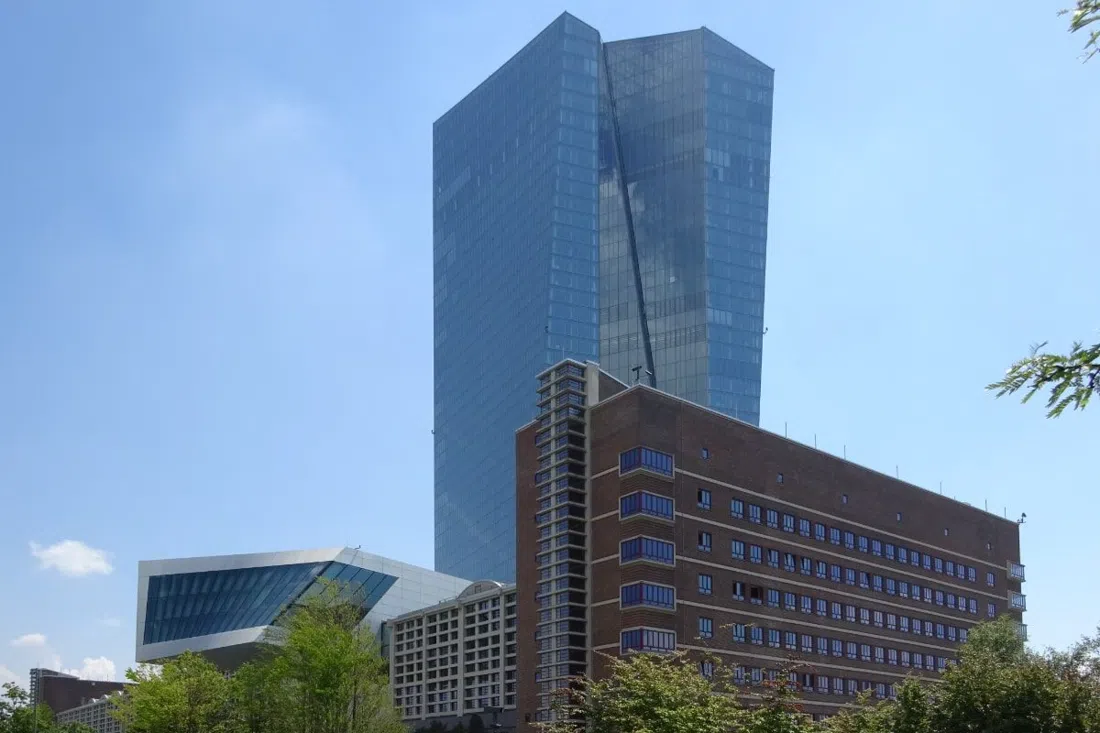
Martin Elsaesser was May's city architect and the man who built the programme's public face. His masterpiece is the Großmarkthalle at the European Central Bank (Ostend, Sonnemannstraße), the vast concrete-vaulted market hall now wrapped inside the bank's towers. Free ECB tours run alongside paid architecture tours at roughly €20 to €30 per person; everyone registers in advance and brings photo ID, and groups must register as a group. There are no visitor-centre tours from 20 July to mid-September 2026 because of construction, which makes this an autumn item this year. The site also carries a sober memorial in the basement, where deportations were assembled. The tours handle that plainly and so should you.
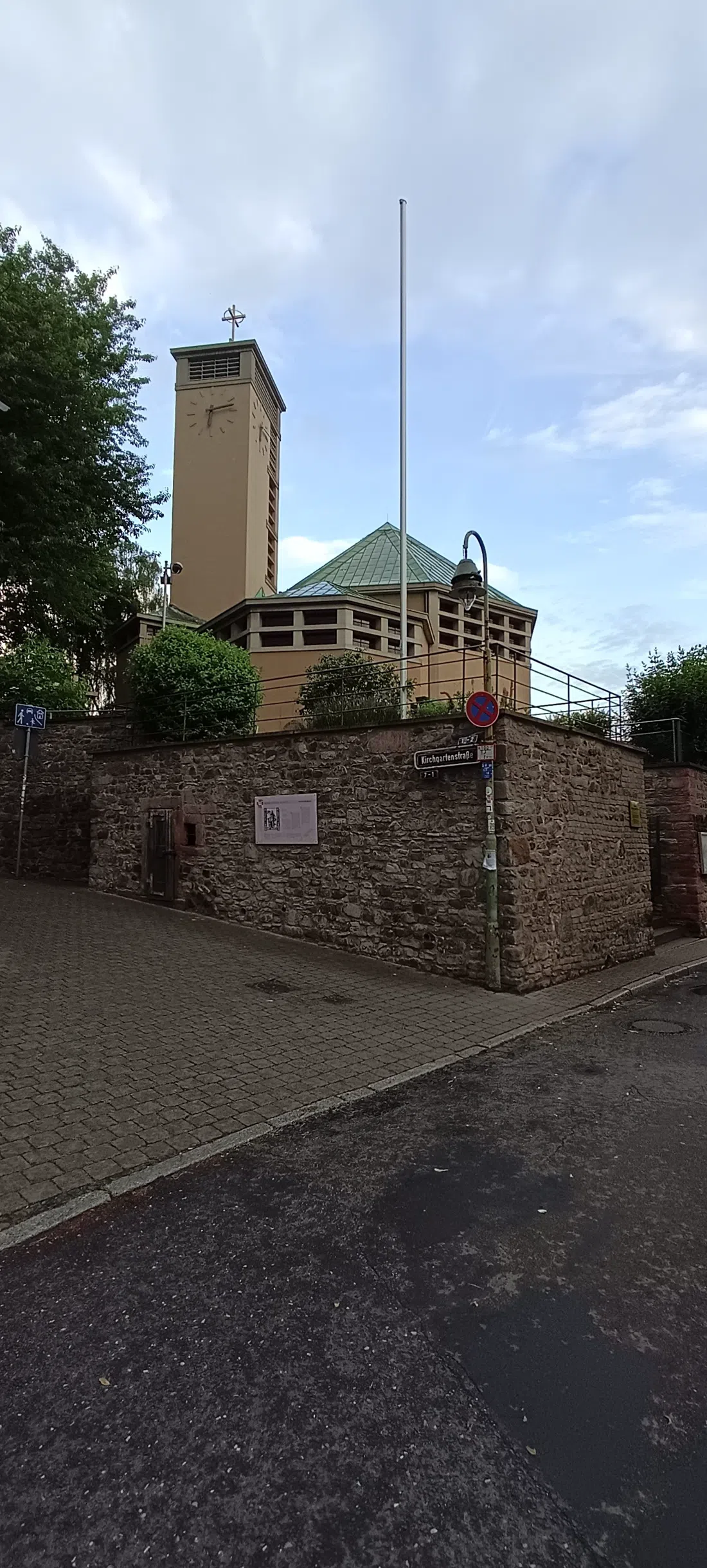
His quietest building is Gustav-Adolf-Kirche Niederursel (Niederursel, far north), his only pure central-plan church, uncrowded to the point of solitude. There are no fixed opening hours; interior viewing is arranged with the parish office, which suits a pre-booked small group and punishes the spontaneous. Turning up unannounced usually means a locked door. Entry is free, a donation is the decent thing.
The other modernism, at Campus Westend
Not all of it was social. The Poelzig-Bau (Westend, Goethe University Campus Westend) was built for IG Farben, served as army headquarters afterwards, and is now a working university that is honest about every phase of that. The campus is freely walkable, the lobbies are open on weekdays and the paternoster still runs, a chain of doorless cabins you step into while they move and one of very few left anywhere. Ride it; then read the plaques. Groups can wander at will, and private guides run themed Campus Westend tours at roughly €120 to €180 per group, which is good value split six ways and pointless for two.
The ancestor, four Fridays a year
The hardest door in this article is the Peter-Behrens-Bau (Höchst, Industriepark Höchst, west of the centre). Behrens taught Gropius, Mies and Le Corbusier, and this expressionist brick pile is the ancestor of everything else here. Free one-hour tours run only about four Fridays a year; registration opens three months ahead at 10:00 and sells out fast. Over-14s only, ID checked at the East Gate, and groups enquire separately. If you want it, plan the trip around the date rather than hoping: book the moment it opens or you will not see it.
Where Frankfurt still sells the kitchen
Finish in town at Lorey (Innenstadt, Schillerstraße), which has been selling kitchen equipment in this city since 1796 and now does it inside a landmark of its own. It is ordinary open retail, so walk in, bring a group, nobody minds, and the range starts at a few euros for a wooden spoon and climbs to cookware you would insure. The city that industrialised the kitchen still outfits it, two centuries and one revolution later.
Practical notes
Everything here is on the U-Bahn or S-Bahn, including Höchst, and a single-day Frankfurt ticket covers the lot. Buy it in the RMV app or at any machine before you board; there are no barriers, but inspectors are frequent and unsympathetic. Römerstadt and Lindenbaum sit on the same U1 corridor, so do them in one run rather than two.
Museums, the restaurant and Lorey all take cards. Carry €40 to €50 in notes anyway for the parish donation, small tour payments and the older Apfelwein houses, which still treat cards as an imposition.
Most of the museums close on Monday, and Ernst-May-Haus only opens Tue to Thu and at weekends, so Wednesday and Saturday are the two days when the whole trail works. Weekdays for the paternoster. Avoid the ECB between 20 July and mid-September 2026. Two full days is honest: south bank plus the Römerberg on one, the estates and Campus Westend on the other.
Entries come to roughly €26 to €32 per person for the three museums and the house, and the estates, the campus and the ECB tour are free. Lunch at Emma Metzler is the one real expense; skip it and the whole trail costs less than a single ticket to most European design shows.
The south-bank museums and the Altstadt are walkable from most central hotels; for the estates, anywhere on the U1 saves you twenty minutes each way. Start with a Frankfurt hotel search, and see the full Frankfurt guide for the rest of the city around this one.