
Frankfurt is the only city in continental Europe where you can walk between a genuine cluster of skyscrapers, not one tower rising alone over a low-rise old town, but a dozen of them, close enough that their shadows overlap by mid-afternoon. Locals have called it "Mainhattan" for decades, half in irony, half in pride, and the joke only works because the walk is real: start at the river, finish at the river, and in between you pass through more vertical architecture per square kilometre than anywhere else on the continent. This is that walk, mapped stop by stop, with the one payoff, actually standing above the towers instead of just below them, saved for the middle of the day rather than the end.
Starting among the glass in MainTor Quartier
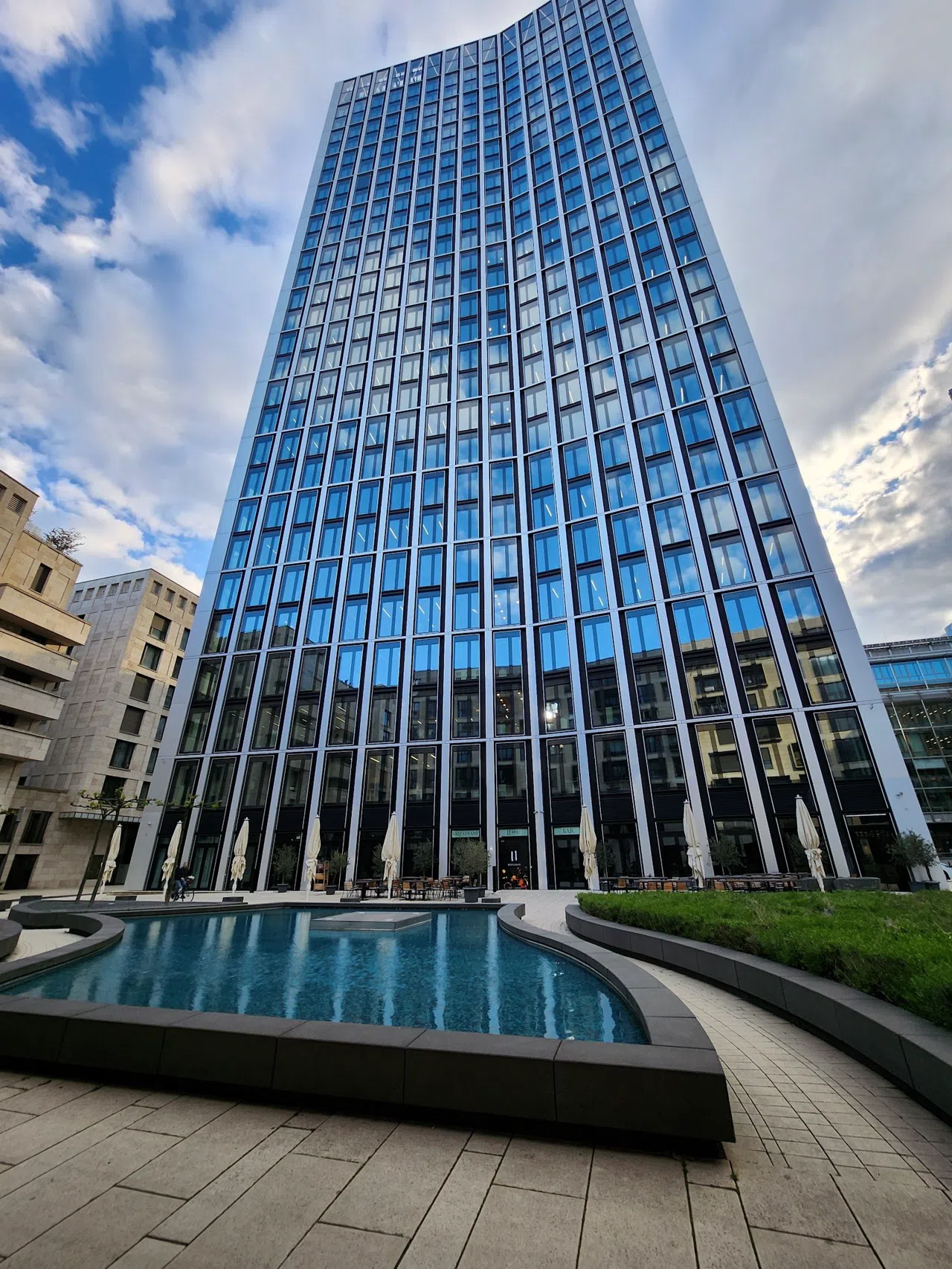
The walk begins at MainTor Quartier (Bankenviertel, by the river), a stretch of riverside streets and plazas that spent 45 years as a closed bank compound before opening to the public. There's no gate, no security desk, and no reason to arrive at a particular time. It's simply open, which makes it the natural assembly point if you're gathering a group before setting off. Come from the river side and the effect is immediate: low 19th-century blocks give way, almost without warning, to glass and steel.
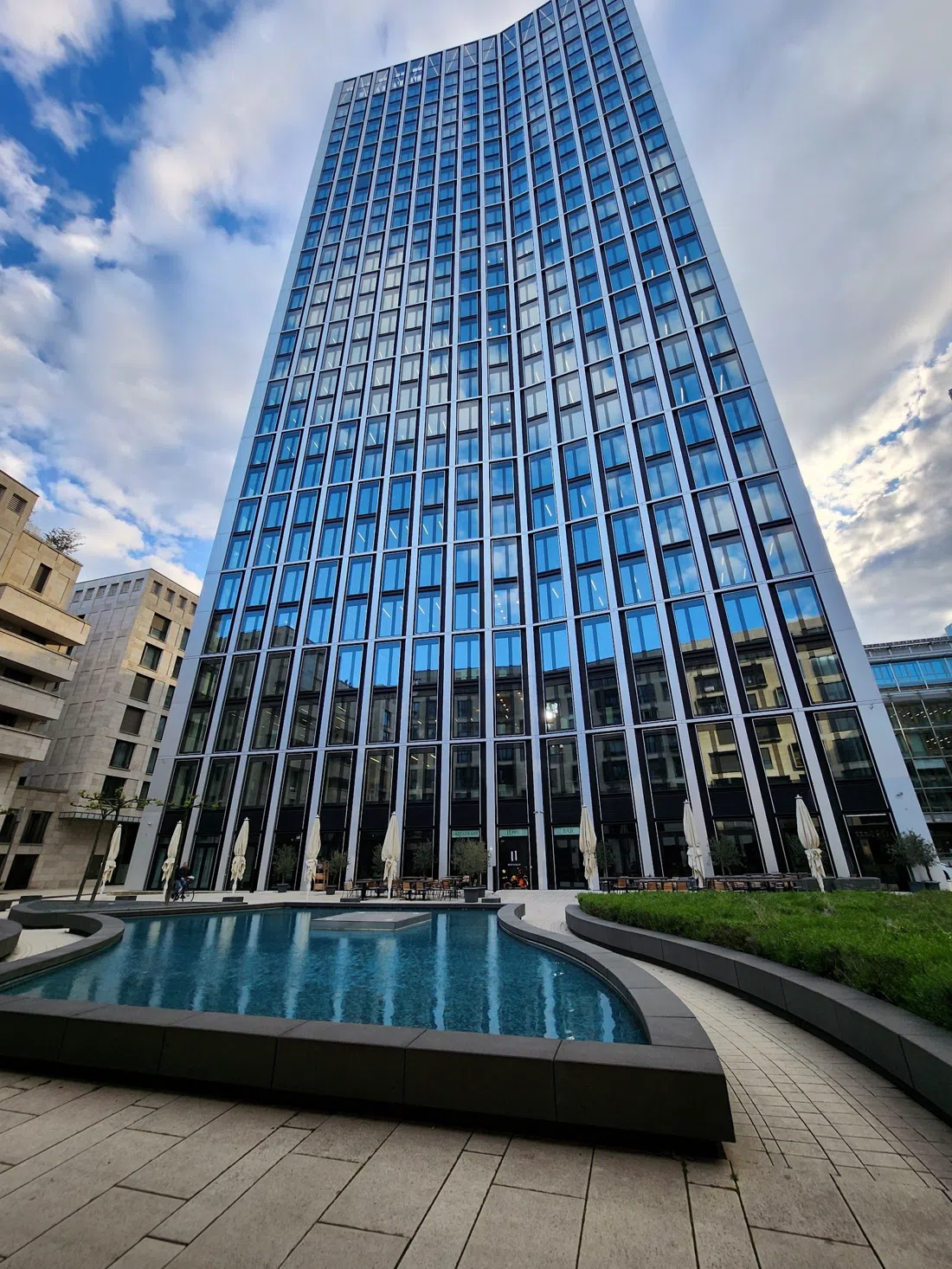
A five-minute walk north gets you to FOUR Frankfurt (Neue Mainzer Straße, Bankenviertel), the newest thing on this route and, as of 2026, still the thing most guidebooks haven't caught up on. It opened in 2025 on a site that had been closed to the public for nearly half a century, and it's now Germany's tallest tower, with a public rooftop skygarden and ground-level square that cost nothing and need no booking. If you only have time for one stop on this walk, it should probably be this one; it's also, simply, the best photograph on the route.
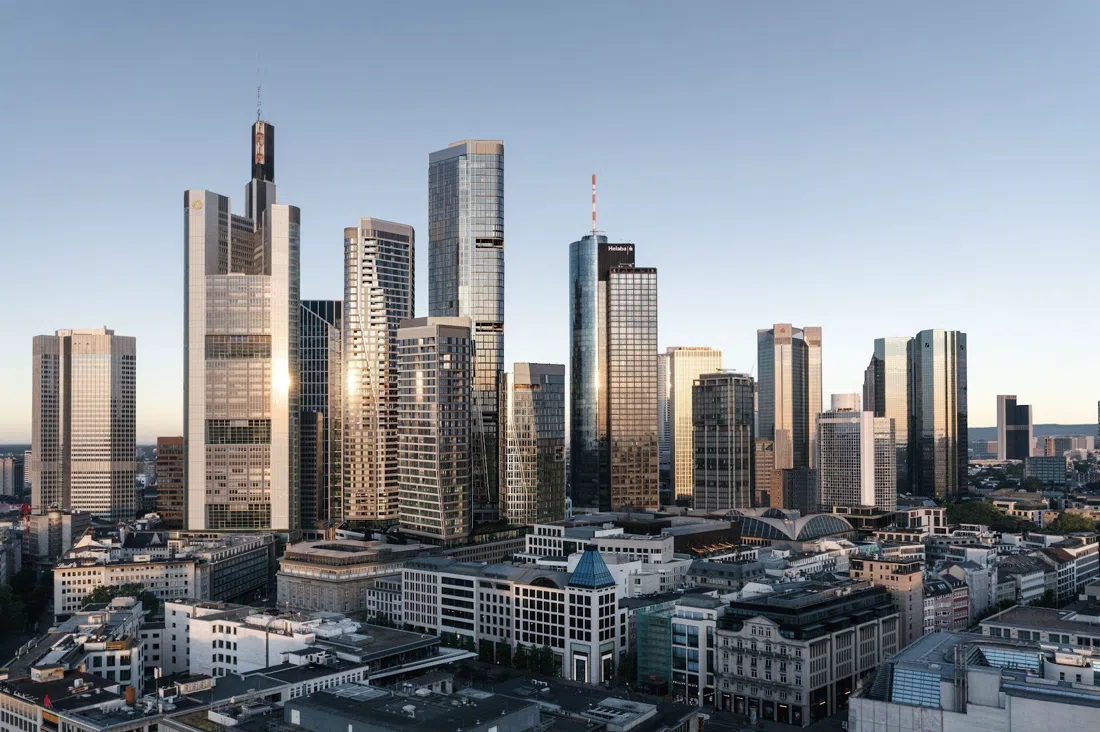
The cluster of towers that gives Frankfurt its skyline
From FOUR Frankfurt, the walk threads through the rest of the Bankenviertel, and this is where the vertical-walk idea earns its name: five or six towers within a fifteen-minute walk of each other, each doing something different with the same basic material.
Omniturm (Große Gallusstraße, Bankenviertel) is worth slowing down for. It's the one shape-shifting building on the route, its middle section visibly twisting against the straight lines above and below it, and standing at its public plaza, the contrast with the flat glass boxes on either side is sharper than any photo captures. Street level only; no ticket, no restriction, just look up.
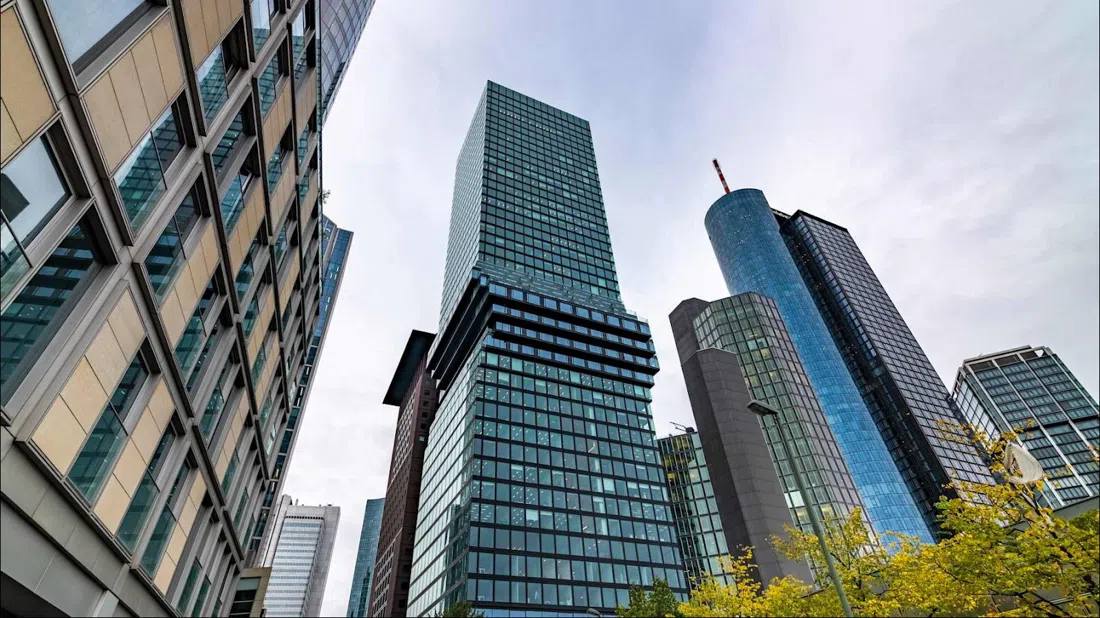
Ten minutes further, Skyper Tower & Skyper Villa (Taunusanlage) sit at the same address, an actual 19th-century villa preserved at the foot of a glass tower, the single clearest frame of old-meets-new tension anywhere on the walk. Exterior and plaza only; there's no public entry to either building, but neither needs one to make the point.
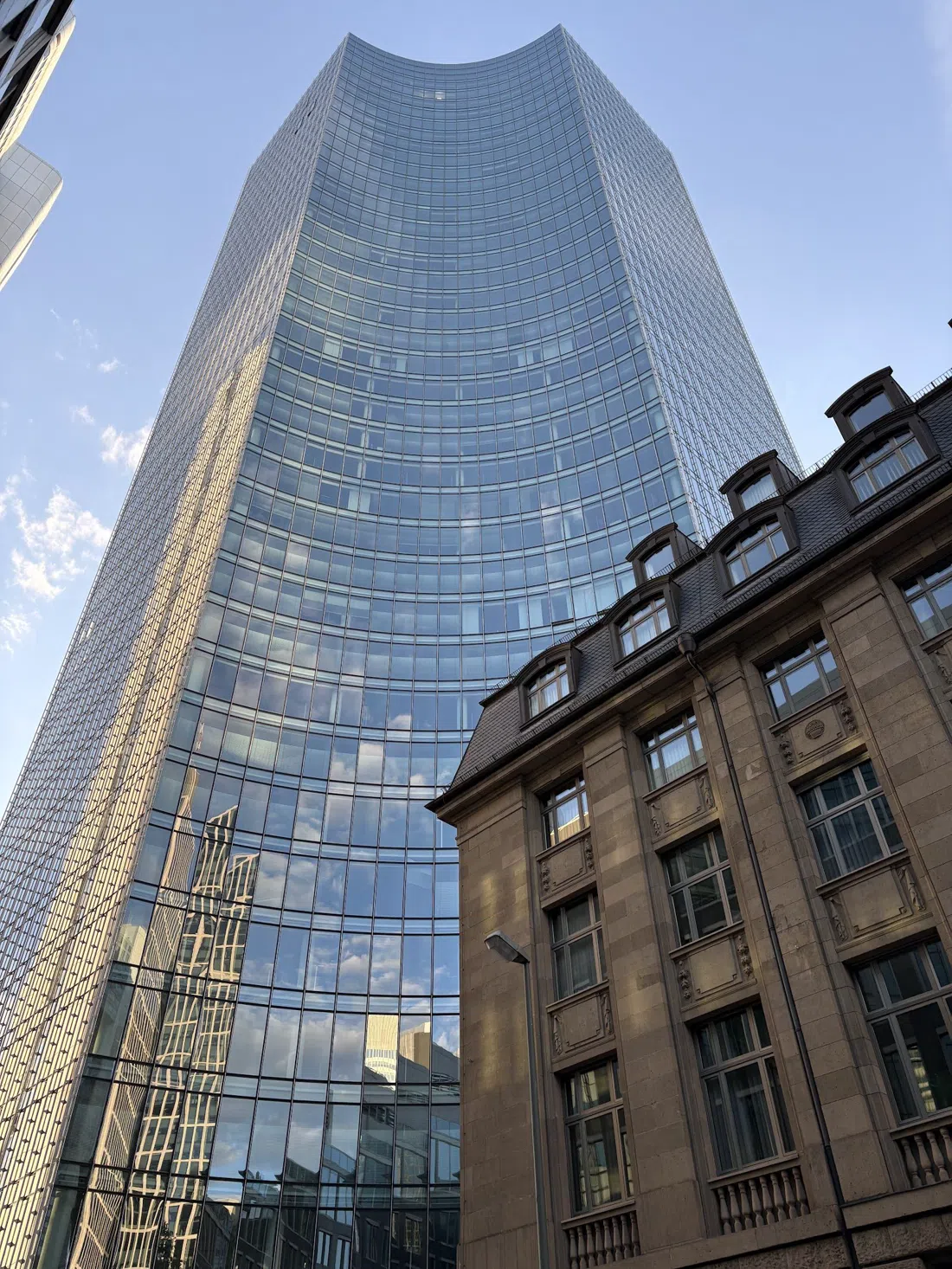
Nearby, Trianon Tower (Mainzer Landstraße, near Hauptbahnhof) is the strangest silhouette in the skyline and worth the short detour even though, like most of the towers here, it's a working office building with no public access. A triangular tower carries what looks like a floating glass diamond at its top, unmistakable from blocks away, and one of the few Frankfurt towers you'd recognise in silhouette alone.
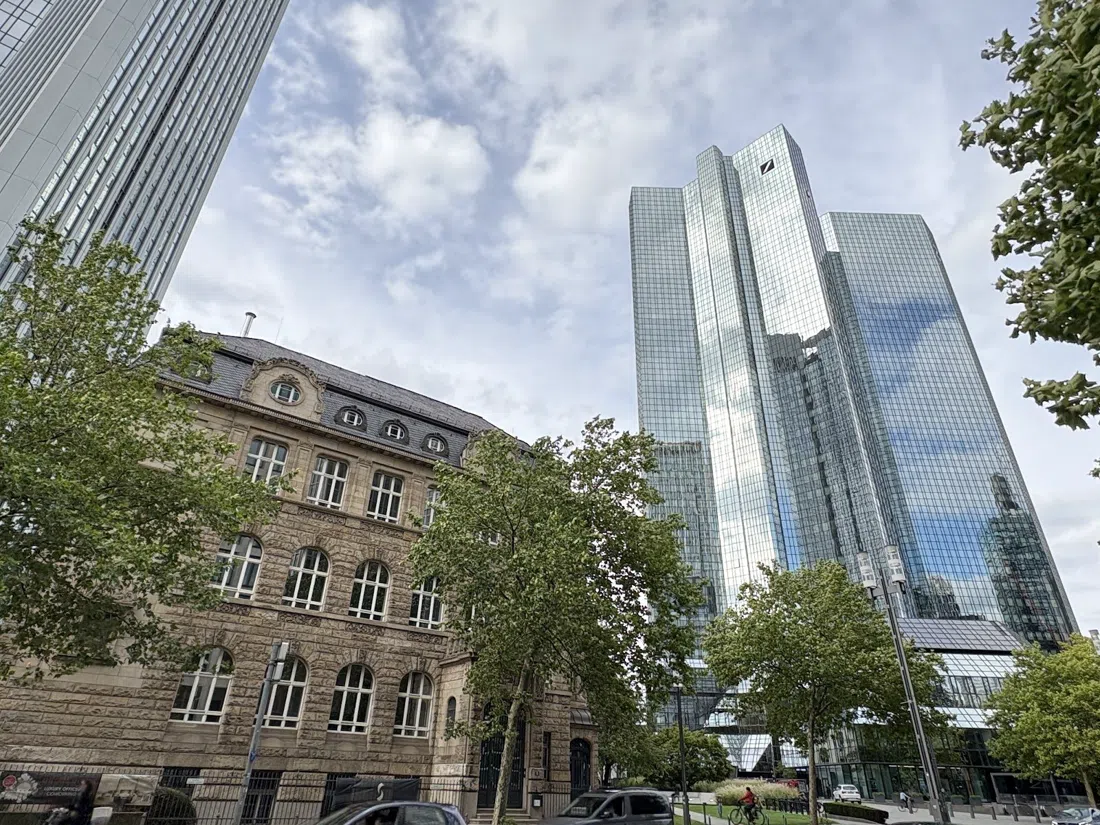
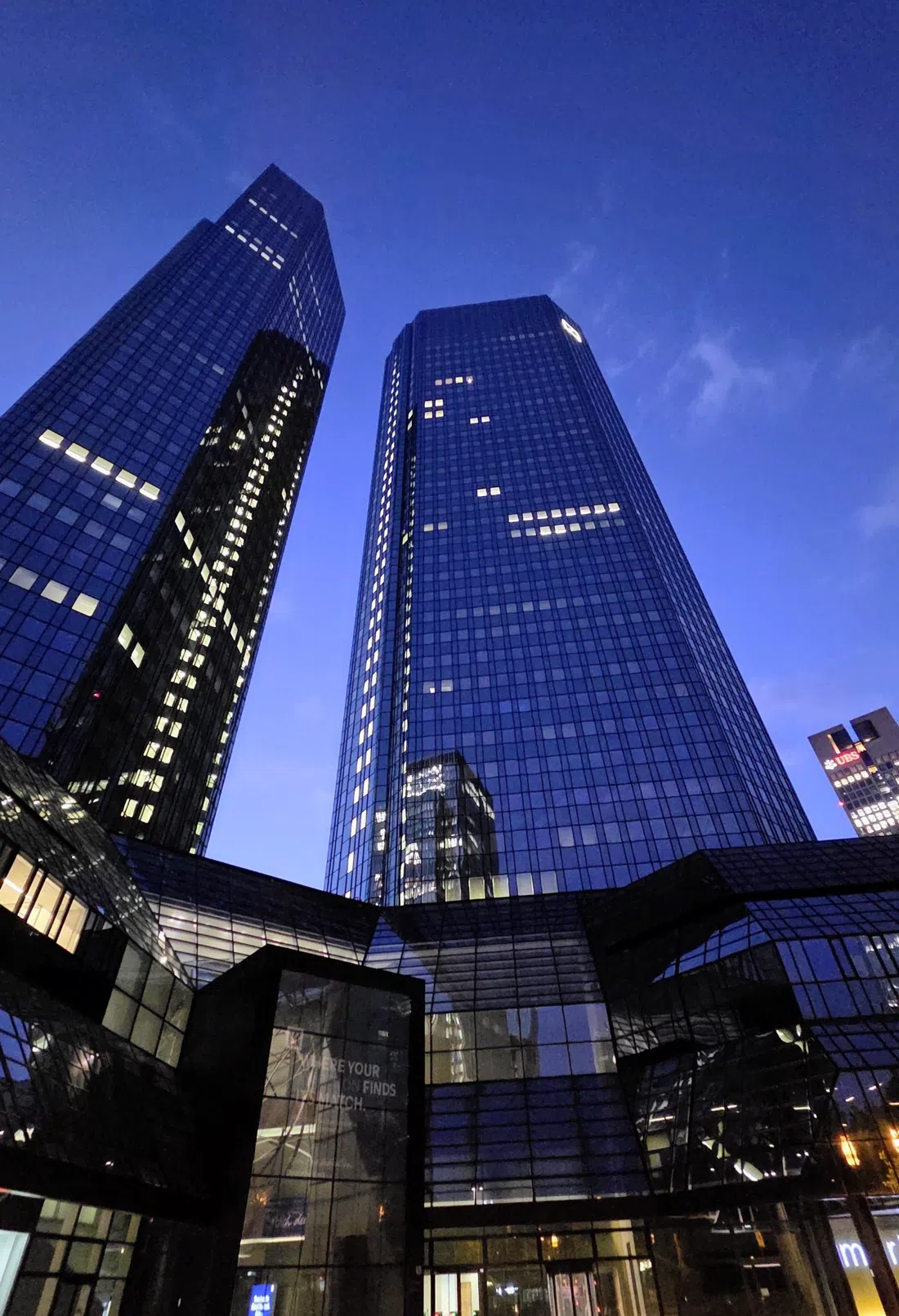
Loop back toward Deutsche Bank Twin Towers & Taunusanlage Park (Taunusanlage), and this is the spot to actually stop walking for ten minutes. The park is fully open, with benches and shade, and it's the best rest point on the route for a group, plus a genuinely good piece of public sculpture that most tour groups walk straight past on their way to the next tower. The twin towers themselves are the closest thing Frankfurt has to a symbol of German banking, instantly recognisable even to people who've never been here.
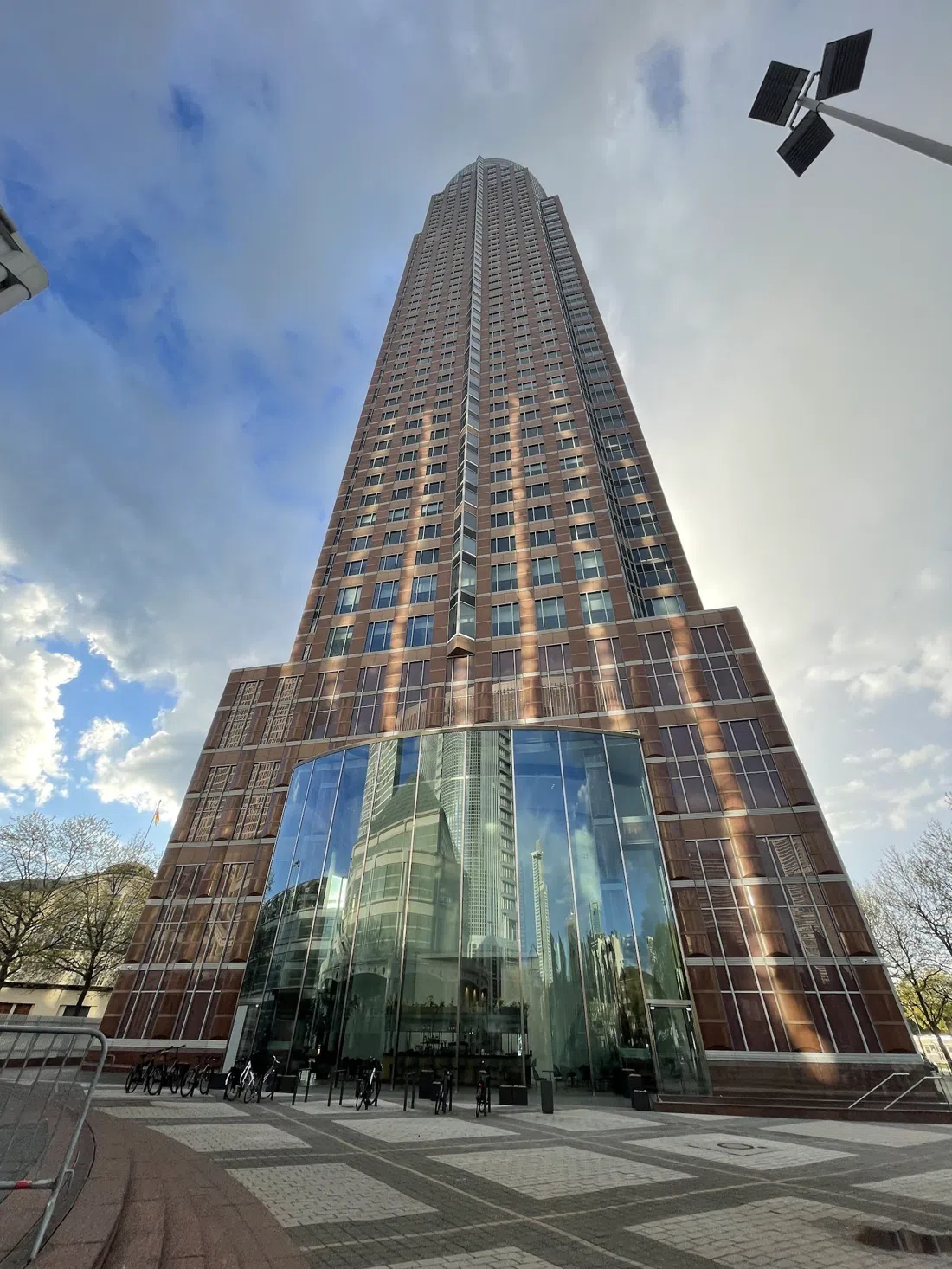
Last stop in the cluster is Messeturm (near Messe Frankfurt, Westend), which held the title of tallest building in Europe from 1990 to 1997 and still stands out as the only warm-coloured tower among all this glass, red granite against steel and glass neighbours. The lobby and coffee bar are open to the public (no observation deck), so this is the one spot in the cluster where you can actually sit down, warm up in winter, and pay normal café prices for the privilege of being inside one of the towers rather than just under it.
Standing above the towers at Main Tower
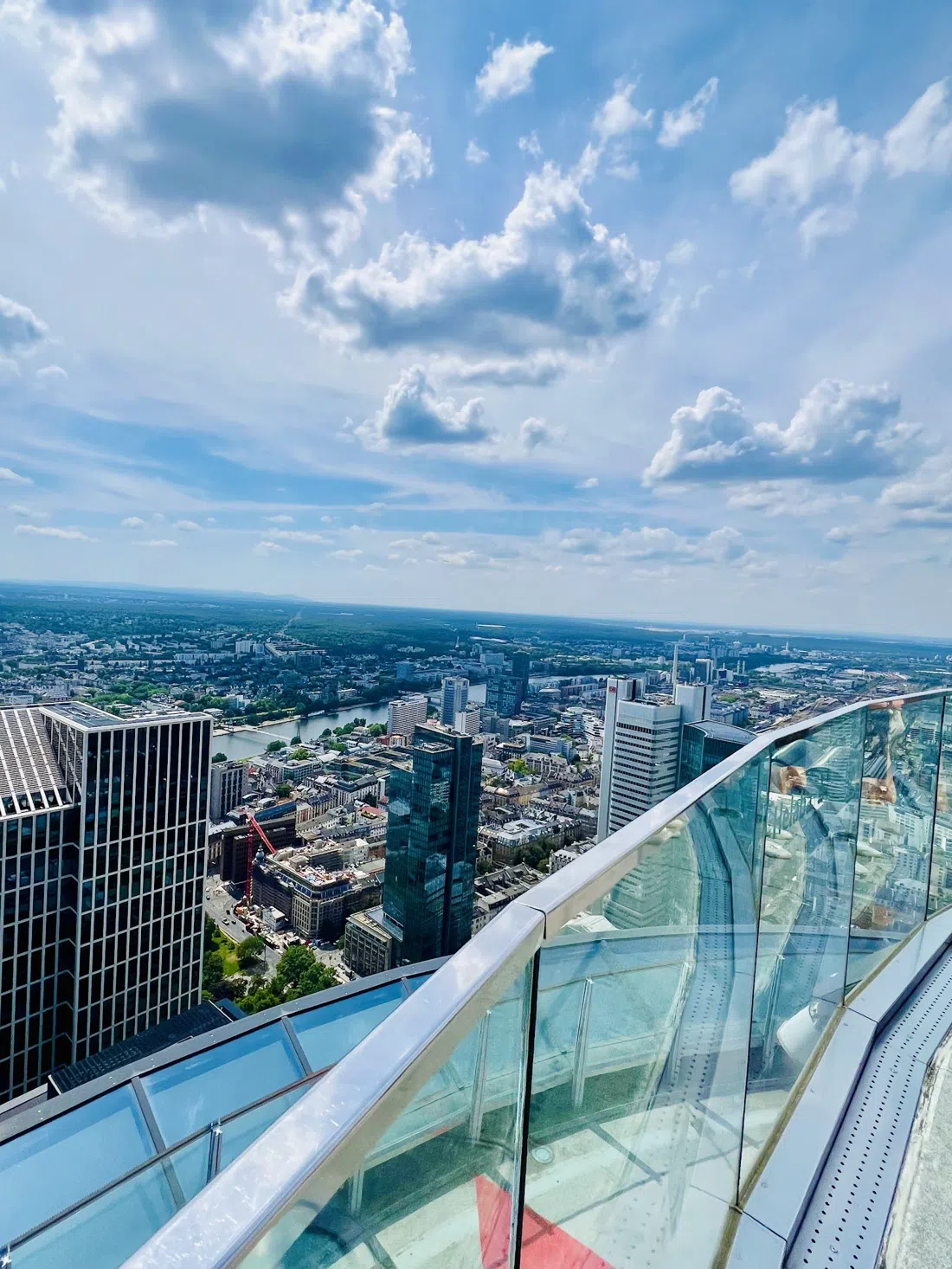
Everything so far has been looking up. Main Tower Observation Deck (Neue Mainzer Straße, Innenstadt) flips that: it's the one place on this entire walk where you stand above the towers you've just spent an hour walking between, rather than craning your neck at them from street level. Ticketing is walk-up, no group booking required, and it handles groups fine outside peak weekend afternoons; €9 for adults, €6 for children and seniors. Go up here roughly two-thirds of the way through the walk, once you've actually seen the towers from the ground and can identify them from above. It reframes everything you've just walked through, and it's the only view on the whole day that looks down instead of up.
Two bridges, two very different skyline views
Two river crossings do most of the postcard work for this skyline, and they're worth treating as separate stops rather than one.
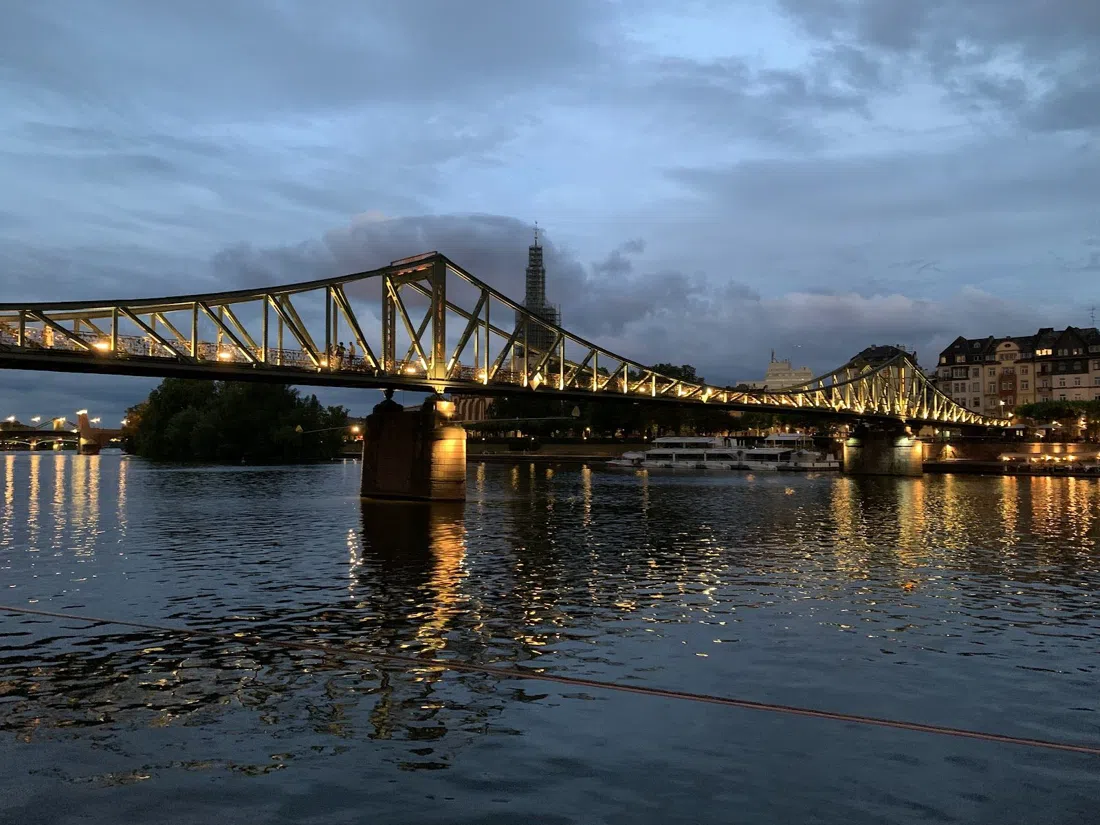
Eiserner Steg (river Main, connecting Altstadt and Sachsenhausen) is the most photographed skyline angle in the city, a pedestrian iron bridge with the towers rising directly behind it, best around sunset when they light up. It's open, unlimited, free, and busy; treat it as a five-minute stop for the photo rather than a lingering one, especially with a group.
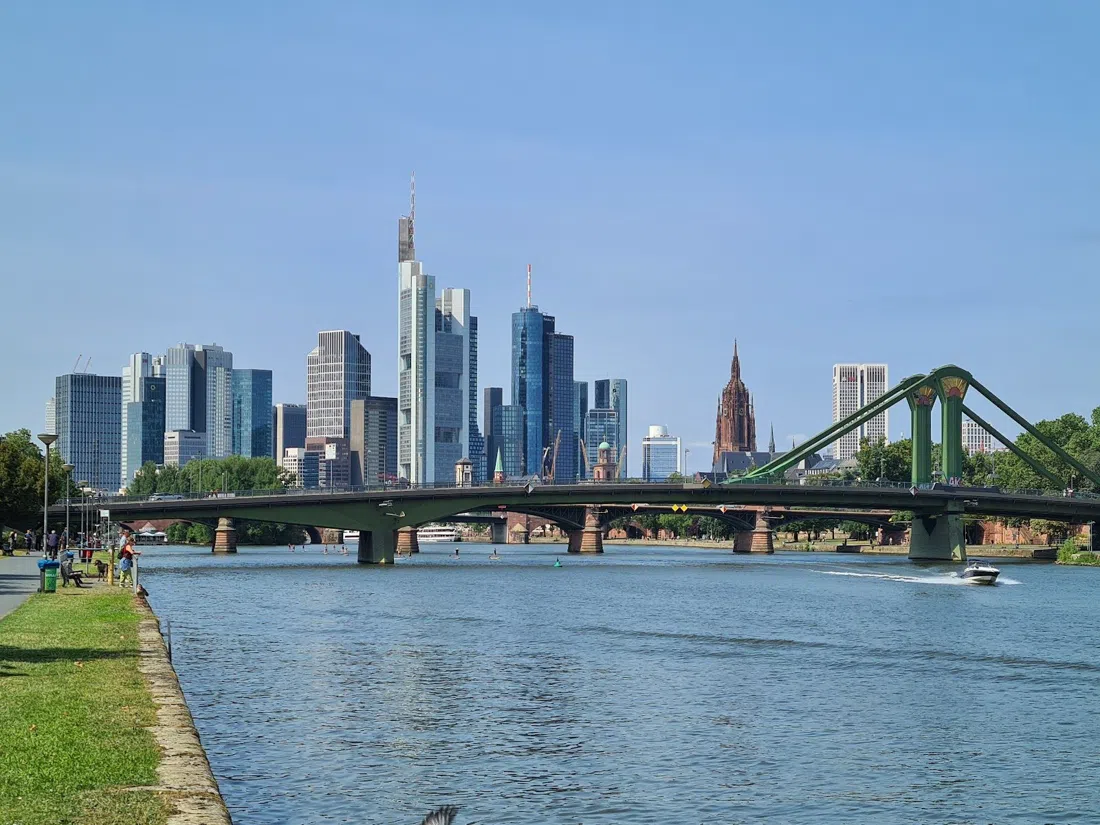
For the wider view, walk on to Deutschherrnbrücke Skyline Viewpoint (Sachsenhausen/Ostend riverbank), which is where the walk has effectively been building the whole time: the one spot that gets the entire Mainhattan skyline into a single frame, river and all. There's plenty of room here for a group to spread out, unlike the crowded Eiserner Steg, which makes it the better stop if you're travelling with more than two or three people.
The old skyline looking at the new one
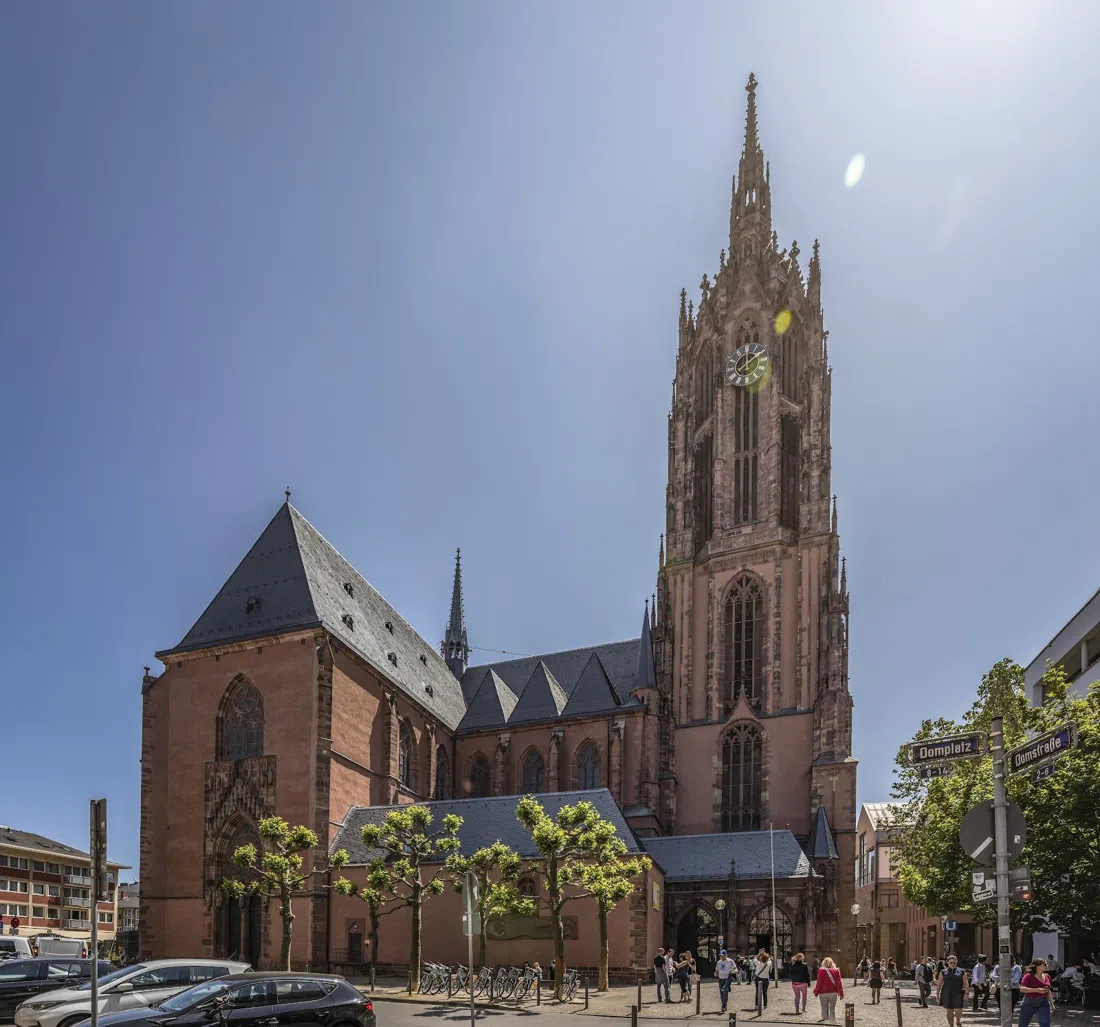
Before heading to dinner, it's worth the walk to Frankfurt Cathedral (Kaiserdom) Tower (Altstadt), the deliberate historical counterpoint this whole walk has been setting up, a Gothic tower that was, for centuries, the tallest structure in the city, now dwarfed by everything you've just walked past. The climb is a narrow spiral stair that limits groups to small batches at a time, so if you're travelling with more than four or five people, expect to split up and regroup at the top. It's closed on Mondays outside April to September, so check the calendar before building it into the day. €3 for adults, €2 for students and Frankfurt Card holders, free under 9. Genuinely the cheapest view on the whole route, and the only one that looks down at the skyline from outside it rather than from within it.
Dinner with the skyline laid out below
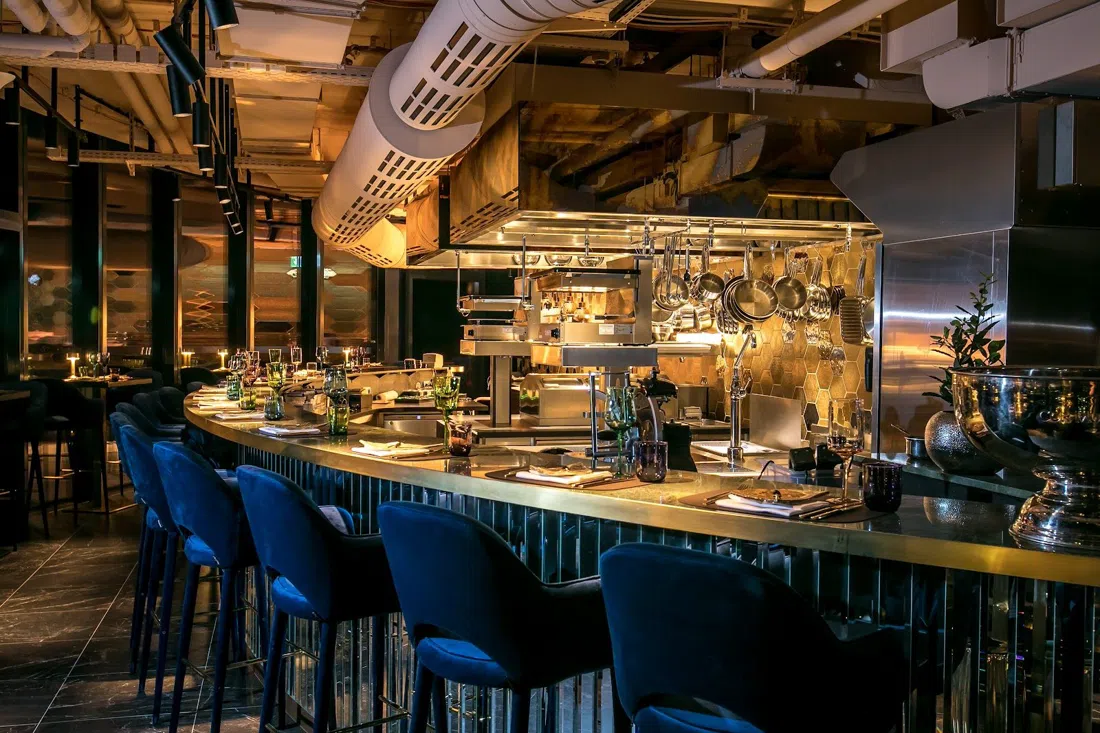
To close the day properly, Franziska at Henninger Turm (Sachsenhausen, a short taxi south) does progressive German cuisine on a tasting menu, served with the skyline laid out below rather than beside you. Reservations are required in advance through SevenRooms (this is not a walk-in), but it does take groups with enough notice, which makes it a workable finale even for a party that's been six or seven people all day. Expect €€€ pricing; this is the one stop on the route that costs real money, and it's designed to be booked as the deliberate end of the day rather than folded in casually.
Walking it with a guide instead
Everything above can be done self-guided with a map and a free afternoon, but for readers who'd rather have someone else handle the route and the history, Frankfurt on Foot Walking Tour (citywide, English-language) covers most of the same ground this article maps out. It's built explicitly for groups and private bookings, and carries a 4.9 rating on GetYourGuide from roughly €35 per person. Worth it if you're short on time, travelling with people who'd rather listen than navigate, or visiting in weather that makes self-guided wandering less appealing.
Planning the day
Transport. Everything from MainTor Quartier to Main Tower is walkable in under an hour at an easy pace; the U-Bahn (Hauptwache or Willy-Brandt-Platz stations) sits in the middle of the route if you want to shortcut between clusters, and a taxi or tram is the sensible move out to Henninger Turm for dinner rather than walking it.
Cash. Card is accepted everywhere on this route, including the Main Tower and Kaiserdom ticket counters. Carrying cash isn't necessary, though a few euros in coins is handy if a toilet or small café asks for it.
Timing. Start at MainTor Quartier in the late morning, go up Main Tower Observation Deck in the early-to-mid afternoon before it gets crowded, and time the bridges for the hour before sunset, when the towers actually light up behind them. The whole route, without dinner, runs four to five hours at a relaxed pace with stops.
Budget. Most of this walk is free. Between Main Tower (€9), the Kaiserdom (€3), a coffee at Messeturm, and dinner at Franziska, budget roughly €60-90 per person for a full day including the tasting menu, or under €15 if you skip dinner and stick to daytime.
For where to stay before or after the walk, start with Frankfurt hotel search; for the rest of what the city offers beyond its skyline, the Frankfurt guide covers the wider trip.