
Frankfurt's skyline is banks and glass, but a few hundred metres from the trading floors sits a quieter city — one where a small research institute rewired how the twentieth century thought about power, culture and the self. This walk follows Theodor Adorno, Max Horkheimer and their students from lecture hall to café table to grave, through streets that still carry the argument. Nothing here is a plaque for its own sake; every stop is a place where the work actually happened, or is still happening.
The Institute and Its Monument
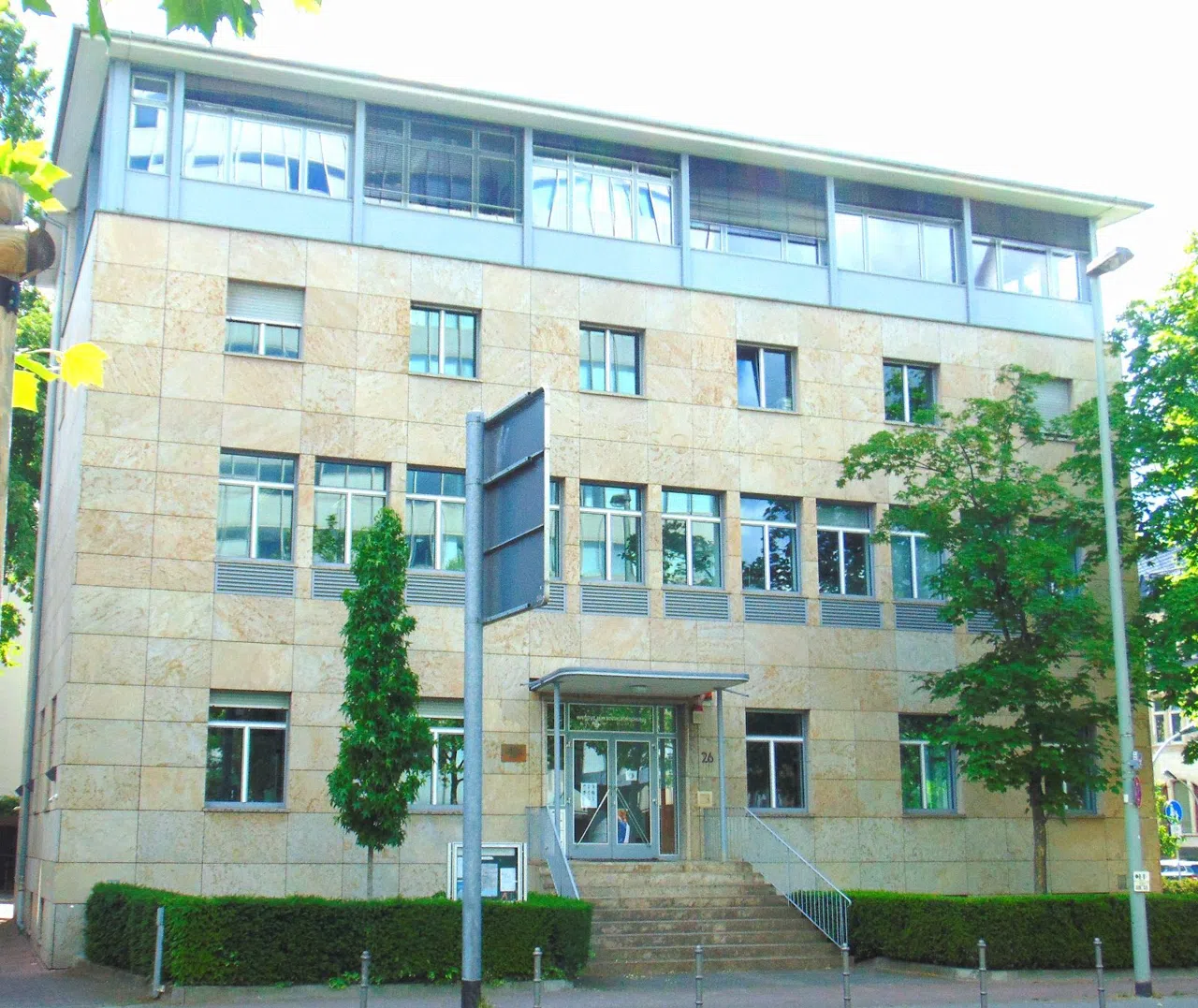
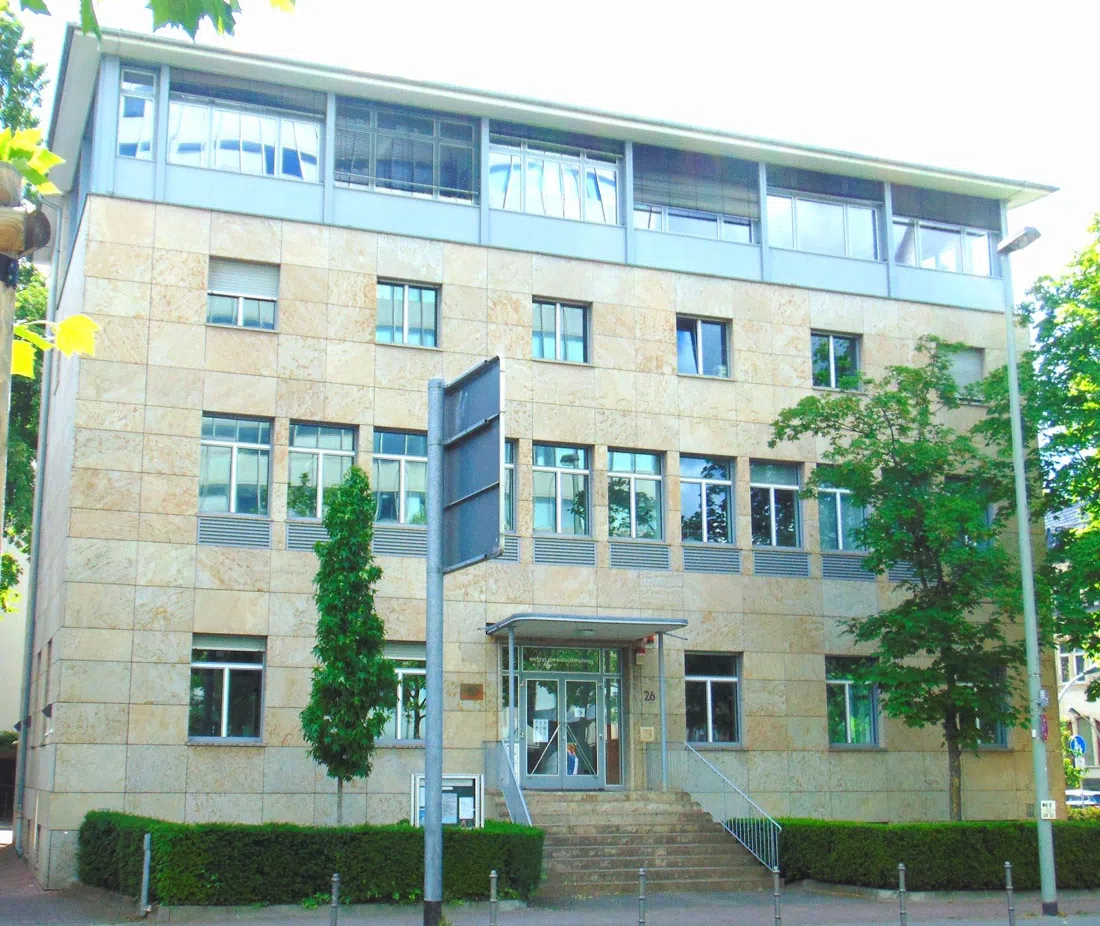
The Institut für Sozialforschung (Westend, on Senckenberganlage) is not a museum, and that's the point: this is the real, still-functioning successor to the institute Felix Weil endowed in 1924, and the building most closely associated with the postwar Frankfurt School — the version of critical theory Adorno and Horkheimer built after returning from American exile in 1949. There's no public interior access; researchers work here, and it isn't set up for casual visitors. But the exterior and the plaza in front of it are freely viewable at any time, and if you time your trip around the institute's public lecture series, the Adorno-Vorlesungen, groups can book ahead directly through the institute for a ticketed evening that's usually free or low-cost — check the 2026 calendar before you build a day around it, since lectures don't run continuously.
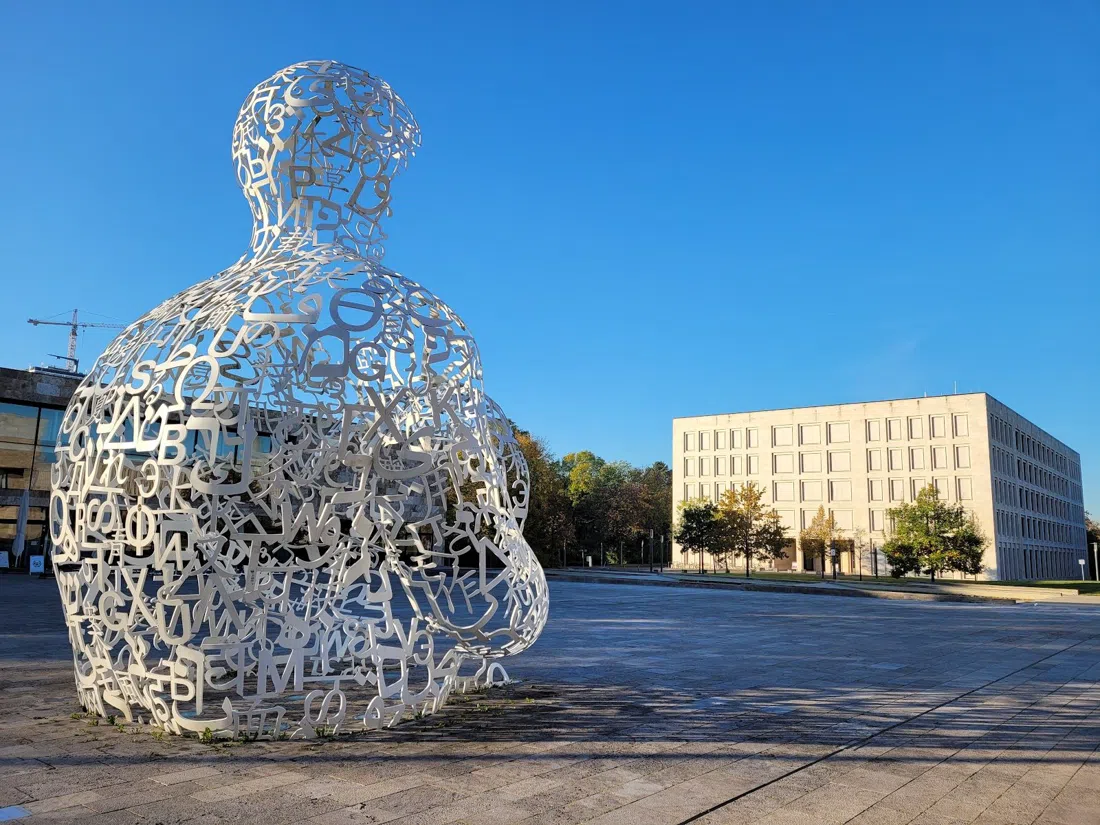
A short walk away, on the Campus Westend, is the Theodor W. Adorno Monument — Vadim Zakharov's Der verlassene Raum ("The Abandoned Room"), a glass cube enclosing a floating desk, chair and metronome that looks caught mid-collapse. It moved to its current spot on the Westend campus in 2016, and it's the single most photographed Frankfurt School site in the city, for good reason: open-air, unstaffed, free, no booking, no cap on group size. It reads differently by the hour — flat and administrative at midday, genuinely unsettling after dark, lit from within.
Campus Westend: Where the Students Actually Sat
The monument sits inside a building with its own complicated history. Campus Westend / IG Farben-Haus — properly the Poelzig-Bau — is where Frankfurt University relocated much of its humanities teaching, and where Adorno and Horkheimer's students attended lectures once the postwar Institute reopened. Worth being honest about what the building was before that: constructed for IG Farben, the chemical conglomerate whose wartime record is inseparable from the Holocaust, it later served as US military headquarters before the university took it over. That layered history is part of what makes the campus worth slowing down for, not just photographing.
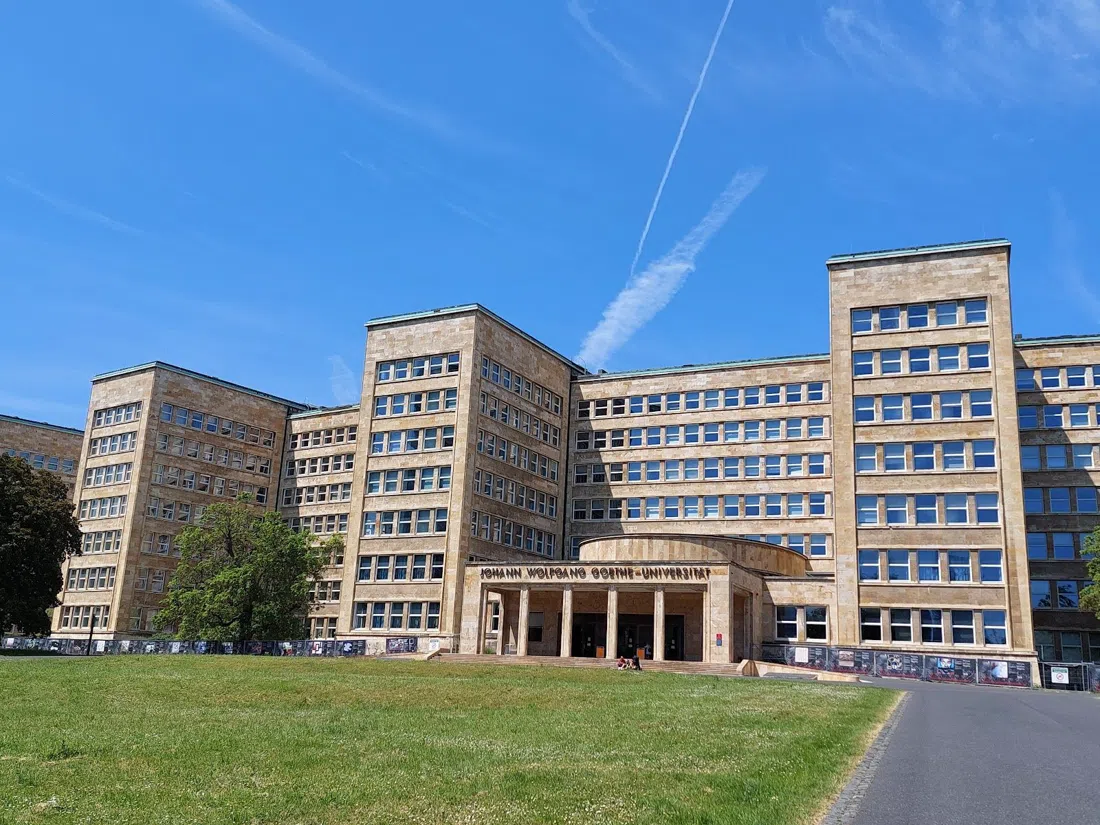
The grounds are open to anyone, free, no booking needed. For the building itself, regular public guided architecture tours run for around two hours, meeting at Norbert-Wollheim-Platz 1 — worth booking ahead for a group, at roughly €10-15 per person, since the Poelzig-Bau's interior (the barrel-vaulted lobby, the old executive floors) needs a guide pointing out what you're looking at to actually land.
Bockenheim: The Tower, the Old University, the Café
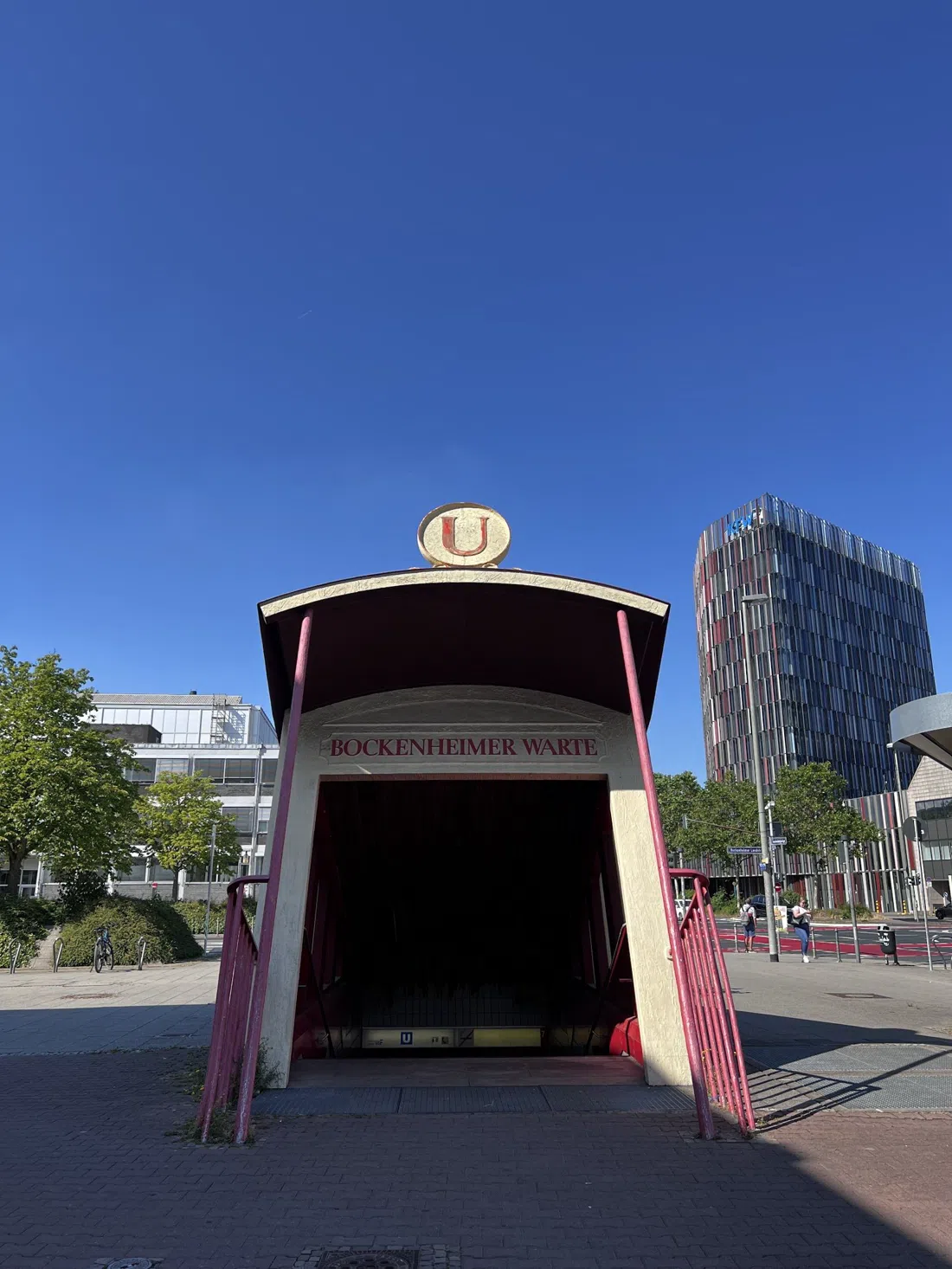
Most of the earlier chapters of this story happened a couple of kilometres west, around Bockenheimer Warte in Bockenheim — a squat medieval tower turned tram interchange that acts as the geographic anchor for the whole walk. The original 1924 Institute stood a few minutes' walk from here; Jügelhaus and the old student cafés sit in the same short radius. It's a working public square rather than a set piece, which is fitting — this was student Frankfurt, not institute Frankfurt.
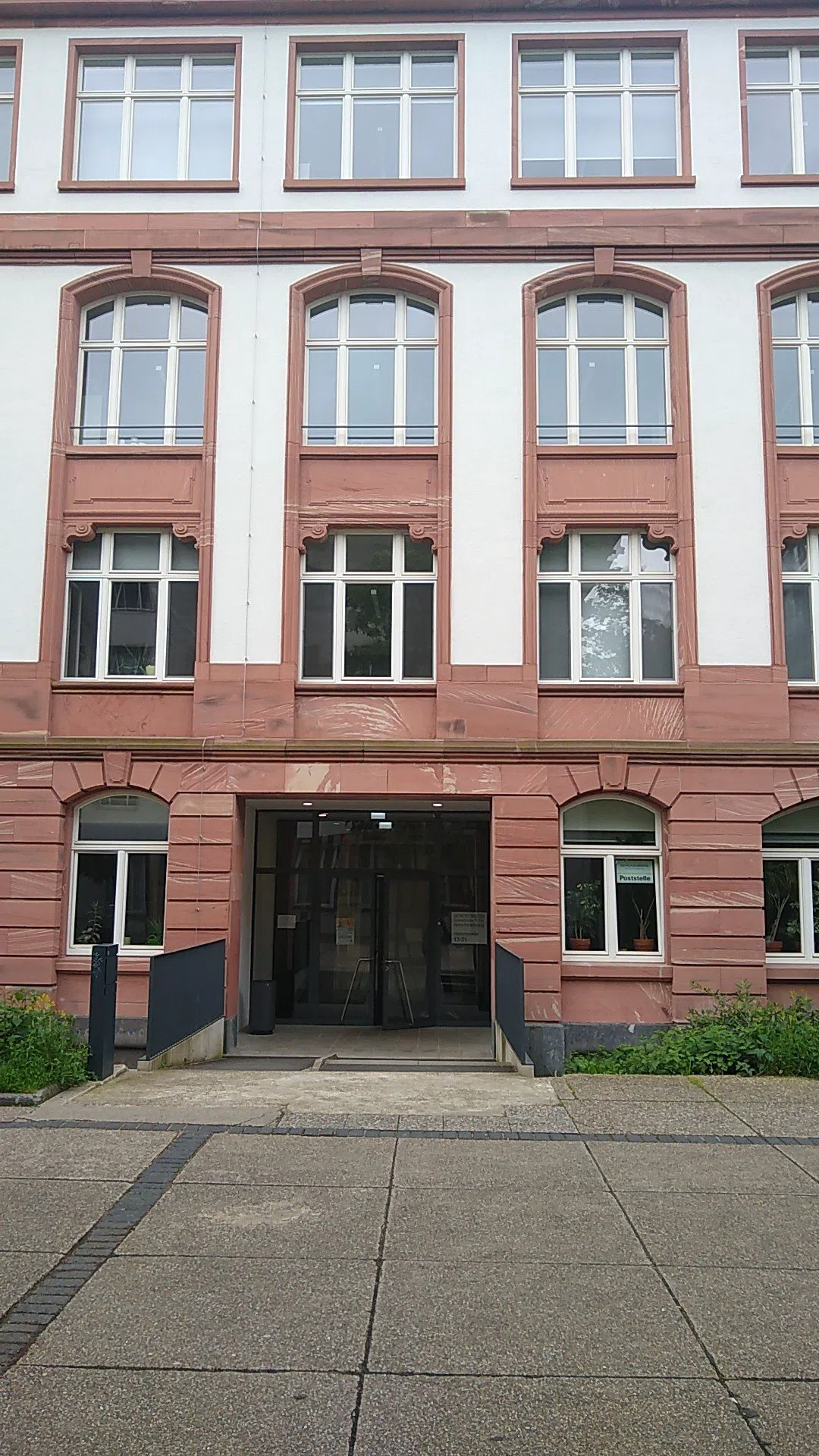
Jügelhaus, the old main building of Frankfurt University in Bockenheim, is worth the detour for one reason above the architecture: this is where the most dramatic single episode of the school's later history played out, the January 1969 crisis in which Adorno — the philosopher who had shaped a generation of the West German student left — found himself on the wrong side of an occupation by his own students, and called the police in. It's a rupture still argued over in seminar rooms today, between the theorist of resistance and the practice of it. The building is a working research faculty now, so this is an exterior-and-forecourt stop only — but standing there, knowing what happened inside, changes how the rest of the walk reads.
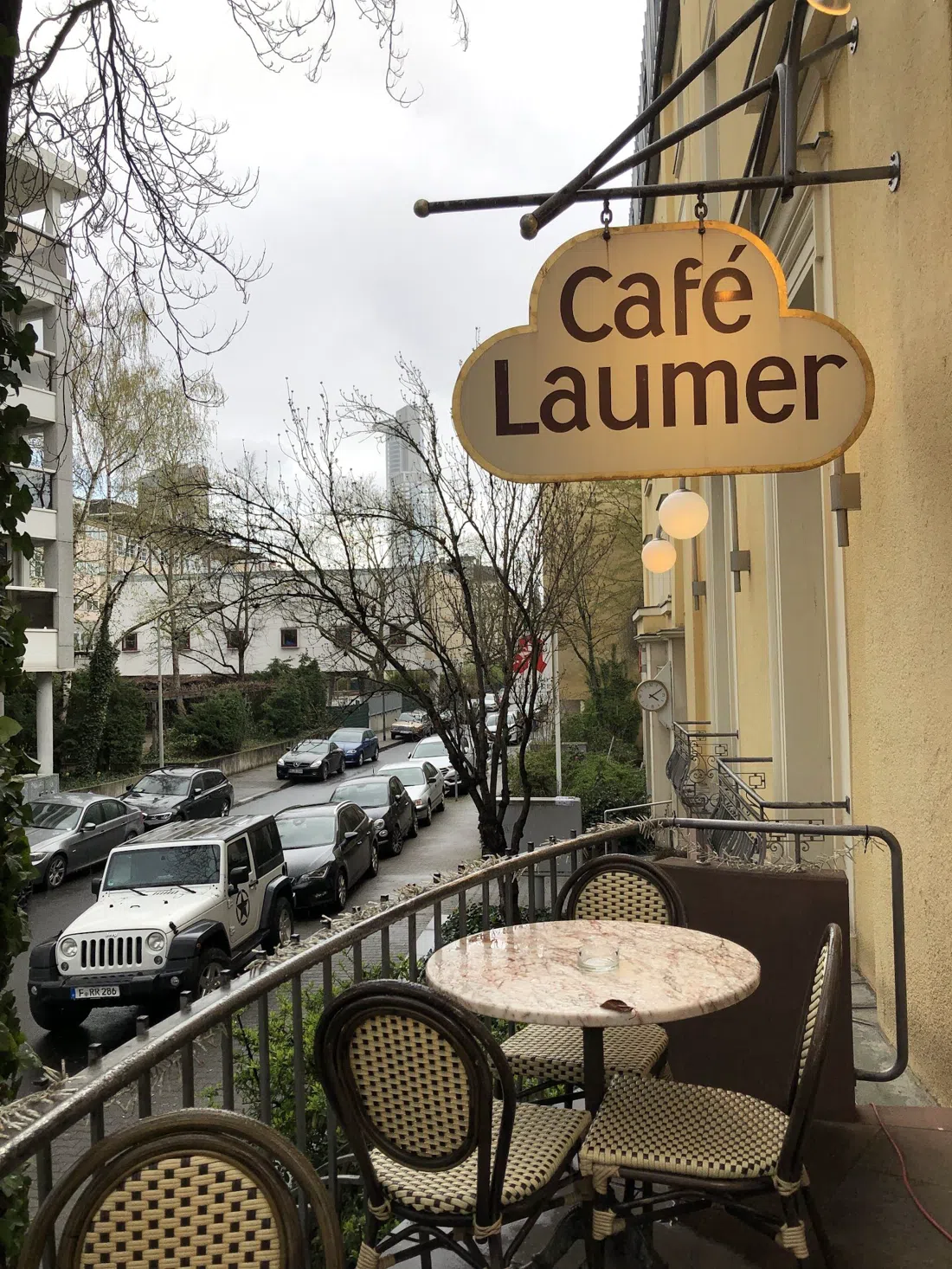
From there it's a short walk to Café Laumer on Bockenheimer Landstraße in Westend, where Adorno held informal after-seminar conversations with students once he'd returned to Frankfurt in 1949 — the kind of talk that never made it into the lecture transcripts but shaped how his ideas actually spread. The café had a real insolvency scare in recent years, a period where its survival wasn't guaranteed; as of 2026 it's trading normally under the same name at the same address, standard café seating, coffee and cake in the €5-9 range. It takes reservations for groups and there's no minimum spend or dress code — this is the one stop on the walk that suits a couple wanting to sit for an hour as much as it suits six people splitting a table.
The Institute's Deeper Roots
None of this happens without Frankfurt's Jewish community, and the Jüdisches Museum Frankfurt, in the Altstadt near the Main, is where that connection gets its proper context: the original Institut für Sozialforschung was endowed by Hermann Weil, a grain merchant, and driven by his son Felix Weil, whose political convictions shaped the Institute's founding mission before Horkheimer's directorship reoriented it toward the interdisciplinary "critical theory" the school became known for. The museum runs regular group bookings and guided tours, is open Tuesday to Sunday 10:00-18:00 (Thursdays until 20:00), and tickets run €6-13 depending on the combination of exhibits and tour. It isn't strictly a Frankfurt School site, but it's the context that stops the story sounding like it appeared from nowhere in 1924.
The School Today
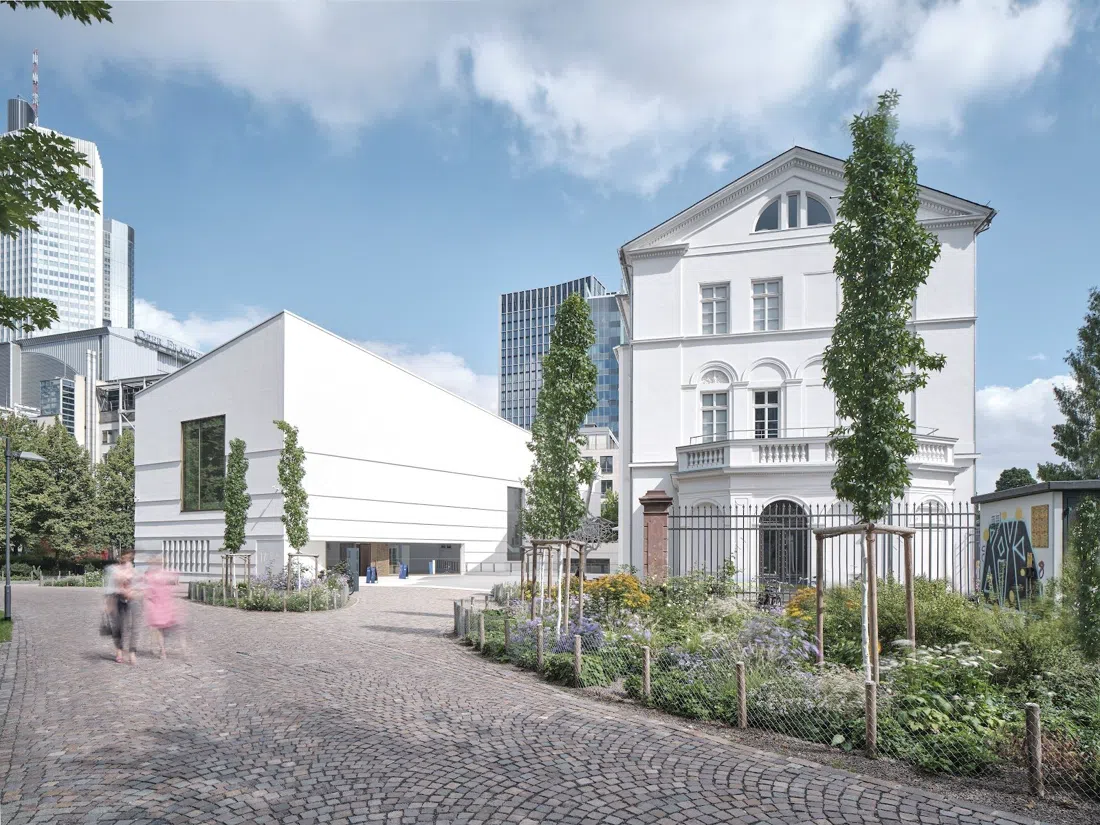
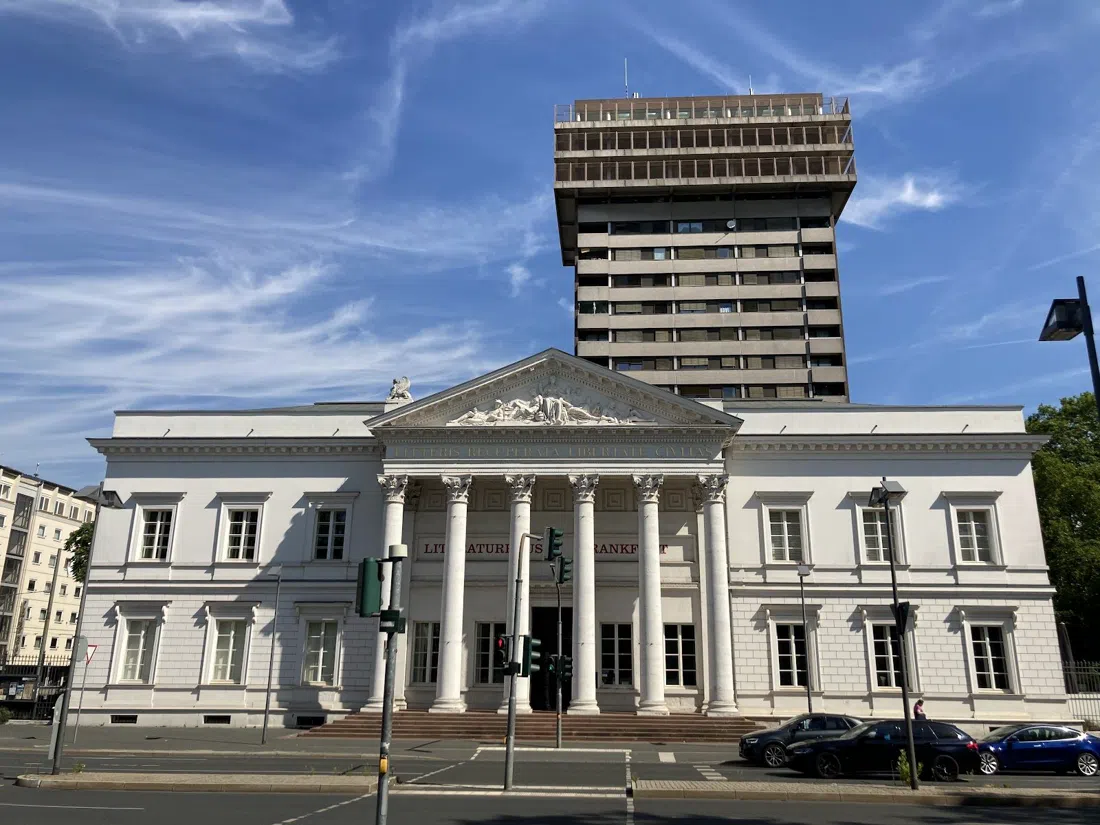
It would be easy to leave this walk thinking critical theory ended with Adorno's death, or with the 1969 occupation. It didn't — Jürgen Habermas, who studied under Adorno and mourned him at his funeral, spent the following decades extending and revising the school's project, and Frankfurt's intellectual culture around the Institute never really stopped. The Literaturhaus Frankfurt, now housed in the reconstructed Alte Stadtbibliothek on Schöne Aussicht in the Altstadt, right on the Main promenade, is the place to see that lineage as ongoing rather than sealed in a glass case. It's a public event venue running readings, lectures and discussions, group tickets are available through the box office, and admission ranges from free to around €20 depending on what's on. Check the 2026 programme before you plan around it — this only works as a stop if there's an event that actually connects to the theme, otherwise it's a handsome building with not much to show a visitor who's just passing through.
The Quiet Ending
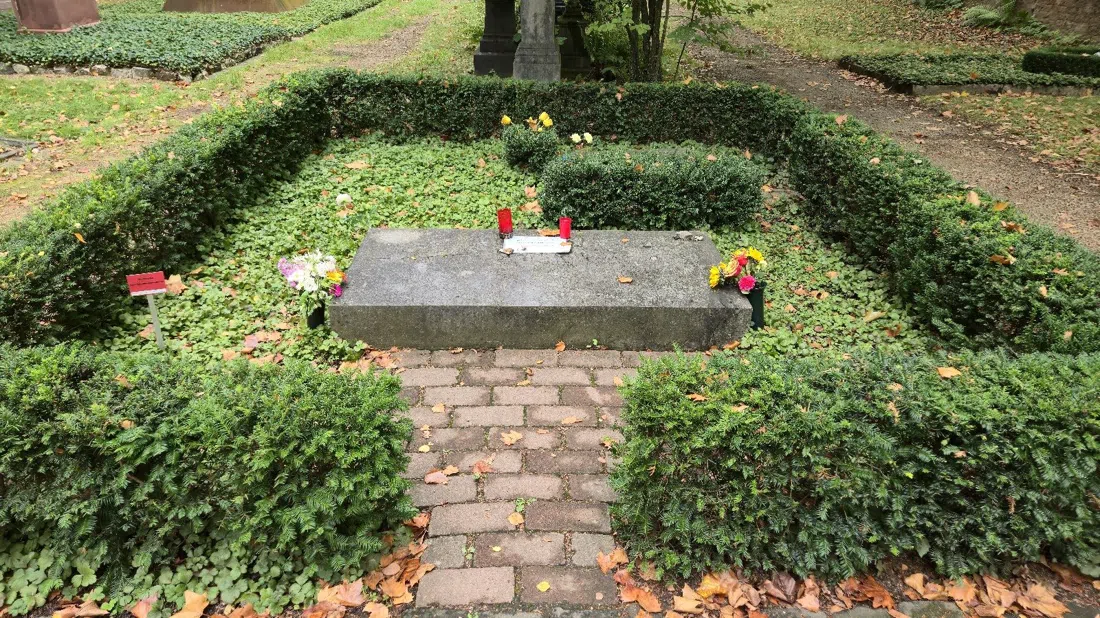
The walk's natural close is the Frankfurter Hauptfriedhof in Nordend, Frankfurt's main cemetery, where Adorno was buried in 1969 — Horkheimer and Habermas were among the mourners — a few rows from where Arthur Schopenhauer, the philosopher Adorno's own thinking never fully escaped, has lain since 1860. The grounds are open to the public daily and free to walk. There's a themed guided route, "Auf den Spuren der Dichter & Denker" (In the Footsteps of Poets and Thinkers), bookable privately for a group through Frankfurter-Stadtevents — typically €10-15 per person on the public version, with a private group rate on request. Go in the late afternoon if you can; it's the one stop on this route where the point isn't information, it's just standing somewhere quietly for a few minutes.
Doing the Walk With a Guide
Self-navigating this route is entirely possible — nothing above requires a ticket except the two guided add-ons — but if you'd rather not be the one cross-referencing addresses on a phone while shepherding a group across Bockenheim traffic, WALK Frankfurt is a private guided-tour operator built specifically for small groups, with itineraries that can be custom-themed on request. Pricing starts from €125 for up to five people over 90 minutes, scaling with group size and duration. Flag this clearly before you book: the Frankfurt School isn't one of their stock itineraries, so it needs to be requested and built in advance — don't expect to turn up and book it as a walk-in.
Practical Details
Getting around: everything on this route sits within Frankfurt's compact U-Bahn/tram network — Bockenheimer Warte is a direct interchange stop, Campus Westend has its own U-Bahn station, and the Hauptfriedhof is served directly by the U5. You won't need a car or a taxi between any of these stops; a day pass on the RMV network is worth it if you're doing more than three legs.
Cash and cards: Germany still runs more on cash than most visitors expect, especially at older, family-run places like Laumer — carry some euros even though cards are increasingly accepted.
Timing: done at a genuine walking pace, with time to actually look rather than tick off stops, the full route takes a day. Short on time, the Institute, the Adorno Monument and the Westend campus form a tight, satisfying half-day loop on their own; add Bockenheim and the cemetery as a second, more reflective half-day.
Budget: the walk itself costs nothing beyond transport — the Institute exterior, the monument, Jügelhaus's forecourt, Bockenheimer Warte and the cemetery grounds are all free. Where you'll spend: the Campus Westend architecture tour (€10-15pp), the Jüdisches Museum (€6-13), coffee and cake at Laumer (€5-9), and, if you book them, the Adorno lecture series or a private guide — which is where WALK Frankfurt's from-€125 pricing comes in.
If you're building a longer stay around this, start with the Frankfurt guide for the wider city context, and sort accommodation early — Westend and Bockenheim both put you within walking distance of most of this route, and a well-placed base is the difference between a rushed afternoon and the full day this deserves. Frankfurt hotel search is the place to start.