
Frankfurt is the rare city where a school of thought has a mailing address. Walk two kilometres between a converted IG Farben headquarters and a bombed-out lecture hall and you cross the actual ground where Horkheimer, Adorno, Fromm, Löwenthal and Marcuse built the Institute for Social Research, went into exile, and came back to rebuild it. This is that walk, in the order the history happened rather than the order a map would suggest.
What ties these stops together isn't a house style so much as a shared method: treat Enlightenment reason, mass culture and capitalism themselves as objects worth interrogating, rather than assuming progress was self-evident. Horkheimer's 1937 essay distinguishing "critical theory" from conventional social science, Adorno and Horkheimer's wartime "Dialectic of Enlightenment," Marcuse's later writing on one-dimensional society — none of it was written as abstract philosophy. It came out of a specific institute, in a specific building, staffed by people who had to leave the country to keep writing it. That's what makes this walk different from a generic literary-landmarks tour: the geography isn't incidental to the ideas, it's part of the argument.
Bockenheim: Where It Began Before the Bombs
Start in Bockenheim, the district west of the old city centre where the Institute for Social Research opened its doors in 1923, years before anyone called this body of thought "the Frankfurt School." Little of that original campus survived Allied bombing in 1944, but the district still holds three stops worth the walk.
Jügelhaus (Bockenheim campus) is the closest surviving building to the ground the pre-1933 Institute actually stood on — the university's old main building, now largely repurposed, viewable only from the outside. There's no public interior access, so don't plan more than ten minutes here; it's an orientation point rather than a destination, and it reads best if you already know that the Institute worked within walking distance of this square before Hitler's rise forced Horkheimer to relocate the whole operation, library included, into an exile that didn't end until the school reopened here in 1949.
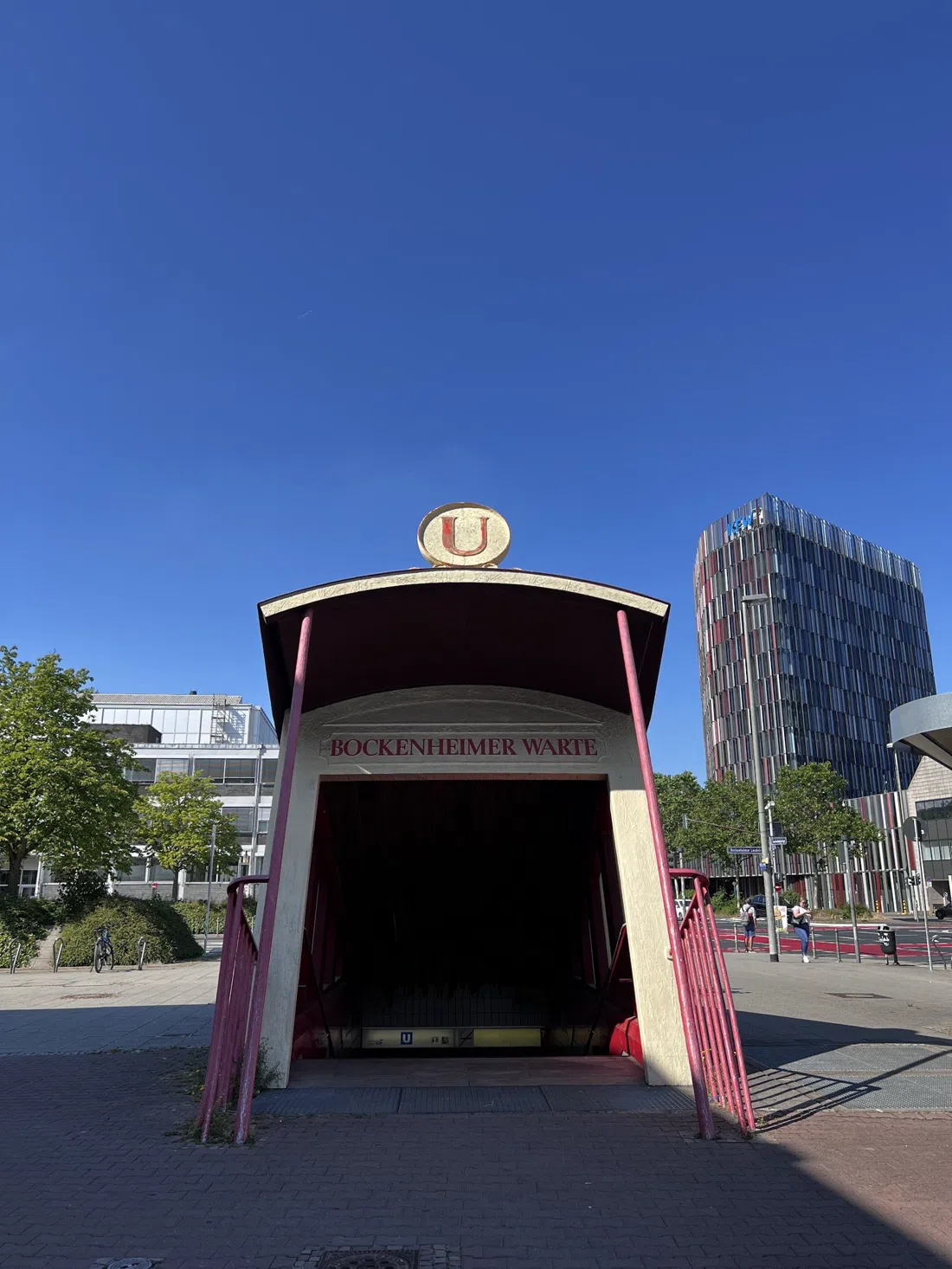
From there, walk to Bockenheimer Warte (Bockenheim), the old city-gate landmark that marks the district's edge and doubles as a transit hub. It's a natural place to get your bearings before the next stop — several cafés around the square can seat a group with a bit of notice, at moderate prices, if you want a coffee before continuing.
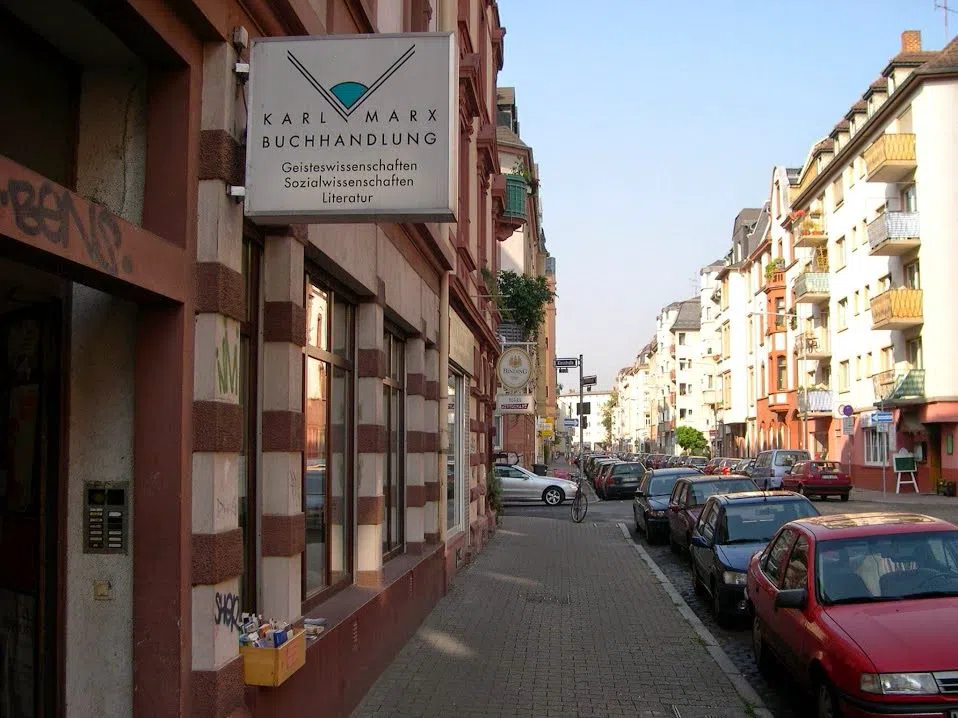
Ten minutes on is Karl-Marx-Buchhandlung (Bockenheim), a left-wing and philosophy specialist bookshop that's occupied this same stretch of ground for more than fifty years. This is the one stop on the whole walk where the theory is still for sale rather than commemorated — expect a proper shop floor, not a gift-shop rack, with books starting around €12. Browsing groups of six to eight are fine; anything larger, call ahead so the staff aren't stepping over each other around your party. It suits a couple with twenty minutes to actually read spines rather more than it suits a fifteen-person tour group working to a schedule.
Campus Westend: Where It Lives Now
Take the U-Bahn (U1, U2, U3 or U8) a couple of stops to Westend and the story changes register entirely. This is where the Institute rebuilt after the war, and where its intellectual descendants still work today.
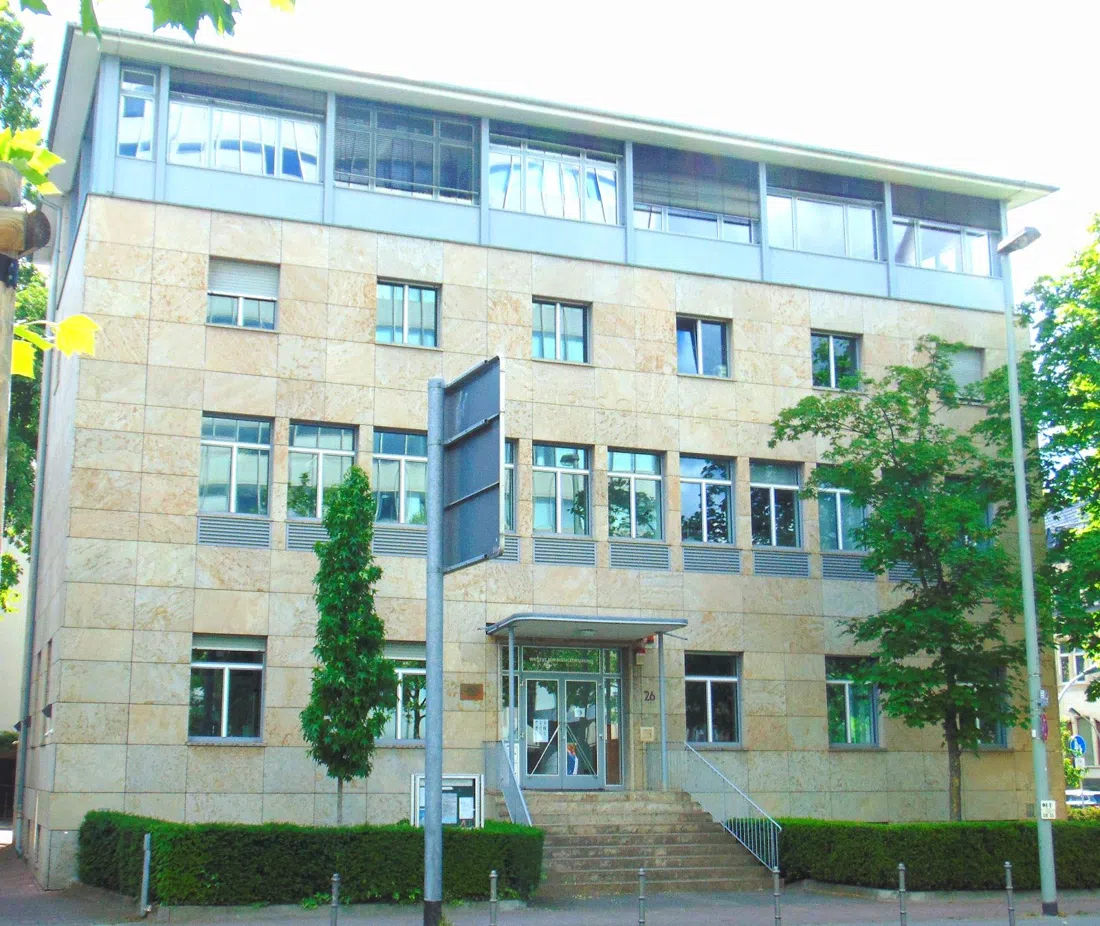
The Institut für Sozialforschung (IfS, Westend) is the actual, current home of the Institute for Social Research — not a museum, a functioning research body, so there are no public tours of the working offices. What you can do is stand in the exterior plaza freely, with any size group, and take in the fact that this is a live address, not a preserved one. It pairs naturally with an official Campus Guides walking tour (more on that below), since a guide can explain what you're looking at in a way a plaque can't.
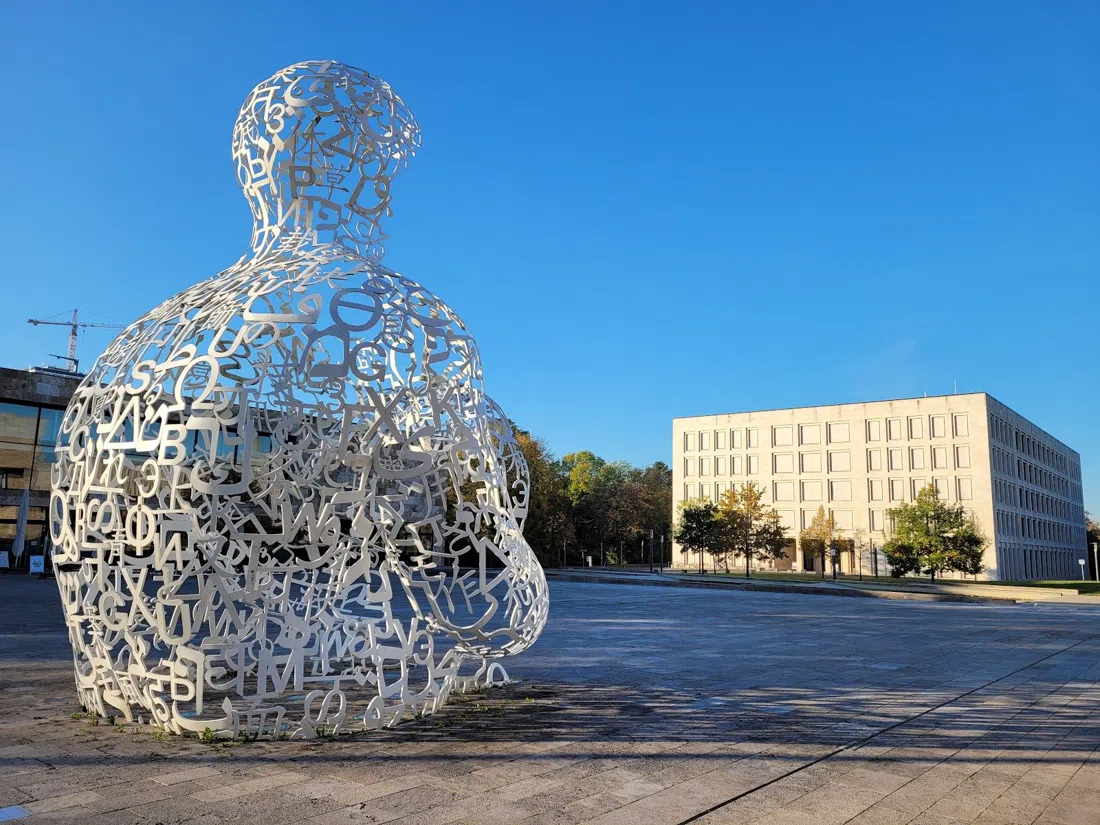
A short walk away, on the same campus green, is the Adorno-Denkmal (Westend) — the open-air Adorno Monument, a glass cube holding a desk, chair and metronome that's become the school's most photographed relic. It moved here from Bockenheim's Tilly-Edinger-Platz in April 2016, so if you're working from an older guidebook or a well-meaning local's memory, ignore it: this Campus Westend location is the only correct one now. It's unrestricted, free, and fine for any group size, which makes it an easy anchor to build a route around.
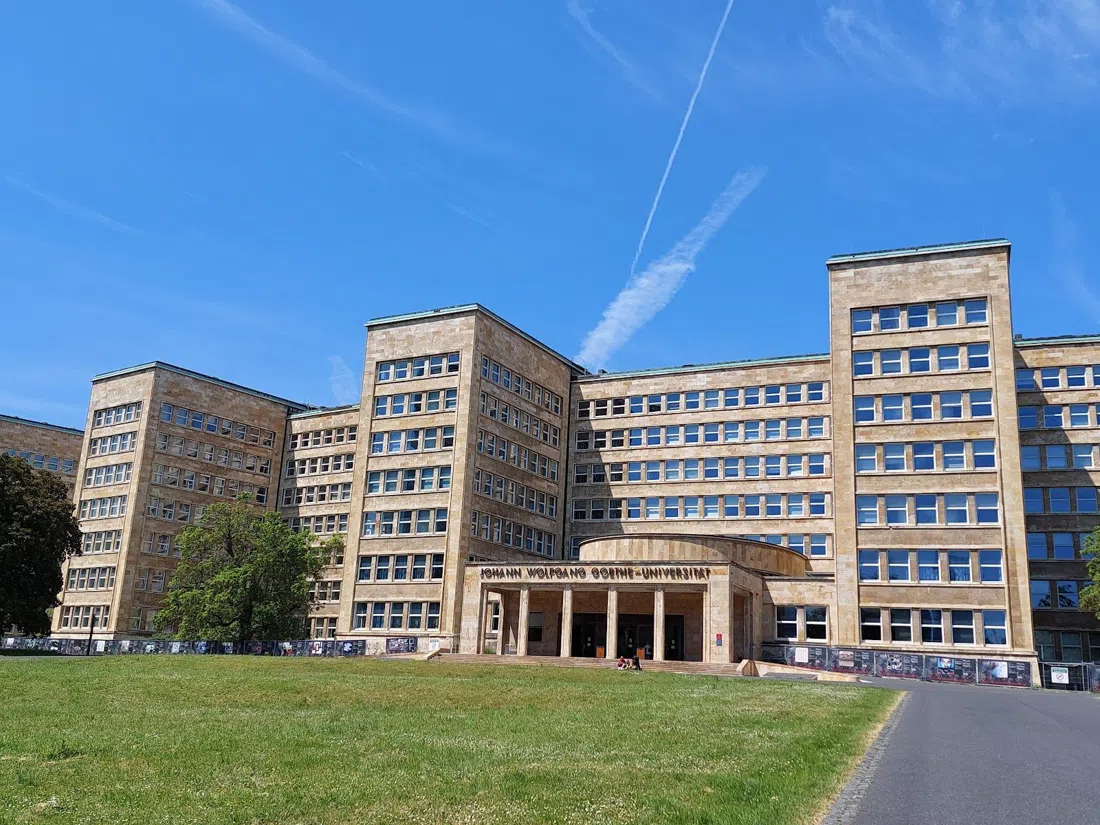
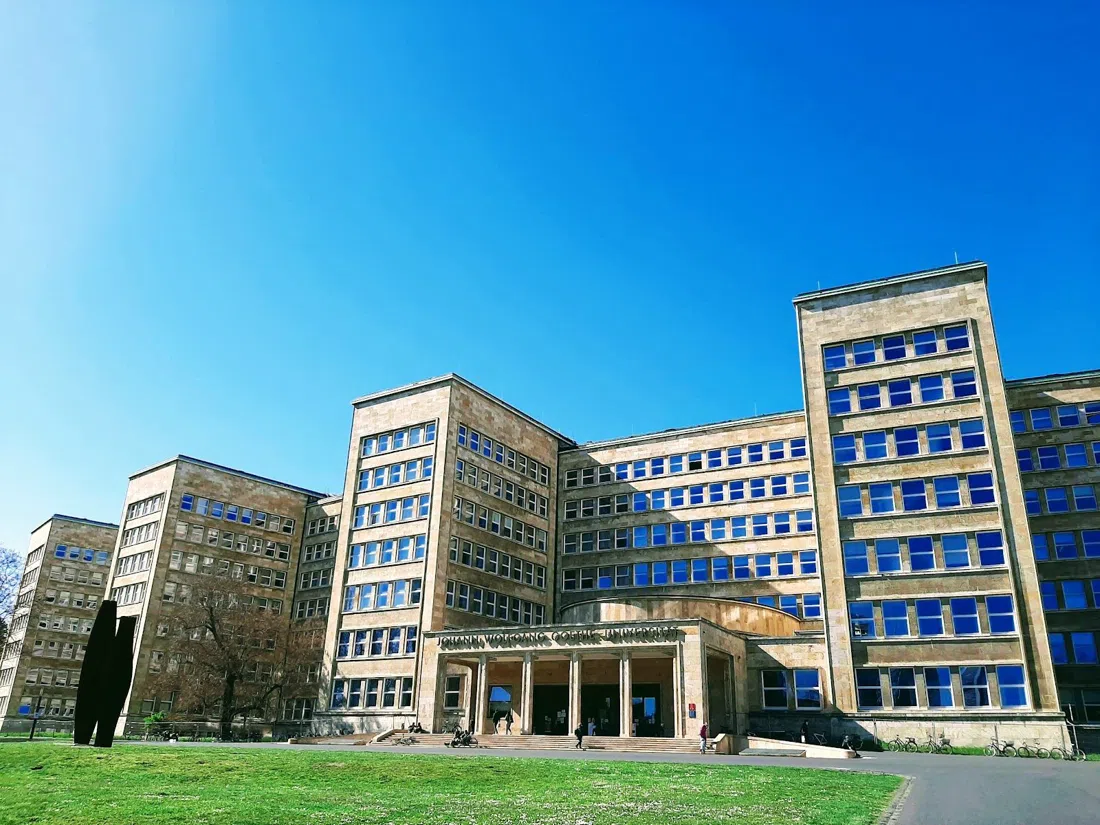
The building that dominates the whole campus is the IG Farben Building (Poelzig-Bau, Westend), the vast headquarters Hans Poelzig designed for the IG Farben chemical conglomerate, completed around 1930. The grounds and the building itself are open to the public free of charge — you can walk in, sit in the atrium, and get a sense of scale that photographs don't convey. This is the hinge of the whole walk: a building raised as the headquarters of an industrial conglomerate that later profited from forced labour and the machinery of the Nazi regime became, after the war, the physical home of the Institute that spent its life theorising exactly how a modern, rational, administered society enables atrocity. You're not choosing between architecture and history here — it's the same stop.
Which is why the next stop matters more than its size suggests. The Norbert Wollheim Memorial (Westend campus grounds) sits on IG Farben's own former corporate ground and commemorates Wollheim, a Holocaust survivor forced into slave labour for the company during the war, who later brought one of the first successful reparations claims of its kind against it. Free public guided tours run the third Saturday of most months and need no registration; groups are welcome. Do not skip this stop to save time — it's the necessary counterweight to the Adorno-Denkmal thirty metres away, the theory of a "totally administered society" standing on the literal ground where that administration turned murderous. Give it real time, not a walk-past.
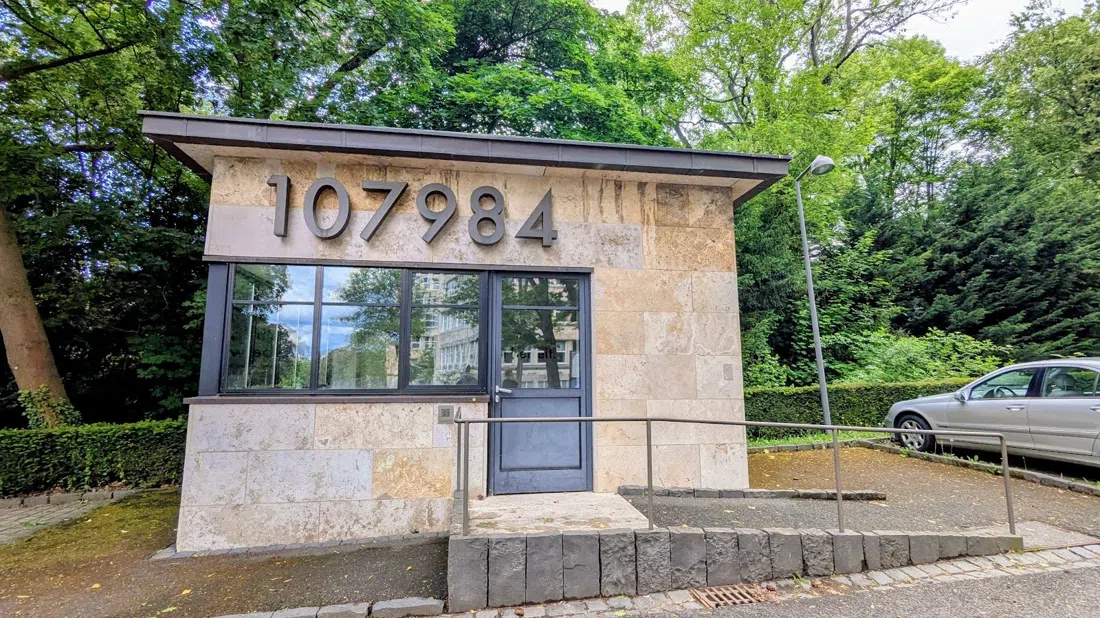
Finish this stretch in Grüneburgpark (Westend), the large public park that functions as connective tissue between the campus stops and the rest of the district. It's unrestricted and free for any group size, and if you've just spent forty minutes at the Wollheim Memorial, it's a legitimately good place to sit before deciding what's next.
The City That Made Them: Museum Judengasse
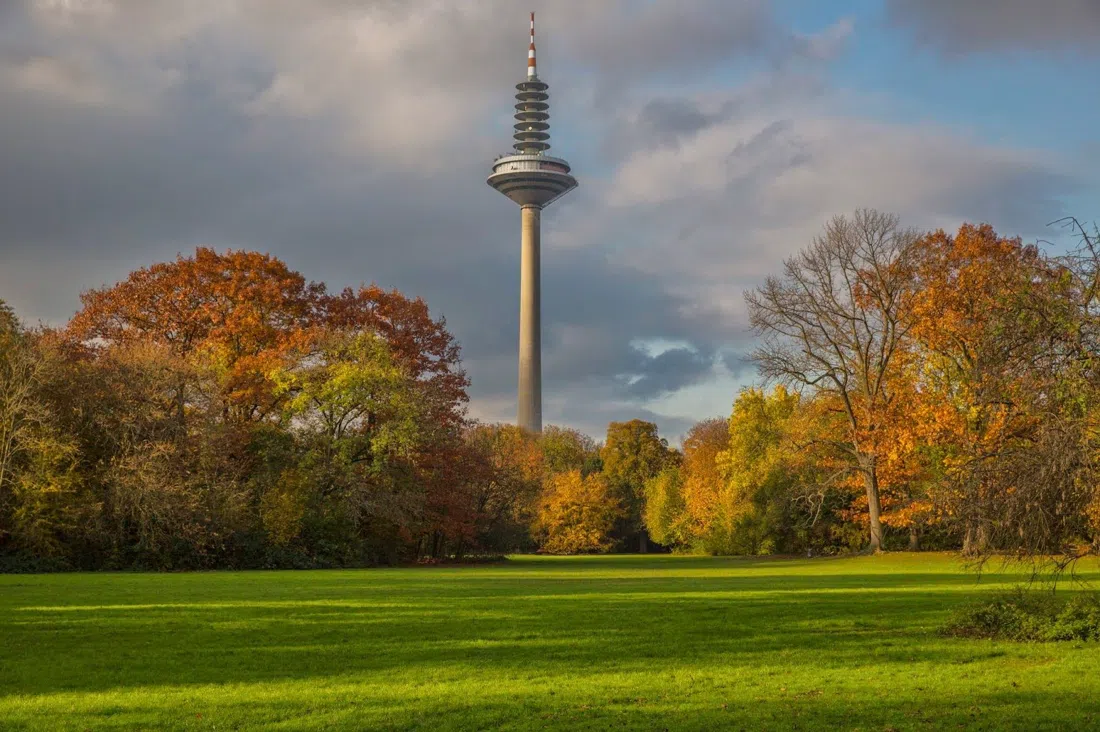
The Frankfurt School's founders — Horkheimer, Adorno, Fromm, Löwenthal, Marcuse — came almost entirely out of Frankfurt's Jewish bourgeoisie, and the Institute's 1933 exile wasn't incidental to that fact; it was caused by it. Museum Judengasse (Altstadt) is where that context lives: excavated foundations of the historic Frankfurt ghetto, with a full group-tour programme and advance booking recommended for parties. Entry is €6 for adults, with combo tickets available if you want to pair it with the city's Jewish Museum. It's a tram ride from Westend, which makes it a genuine detour rather than a stop on the route — but it's the piece that explains why this specific group of people, in this specific city, ended up writing the theory they wrote. If you already know that several of the Institute's founders came from Frankfurt's mercantile and professional Jewish families, walking through these foundations recontextualises them as products of a specific milieu — not just its critics. Read it as prologue, not sightseeing.
For the Architecture Case: Deutsches Architekturmuseum
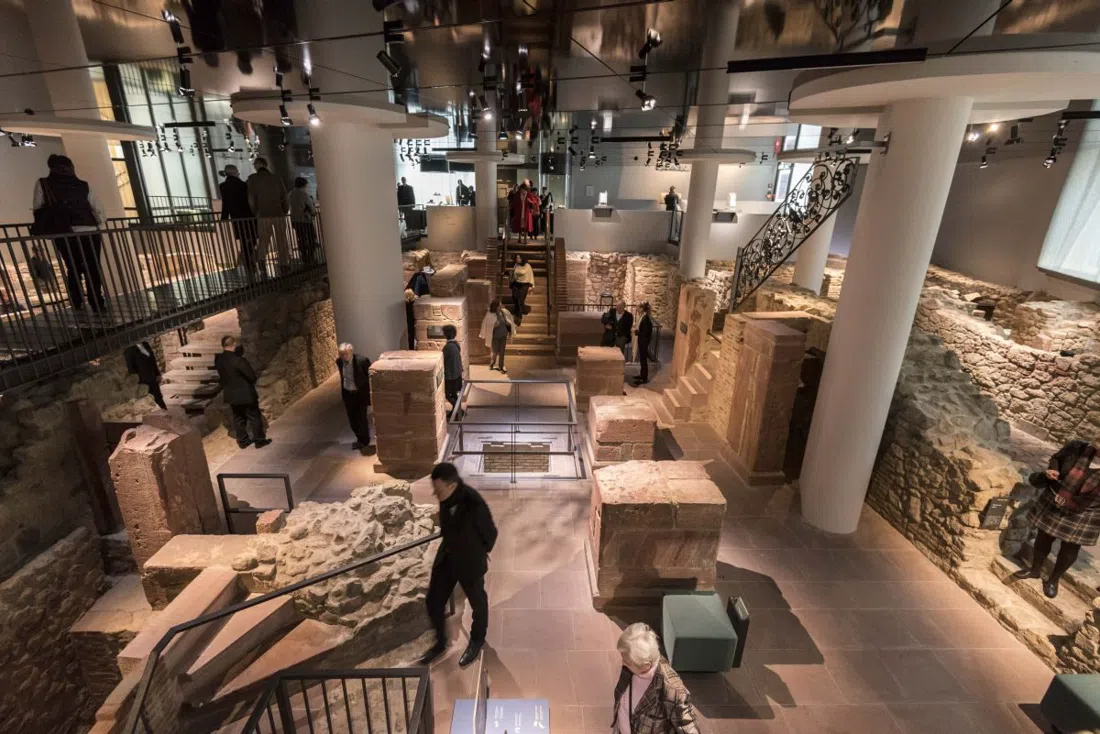
If the IG Farben Building has you wanting the fuller architectural story — Poelzig's career, what made the design controversial, how it survived the war largely intact while so much of central Frankfurt didn't — the Deutsches Architekturmuseum (DAM, Sachsenhausen) runs a standard museum group-booking programme, with admission around €12 for adults, varying by exhibition. It won't add new facts about the Frankfurt School itself, but it sharpens the case for why the IG Farben Building's architecture was already a statement about power and rationalism before the Institute ever moved in — which is exactly the territory critical theory spent decades picking apart. It's across the river from Westend, so treat it as a before-or-after add-on rather than something to fold into the same afternoon as the campus stops.
Doing It With a Guide
None of this requires a guide — every stop above is either freely accessible or bookable on its own terms — but two options exist if you'd rather not self-navigate. Campus Guides (Goethe University's official campus tour operator) runs themed walks including "IG Farben and the War Economy" and "The Architect Poelzig and His Successors," which sit close enough to the Frankfurt School angle to be worth booking directly at [email protected]; tours are built for groups and typically free or donation-based. For something more tailored, Main Frankfurt Guide (a private city-guide service) offers a Campus Westend & IG Farben tour by appointment, priced roughly €150–250 for a small group — ask specifically for the Frankfurt School angle when you book, since the standard script leans architecture and general history rather than critical theory.
Planning the Walk
Getting around: Westend and Bockenheim are both served by the U1/U2/U3/U8 U-Bahn lines — get an RMV day ticket rather than buying single fares if you're covering the whole route in one day. Walking from Bockenheimer Warte to the IfS plaza takes about twenty-five minutes on foot if you skip the U-Bahn hop, and it's a pleasant walk in its own right.
Cash: Almost everything on this route is free. The real spends are a book at Karl-Marx-Buchhandlung, a museum ticket at Judengasse or DAM, or a coffee near Bockenheimer Warte. Cards are accepted nearly everywhere in Frankfurt now, but it's worth carrying some cash for the bookshop and smaller cafés regardless.
Timing: Budget half a day for the Bockenheim-to-Westend core — roughly three hours including real time at the Wollheim Memorial — and a full day if you're adding Museum Judengasse or DAM. The Wollheim Memorial's public tours run the third Saturday of most months only; check the date before building a Saturday around it, since on other days you're limited to the grounds and exterior.
Budget: This is one of the cheapest serious city walks going — under €20 covers museum entry at Judengasse, a coffee, and a paperback from the bookshop. The private guided option is the one real expense, if you choose it.
Who it suits: This is a walk for readers who want ideas attached to specific ground, not a checklist of photo spots — it rewards a slow pace and genuine reading over rapid stops. Couples and solo readers can do the whole thing unguided in an afternoon; larger groups will get more out of it with Campus Guides or the Main Frankfurt Guide booked in advance, since neither the IfS plaza nor the Adorno-Denkmal explain themselves without context.
If you're basing a trip around this walk, Westend is the obvious place to stay — close to the IfS, the monument, and the IG Farben Building, and an easy U-Bahn hop from Bockenheim. Start your search with Frankfurt hotel search, and for the rest of the city beyond this one afternoon, the Frankfurt guide covers where to eat and what else to see.