The Frankfurt issue
The Bembel and the Boardroom: Frankfurt's Cider Houses Where the City Really Drinks
A calm, street-level walk through Frankfurt's Apfelwein taverns — where bankers, students and grandmothers share the same cloudy glass and the same long bench.

By Robin van DijkThe city read on foot, one district at a time
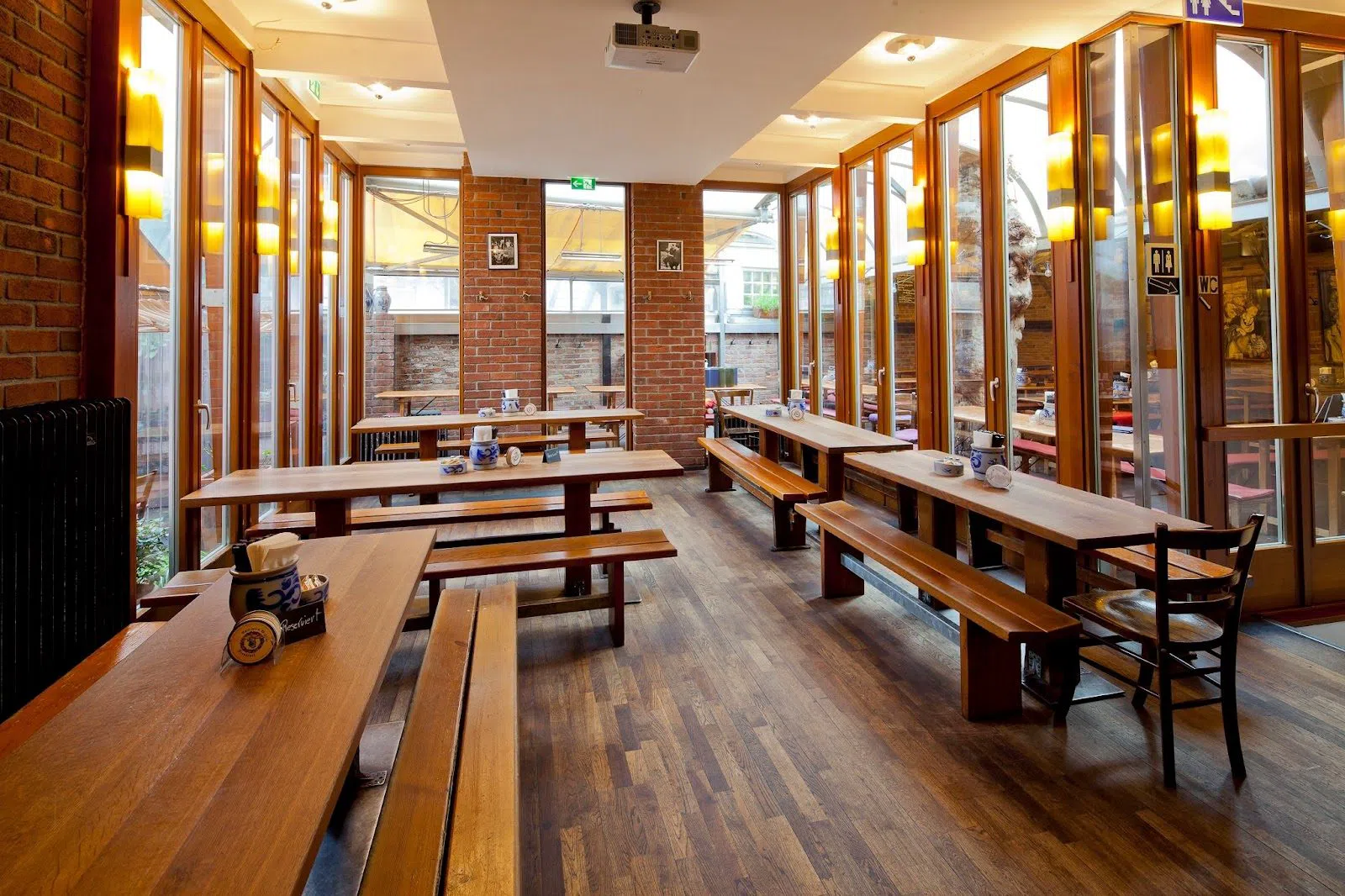
The bembel arrives before the conversation does — a grey stoneware jug flecked with blue, sweating slightly, thumped down on a scrubbed table between strangers who are about to become benchmates for the night. Apfelwein, the tart apple cider Frankfurt calls Ebbelwoi, is not a drink you sip alone; it is poured, shared, topped up and argued over until the jug is empty and someone signals for another. This is a guide to the houses where that ritual still runs on its own terms — where bankers from the glass towers across the river end up elbow to elbow with plumbers, students and grandmothers, all drinking the same cloudy glass.
Frankfurt is a small city that behaves like a large one, and nowhere does it drop the corporate register faster than in its cider houses. The financial district gleaves you the moment you cross the Main into Sachsenhausen. What follows is not a bar crawl — it's a set of rooms, benches and gardens, walked in an order that makes sense whether you have one evening or three.
What you're actually drinking
Ebbelwoi is drier and more bracing than the sweet ciders many visitors expect — closer to a still, sharp white wine than to anything fizzy. It comes by the glass, but properly it comes in a bembel, the ridged stoneware jug, poured into a gerippte glass whose diamond-cut sides were designed so greasy fingers could keep their grip. You'll see it ordered three ways: pur (straight), sauergespritzt (cut with sparkling water, the local default on a warm night), or süßgespritzt (with lemonade, sweeter and easier if the tartness catches you out). A glass runs around €2 almost everywhere, which is part of the point: this is democratic drinking.
The food is not an afterthought. Look for Grüne Soße — Frankfurt's cold green herb sauce, served over boiled eggs or potatoes — and Handkäse mit Musik, a pungent sour-milk cheese marinated in onions and cider vinegar (the "music" is a digestive joke you'll understand later). Schnitzel, ribs and pork knuckle anchor most menus, with mains sitting in the €10–18 band. It is honest, generous food built for soaking up several bembel between friends.
Plan your Frankfurt trip
Live prices from our booking partners.
Free cancellation on many rooms. We may earn a commission when you book.
Start here: the Sachsenhausen classics
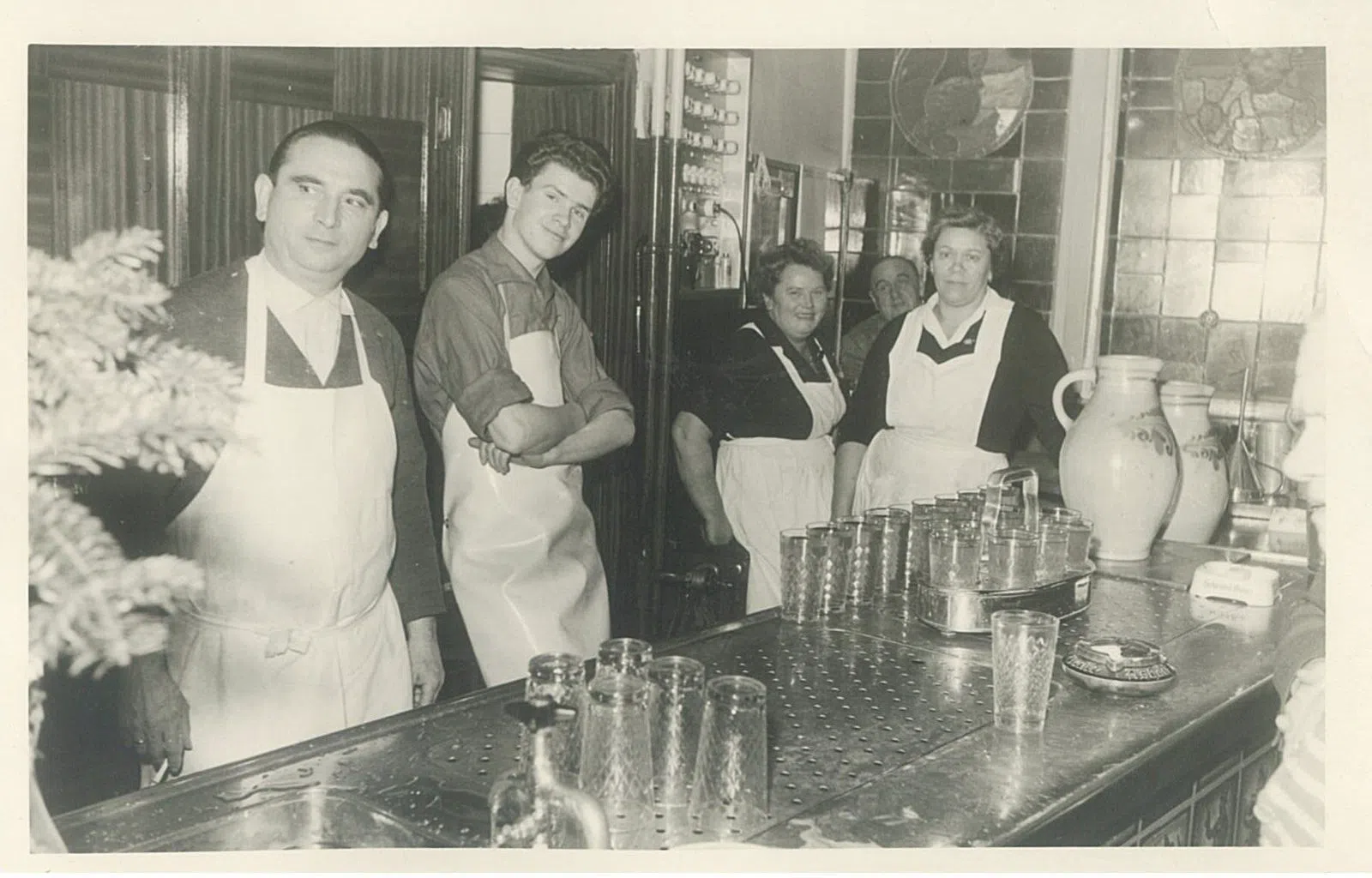
If you make one stop, make it Apfelwein Wagner (Sachsenhausen), the definitive institution on Schweizer Straße, pouring since 1931. Long shared benches run the length of the rooms, and the volume climbs as they fill; you sit where there's space and shift up for the next arrivals. Walk-ins are fine midweek, but a large party on a Friday or Saturday should reserve — Wagner fills, and it fills with locals as much as visitors. It's cash-friendly, loud and reliably good, and it's the first stop most first-timers should make precisely because nothing about it is staged.
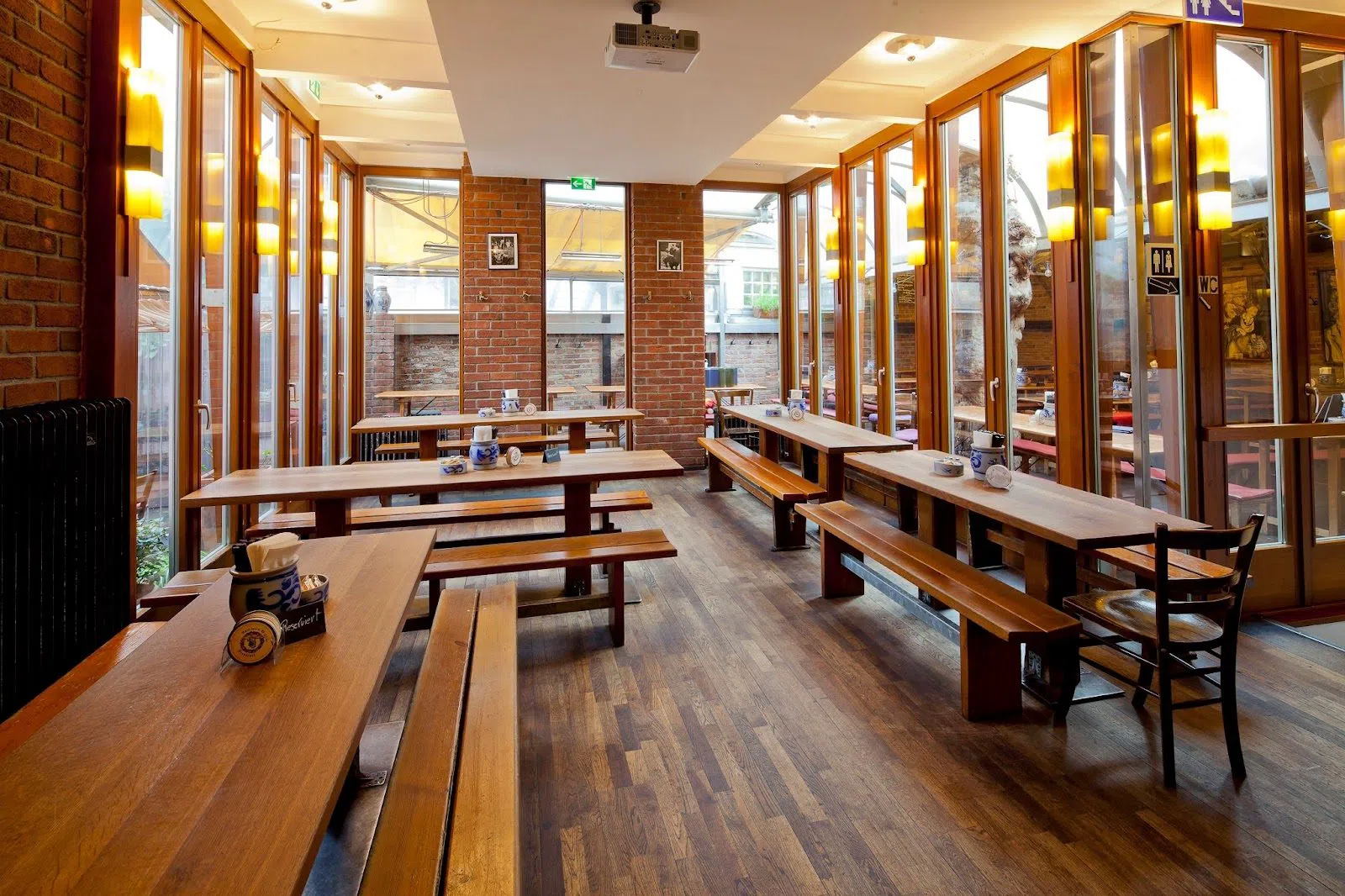
A short walk away, Zum Gemalten Haus (Sachsenhausen) is one of the oldest and most photogenic Ebbelwoi houses in the city — the painted façade alone earns its place on the street. Inside, communal seating makes it a natural fit for groups, and the kitchen matters: green sauce and ribs are made in-house rather than bought in. It closes on Mondays, so plan around that, and book ahead if you're bringing a party. It suits a table of six who want the full traditional room without hunting for it.
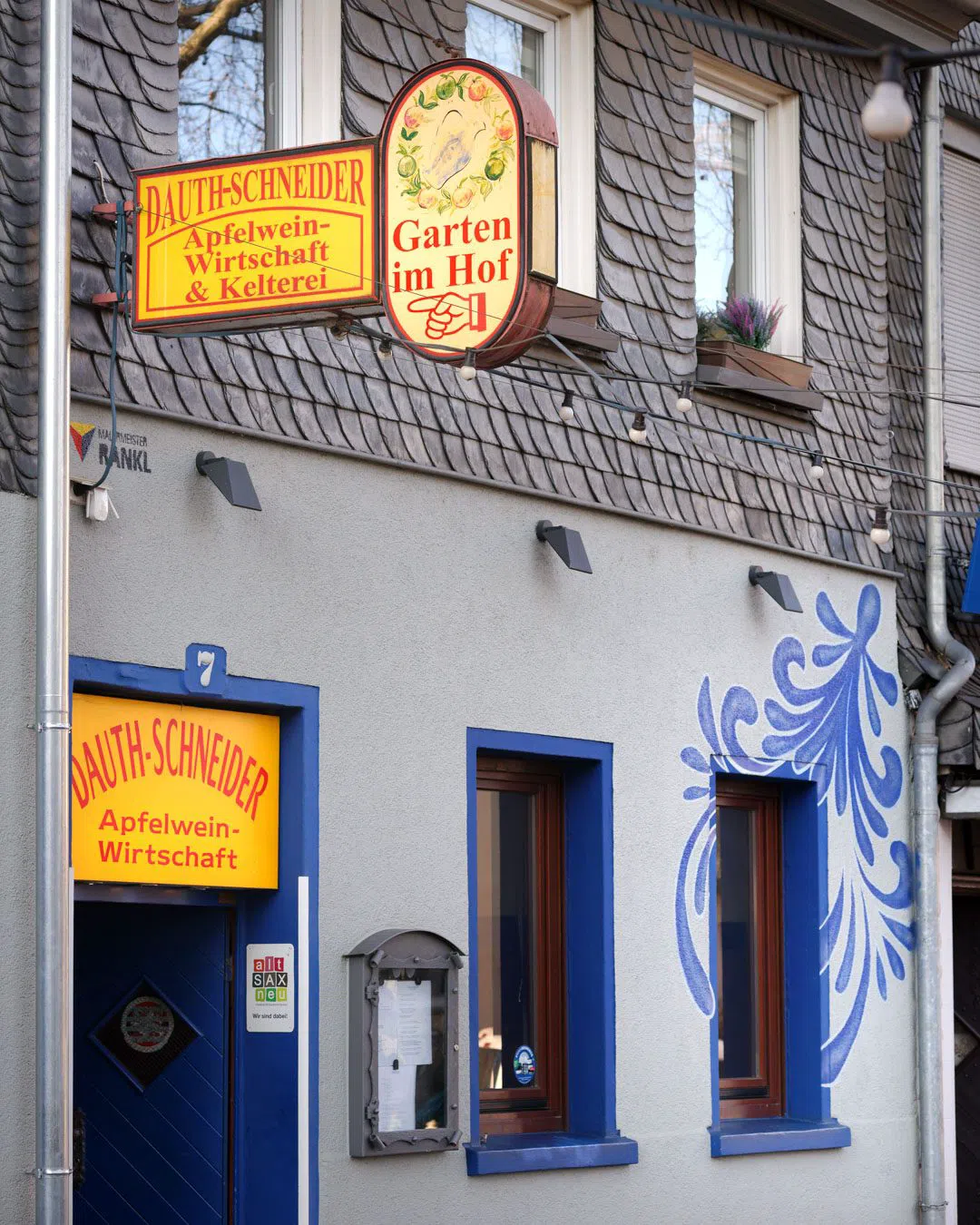
For a warm evening, Apfelweinwirtschaft Dauth-Schneider (Alt-Sachsenhausen) is the obvious call. More than 150 years old, it opens onto one of the best sprawling alley gardens in the quarter — the kind of place where a group can spread across several tables under the trees and lose an hour without noticing. Reserve for bigger parties; the garden is popular for exactly the reason you'd want it. It's less intimate than some, but for a crowd on a mild night it's hard to better.
The old guard of Alt-Sachsenhausen
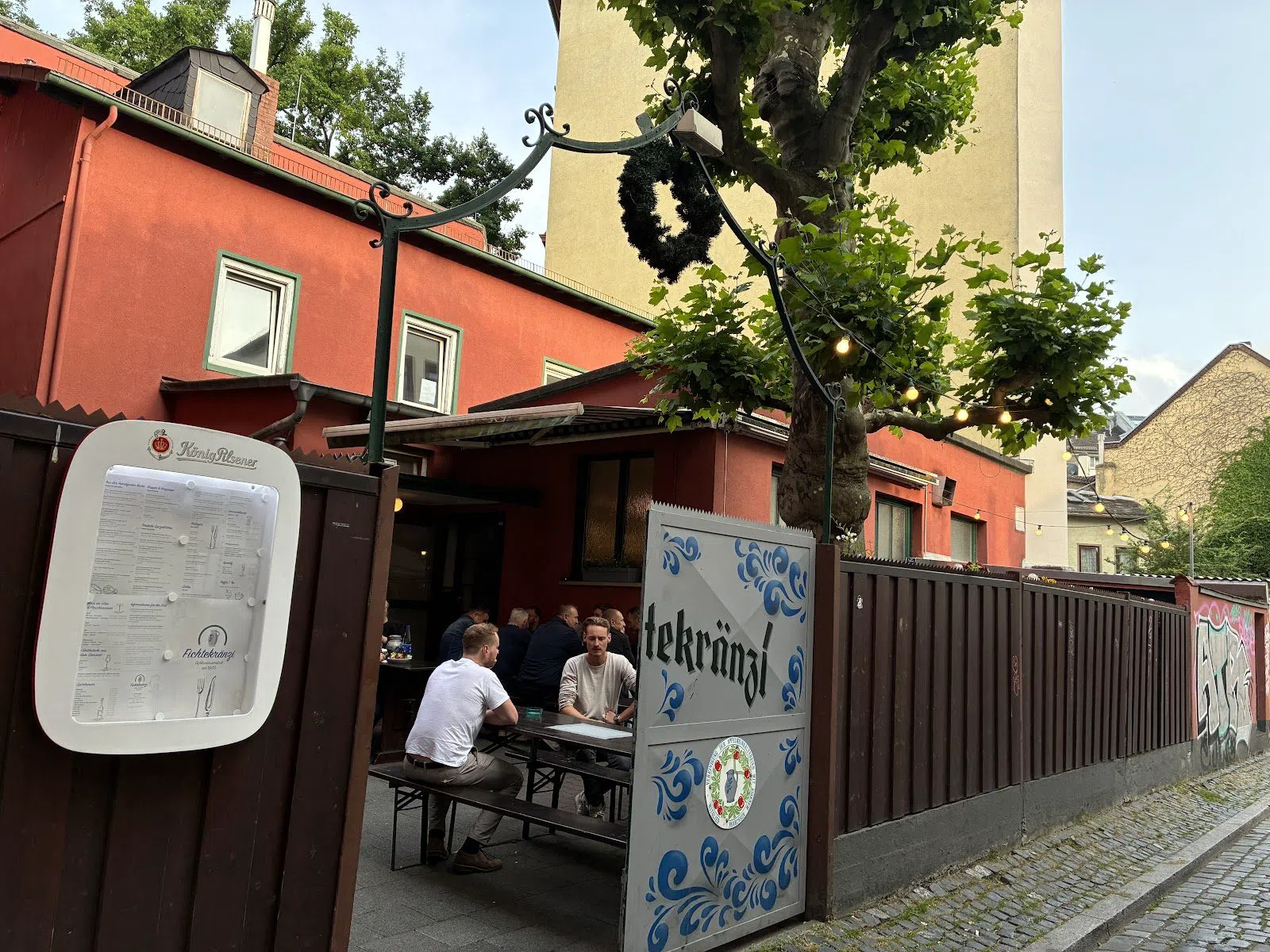
The tangle of lanes in Alt-Sachsenhausen holds the highest concentration of these houses, and it rewards walking slowly rather than diving into the first lit doorway. Apfelwein-Wirtschaft Fichtekränzi (Alt-Sachsenhausen) has been open since 1849 and takes its name from the spruce wreath — the Fichtekranz — that once hung outside to signal cider was flowing. Long tables and a summer garden make it a group favourite; it's atmospheric and genuinely welcoming to visitors, which isn't a given in every historic room. Reserve ahead in season.
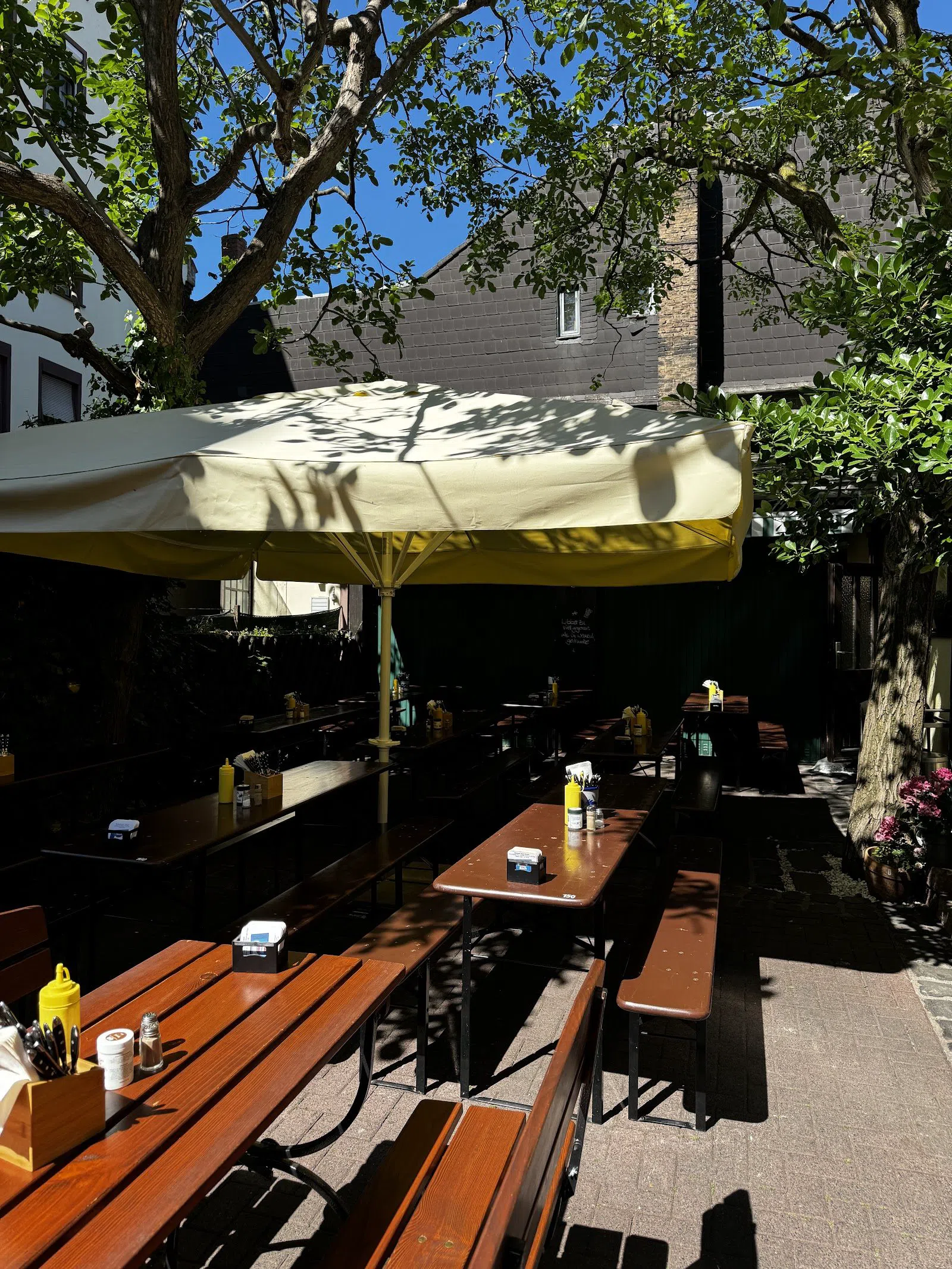
Round the corner in spirit if not always in street, Apfelweinwirtschaft Atschel (Sachsenhausen) has run since 1861 and is beloved locally for its schnitzel and pork knuckle — regulars rate the kitchen among the city's best. The honest caveat: it's cosy, meaning small. A couple can usually find a corner, but a group should book, especially at weekends when it fills fast and early. Come here for the food and the intimacy rather than for room to sprawl.
If you're travelling with anyone who wants the tradition without the late-evening-only opening hours, Apfelwein Struwwelpeter (Alt-Sachsenhausen) opens from late morning daily and is themed on the local children's-book character of the same name. Long tables and all-day hours make it easy for both groups and drop-ins — a fun, low-stakes pick right in the heart of the tavern quarter, handy for a mid-afternoon glass when other houses are still shuttered.
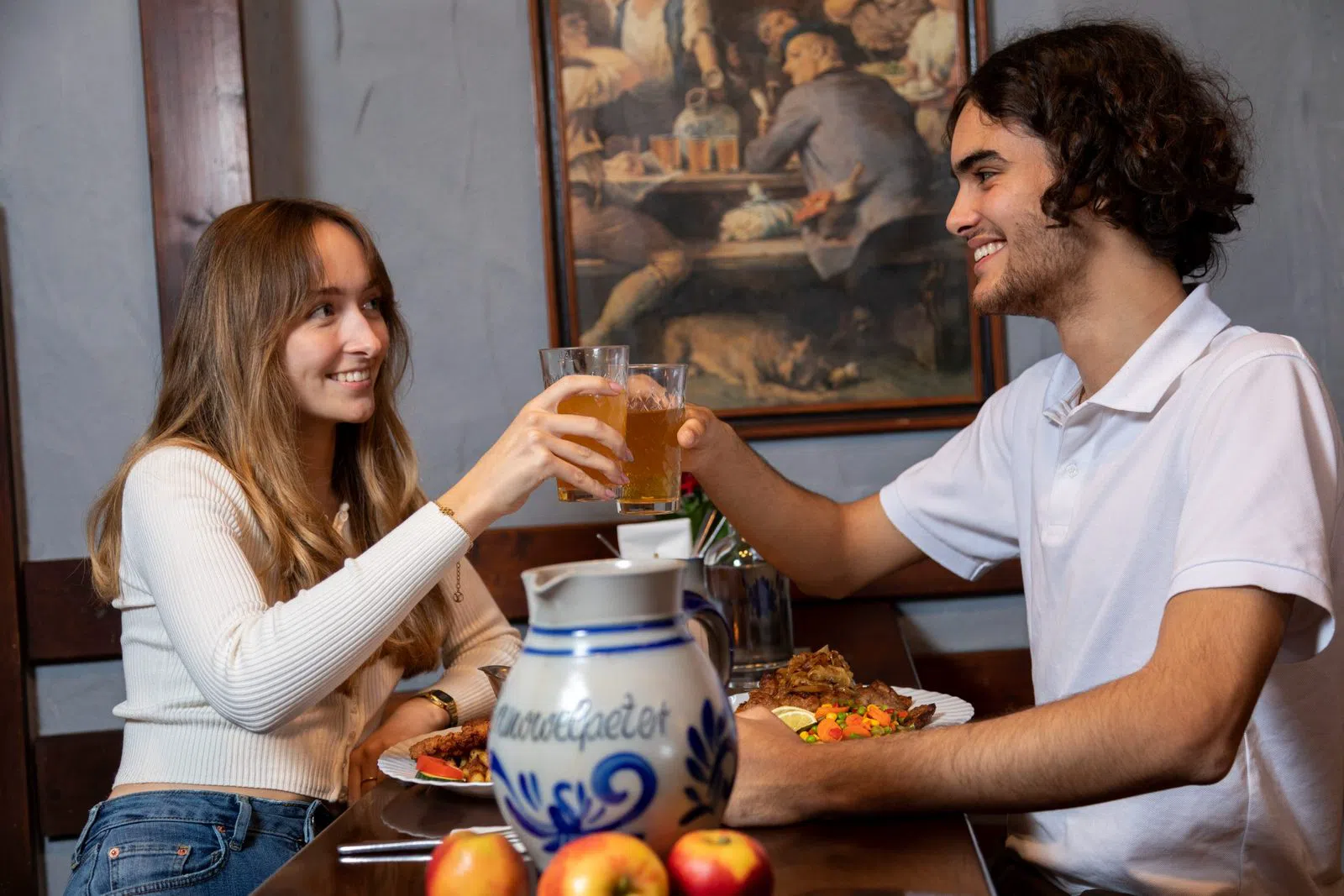
The standout of this stretch for anyone who actually wants to taste is Daheim im Lorsbacher Thal (Alt-Sachsenhausen), with a tradition reaching back to 1803 and what is fairly claimed as Germany's deepest cider list — more than 30 Hessian and European varieties. This is the house for the curious drinker who wants to go beyond the standard cloudy pour, and its scale — a 250-seat courtyard plus 170 seats indoors — makes it genuinely capable of holding large groups and events without splitting them across rooms. Prices sit a notch above the house average (cider from about €2.50, mains €13–20), and it's worth it for the range alone.
For groups, gardens and a bit of quiet
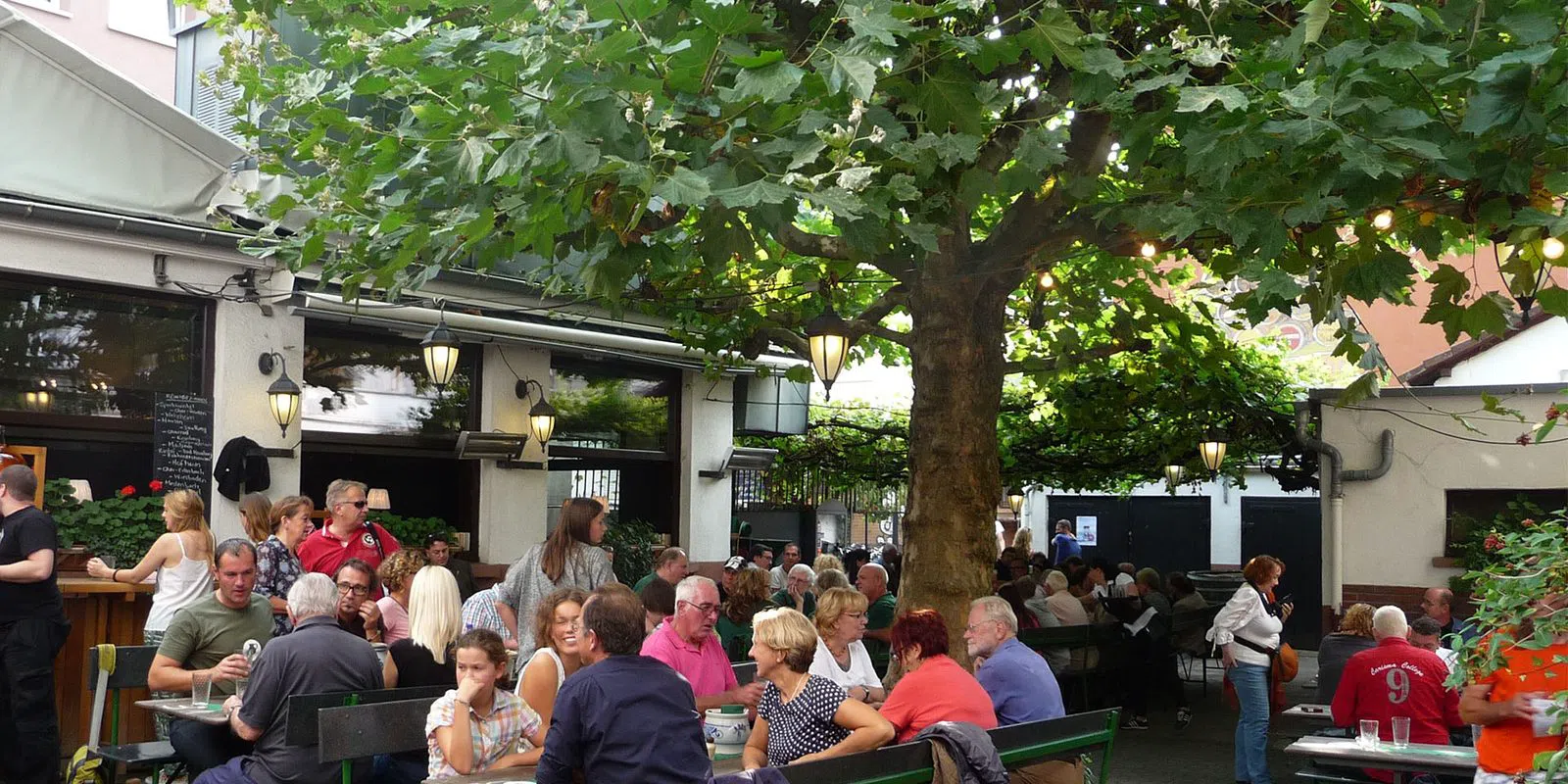
Not every good night needs the crush. Zum Eichkatzerl (Sachsenhausen), first recorded in 1880 and named for the squirrels — Eichkatzerl in the local dialect — that once lived in its trees, is one of the most group-ready rooms in the city: a 120-seat shaded garden plus a separate 60-seat private room. If you're organising something with a fixed guest list, that function room is a quiet asset most cider houses can't offer. It's the pick when you want the tradition but also want to hear the person across the table.
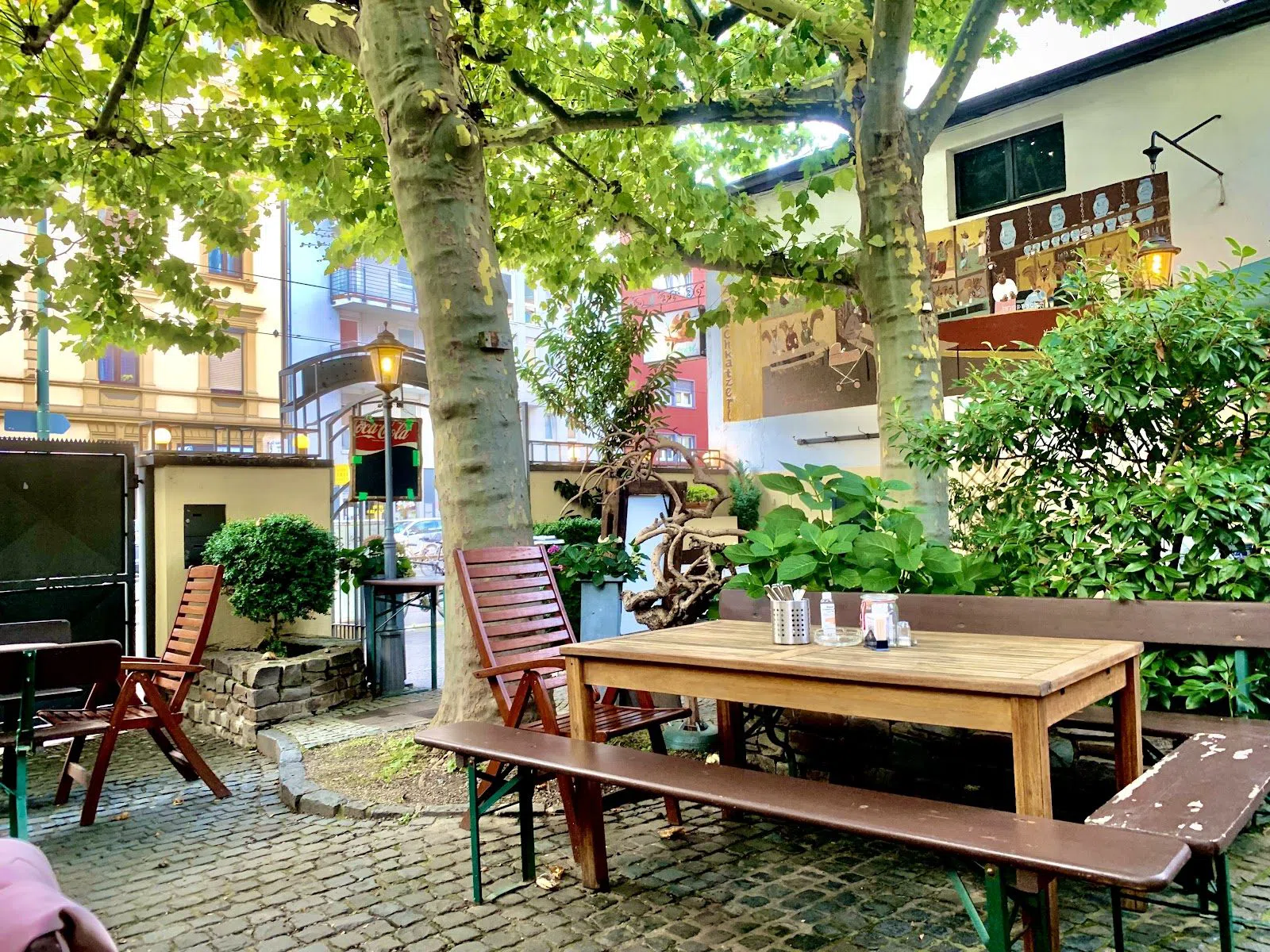
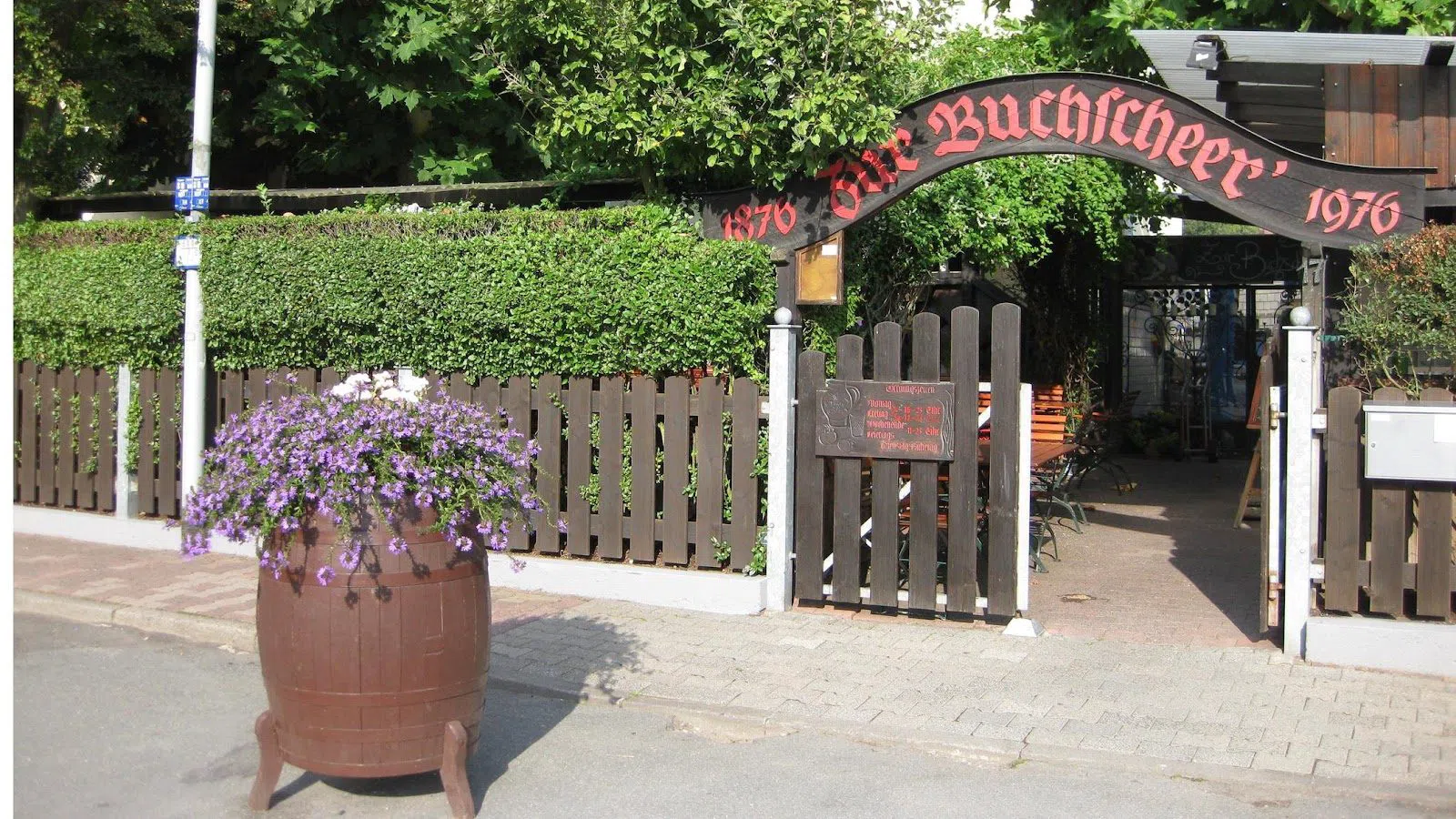
Further out, and worth the short walk away from the crowds, Zur Buchscheer (Sachsenhausen) has been family-run since 1876 and celebrates its 150th year in 2026. Its big, tree-shaded summer garden is the draw — a calmer, greener setting than the packed lanes closer to the river. Note the hours before you set off: it's closed Mondays and Tuesdays, and weekends warrant a reservation. For a couple or a small group who want the ritual without the tourist volume, this is one of the most rewarding stops in the whole guide.
Loud, young and off the usual track
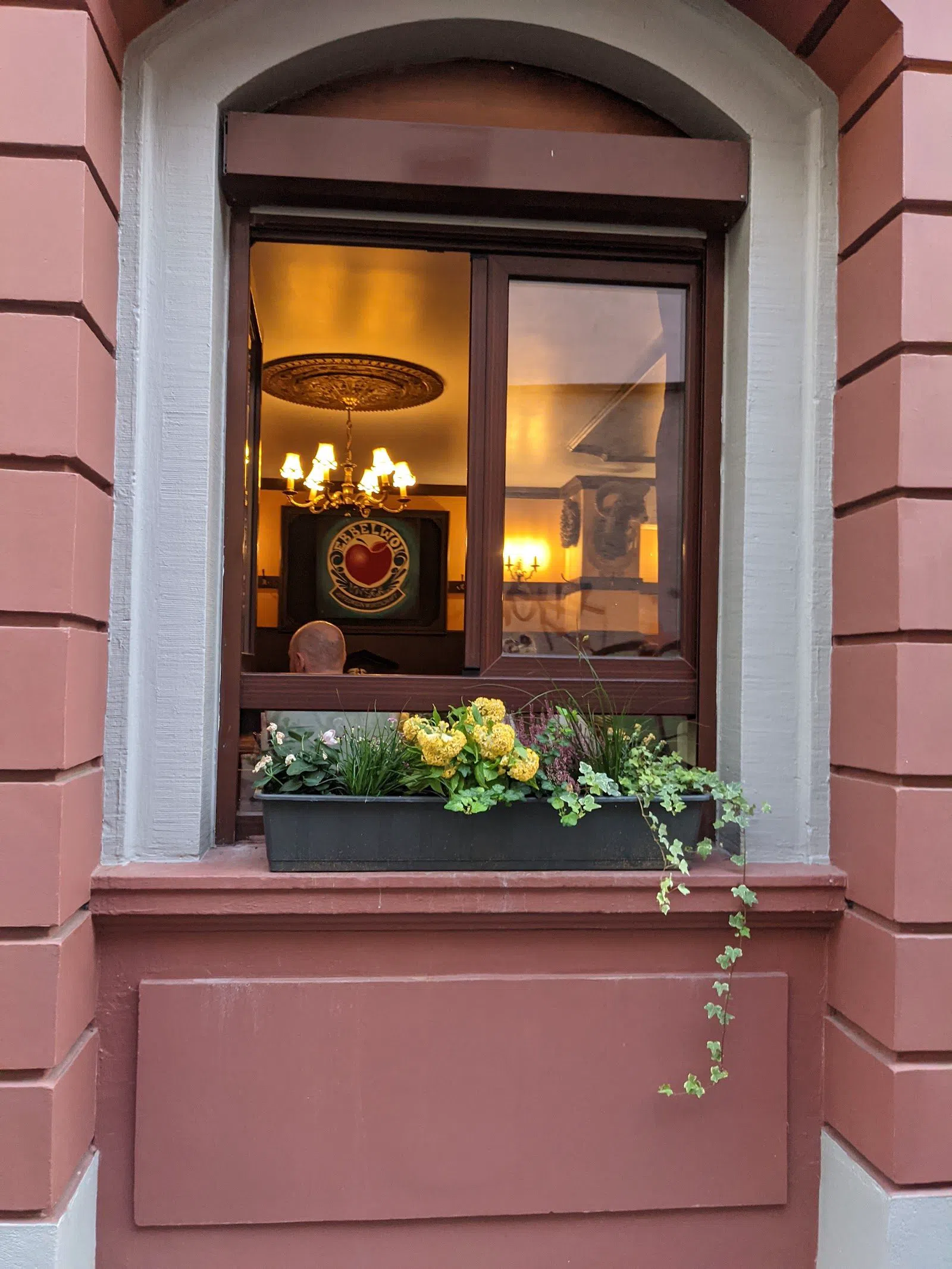
Ebbelwoi is not a museum piece, and two houses prove it. Ebbelwoi Unser (Sachsenhausen) is the current "in" house — young, loud and sociable, with beerhall-style communal seating that means you will share your table with other groups. That's the appeal: it's built for a night out with a crowd rather than a quiet dinner. Book ahead, and bring cash — it's cash only, though there's an ATM nearby. Couples after a calm evening should look elsewhere; groups who want energy will be at home.
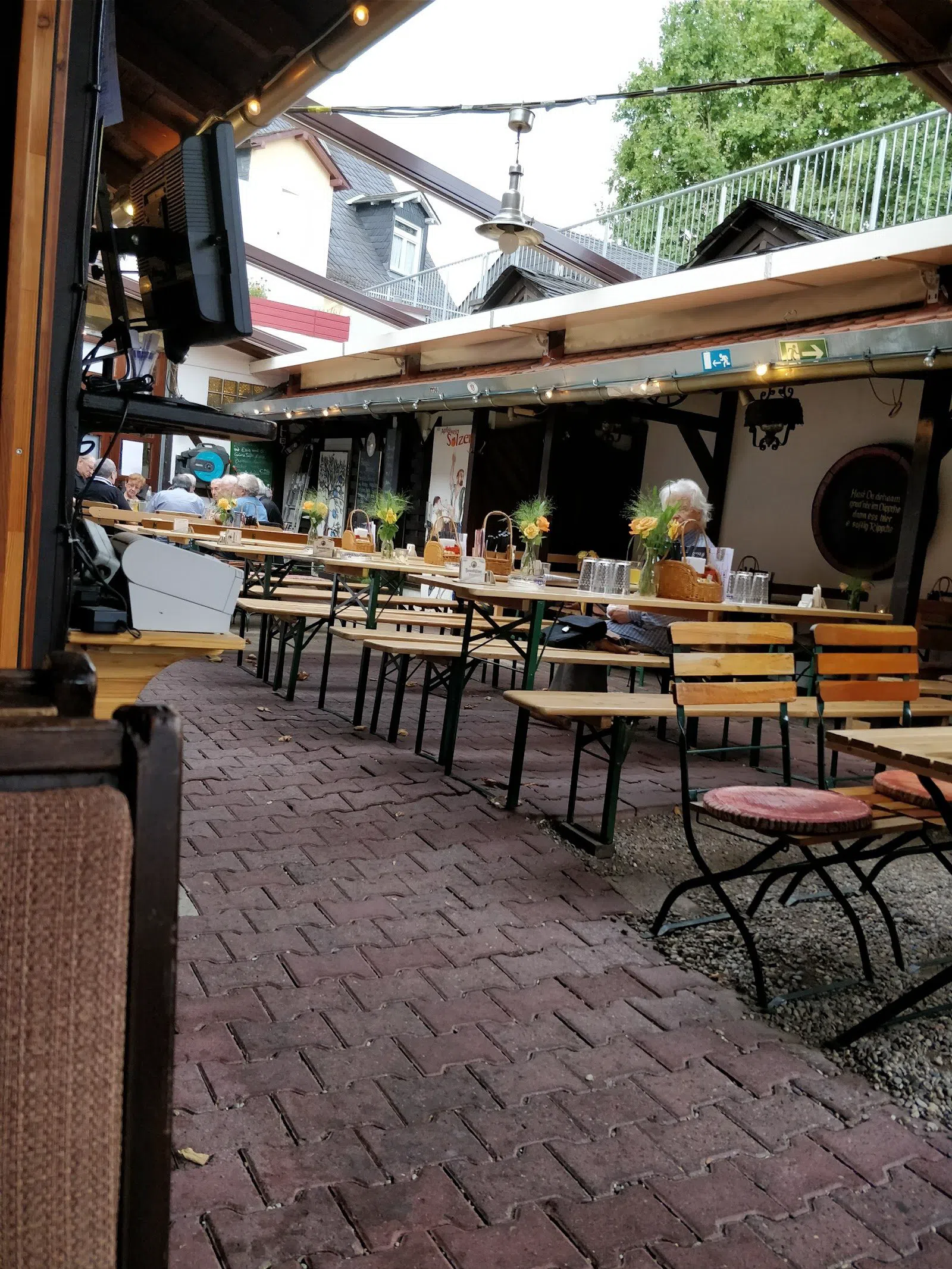
To leave Sachsenhausen entirely, cross town to Bornheim and Apfelwein Solzer (Bornheim), a fifth-generation family cider house making Apfelwein since 1893. Shared tables and a garden welcome groups, and the setting — the livelier, more residential Berger Straße district rather than the tourist lanes — gives you a different, more everyday Frankfurt night. It's a reminder that the cider tradition belongs to the whole city, not just one riverside quarter, and it's an easy recommendation for anyone who's already done Sachsenhausen and wants to see where locals go next.
If you want to understand it, not just drink it
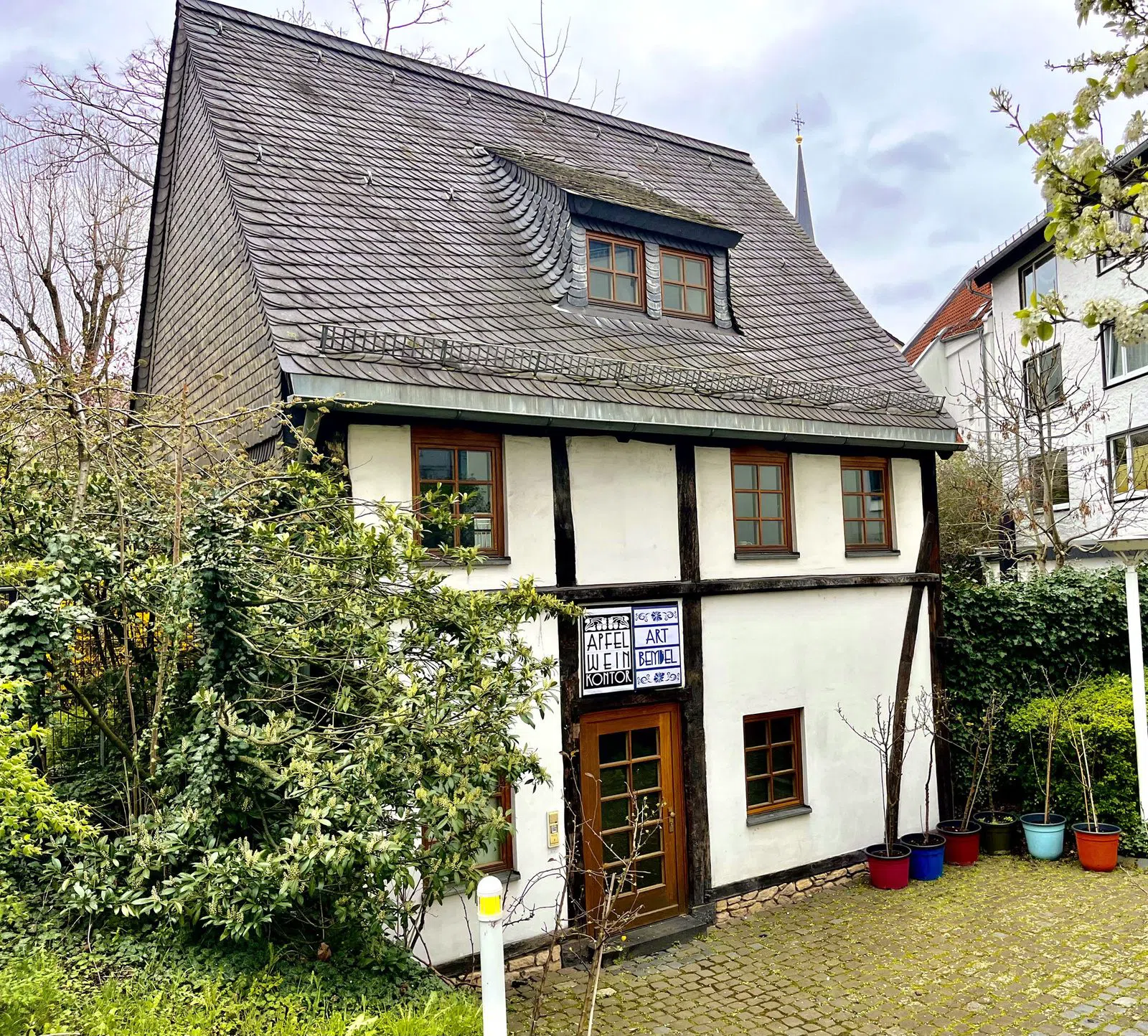
One stop stands apart. Apfelweinkontor (Sachsenhausen) is not a beerhall at all — it's a cider shop and tasting bar, and the place to actually understand what you've been drinking all week. It pours curated single-variety Apfelwein and runs small-group guided tastings on Fridays and Saturdays (roughly €25–35 per person; reserve a session in advance). For a curious international group that wants depth over volume — the difference between a young sharp pressing and an aged, funkier one, side by side — this is the most educational hour in the city. Do it early in your trip and the rest of the houses read differently afterwards.
Practical notes
Getting there. Almost everything here sits in Sachsenhausen, an easy walk or a couple of stops south of the river. The S-Bahn and U-Bahn reach Lokalbahnhof and Südbahnhof, and trams run down from the centre; from the Altstadt it's a pleasant fifteen-minute walk across the Main via the Eiserner Steg footbridge. Bornheim, for Solzer, is a short U-Bahn ride northeast to Bornheim Mitte. None of it requires a taxi.
Cash. Carry it. Several of these houses — Ebbelwoi Unser explicitly, and Wagner among others by habit — lean cash-friendly or cash-only. Cards are increasingly accepted but not guaranteed, and a run to the ATM mid-meal breaks the evening.
Timing. Many traditional houses open only in the evening, so check before an afternoon plan — Struwwelpeter (late morning daily) and the tasting-focused Apfelweinkontor are your daytime options. Watch the closing days: Zum Gemalten Haus is shut Mondays, and Zur Buchscheer closes Mondays and Tuesdays. Weekends fill fast; for any group of six or more, reserve rather than chance it, particularly at Wagner, Atschel and Ebbelwoi Unser.
Budget. This is deliberately affordable drinking. A glass of Ebbelwoi is around €2 across the board, mains sit in the €10–18 range, and only the guided tasting at Apfelweinkontor and the broader list at Daheim im Lorsbacher Thal push higher. A full evening of cider and a proper plate rarely troubles €30 a head.
For where to base yourself within walking distance of Sachsenhausen, start with a Frankfurt hotel search; for the wider city beyond the bembel, our Frankfurt guide covers the rest. Whichever house you start in, the rule holds: sit where there's space, wait for the bembel, and let the bench do the introductions.
Before you go
What is Apfelwein and how is it different from sweet cider?
Apfelwein — locally called Ebbelwoi — is Frankfurt's traditional apple cider: dry, tart and still, closer to a sharp white wine than to fizzy sweet cider. It's poured from a stoneware bembel jug into a ridged gerippte glass, and ordered pur (straight), sauergespritzt (with sparkling water) or süßgespritzt (with lemonade) if you find it too sharp.
Which Frankfurt cider house is best for a first-timer?
Apfelwein Wagner in Sachsenhausen, open since 1931, is the classic first stop — loud, cash-friendly, reliably good and full of locals as much as visitors. Walk-ins are fine midweek, but reserve for a larger party on a weekend.
Are Frankfurt's Apfelwein taverns good for large groups?
Several are built for it. Zum Eichkatzerl has a 120-seat garden plus a 60-seat private room, Daheim im Lorsbacher Thal seats over 400 across courtyard and indoors, and Dauth-Schneider and Fichtekränzi have big group-friendly gardens. Smaller rooms like Atschel are cosy, so book ahead if you're bringing a crowd.
Do the cider houses take cards or is it cash only?
Carry cash. Some houses, such as Ebbelwoi Unser, are explicitly cash only, and others lean cash-friendly by habit. Cards are increasingly accepted but not guaranteed, so bring notes to avoid an ATM run mid-meal.
Where should I go to actually learn about Apfelwein rather than just drink it?
Apfelweinkontor in Sachsenhausen is a cider shop and tasting bar rather than a beerhall, pouring curated single-variety ciders and running small-group guided tastings on Fridays and Saturdays (roughly €25–35 per person, reserve ahead). For range while dining, Daheim im Lorsbacher Thal lists 30+ varieties.