
The lift covers 200 metres in a little under a minute and opens onto a glazed floor where the traffic below has gone silent. One short flight of stairs later you push a door and step outside, and the wind arrives with the view. That open ring is the point of the building, and it is also the part the operators can shut at an hour's notice.
What you actually see from the top
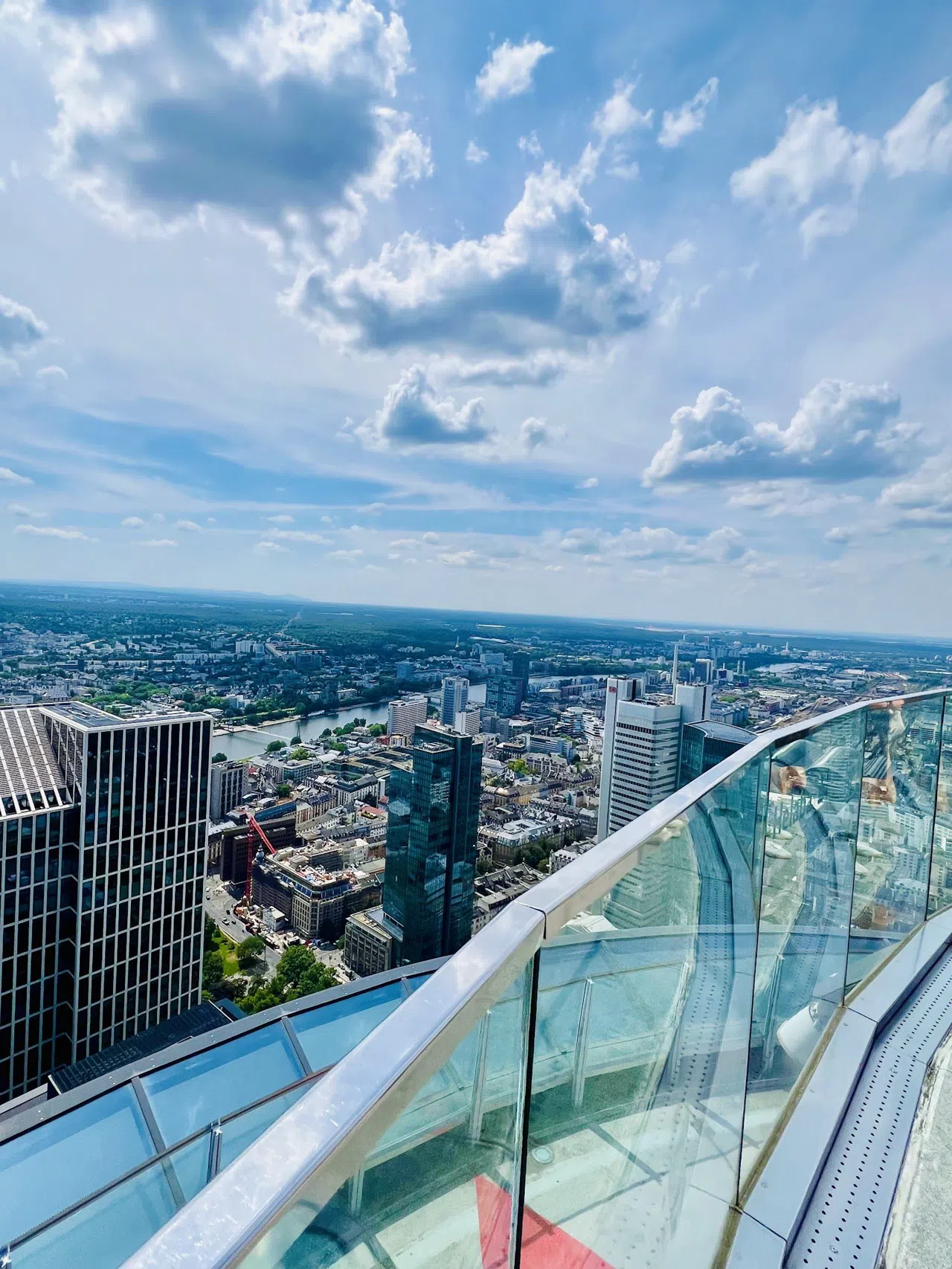
The MAIN TOWER Viewing Platform (Bankenviertel, entrance on Neue Mainzer Straße) is an uninterrupted circular walk at roughly 200 metres, open to the sky, with a parapet and a mesh screen between you and the drop. The sequence is fixed: a security check at street level, a lift to the enclosed 54th and 55th floors, then stairs up to the open 56th. Most people photograph through the glass on the way up, then forget those pictures once they are outside.
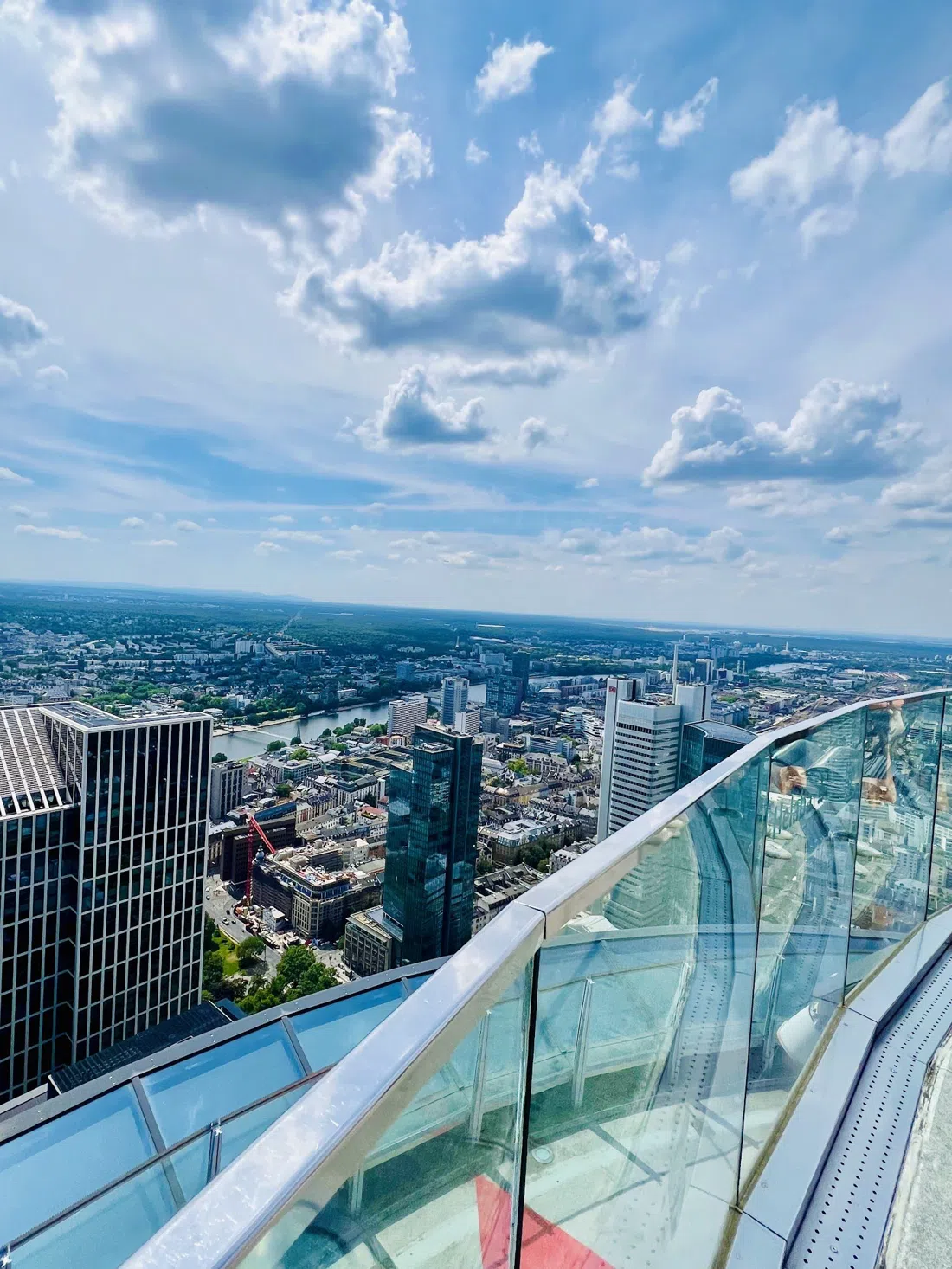
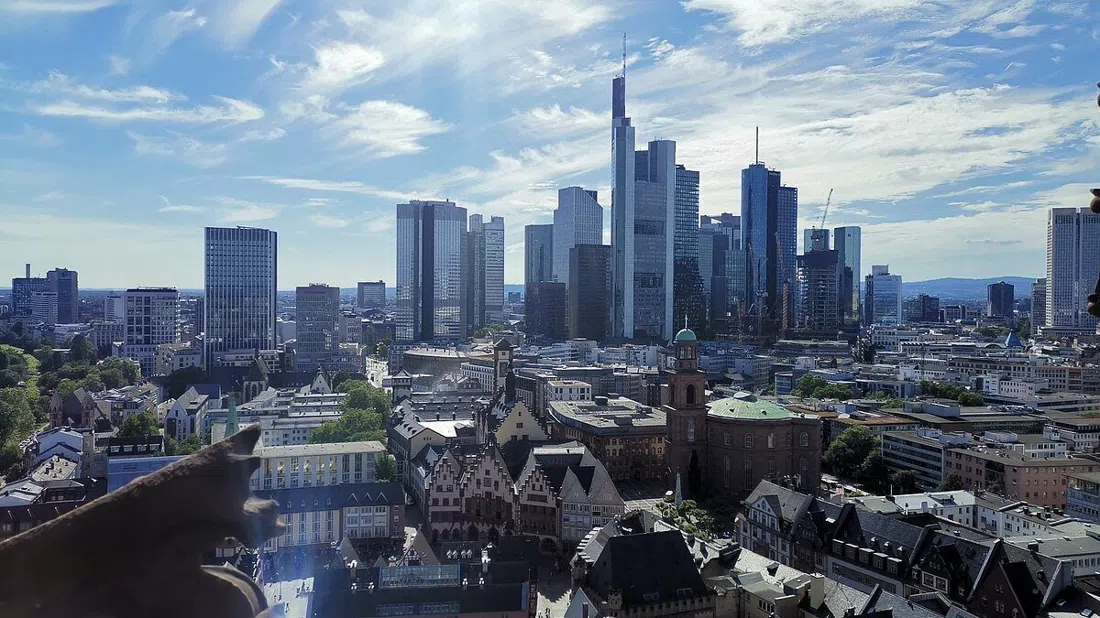
Looking south, the Main runs straight across the frame, the museum embankment strung along the far bank and the low roofs of Sachsenhausen behind it. East, the red sandstone tower of the cathedral marks the old town, which from up here reads as a small dense patch of gables ringed by glass. West, aircraft climb out in a slow, regular line. North, the ground flattens towards the Taunus hills, and on a cold clear morning you can pick out their ridge.
What you get from the platform is a sense of proportion. The historic centre is smaller than any photograph suggests, and the banking towers stand close enough to feel like neighbours rather than a skyline: you look across at other people's office windows before you look down. Twenty minutes is enough to walk the full circle twice and work out what everything is. If you want the buildings explained rather than just admired, that comes later, on the ground.
How long the visit takes
The official figure is a 45-minute visit measured from the security check, and that is honest rather than optimistic. The bag check takes a few minutes, the lift runs in small batches, and the stairs to the open level create a second small queue when the deck is busy. Allow an hour door to door if you want to stand still for a while, and closer to 90 minutes if you are waiting out a cloud or staying for the light to change.
The batching matters more than the ticket queue. Because the lift only holds a modest group at a time, arrivals bunch: you can wait ten minutes at the barrier and then find the deck comfortable, or walk straight in and arrive with thirty other people. Early in the opening hours is consistently the calmest, and the last hour of the day is the busiest.
Tickets at the door, online, and what a guided visit adds
Entry is 9.00 EUR for an adult, 6.00 EUR reduced, and 20.00 EUR for a family ticket covering two adults and up to three children aged 6 to 12. Booking online adds a 0.50 EUR fee. If the weather has restricted the deck, the price drops to 4.00 EUR, which is a useful signal in itself: being charged the lower rate tells you the open level is compromised.
Groups of 30 or more pay 6.00 EUR per person, or 5.00 EUR for school groups, and must pre-register with reception rather than turning up en masse. Even then the lift will split you into batches, so a coach party should plan to reassemble on the deck rather than move as one body.
A guided option exists and is attached to this page as a separate card. It runs seven days a week, which makes it the flexible choice on a Sunday when much of the surrounding walk is shut, but the top-rated option is confirmed manually by the operator, so allow up to 48 hours and do not count on booking it the night before. Prices start from 304 USD per person. The door ticket is 9.00 EUR and the tower needs no interpretation, so pay for a guide when you want the whole half-day walked and narrated, rather than as a way into the lift.
The weather clause
The platform closes in strong wind, heavy rain or thunderstorms. It is never a guaranteed stop, and the decision is made on the day, sometimes mid-afternoon. Build your plan so that losing the deck costs you an hour rather than the whole outing.
The best indoor substitute is five minutes away and sits directly between the old town square and the river: the Historisches Museum Frankfurt (Altstadt, by the Main) charges 8 EUR for the permanent exhibitions, 10 EUR with a special show, or 12 EUR for everything, half price reduced, and wants 90 minutes to two hours. It is closed on Mondays, which is the one day the fallback does not exist.
Access, stairs and rules
The lift reaches the enclosed 54th and 55th floors; the open 56th is reached by stairs only. That single detail decides the visit for a lot of people. Wheelchair users and anyone who cannot manage a flight of steps can still get to the glazed level and the view through glass, but the open-air deck is out of reach. Bags go through a security check at the entrance, so travel light if you are arriving between trains.
Dinner and drinks at the same height
The MAIN TOWER Restaurant & Lounge occupies the floor below the deck and has held a Michelin star since 2022 under head chef Martin Weghofer. It serves tasting menus of five or six courses, takes restaurant bookings between 18:00 and 19:30 and lounge bookings from 21:00 to 22:00 with a 30 EUR per-person minimum spend, and hosts events for up to 80 guests. A confirmed booking gets you past the public entrance queue, which is the practical argument for the lounge if you would rather drink at height than shuffle.
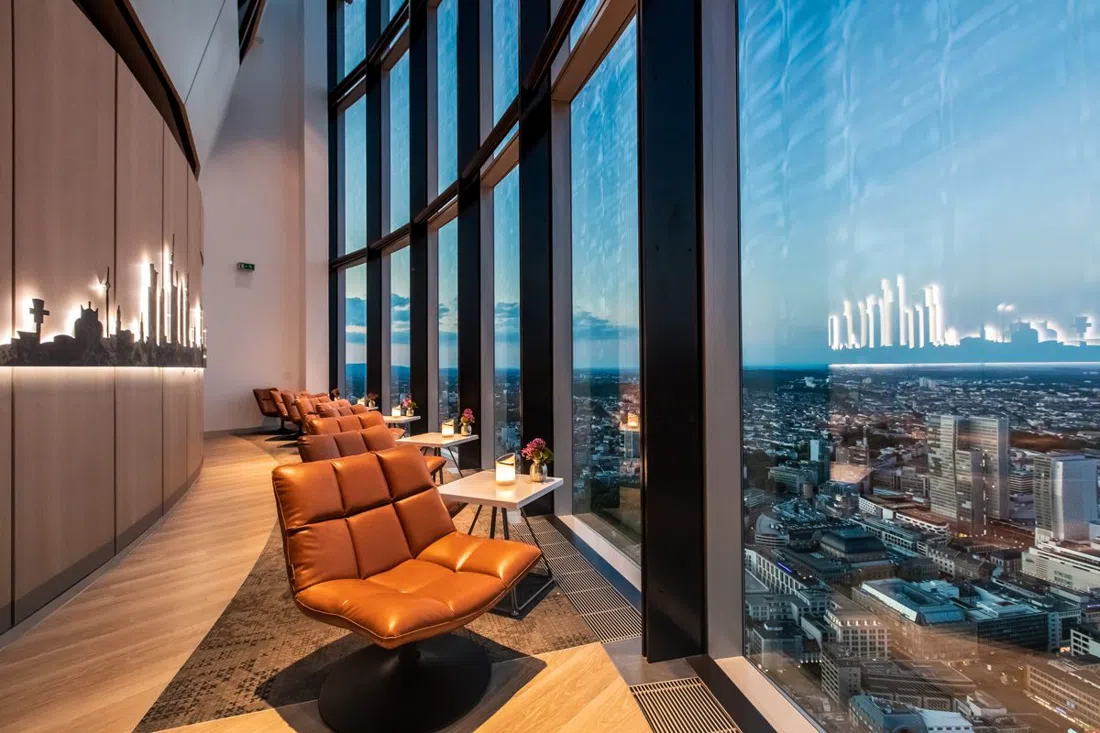
It is dinner only, Tuesday to Saturday, closed Sunday and Monday. It cannot rescue a daytime itinerary, and it is not a lunch plan. Treat it as a separate evening decision.
Is it worth it
At 9.00 EUR, yes, on one condition: go when the open level is running. The enclosed floor is a decent view behind glass and about a third of the experience. The deck is the thing, the wind, the noise of the city arriving from below, the unglazed sightline down Neue Mainzer Straße. It suits first-time visitors trying to read the city's layout, photographers who want the old town and the banks in one frame, and anyone with a few hours between meetings or flights.
Families do reasonably well at the family rate, though small children on an open deck need holding. Anyone with mobility limits gets only part of it, for the stairs reason above. And it is poor value if you arrive in flat midday haze with cloud at tower height, which happens often enough to be worth checking before you buy.
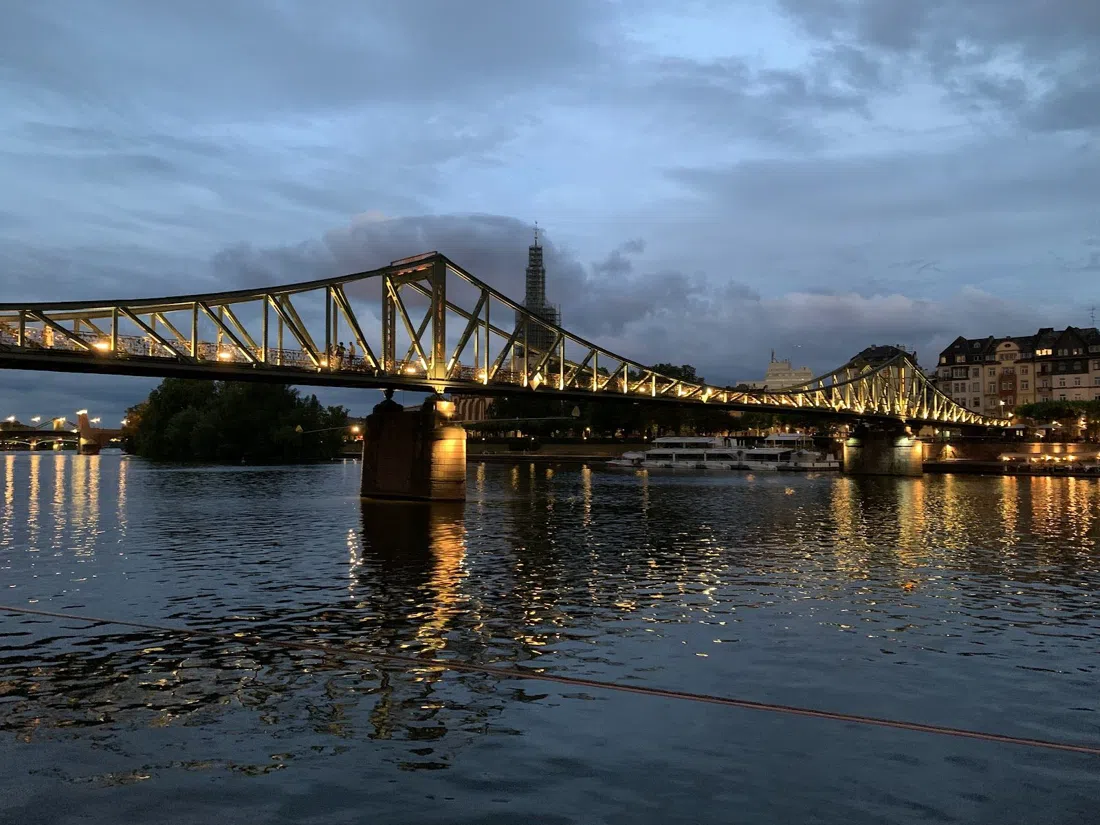
The cheap counterweight is the Frankfurt Cathedral Tower, the Domturm (Altstadt, beside the cathedral), about 4 EUR for a climb of more than 300 steps with no lift. It is lower, older and entirely physical, numbers on the staircase are capped so groups go up in waves, weekends back up, last entry is 30 minutes before closing, and it also closes in bad weather. It is not the right choice for anyone with heart or mobility issues. Free of charge, the Eiserner Steg (the footbridge between the Altstadt and Sachsenhausen) gives you the postcard shot of the skyline you have just stood on top of, open around the clock, narrowing only when the river boats unload beneath it.
Best time to go
The clearest air is usually early, within the first hour or two of opening, and that is also when the lift queue is shortest. The lights are best in the half hour on either side of sunset, which is the most crowded window of the day and worth it once a trip. Midday in summer haze is the weakest option: flat light, poor distance, a warm platform.
Day of the week matters more than season, because the tower is only half of a good half-day. Monday closes the city museum. Sunday closes the market hall, the coffee house and the exchange, leaving you the square, the bridge and a tavern. Tuesday to Saturday is when the full loop works. Winter gives the sharpest visibility and the shortest queues, but also the highest chance of a wind closure; late spring and early autumn are the best compromise. If you are choosing hotel dates around this, the Frankfurt guide has the wider calendar.
Five minutes from the lift
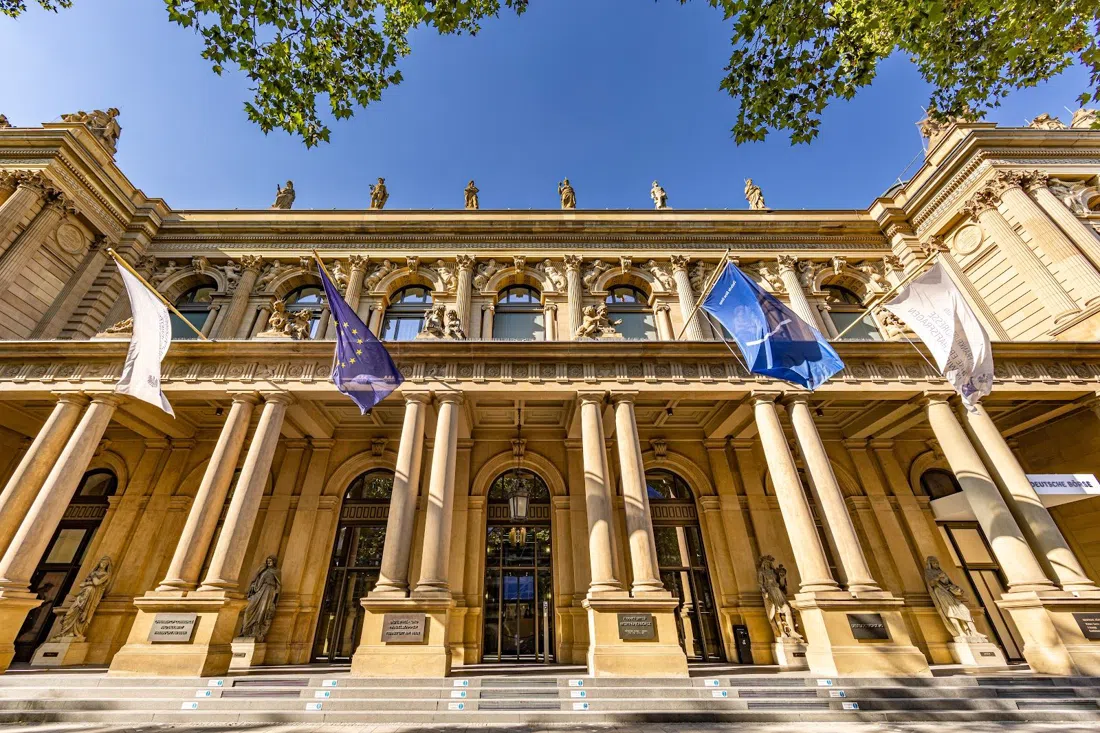
The Deutsche Börse Visitors Center (Börsenplatz, Innenstadt) is free but needs a timeslot booked online, takes a maximum of 70 people per visit and 40 per talk, and opens Monday to Friday, 10:30 to 16:30 only. It looks over Europe's last active trading floor, and it is the one venue that explains the skyline you have just been standing in. Large groups have to be split.
The Euro Sculpture (Willy-Brandt-Platz) is a two-minute detour and needs nothing: open square, no booking, wide enough for a whole group to photograph at once. Ottmar Hörl's sculpture is the city's most-photographed landmark, and its future was secured in December 2025 by joint European Central Bank and city funding, so the old line about it being removed is out of date.
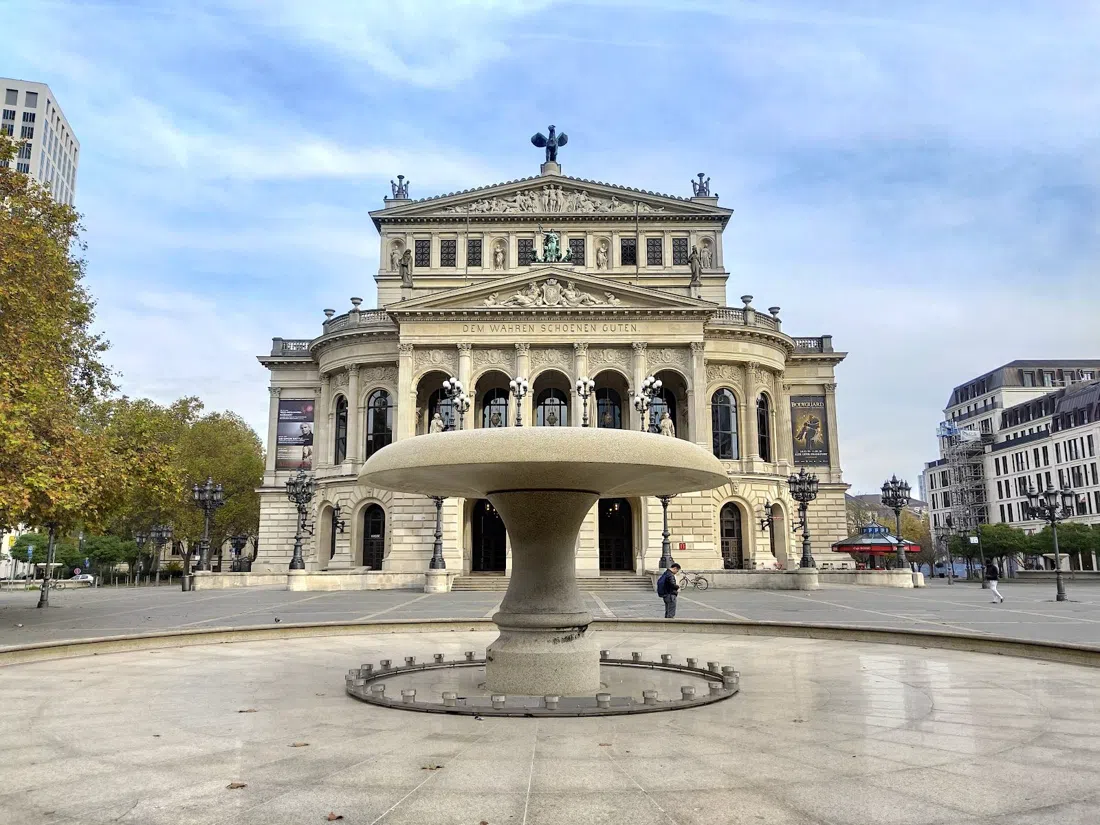
Eight minutes on foot, the Alte Oper Frankfurt (Opernplatz) gives you the other classic frame, the 1880 shell in front and the banking towers behind. The foyer and the square are free outside performance hours. Building tours run around two hours on selected public dates or can be booked privately for a maximum of 20 people, English on request, 10 EUR per person.
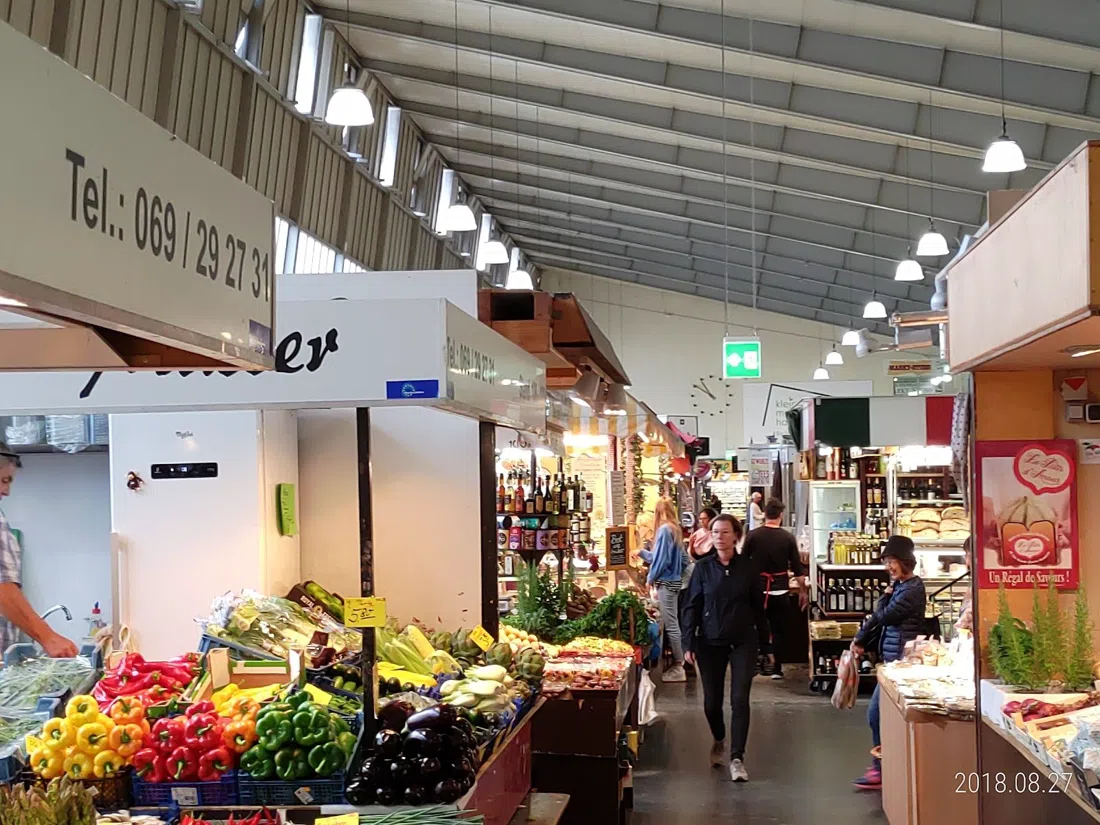
For lunch, the Kleinmarkthalle (Hasengasse, Innenstadt) has been the working food market since 1954 and is the honest answer after the tower: snacks 4 to 12 EUR, a glass of wine on the upstairs balcony for a few euros, Monday to Friday 08:00 to 18:00, Saturday to 16:00, closed Sunday. The aisles are narrow and jam at lunchtime, so take a few people, not fifteen, or you will block the traders. For coffee, Wacker's Kaffee (Kornmarkt) has been roasting since 1914, charges 2 to 5 EUR, takes no reservations and is standing-room tiny. It is a three-minute detour that works for two people and fails completely for a tour group. Closed Sunday.
The old town half of the loop
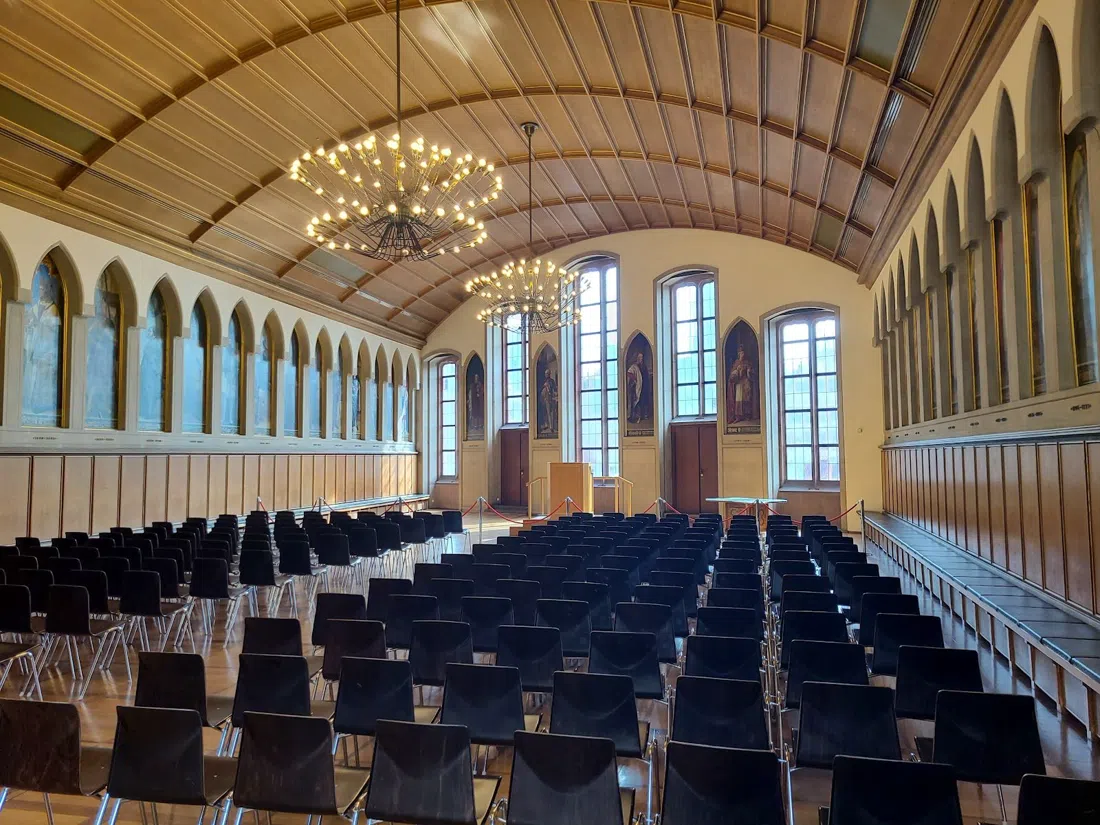
Ten minutes' walk from the tower, Römerberg and the Römer (Altstadt) is the obvious second half. The square is free; the Kaisersaal inside charges a small entrance fee and opens roughly daily from 10:00 to 17:00, but it closes at short notice whenever the city holds a function in it, so treat it as a bonus. Official guided visits cost 125 EUR per guide for up to 30 people and require a room reservation with the city protocol office first.
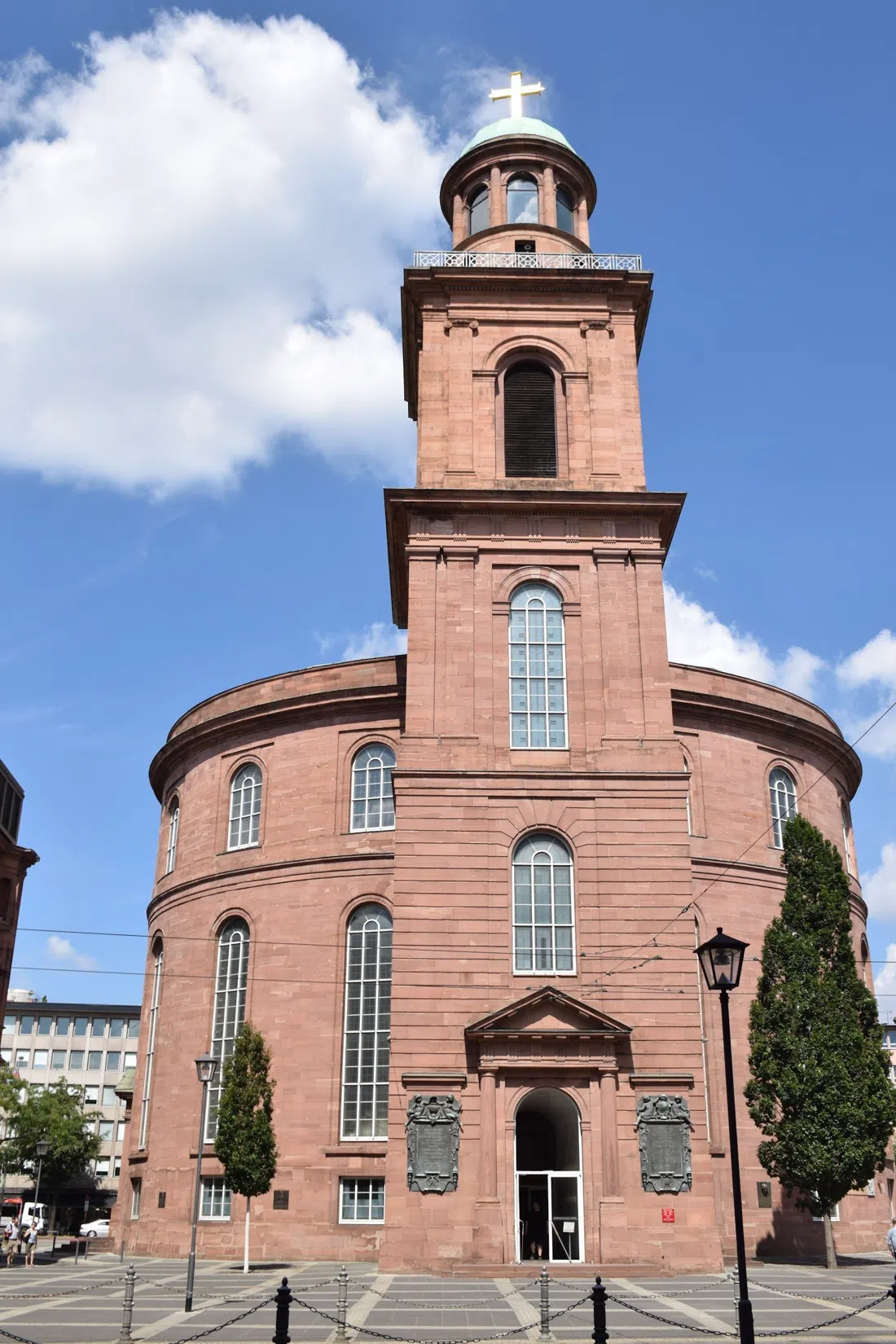
On the adjacent square, Paulskirche (Paulsplatz) is free, open daily from about 10:00 to 17:00, and is where Germany's first freely elected parliament sat in 1848. A full renovation is in planning, with the team commissioned in 2026, so check on the day before routing a group to the door.
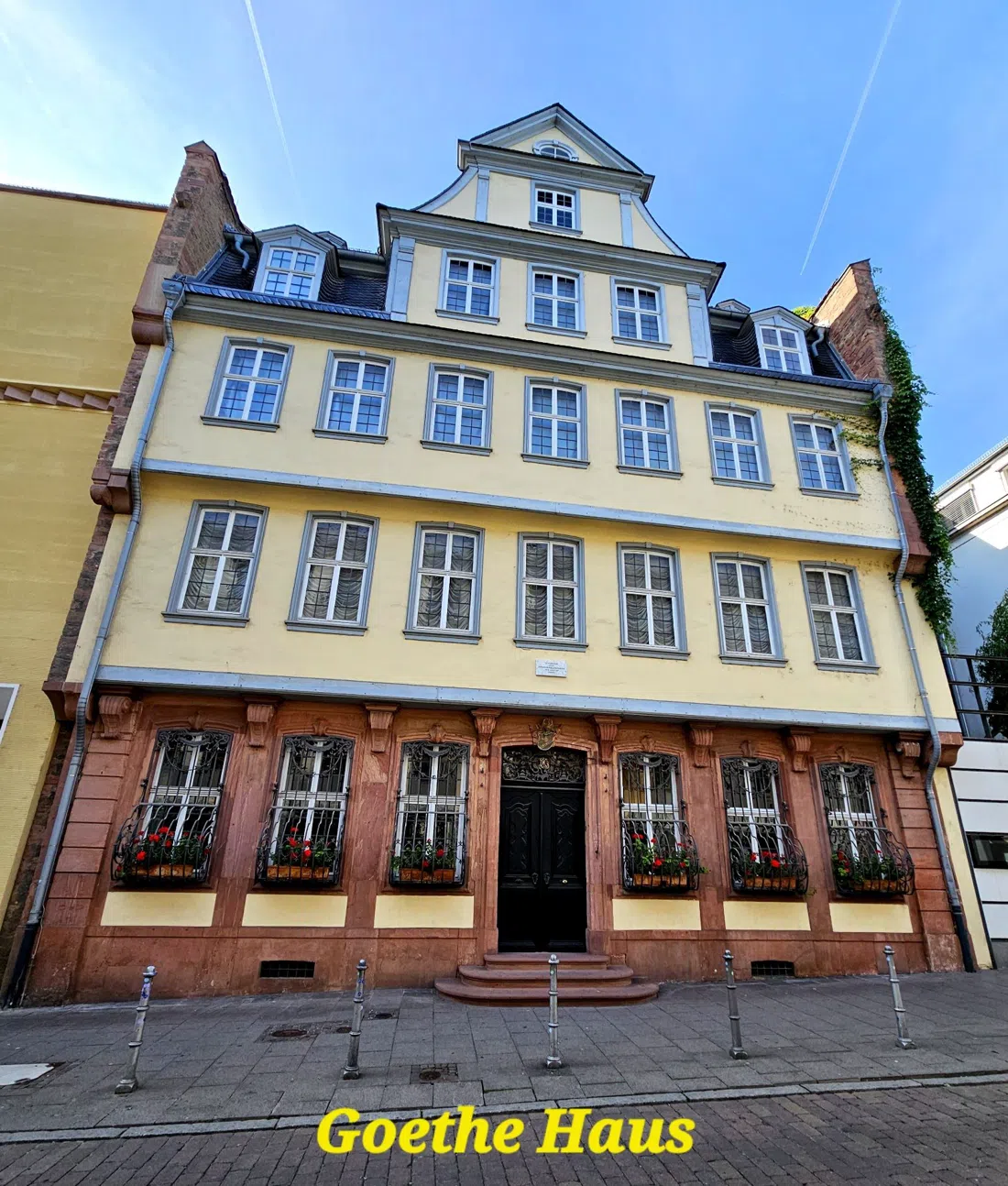
The Frankfurter Goethe-Haus & Deutsches Romantik-Museum (Großer Hirschgraben) opens daily 10:00 to 18:00, Thursday to 21:00, with tickets sold on the door only: 12 EUR adult combined, 7 EUR students, 5 EUR reduced, 3 EUR for children from 6. Groups of 15 or more pay 10 EUR per person, and guided tours must be booked ahead with a guide fee of 50 to 100 EUR depending on language. The historic house has no lift and is not accessible for wheelchairs or pushchairs, so check before committing a mixed group.
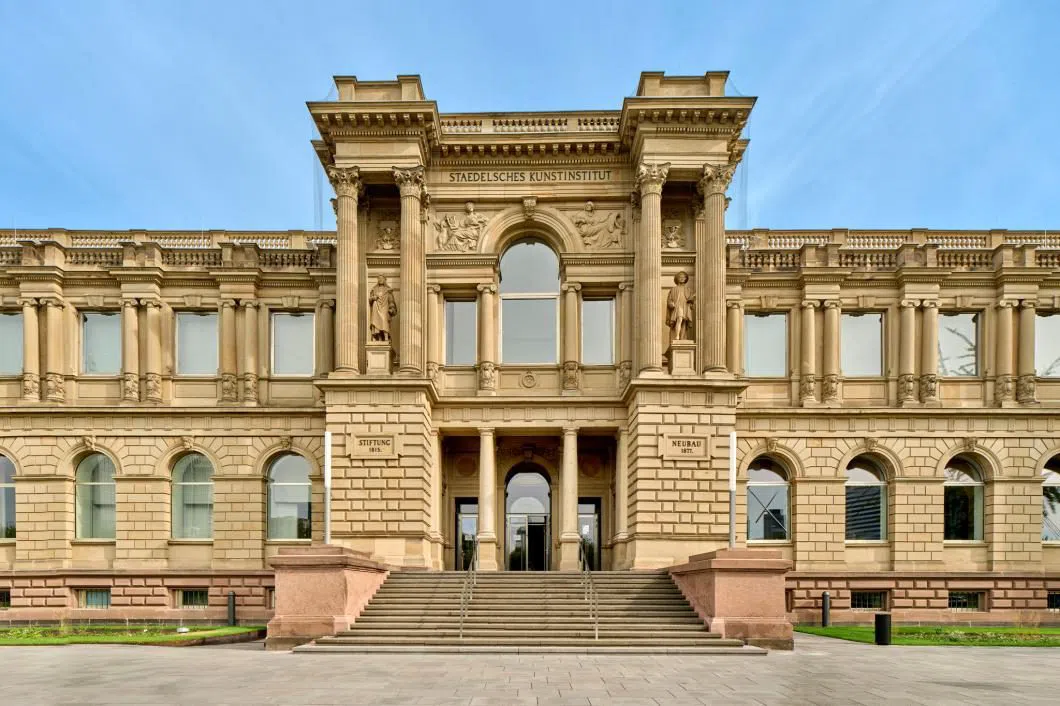
Cross the Eiserner Steg and fifteen minutes' walk brings you to the Städel Museum (Museumsufer, Sachsenhausen) and seven centuries of European art: 19 EUR adult, 17 EUR reduced, groups of 10 or more 17 EUR per person, free for under-12s, closed Mondays. The Tuesday late-afternoon slot from 15:00 to 18:00 costs 10 EUR and is the cheapest serious culture in the city.
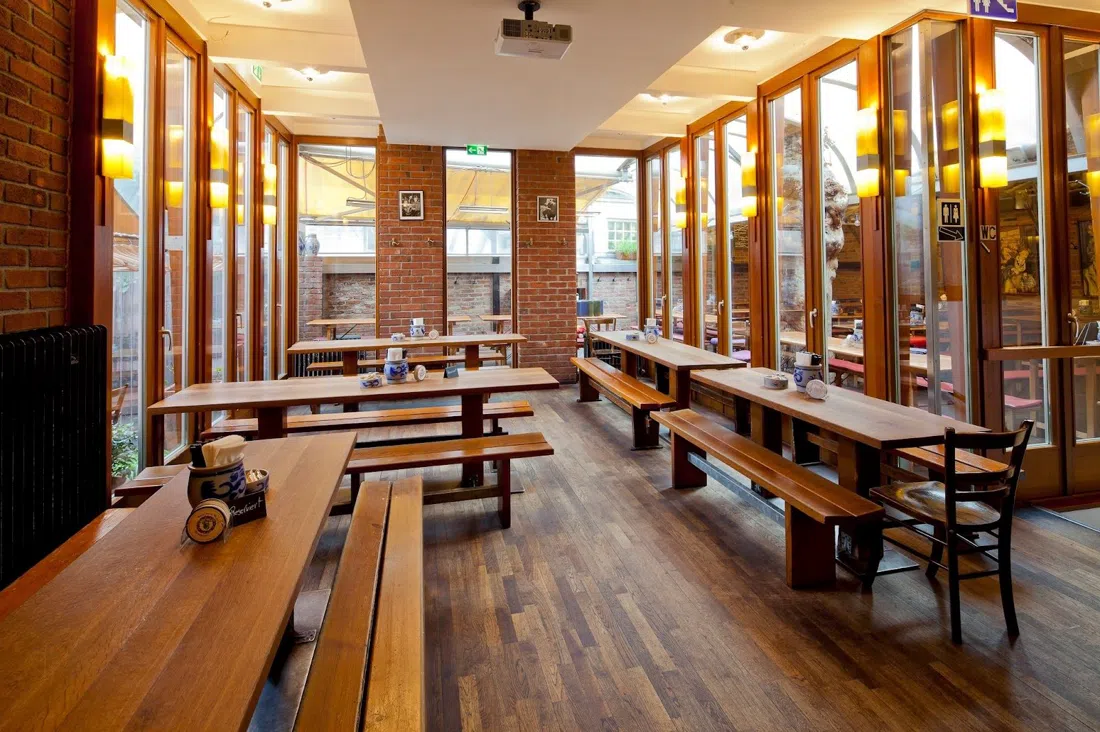
Finish at Apfelwein Wagner (Schweizer Straße, Sachsenhausen), family-run since 1931, open daily 11:00 to 24:00, mains roughly 10 to 20 EUR and a glass of Apfelwein for a couple of euros. It takes groups on long benches and does a shared platter; reserve for evenings and weekends. Because it opens every day, it is the one reliable late finish after a tower visit when the museums and the market have already shut.
Practical notes
The tower entrance is on Neue Mainzer Straße, two or three minutes from Taunusanlage on the S-Bahn and about five from Willy-Brandt-Platz on the U-Bahn. Everything in this article is walkable from it: the exchange and the opera house within ten minutes, the old town square in ten, the bridge in twelve, the art museum in twenty-five. You will not need a taxi at any point.
Card works at the tower, the museums and the restaurant, but the market traders and the small coffee counters are still comfortable with cash and some prefer it. Carry 20 to 30 EUR in notes and coins for the market hall and the tavern.
Give the tower an hour, the market 45 minutes, the old town square and the bridge another hour, and one museum two hours. That is a genuine half day without rushing, and it collapses neatly if the deck is closed.
A lean version of the day runs about 15 EUR a head: tower, cathedral tower climb, bridge, market snack. A fuller day with the city museum or the art museum lands between 30 and 40 EUR before dinner. The evening at height is a separate order of spending, tasting-menu money in the restaurant, or a 30 EUR per-person minimum in the lounge.
For a bed, the banking district puts you within walking distance of all of it and empties out at weekends, which is either the appeal or the problem depending on your taste; the old town is livelier and noisier. Compare both on the Frankfurt hotel search.