
Frankfurt doesn't so much serve Grüne Soße as govern by it. From the last frost of spring until the first one of autumn, cold green sauce over boiled eggs and boiled potatoes is the argument every Frankfurter has already had and refuses to let go of — whose recipe holds all seven herbs, whose sour cream base is too thin, whose tavern gets it right. Walk south across the Main into Sachsenhausen on any warm evening and the argument is still running, spoon by spoon, in stoneware bowls set down on wooden tables that have seen this exact dish since before either World War. Ask three Frankfurters where to eat it and you'll get four opinions, each delivered as settled fact.
The Sauce Itself
Grüne Soße is not a loose variation on herb sauce — it is a fixed recipe, protected by a geographical indication that ties it to Frankfurt and the surrounding Rhine-Main region much the way Parmigiano-Reggiano is tied to Parma. Seven herbs, always the same seven: borage, chervil, cress, parsley, salad burnet, sorrel, and chives, finely chopped and folded into a base of sour cream, crème fraîche, or quark, sharpened with mustard, vinegar, and oil. It is served cold, ladled thick over hard-boiled eggs and boiled potatoes, sometimes alongside a Schnitzel or Tafelspitz for anyone who wants more on the plate than egg and starch. Goethe's mother is the name locals reach for when they want to prove the dish's pedigree — the family is said to have been fond of it, and Frankfurt has never let anyone forget that.
The season is real, not marketing. The seven herbs are grown fresh, much of it in Frankfurt's own Oberrad district, and restaurants that take the sauce seriously won't put it on the menu until the herbs are actually ready. Bornheimer Ratskeller, in Bornheim, sources its bundle from Eschersheim growers and holds off until Maundy Thursday each year, which is as good a marker as any for when the season genuinely starts. It runs through summer and keeps going until the first hard frost kills the tender herbs off, typically sometime in autumn — after that, don't expect to find it on a menu at all.
For the fuller picture of the city around the sauce, the Frankfurt guide covers the rest of what's worth doing between meals.
Sour Cream or Quark: The Argument Underneath the Argument
Ask a Sachsenhausen kitchen what actually goes in the base and you'll hear a shorter, more technical version of the citywide fight: sour cream gives a sharper, thinner sauce; crème fraîche rounds it out; quark makes it heavier and holds the herbs better on a spoon. None of the three is wrong, and no tavern will tell you another tavern's version is wrong either — they'll just quietly serve you theirs and let the plate make the argument. What does separate a good bowl from a mediocre one is freshness of the herbs rather than the base they're folded into. A sauce made with herbs cut that morning tastes green and sharp; one made with anything older tastes like dressing. That's the real reason the season matters as much as it does — it isn't sentiment, it's the difference between a dish worth ordering and one that isn't.
The Sachsenhausen Taverns
Sachsenhausen, on the south bank of the Main, is where Grüne Soße culture actually lives — a dense cluster of Apfelwein taverns, most of them serving the sauce in some form since long before it had a protected name. They range from genuinely tourist-swamped to quietly local, and that difference matters more than the menu does. The food across all of them is close enough in quality that the real decision is about seating and crowd — a long communal bench for eight people needs a different tavern than a quiet dinner for two, and conflating the two is the most common way visitors end up disappointed.
Apfelwein Wagner, in Sachsenhausen and known almost as often as Adolf Wagner, is the tavern most guides lead with, and it earns the position rather than simply inheriting it. Founded in 1931, it is the quintessential Sachsenhausen stop for Grüne Soße with Schnitzel or Tafelspitz. It serves the Frankfurt Platter, a shared cold-meat plate, from four people upward, which tells you plainly who it is built for. Weekends bring a real queue, so anyone arriving with more than two or three people should book ahead. Mains run €12–27.
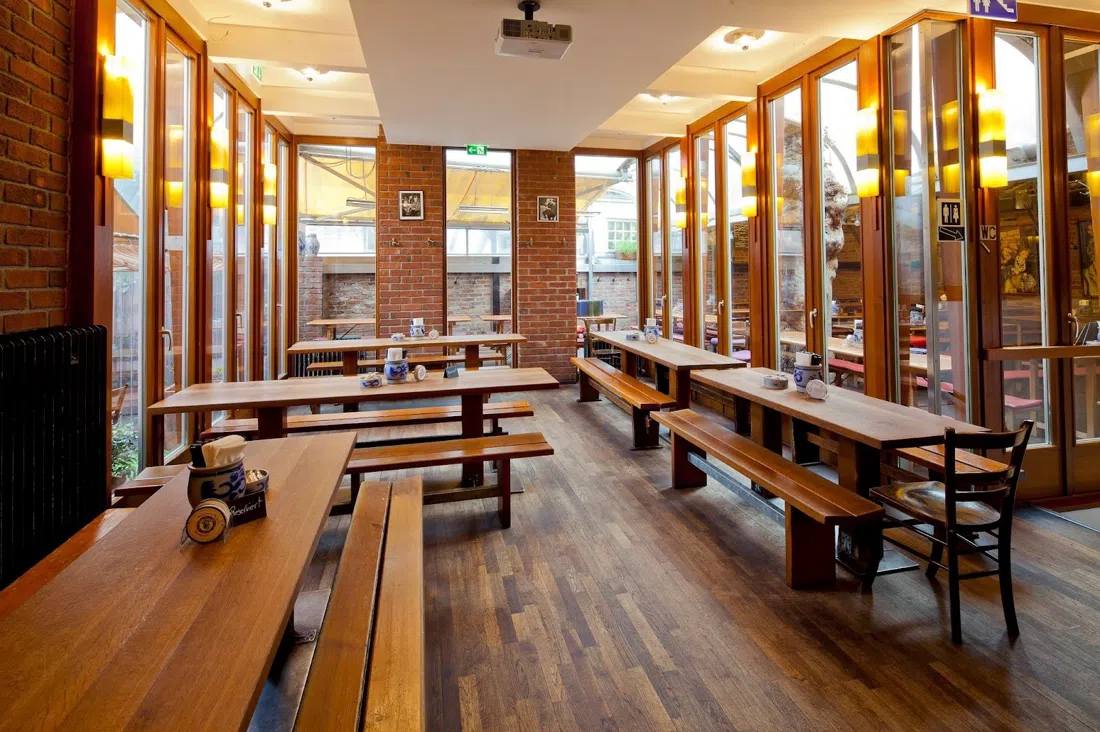
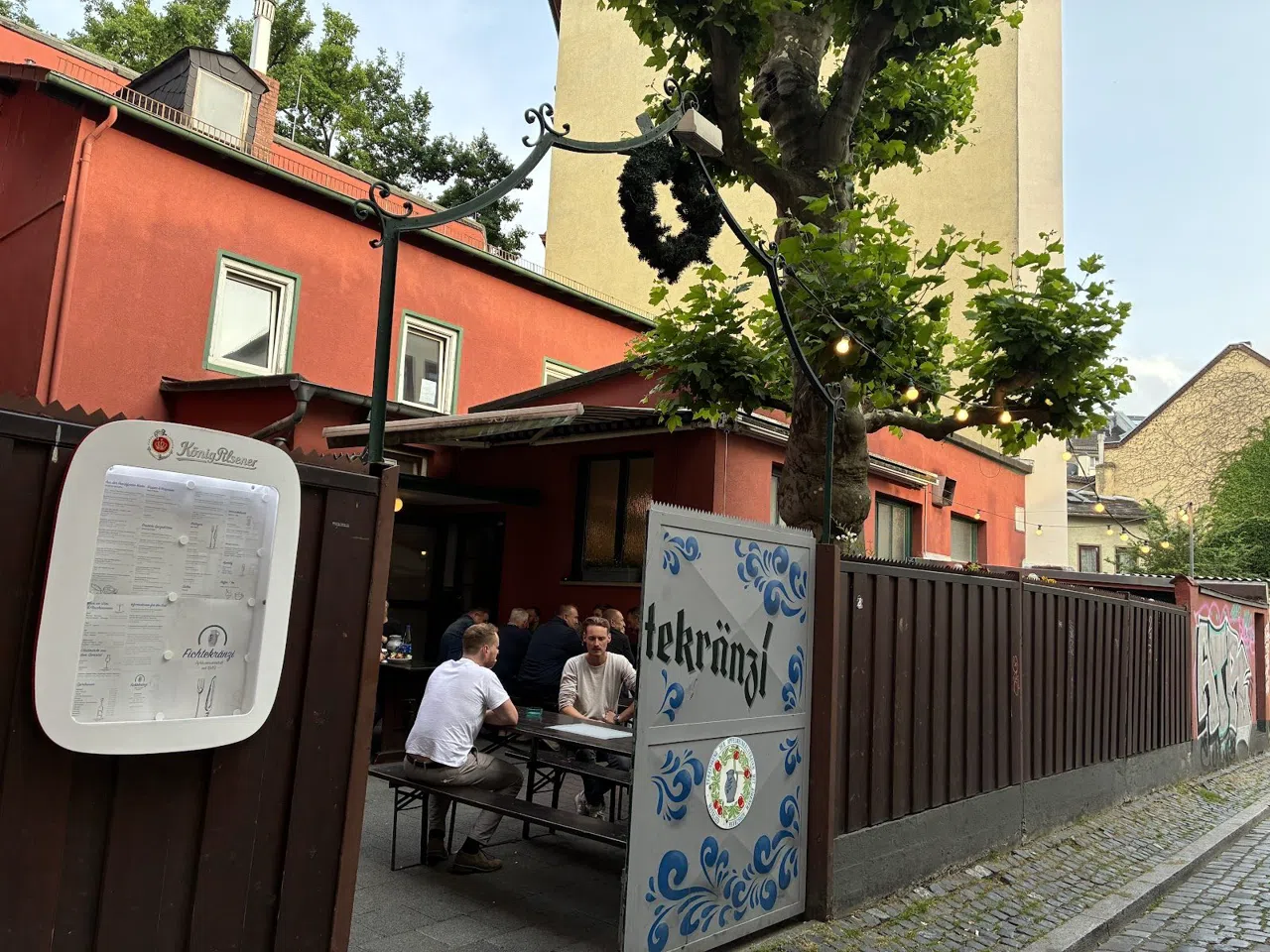
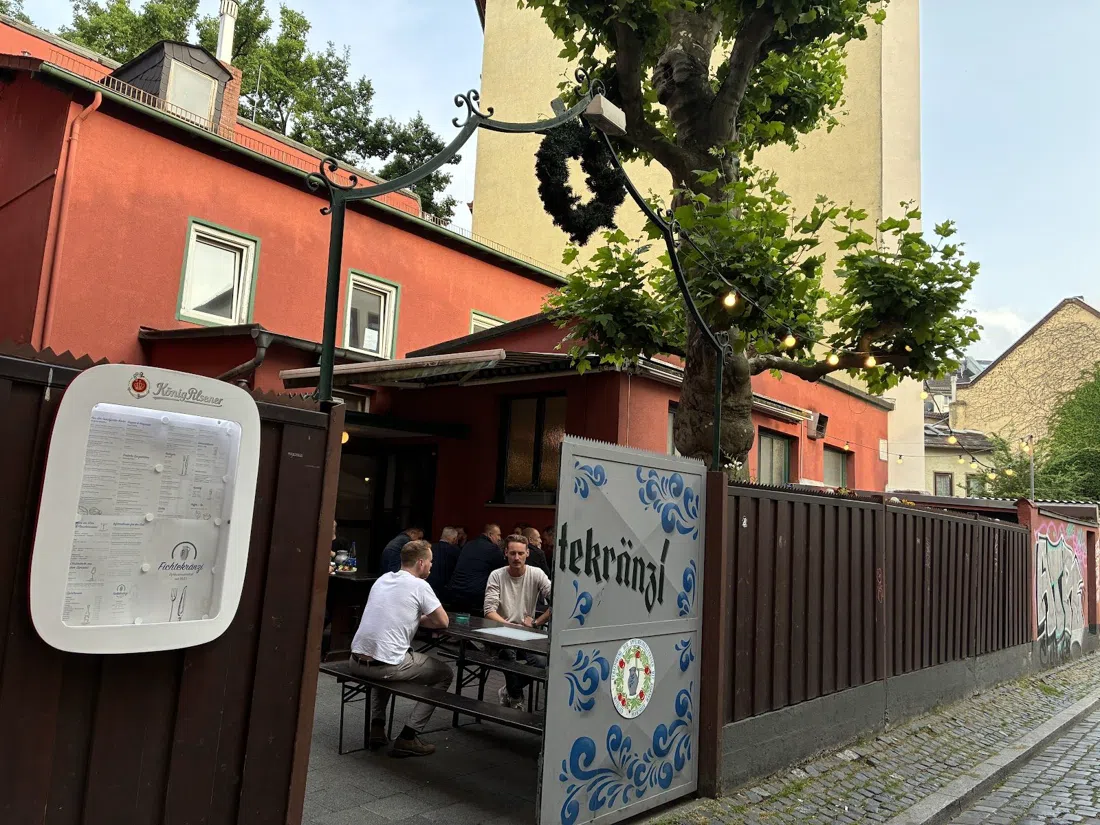
Fichtekränzi, a few streets over in Sachsenhausen, does long communal tables rather than Wagner's separated seating, which makes it the better pick for a group that wants to actually sit together rather than be split across the room. It is also one of the few taverns in the quarter pouring beer alongside Apfelwein, useful if not everyone in the party drinks cider. Reviewers consistently single out the Grüne Soße here as genuinely excellent rather than tourist-menu filler. Mains €12–22.
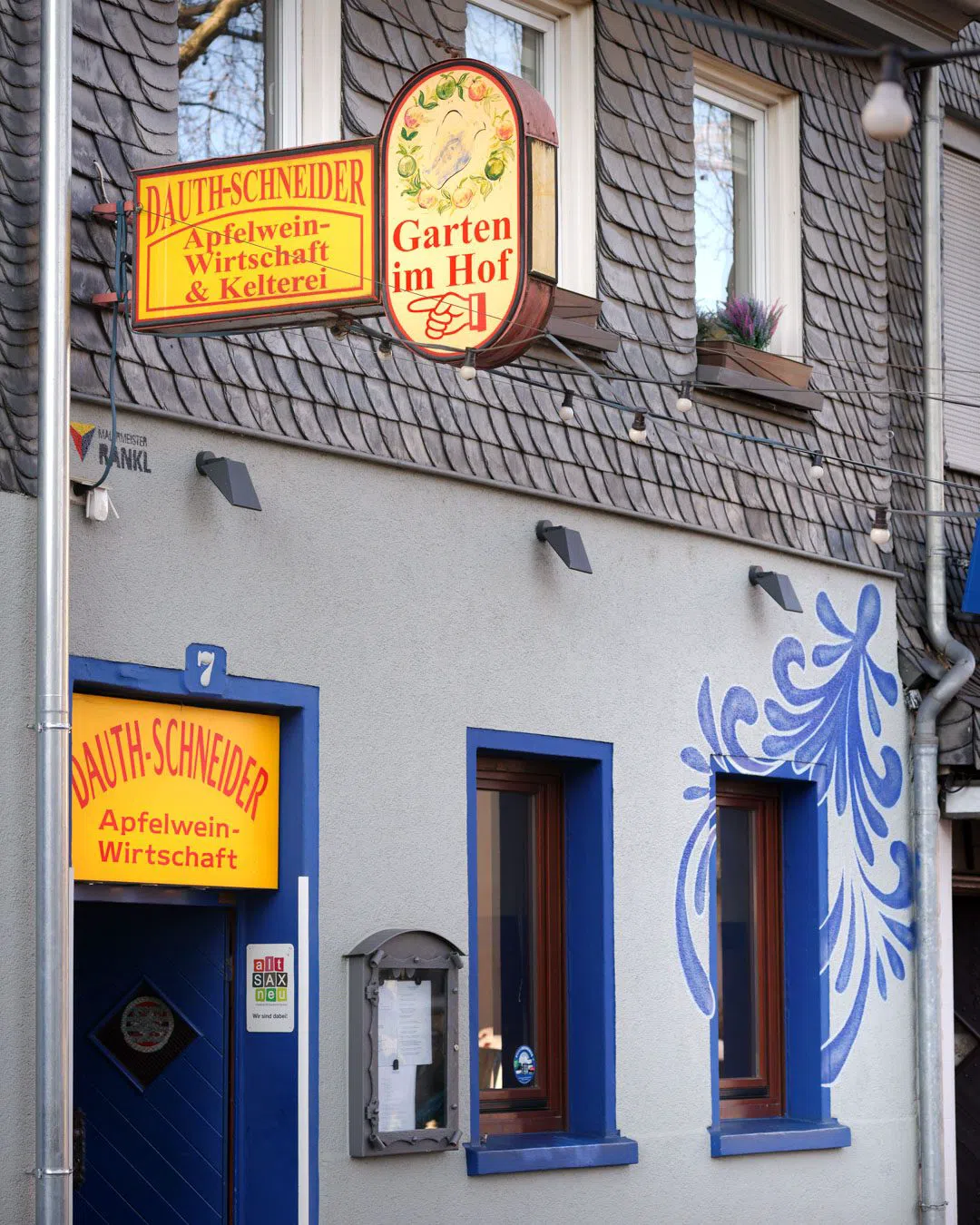
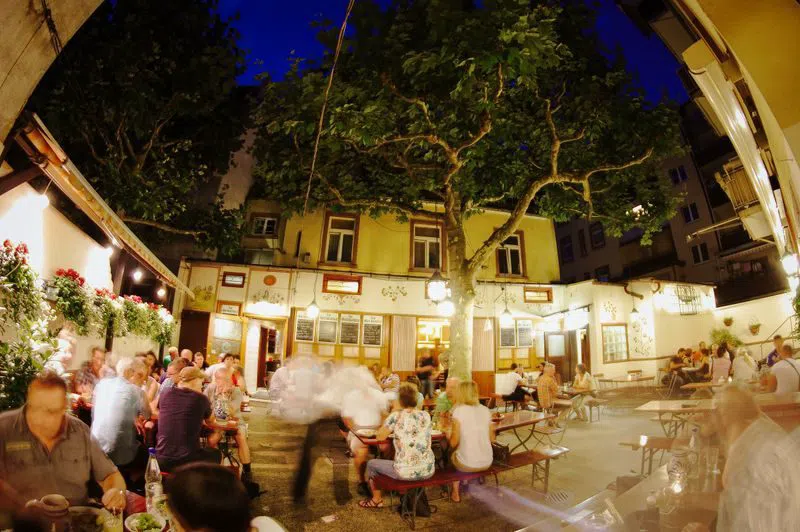
Dauth-Schneider has run in Sachsenhausen for 170 years and handles groups comfortably thanks to a sizeable courtyard — reserve ahead if the plan is a table outside on a warm evening, since that is where everyone wants to sit. It is also one of the only taverns on this list running a vegan version of the sauce, which makes it a sensible pick for a mixed-diet table. Mains €13–24.
Zum Gemalten Haus, in Sachsenhausen, is spacious enough that it has long absorbed coach-tour crowds without much fuss, and groups are genuinely welcome rather than merely tolerated. Rippchen and Grüne Soße are the bestsellers. It sits right at the edge of being a tourist stop in its own right, but the food holds up under that traffic, which is more than can be said for most places that popular. Mains €12–23.
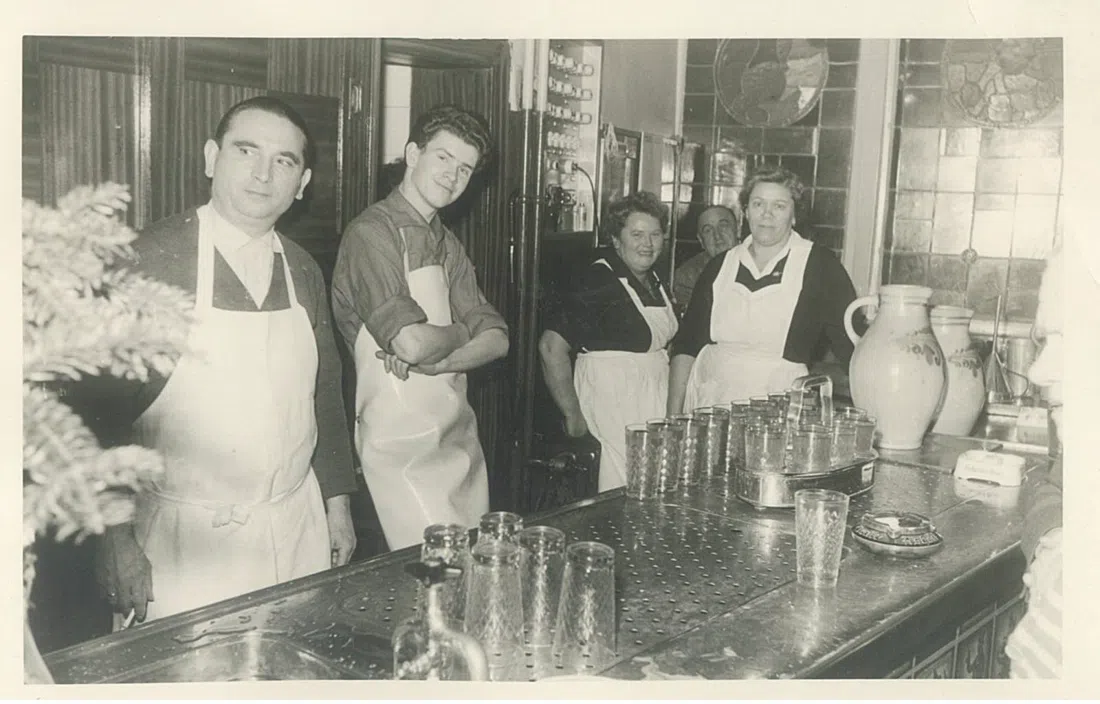
Atschel, in Sachsenhausen, is one of the oldest Apfelwein pubs in the quarter, dating to 1849, and it carries the kind of history that survived a closure — it reopened with its former head chef back in the kitchen. It takes cash only, which catches people out, and larger parties should reserve ahead rather than assume there will be room. Mains €11–20.
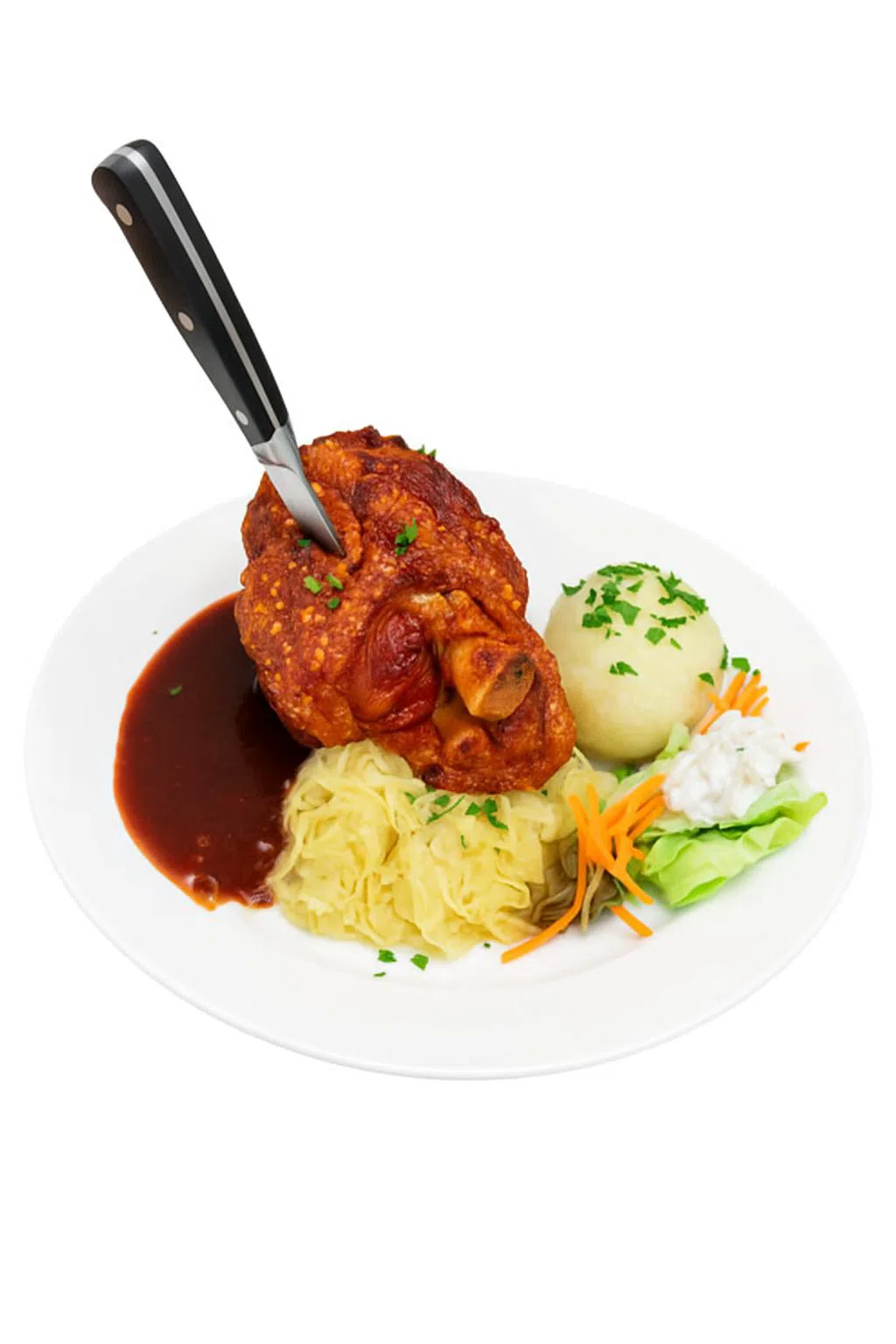
Zur Germania, in Sachsenhausen, has been pouring Apfelwein for 120 years and has the largest garden of any tavern on this list, which makes it a standout for groups specifically — if the party is big and the weather is holding, this is the one to book. The signature order is Frankfurter Schnitzel with Grüne Soße and fried potatoes. Mains €13–24.
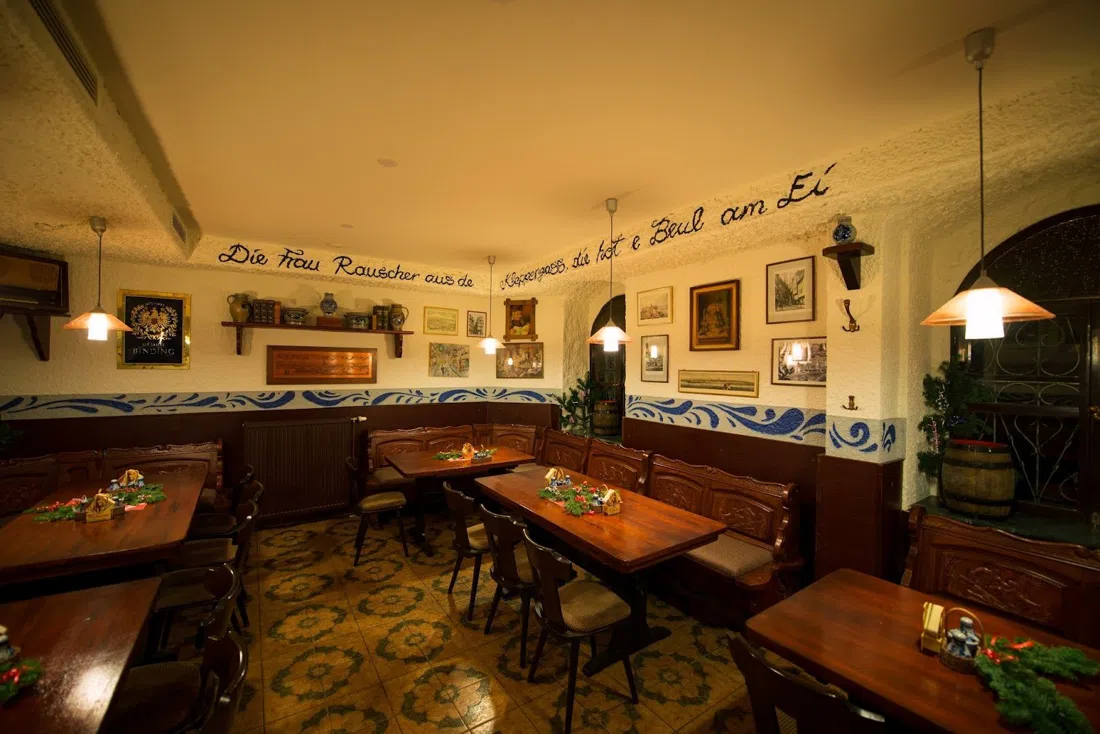
Frau Rauscher, in Sachsenhausen, trades a bit on local-song fame, but the food carries its own weight, with a serious Schlachtplatte alongside the Grüne Soße. Seating is communal, and on Friday and Saturday it runs until 1am, so it is worth booking if a late night is the plan — a solid, less try-hard alternative to the bigger names nearby. Mains €12–22.
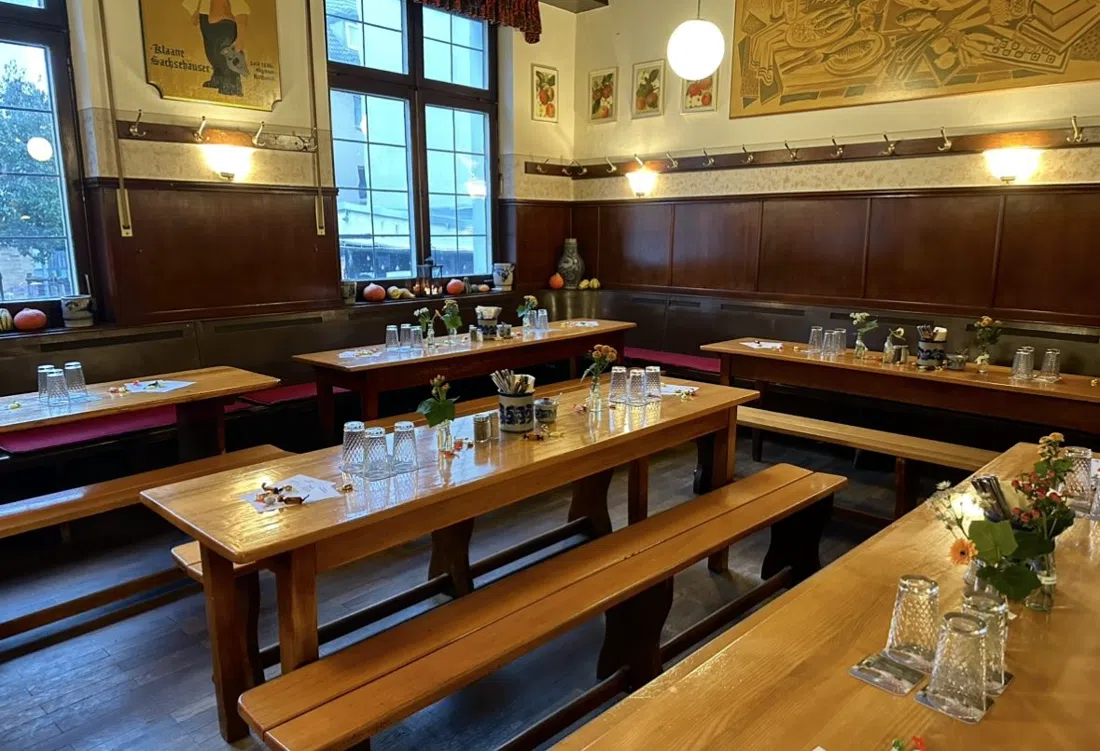
Klaane Sachsehäuser, also in Sachsenhausen, is deliberately the smallest venue on this list, and it plays to that — call ahead for groups, and note it is closed Sundays. For anyone who wants Grüne Soße without the tour-bus energy of Zum Gemalten Haus or the weekend queue at Wagner, this is the quieter option. Mains €12–22.
Oberrad and Bornheim: Beyond the Tavern Quarter
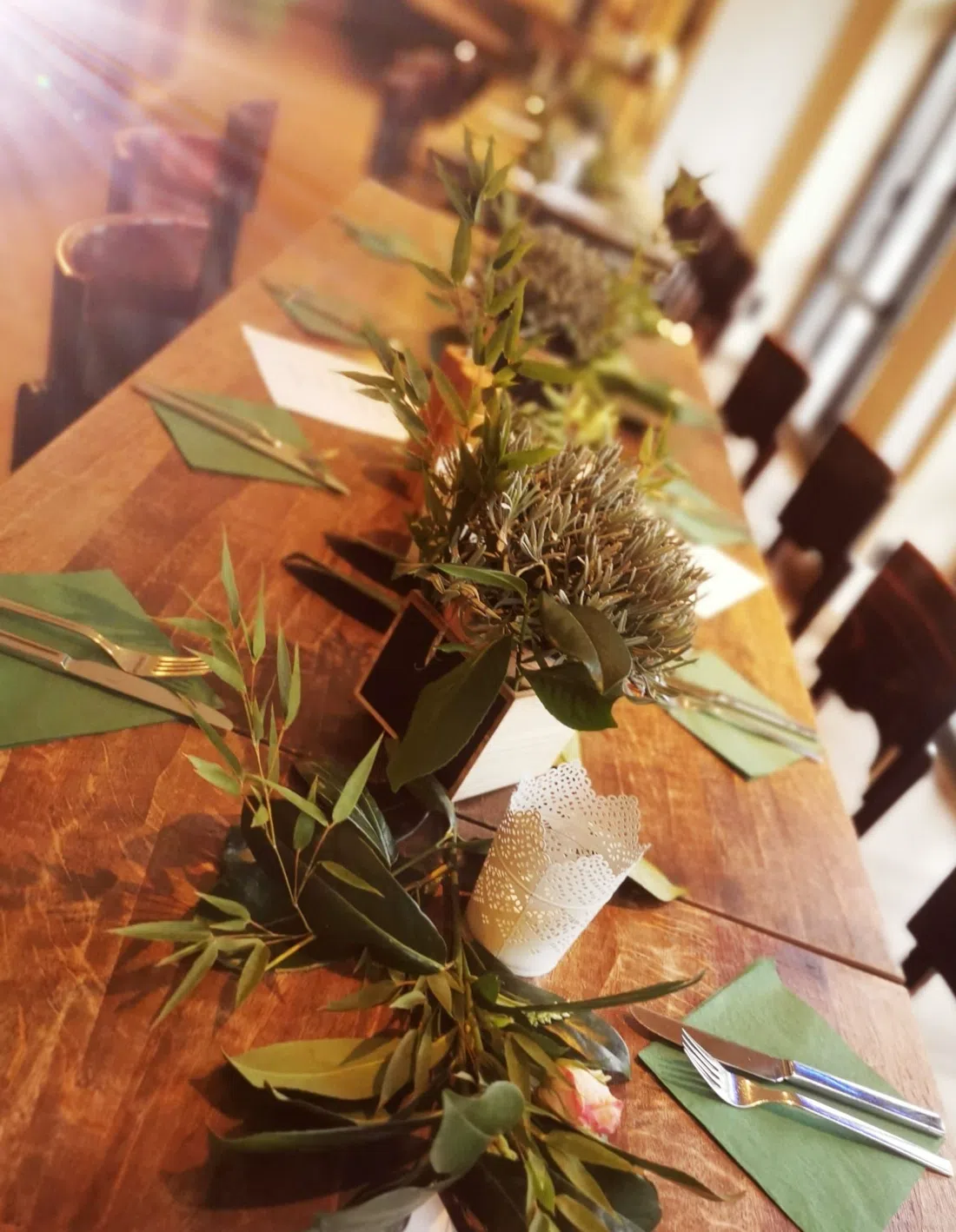
Grüne Soße und mehr sits in Oberrad itself — the district the herbs are actually named for and grown in — which makes it less a Sachsenhausen alternative than the source material. It is a modern bistro rather than a tavern, with a terrace that suits groups if booked ahead on weekends, and it reads as the sleeker, non-tavern counterpoint to everything south of the Main. Mains €14–26.
Bornheimer Ratskeller, already mentioned for its herb sourcing, runs as a beer garden in the Bornheim district, a format that handles groups naturally by design. Its Sunday-only hours run spring through summer, so it is worth checking before making it the centrepiece of a trip. Mains €10–20.
Vegan, Fast, and On the Move
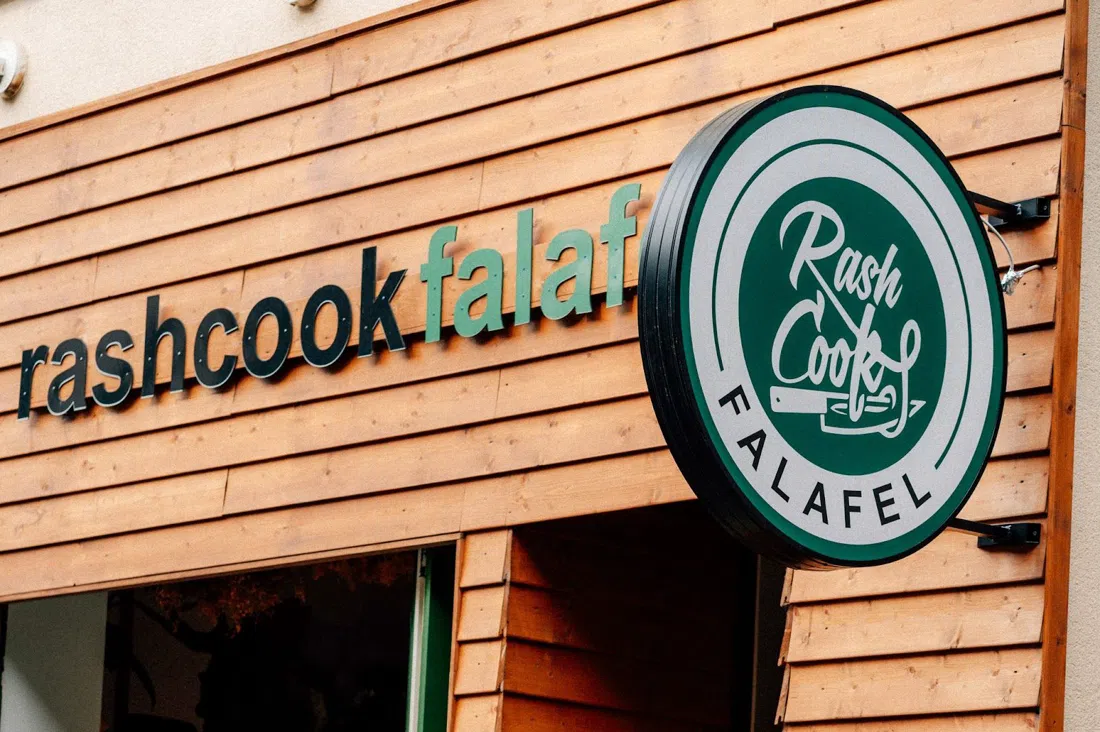
rashcook falafel makes the case that the seven herbs travel well outside a stoneware bowl. It is counter service, no reservations, and not a sit-down group venue — more a stop for two or three people grabbing something to go than a destination meal. But it is proof the sauce is not locked to the tavern format, and at €6–12 it is the cheapest way into the flavour by a wide margin.
Where Frankfurt Actually Buys the Herbs
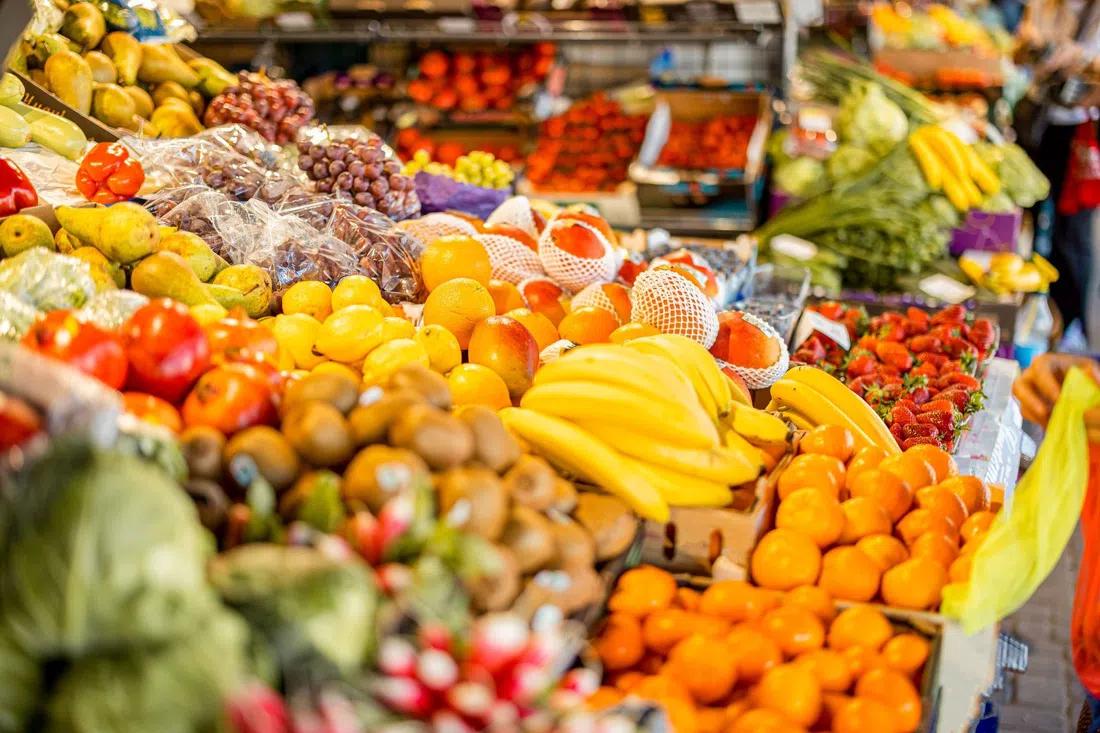
Kleinmarkthalle, the covered market near the old town, is where Frankfurters buy the fresh seven-herb bundle rather than order it already plated. It is self-guided browsing, which suits a group fine without any booking, though Saturdays get properly busy. It is closed Sundays. A herb bundle or market snack runs €3–10, and it is worth the stop even for visitors with no plans to cook — seeing the actual seven herbs bundled together, rather than already blended into sauce, is the clearest way to understand what the fuss is about.
The Festival Season
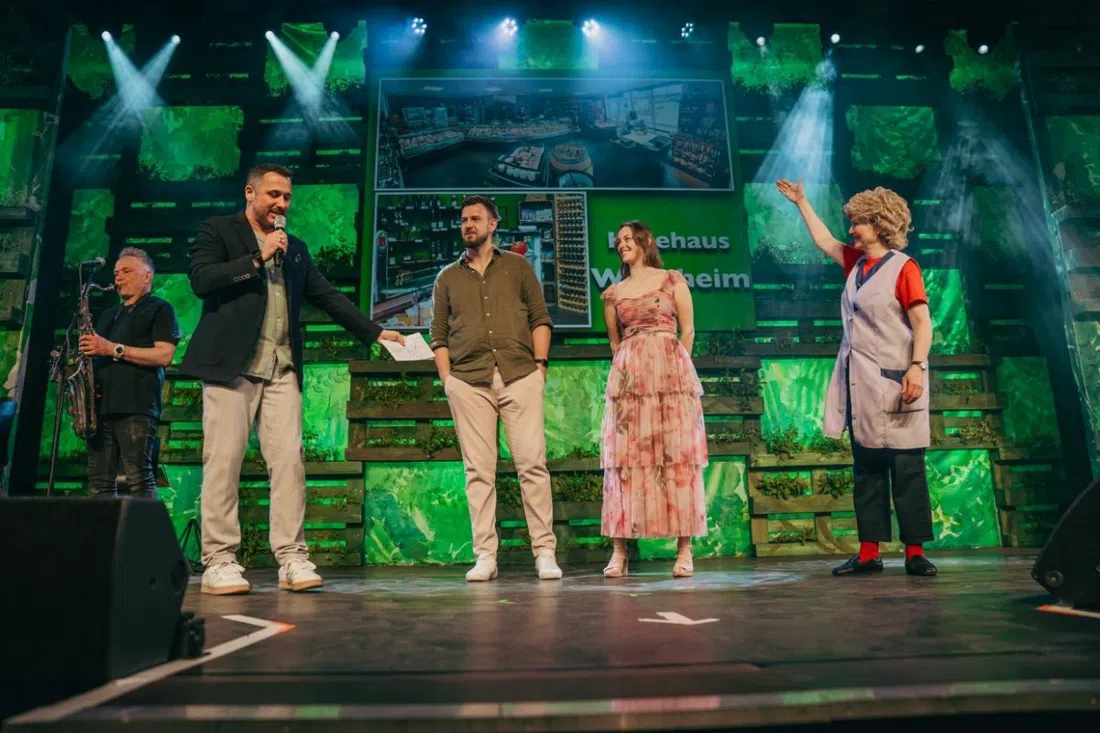
The Grüne Soße Festival is the city's answer to the tavern-by-tavern rivalry: roughly 49 restaurants compete each spring for what amounts to the herb crown, and the market itself is free and open, with no booking required for the food stalls. Evening shows run alongside it but need separate tickets. Food and drink at the stalls run roughly €5–15. It is the clearest single proof of how seriously Frankfurt takes a sauce most other cities would file under garnish, and it is worth timing a spring visit around if the dates line up.
Practical Information
Sachsenhausen is walkable from the old town side of the Main — cross at the Eiserner Steg footbridge and the tavern quarter starts within a few streets, close enough that a full evening can be done on foot without touching public transport at all. For anything further out, U-Bahn, S-Bahn, and trams cover the rest of the city reliably if the walk isn't appealing after a heavy meal, and Oberrad and Bornheim are both a short tram ride rather than a trek. Atschel takes cash only, and it's worth carrying some regardless — smaller taverns and the market stalls at Kleinmarkthalle move faster with cash than card, even where a machine is technically available. Grüne Soße season runs from around Maundy Thursday through the first autumn frost, so late spring through early autumn is the safe window to plan a trip around; outside that stretch, calling ahead to check the sauce is actually on before booking a table around it is worth the two minutes. Weekday evenings are calmer than weekends across every tavern on this list, and arriving before 7pm buys a table without a wait even in high season. Budget €12–27 for a sit-down tavern meal with the sauce, less for festival stalls or a market snack, and book ahead for any group of four or more at the better-known taverns, especially on weekends. For anywhere to stay while working through the list, Frankfurt hotel search covers the options.