The Frankfurt issue
Frankfurt's Green Escape: The Parks, Forests and River Meadows Inside the City
Frankfurt hides more lawns, forest trails and river meadows behind its glass towers than any banking skyline should — here's how to walk them, neighbourhood by neighbourhood.

By Robin van DijkThe city read on foot, one district at a time
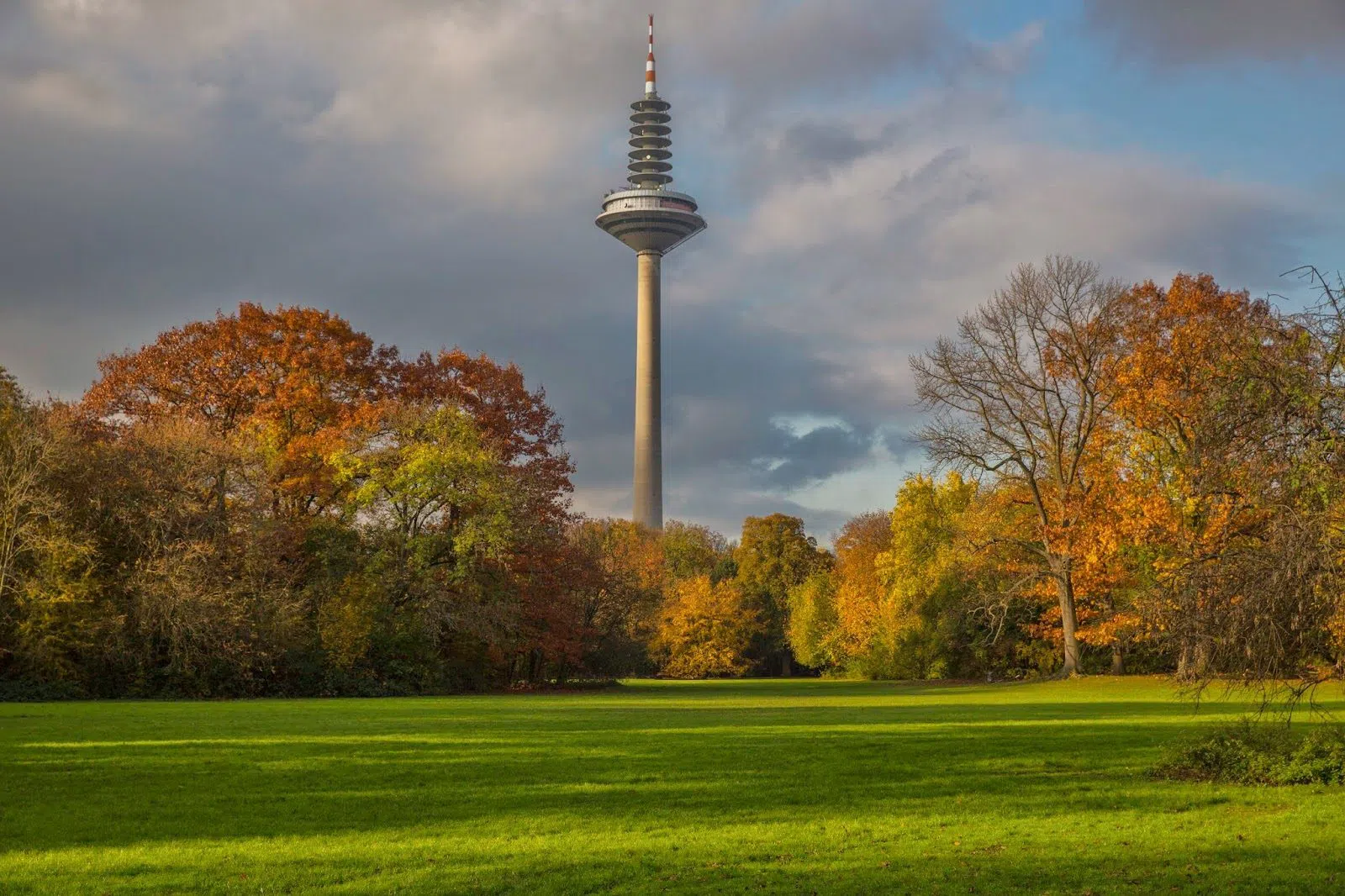
Frankfurt wears its banker's suit by day, but step two tram stops in almost any direction and the glass gives way to lawns, vineyard rows and forest older than the city's oldest bank. More than half of the municipal area is green or blue — parks, a protected inland dune, a river threaded with meadows, and a city forest big enough to swallow a whole afternoon. This is a guide to walking that green Frankfurt on foot rather than glancing at it from a taxi, grouped the way you'd actually plan a few days here.
The Westend's twin gardens
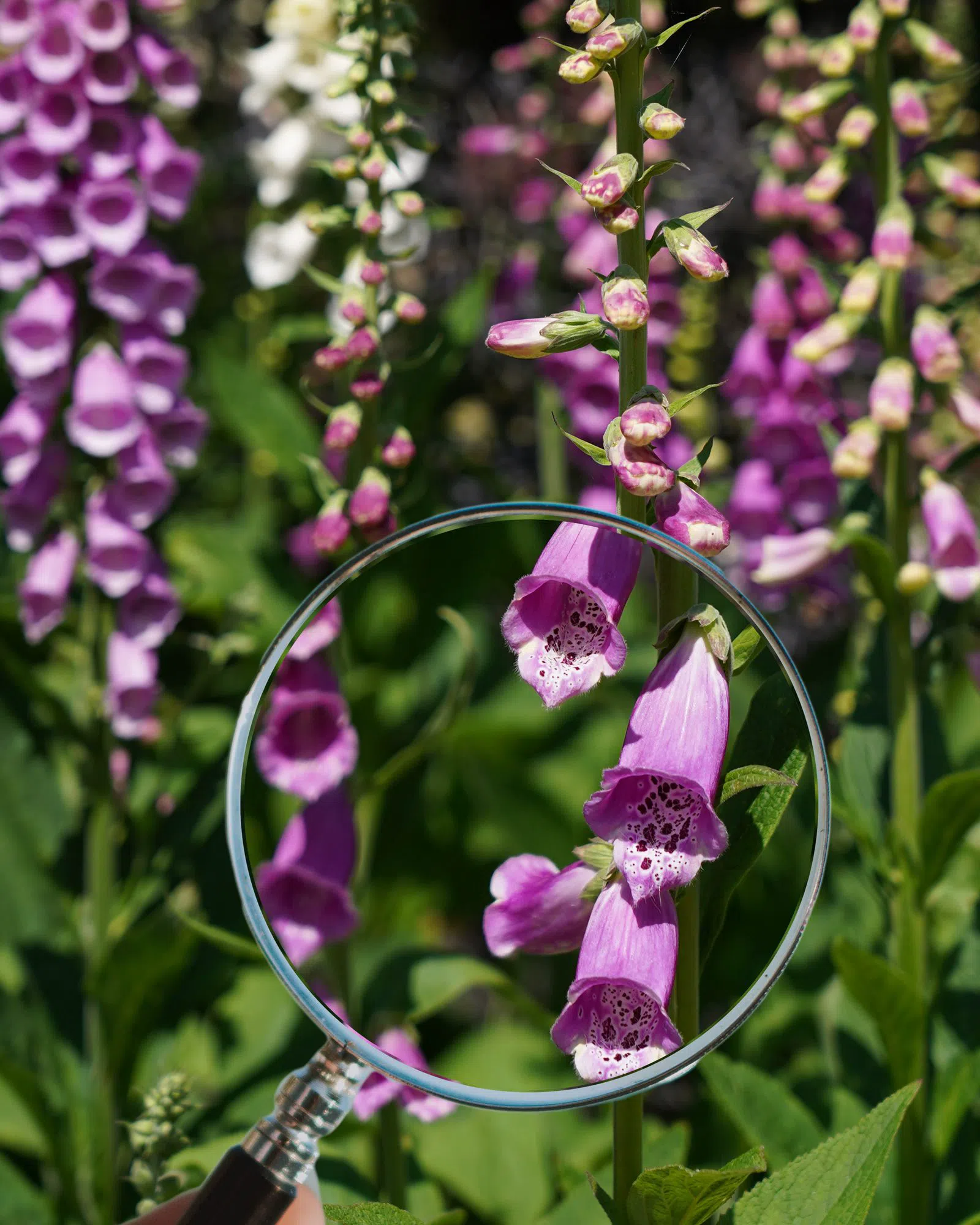
Start where the money district softens into leafy embassy streets. Palmengarten (Westend) is the city's 147-year-old showpiece garden, and the one entry here you pay for — a modest ticket, comfortably under €15, with group rates and guided tours that you can book in advance. It earns the fee: alongside the formal beds and the rose garden, a run of tropical and desert greenhouses makes this the most reliable rainy-day option in the whole guide, since you can spend an hour under glass while the weather sorts itself out. It's at its best in spring, when the outdoor planting comes into bloom. Families and organised groups are genuinely welcome rather than merely tolerated, which is not true everywhere on this list.
Next door, and free, Grüneburgpark (Westend) is where locals actually spend their summer Sundays. The wide, gently sloping lawns are made for large picnic groups — bring a blanket and a crowd and nobody will mind — and there's a quieter surprise folded into one corner: a tranquil traditional Korean garden, worth the detour for ten unhurried minutes. The contrast between the two is the point. Palmengarten is curated and ticketed; Grüneburgpark is loose, social and open to all. Do them back to back on a fine morning and you've seen the two faces of green Frankfurt before lunch.
Plan your Frankfurt trip
Live prices from our booking partners.
Free cancellation on many rooms. We may earn a commission when you book.
Frankfurt's green lung
Cross to the south side and the scale changes entirely. The Frankfurter Stadtwald (Frankfurt City Forest, spreading south from Sachsenhausen) is one of the largest city forests in Germany, and Frankfurters call it the city's green lung with good reason. It's laced with waymarked nature trails, ponds and the occasional clearing that opens onto a beer garden — the kind of forest that absorbs a hiking or cycling group without ever feeling busy. It's free and unfenced, so the practical advice is simply to pick a waymarked route and stick to it; the forest is large enough that wandering off-trail is a real way to lose your bearings.
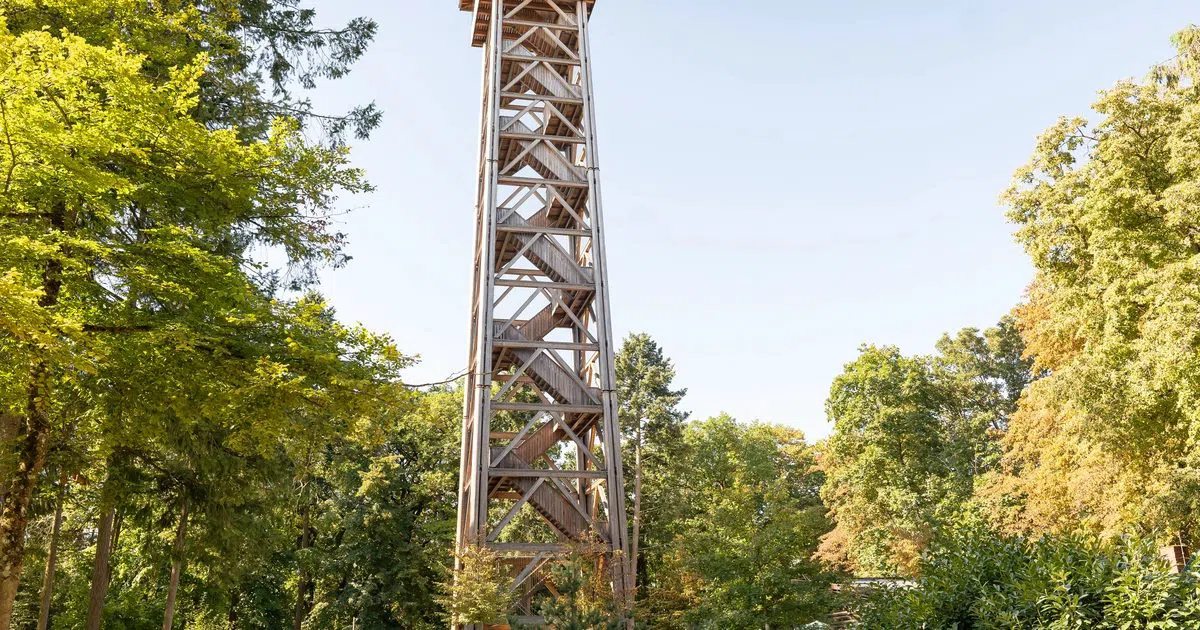
On the forest's edge stands the Goetheturm & forest play park (Sachsenhausen), a tall timber lookout tower faithfully rebuilt after an arson fire destroyed the original in 2017. Climb it for a fine skyline view, but time your visit: the tower is seasonal, climbable roughly April to October and only in daylight, so it's no use as a winter plan. Around its base, a forest play park, a garden restaurant and a beer garden handle families and groups easily, which makes this a natural place to end a Stadtwald walk with the kids run ragged and the adults sat down. If you're here out of season, treat it as a walking destination rather than a viewpoint.
Wide-open meadows for a crowd
When you want space rather than shade, head for the big open parks. Niddapark (Volkspark Niddatal) (northwest, around Ginnheim and Heddernheim) is Frankfurt's largest park, and it was deliberately left semi-wild — the high meadows are allowed to grow so that they read as genuine countryside despite being minutes from downtown. It's vast enough to comfortably hold big groups, runners and dog walkers all at once without anyone crowding anyone. Bring your own everything; this is not a park dotted with kiosks, which is precisely why it feels like escaping the city rather than relocating to a different bit of it.
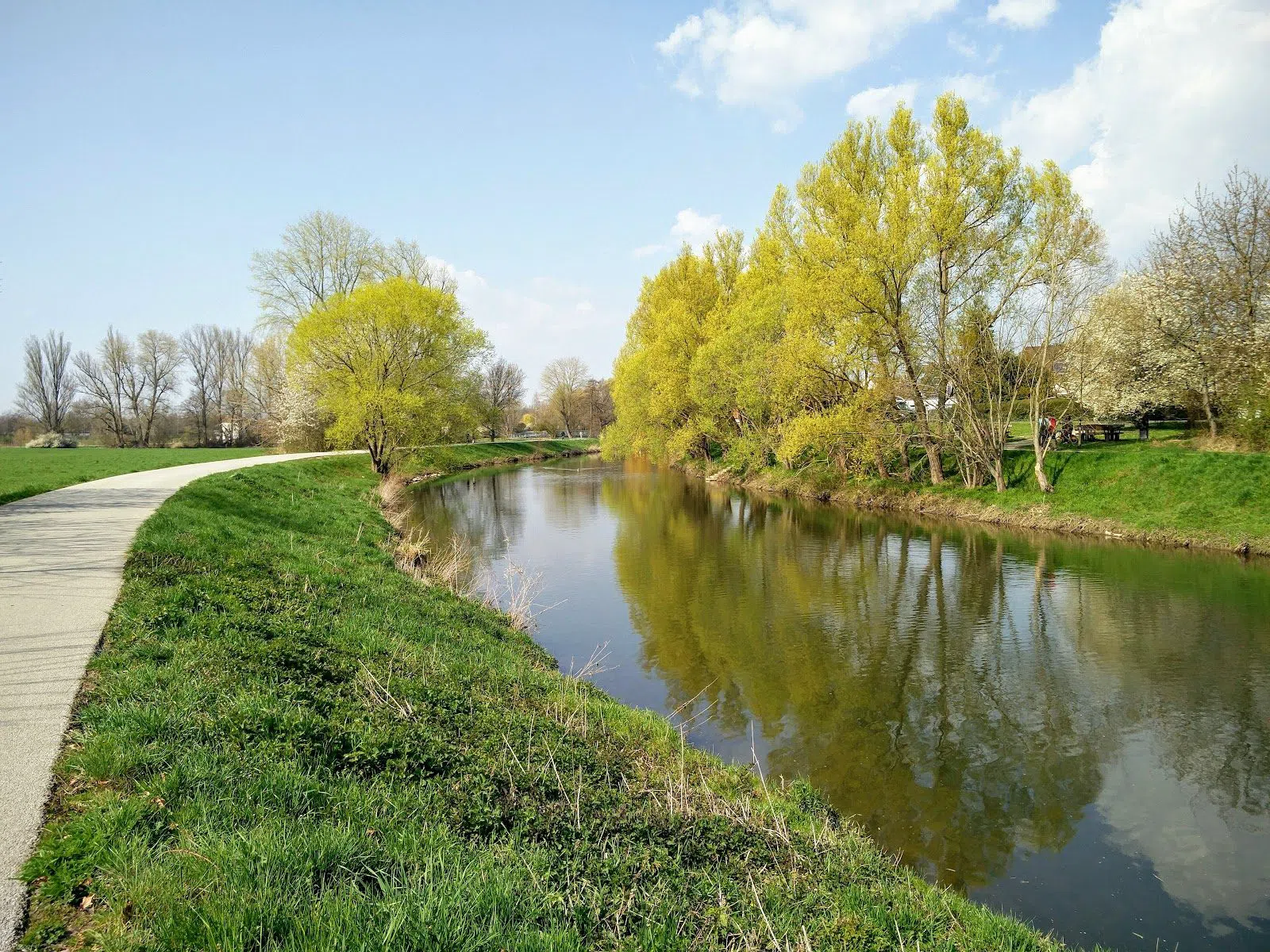
Over in the east, Ostpark (Ostend) is the calmer, more neighbourly alternative. It's the city's second-largest park and refreshingly un-touristy — a relaxed local hangout built around a big pond, popular with runners and picnic groups who live nearby rather than visitors ticking off sights. If Niddapark is the wild, breezy option, Ostpark is the easygoing one, better suited to an unhurried afternoon than a proper hike. Neither costs anything, and both suit large, informal groups better than they suit couples after somewhere intimate.
Along the Main
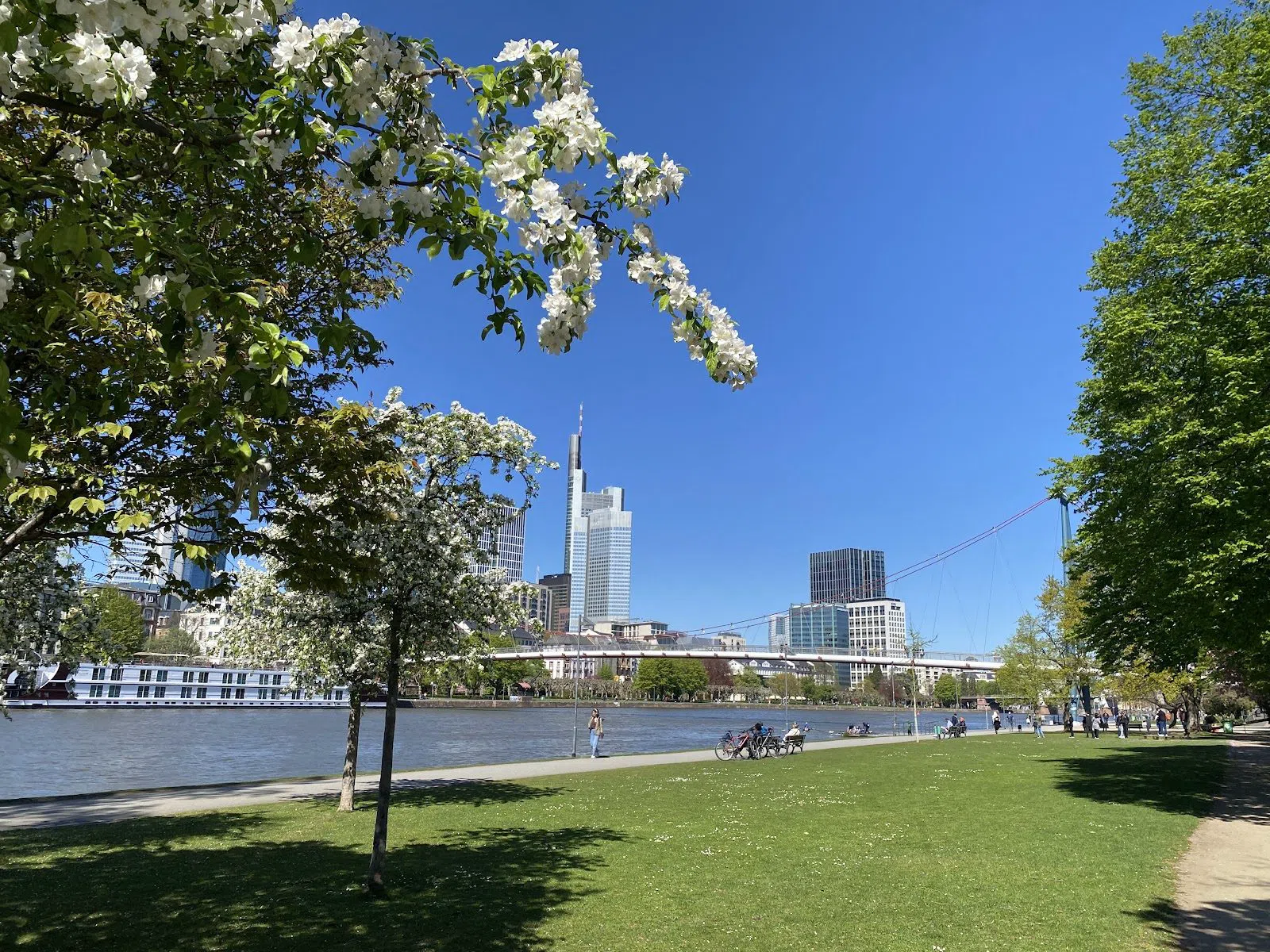
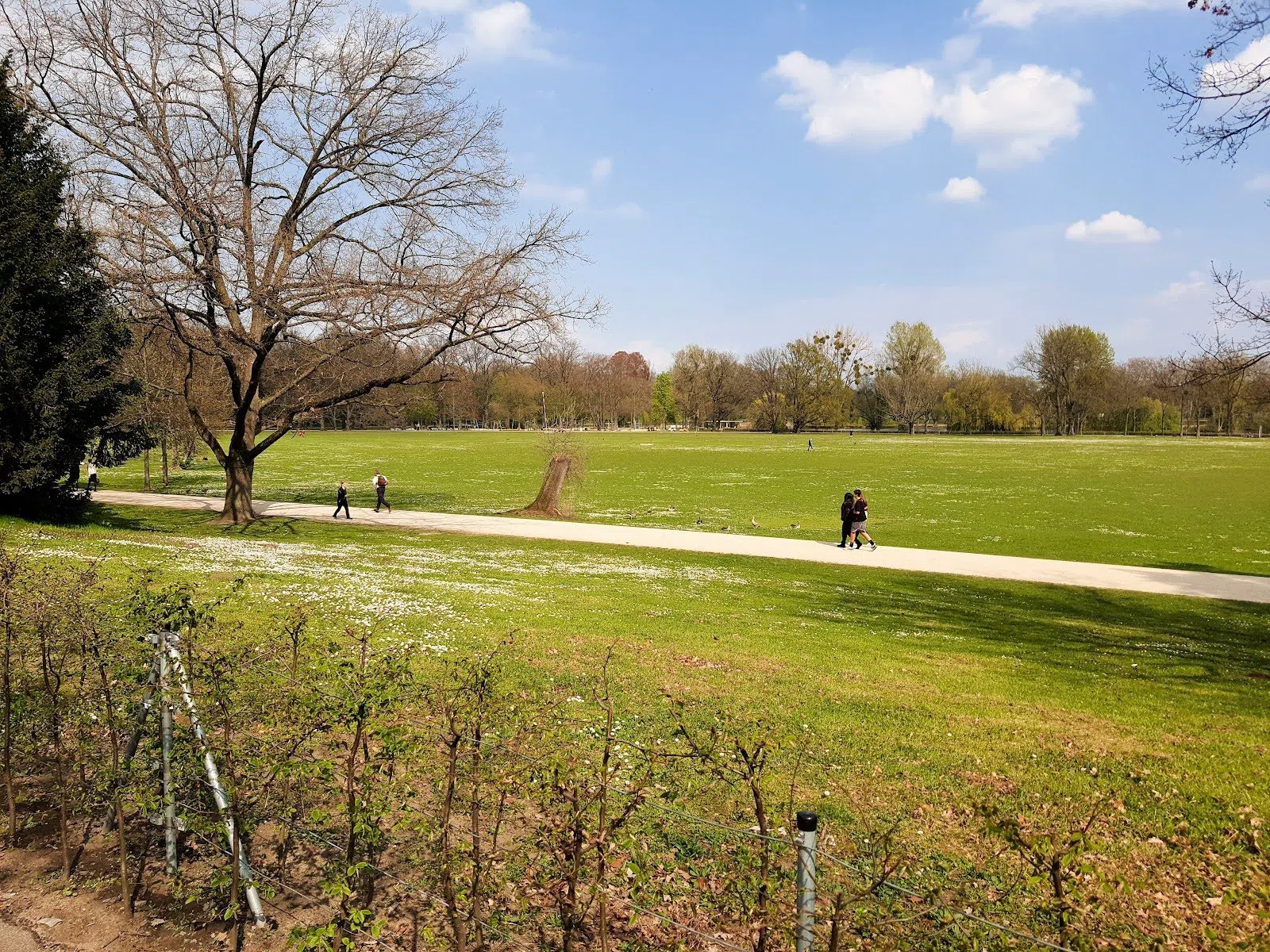
No green tour of Frankfurt is complete without the river, and the Nördliches Mainufer (North Main Riverbank) is the classic walk. This is the continuous grassy promenade along the north bank — joggers and skaters in constant motion, informal picnic gatherings on the meadows, and the museum-lined south bank and the skyline laid out across the water. It's free, open-ended and welcoming to walking or cycling groups; you can join it and leave it at any bridge, which makes it the easiest thing on this list to slot into a day of ordinary sightseeing.
A little along the bank, Nizza Garden (Nizza-Anlage) (riverside, just west of the old centre) is a genuine oddity: a sub-tropical strip that exploits a mild local microclimate to grow Mediterranean planting you wouldn't expect this far inland. It's small, free and informal — a picnic-and-stroll pocket rather than a destination in itself — and open groups are fine, though there isn't the room here that the big parks offer. Fold it into the riverside walk rather than making a special trip; it works best as a warm, unexpected few minutes between other things.
Nordend's neighbourhood greens
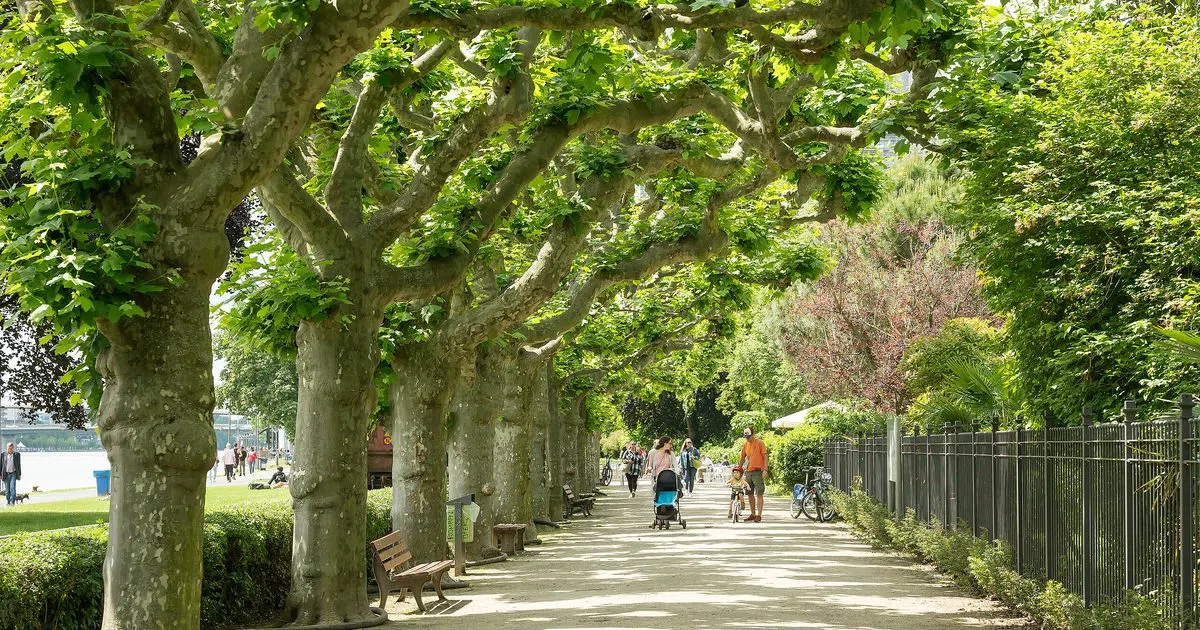
The Nordend district has two very different greens within easy reach of each other. Günthersburgpark (Nordend) is the lively one — a much-loved local park with lawns that take picnic groups well and a sociable, family-friendly feel that tips into properly busy on warm weekends. It sits comfortably next to a café stop, so it's the sort of park you drift into rather than plan around. If you want space and quiet on a Saturday in July, look elsewhere; if you want to feel how the neighbourhood actually lives, come here.
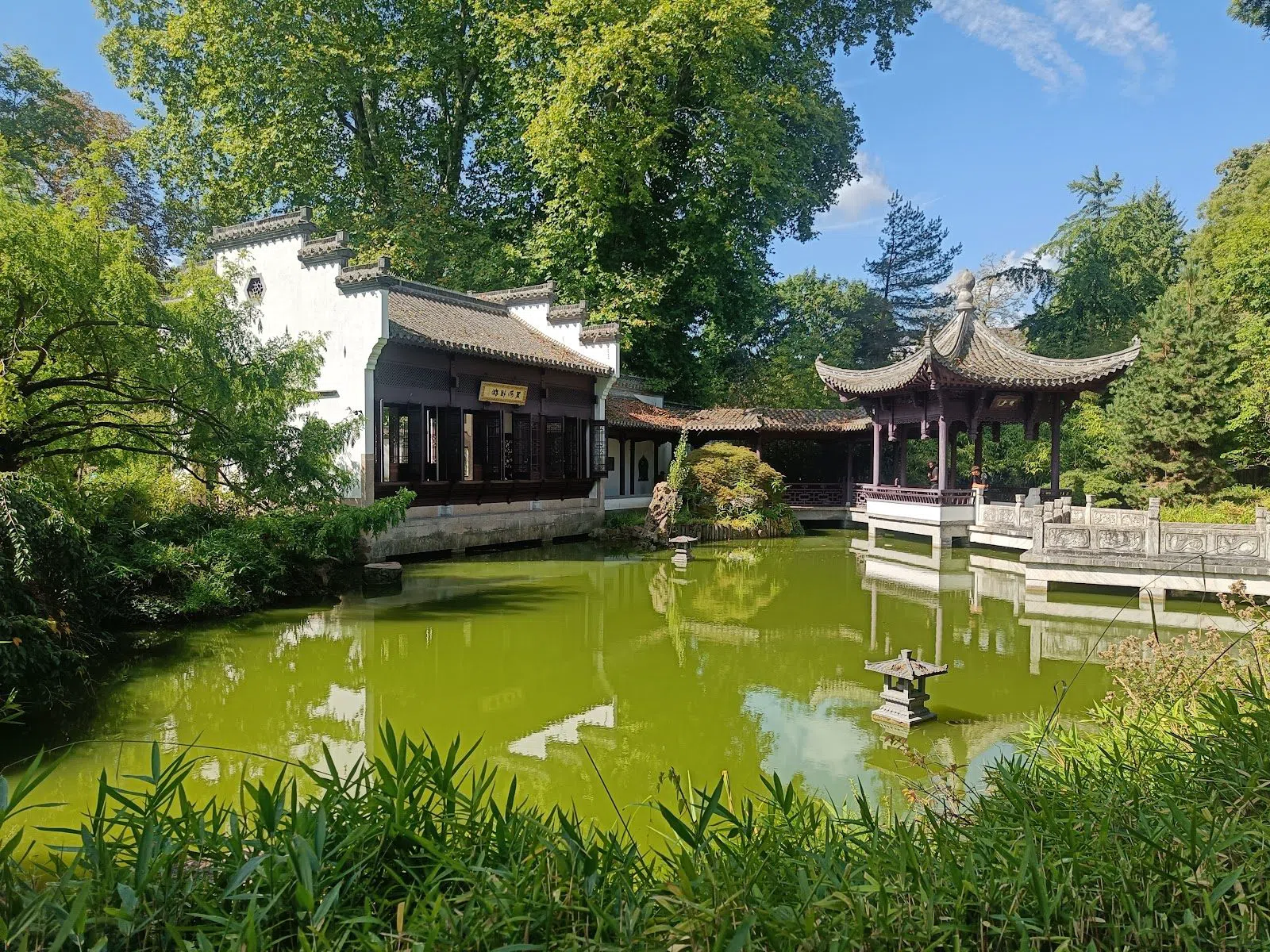
A short way off, Bethmannpark & Chinese Garden (Nordend) offers the opposite mood. The park itself is pleasant, but the draw is the small, walled Chinese garden within it — a gift from one of Frankfurt's Chinese sister cities, reopened after a pavilion fire and now a genuinely serene place to slow down. Be honest with yourself about the crowd you're bringing: the Chinese garden is intimate and easily overwhelmed, so it's far better for a couple or a small group than for a large party. Come early or midweek if you want the stillness it's built for.
Two curiosities: a dune and a vineyard
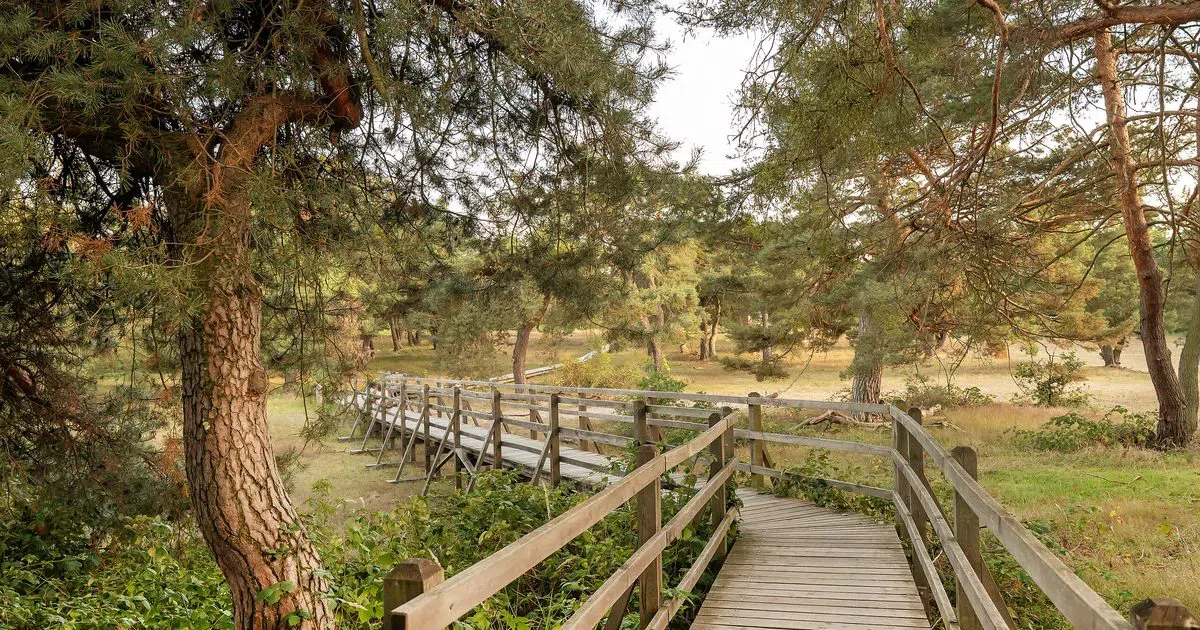
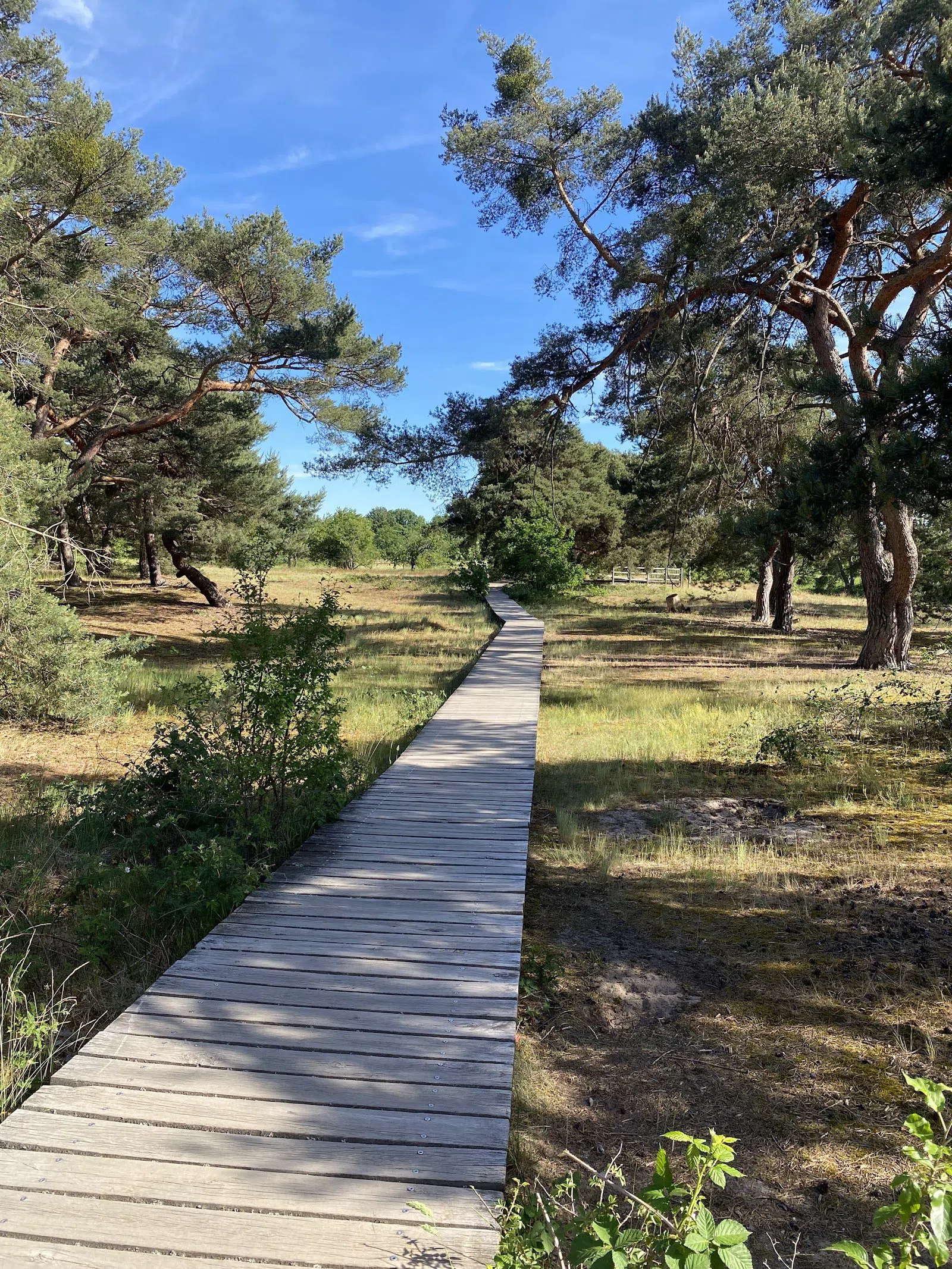
For something you won't find in any other German city guide, make time for two outliers. Schwanheimer Düne (Schwanheim, southwest) is a 10,000-year-old post-Ice-Age inland dune — a stretch of sand and specialised flora that genuinely feels like a slice of coast dropped into landlocked Frankfurt. It's a protected reserve and its plant life is fragile, so the rule is firm and non-negotiable: keep to the boardwalk. Groups are welcome, but only if everyone respects that, which makes it a better fit for considerate walkers than for a boisterous crowd. Treat it as a short, curious detour rather than a place to spread out a picnic.
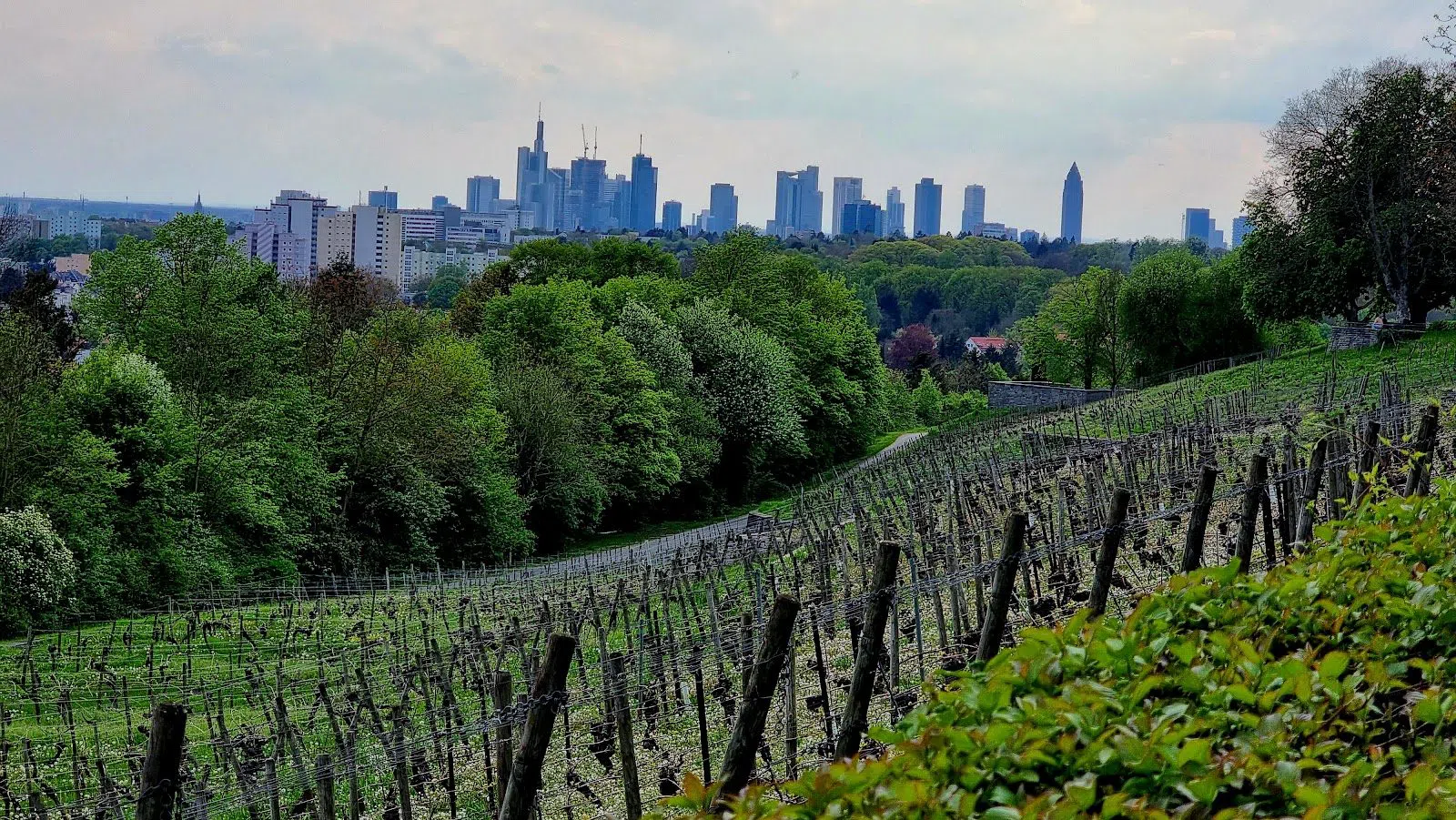
Then climb Lohrberg (Seckbach, northeast), the only vineyard within the city limits. The reward for the climb is the best skyline panorama in Frankfurt, and — better still — a Straußwirtschaft, a seasonal vineyard tavern, and a terrace garden restaurant where you can put a group in front of the view with a glass of the local wine. The park is free; the food and drink land in the €–€€ range. This is the entry to end a day on: earn the view on foot, then reward everyone at the terrace. It suits groups after a view and a drink far better than anyone looking for solitude.
The thread that ties it together
If you're the sort of traveller who wants a single organising line through all of this, it already exists. The GrünGürtel Rundweg (Green Belt circular trail) runs around an 8,000-hectare protected green ring encircling the city, and it physically stitches many of the places above into one continuous route. The honest advice is not to attempt the whole loop in a day — tackle a single signposted stage, on foot or by bike, and let it carry you between two or three of the parks and forest edges you'd want to see anyway. Done in stages over a few days, it turns a list of separate green spaces into one coherent walk.
Practical notes
Getting around. Every place here is reachable on public transport — the U-Bahn, S-Bahn and tram network covers the parks, the forest edge and the riverbank, and a day ticket pays for itself quickly. Frankfurt is also a strong cycling city; a hire bike is the best single tool for the Stadtwald, Niddapark and the GrünGürtel stages, where distances between sights are real.
Cash. Carry some. Many beer gardens, forest kiosks and the vineyard tavern at Lohrberg still prefer cash, and prices are quoted in euros; a small stock of coins and notes saves awkwardness far from the nearest card machine.
Timing. Spring is the reward season for Palmengarten and the meadows; high summer is when the lawns fill with picnickers at Grüneburgpark, Günthersburgpark and Ostpark. Watch the seasonal entries — the Goetheturm is only climbable roughly April to October in daylight, and Lohrberg's tavern keeps seasonal hours. On hot weekends, arrive early anywhere popular.
Budget. This is a cheap city to explore green. Everything on this list is free except Palmengarten, whose ticket is modest and offers group rates; at Lohrberg you'll only spend if you sit down to eat and drink. Sort a base first with a Frankfurt hotel search, and for everything beyond the parks — food, museums, getting oriented — the wider Frankfurt guide picks up where this leaves off.
Before you go
Which Frankfurt parks are free and which cost money?
Almost all of them are free — Grüneburgpark, the Stadtwald, Niddapark, Ostpark, the Main riverbank, Bethmannpark, Günthersburgpark, Schwanheimer Düne, the Goetheturm park and Lohrberg all cost nothing to enter. Only Palmengarten charges a ticket, which is modest and comes with group rates. At Lohrberg you pay only if you eat or drink at the terrace tavern.
What's the best park in Frankfurt for a big group picnic?
For sheer space, Niddapark and Grüneburgpark are the strongest choices — wide open lawns and meadows that comfortably absorb a large group. Ostpark and Günthersburgpark also work well and feel more neighbourly. Avoid the small, intimate Chinese garden at Bethmannpark for large crowds; it suits couples and small groups far better.
Where can I get the best skyline view in Frankfurt for free?
Climb Lohrberg, the city's only vineyard hill in the northeast, for the best skyline panorama in Frankfurt — and reward yourself afterwards at its seasonal terrace tavern. The rebuilt timber Goetheturm on the southern forest edge is another fine free viewpoint, but note it's only climbable roughly April to October in daylight.
Can I visit Frankfurt's parks in winter or on a rainy day?
Yes, though pick wisely. Palmengarten is the reliable rain-or-shine option thanks to its heated tropical greenhouses. The Stadtwald and riverbank walks are fine in cold weather with the right coat. Just remember the seasonal spots: the Goetheturm tower and Lohrberg's tavern keep spring-to-autumn hours and aren't winter plans.
Is there really a sand dune and a vineyard inside Frankfurt?
Both, genuinely. The Schwanheimer Düne in the southwest is a 10,000-year-old post-Ice-Age inland dune that feels like a stretch of coast — visit it, but keep strictly to the boardwalk to protect the fragile flora. Lohrberg in the northeast is the only vineyard within the city limits, with a terrace tavern and the finest skyline view in town.