The Frankfurt issue
Walking Frankfurt for the First Time in Early Autumn
A first trip built around the river, the wine market and the taverns, plus the closures, cash-only counters and opening days that catch people out.

By Robin van DijkThe city read on foot, one district at a time
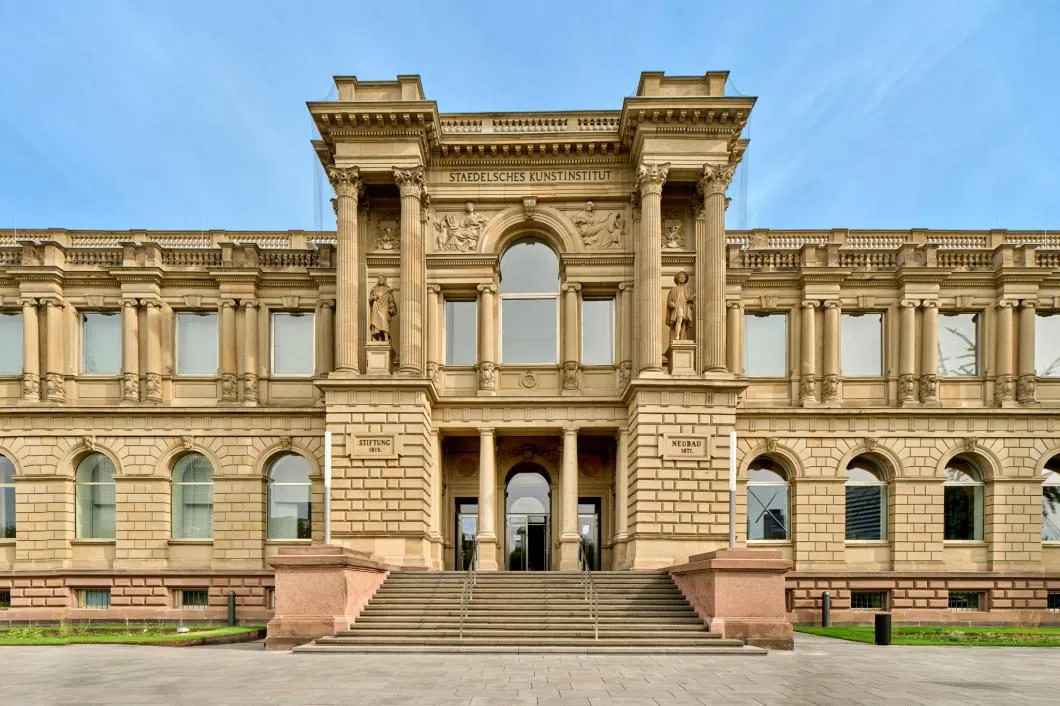
Frankfurt's old centre is small enough to cross on foot in twenty minutes, and most of what a first-time visitor wants sits inside that circle or one tram stop beyond it. In early September the river path is still warm at four in the afternoon and wants a jacket by eight, the plane trees along the Museumsufer are going bronze at the edges, and for ten days the growers come down from the hills and set up trestle tables in the middle of the shopping street. Early autumn is the easiest week of the year to make sense of this city, as long as you know which gallery has moved and which room is shut.
What early autumn actually does to your plans
Days in the first half of September usually sit somewhere between 17 and 22°C, dropping into the low teens by the start of October, and the evenings cool faster than the light suggests. Rain here arrives in short heavy bursts, not all-day grey, which matters less for what you pack than for how you order the day. Bring one waterproof layer, one warm one and shoes that cope with cobbles; leave the umbrella, because the wind off the river will fold it.
Give every day one indoor anchor (a museum, the market hall, an hour under glass) and hang the walking around it. Frankfurt rewards that better than most cities its size because the anchors sit so close together: from the Römerberg you can be inside a natural history hall, on a rooftop, or across the river on the museum embankment within fifteen minutes. If you want the wider picture of what the city holds outside this season, the Frankfurt guide covers the rest of the year.
Plan your Frankfurt trip
Live prices from our booking partners.
Free cancellation on many rooms. We may earn a commission when you book.
The wine market that takes over Freßgass
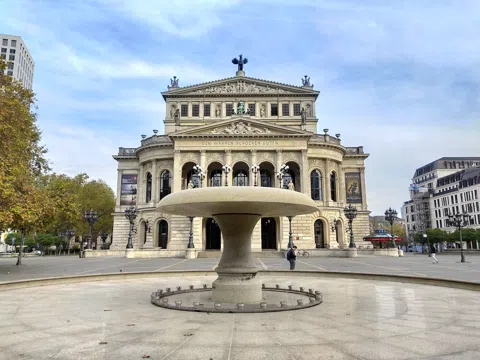
Rheingauer Weinmarkt (Freßgass and Opernplatz, Innenstadt) runs 2-11 September 2026, noon to 11pm daily, with around 30 growers from the Rheingau pouring roughly 600 wines down the middle of a pedestrian street. Entry is free, glasses are €4-7 with a deposit on the glass itself, and there is no door policy of any kind: you walk in off the pavement, and so does everyone else.
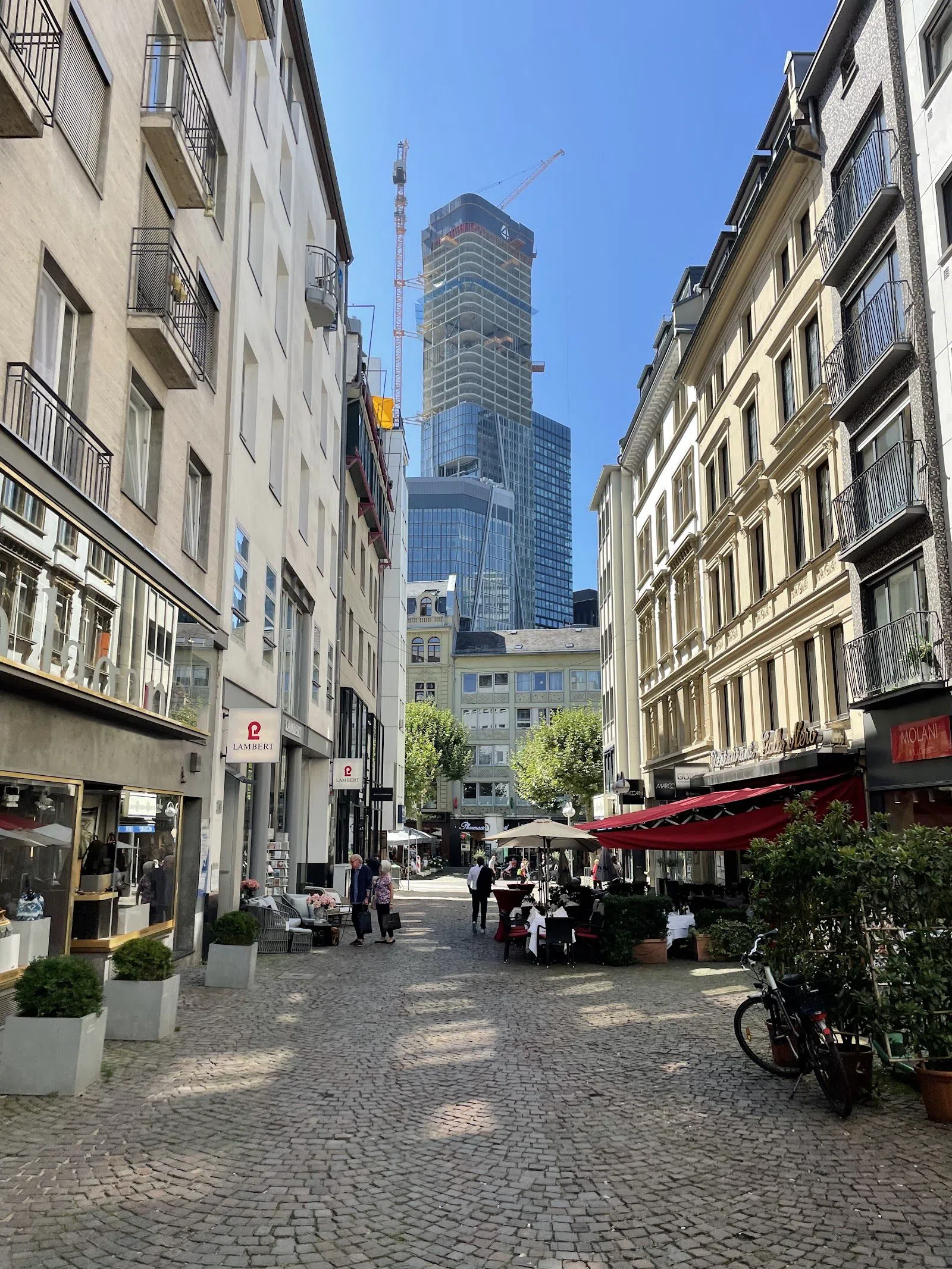
That makes it the one thing here that works equally for two people and for twelve. Groups do not need to book, split or apologise; you claim a corner of a standing table and stay there. The trade-off is that between about six and eight on a warm evening the stretch nearest Opernplatz is shoulder to shoulder. Come at five, taste through three or four growers while there is still room to read the lists, then move on before the after-work crowd lands. Riesling is the point here, since this is the region's home fixture, and most stands will pour a small measure if you ask before committing to a full glass.
An hour that makes the map make sense
Two orientation rides are worth doing on the first day.
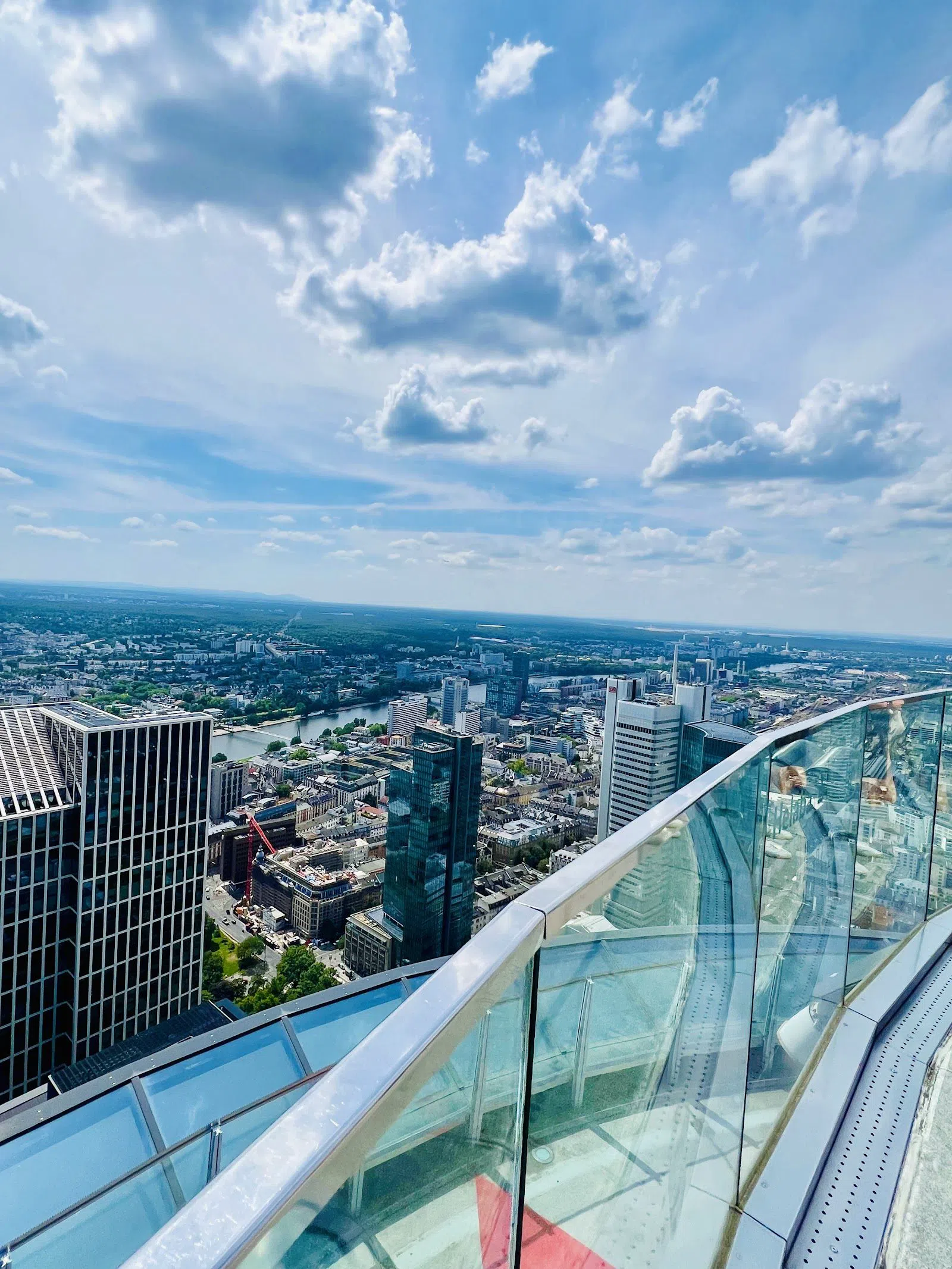
Main Tower (Bankenviertel, Neue Mainzer Strasse) has the only open-air deck in the skyline: around €9-11, open until 9pm Sunday to Thursday and 11pm on Friday and Saturday. From up there the city's logic becomes obvious. The river cuts east to west, the rebuilt Altstadt sits as a small dense knot, and the towers stand in one tight cluster instead of spreading across the map. Lift capacity is the constraint, so a sunset arrival means queuing; go an hour either side of it. One date to note: the deck closes for an hour on the evening of 8 September 2026 for a private event.
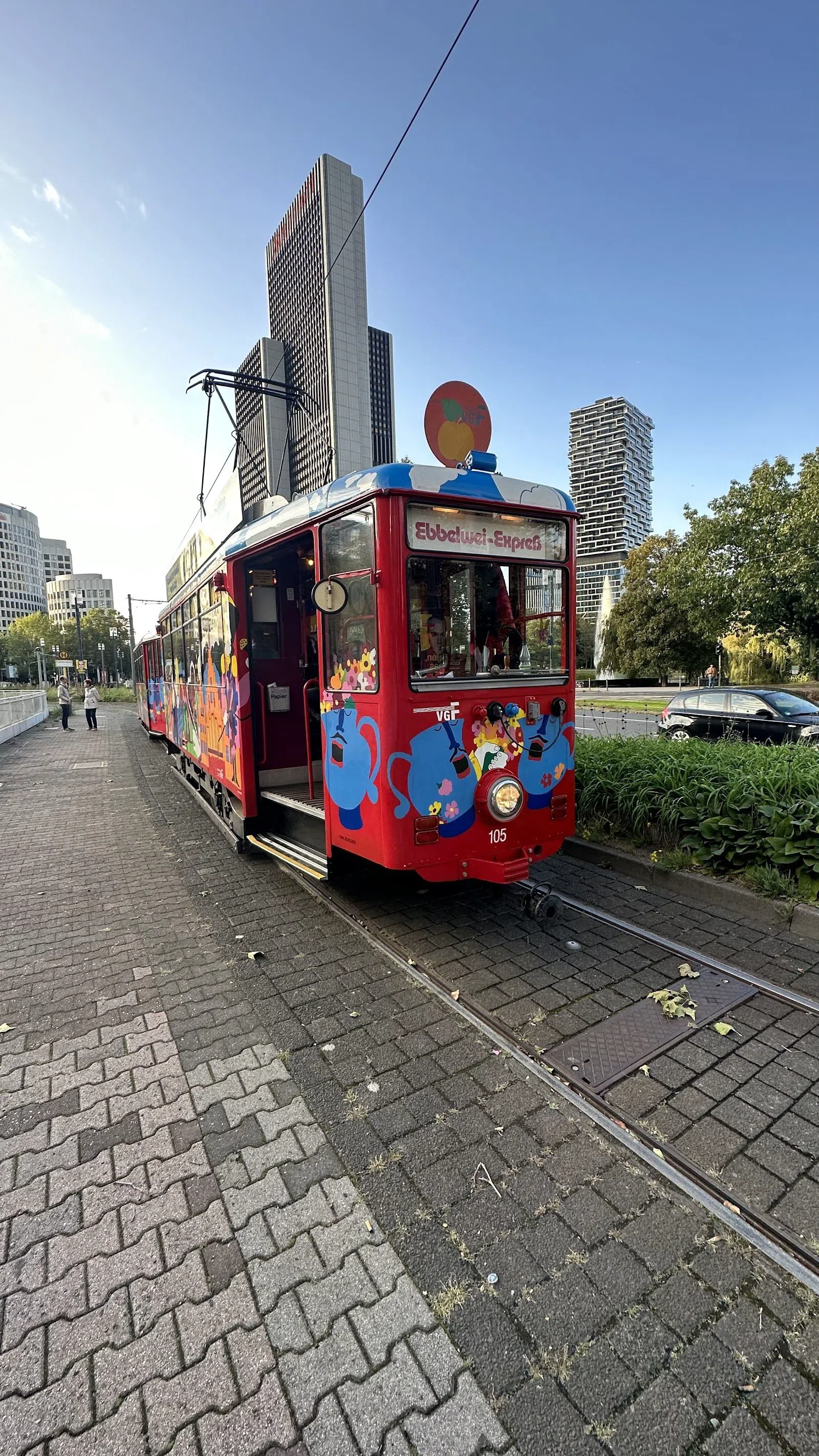
Ebbelwei-Expreß (23 stops across the city) is the other, and less of a novelty than it looks. The painted tram runs a one-hour loop past the Römer, over the Main and along the Museumsufer for €8 adult and €3.50 reduced, which includes a bottle of apple wine or juice and a bag of pretzels. It operates Saturdays, Sundays and public holidays only, so it shapes your weekend more than you shape it, and the conductor takes cash only. For a group it is ideal: you hop on at any stop, with no booking and no minimum. With children in tow it buys a quiet hour.
Museums for the grey half of the day
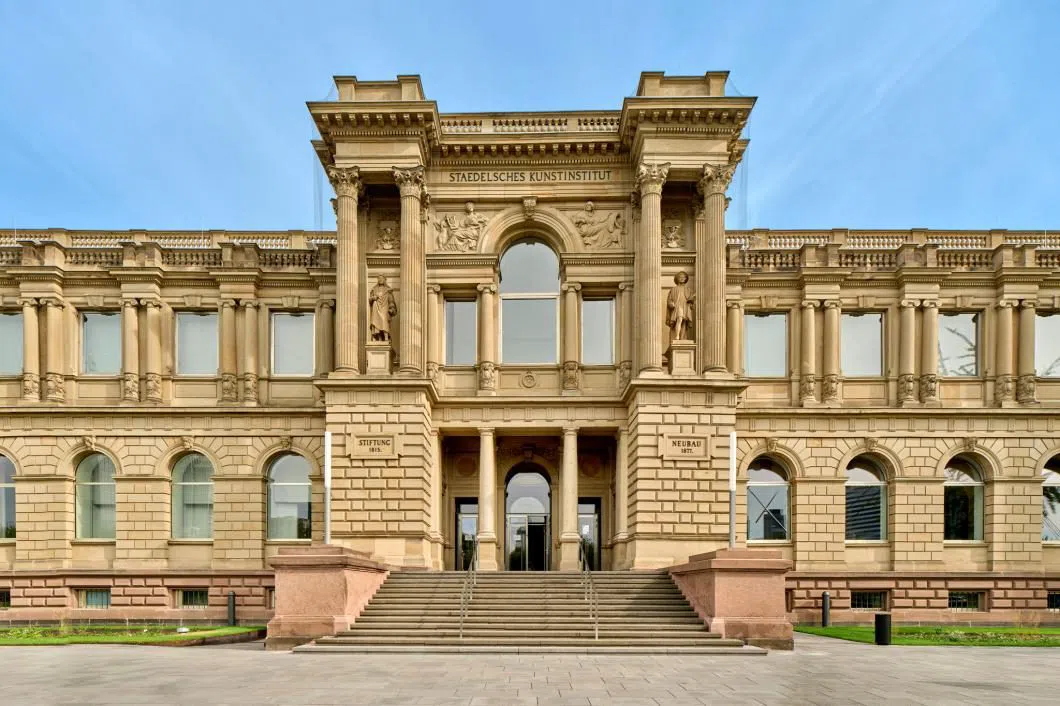
Städel Museum (Museumsufer, on the Sachsenhausen bank) is the anchor and the one museum a first-timer should not skip: €19 adult, €17 reduced and for groups, €30 family, under-12s free, and €10 on Tuesdays between 3 and 6pm, which is the best-value slot in the city. Groups are handled openly, with a form on the site for the group rate and for booked guided tours. The in-house Städel Restaurant is closed for refurbishment, so plan lunch elsewhere. The museum café is open, as is the café at the Liebieghaus a short walk along the embankment.
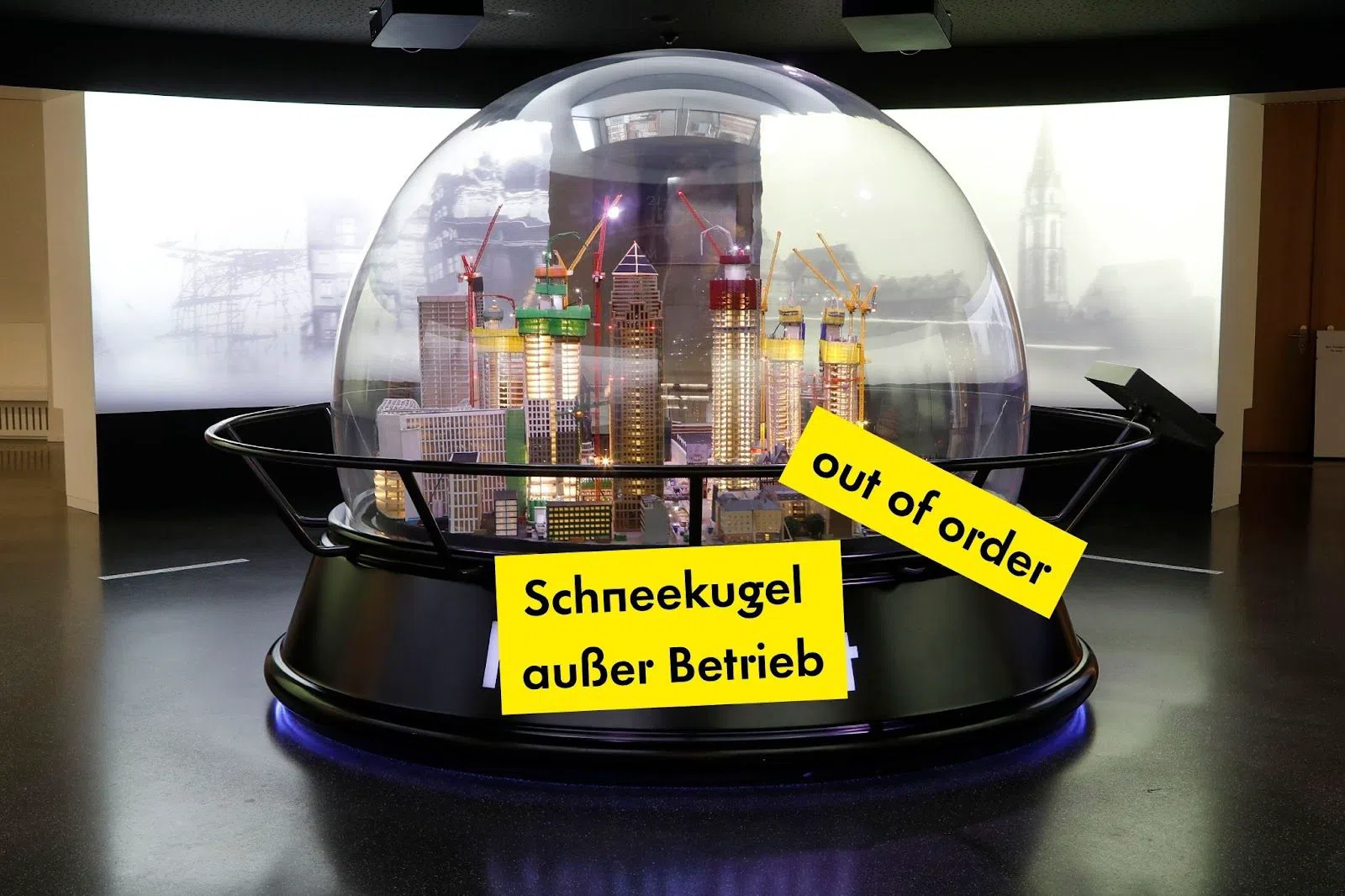
Historisches Museum Frankfurt (Römerberg, Altstadt) explains why the city looks the way it does (the medieval town, the bombing, the banking decades), and it stands exactly where first-timers are already standing. Tickets are €8 for the permanent collection, €10 for a special exhibition, €12 for a combined day ticket, half price reduced. Guided tours and group programmes go through visitor services, reachable Monday to Friday 10:00-16:00. The much-photographed 'Typical Frankfurt!' snow-globe installation is out of action at the moment.
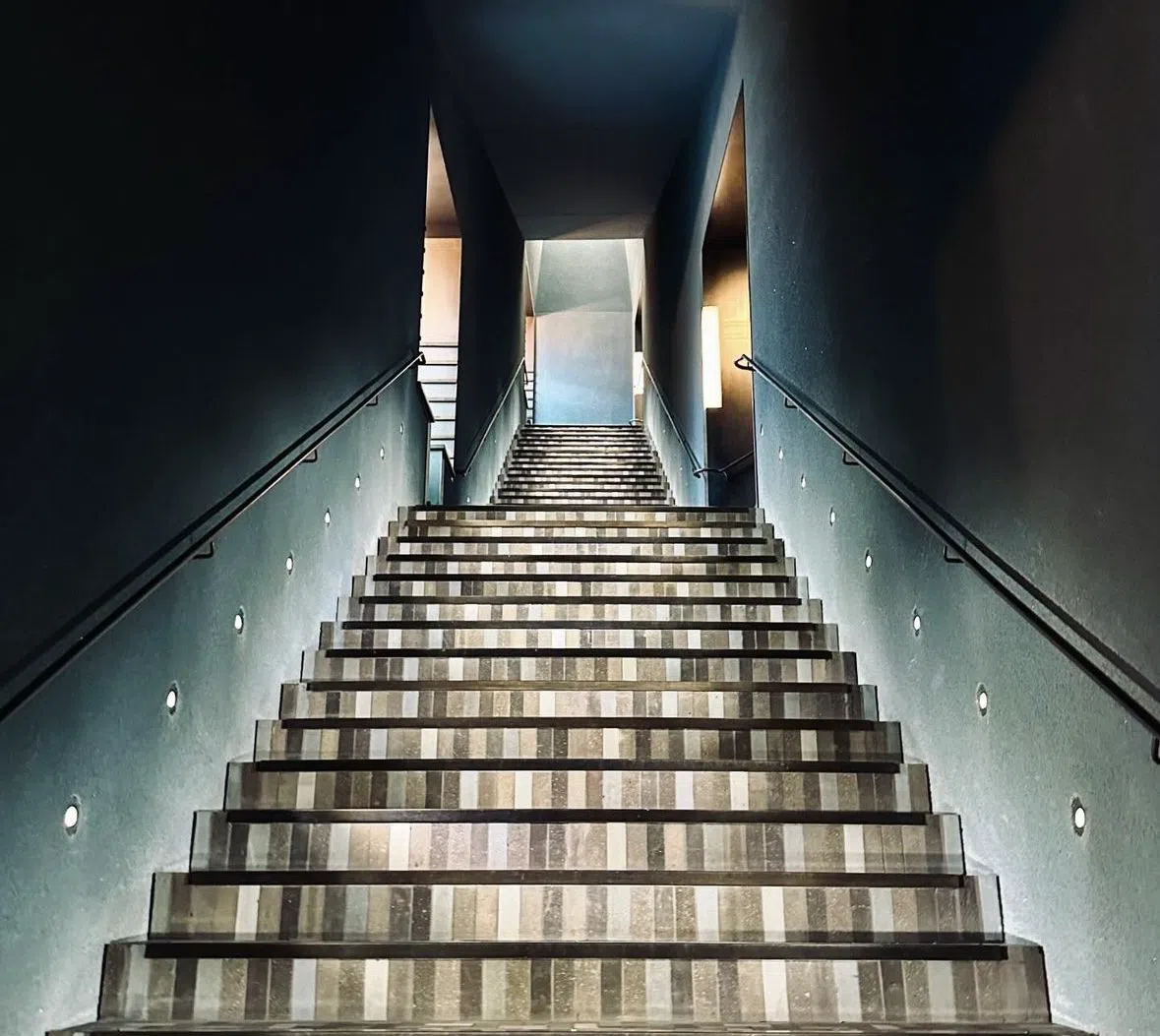
Deutsches Romantik-Museum & Frankfurter Goethe-Haus (Grosser Hirschgraben, Altstadt) is the best rainy hour in the old town: Goethe's birth house next door to a purpose-built museum of German Romanticism, about €12-15 on a combined ticket. It stays open until 9pm on Thursdays, which is useful once the light starts going early. Tours are booked by phone or email through the Freies Deutsches Hochstift rather than online, so allow a day or two.
SCHIRN Kunsthalle Frankfurt Bockenheim (Bockenheim) comes with a warning, because searching the name will send you to the wrong place. The landmark hall beside the Römerberg is closed for an energy retrofit and the entire programme has moved to the former printing works in Bockenheim until 2028. Type 'Schirn' into a map, follow it to the Altstadt, and you arrive at a building site. The new halls are industrial and big enough to absorb a group without anyone shuffling; exhibitions run about €10-16.
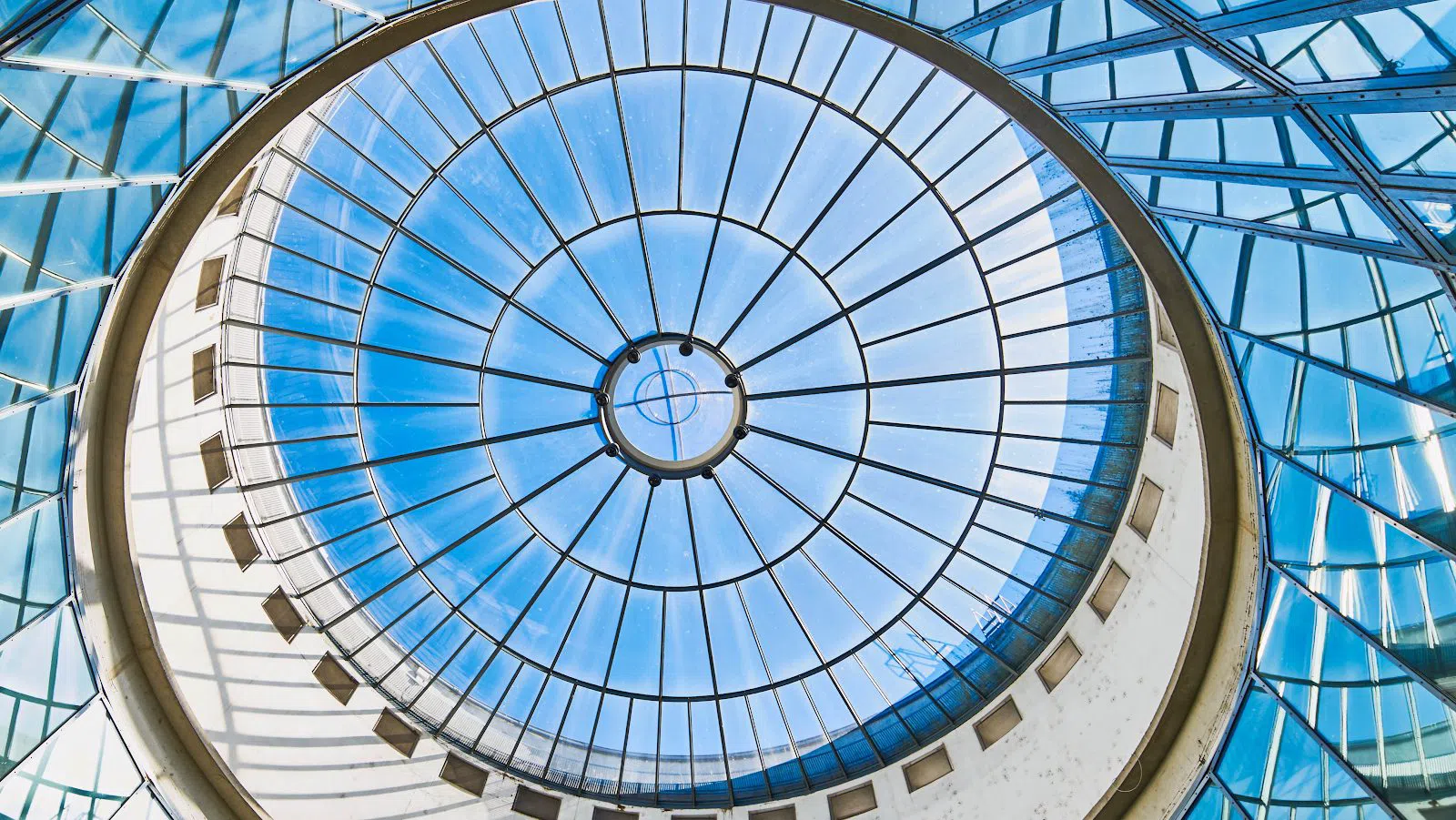
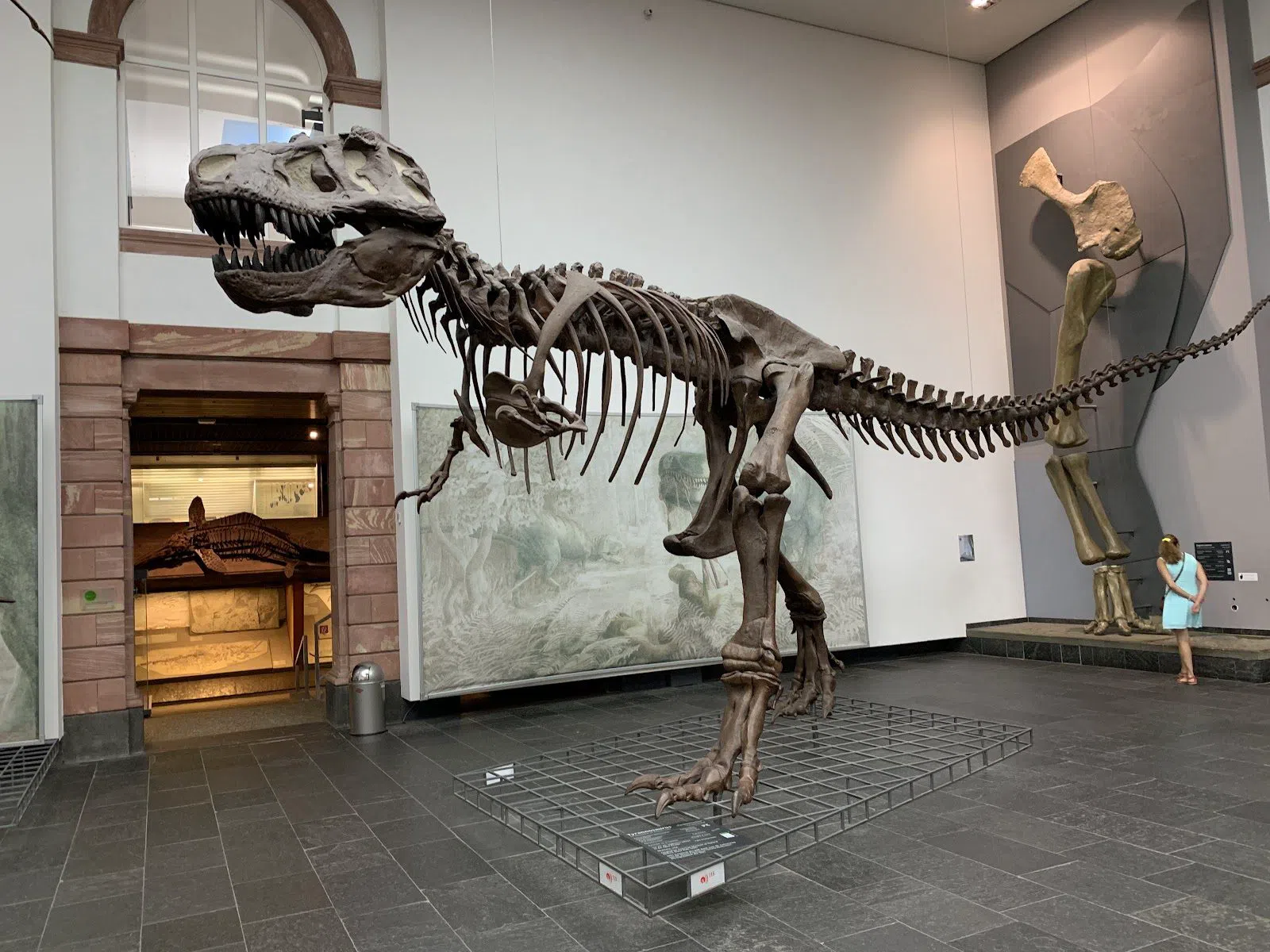
Senckenberg Naturmuseum (Westend, Senckenberganlage) is Germany's largest natural history collection and the reliable choice with children, at around €12 an adult, with guided tours and school or group programmes. Two autumn caveats: the Nature + Medicine gallery is closed from 7 to 24 September 2026, and lift repairs in the first atrium from late September into early October seriously limit step-free access. If anyone in your party uses a wheelchair or a pushchair, call before you build a day around it.
Lunch under the market roof
Kleinmarkthalle (Innenstadt, between Hasengasse and Berliner Strasse) is the city's daily larder and the best cheap lunch in the centre: €5-15 buys a stand-up plate and a glass. Eat Frankfurter Grüne Soße (seven herbs, served cold over potatoes and egg) and a wedge of handkäse if you are curious rather than hungry, then take the stairs to the wine counters upstairs, where the traders drink at lunchtime.
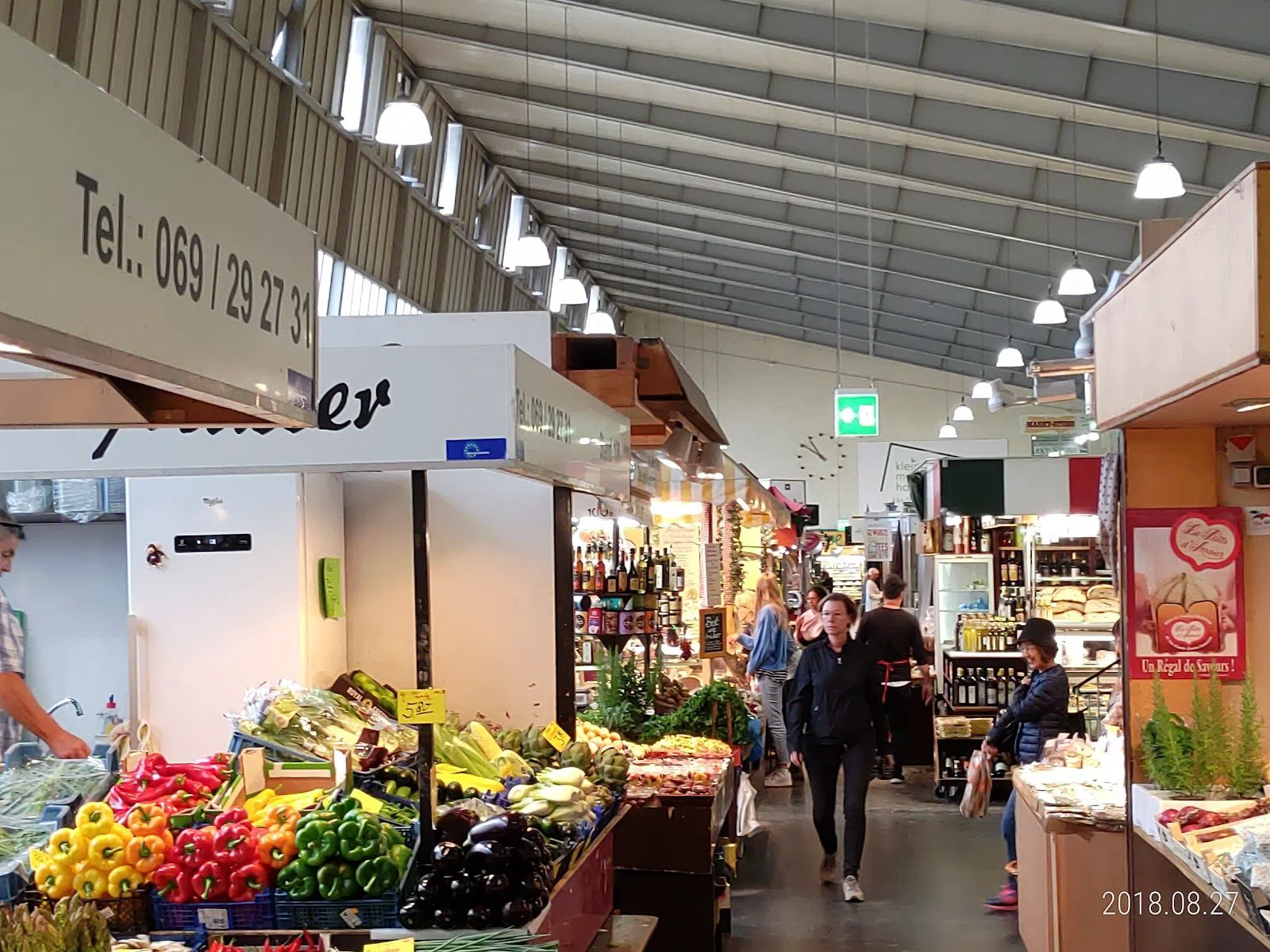
Reservations do not exist here and a group simply becomes part of the crush. Go before 12:30 or after 2, and split a large party across two or three counters instead of holding ground at one. Renovation work started in 2025 but the hall has stayed open throughout, so the only thing that will catch you out is the calendar: it is shut all day Sunday, which is exactly when visitors tend to wander over.
Apple wine, and where to drink it properly
Apple wine (Äppelwoi, Ebbelwei, spelled a dozen ways) is dry, sour and about the least fashionable drink in Europe, and Frankfurt is right to be stubborn about it. A glass runs around €2.50 and it is poured from a ribbed grey stoneware jug.
Apfelwein Wagner (Schweizer Strasse, Sachsenhausen) has been family-run since 1931 and opens 11:00 to midnight every day, which makes it the dependable first-night dinner when half of Sachsenhausen is dark. Mains are €12-20, cards are accepted, and it is the most group-ready tavern in the city, with a dedicated booking form for parties of 21 and over. It is loud and the benches are shared, and that is the correct experience rather than a flaw.
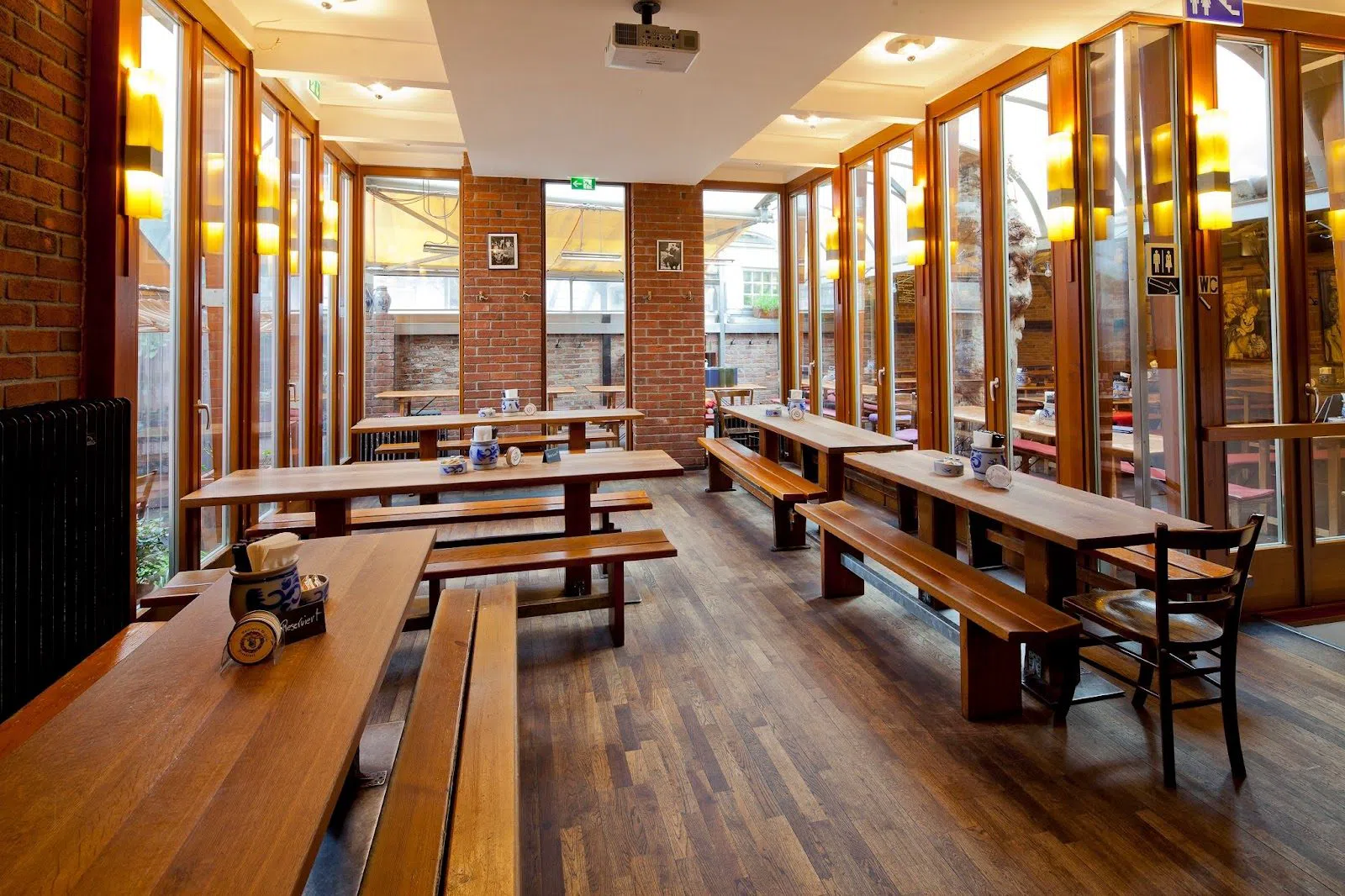
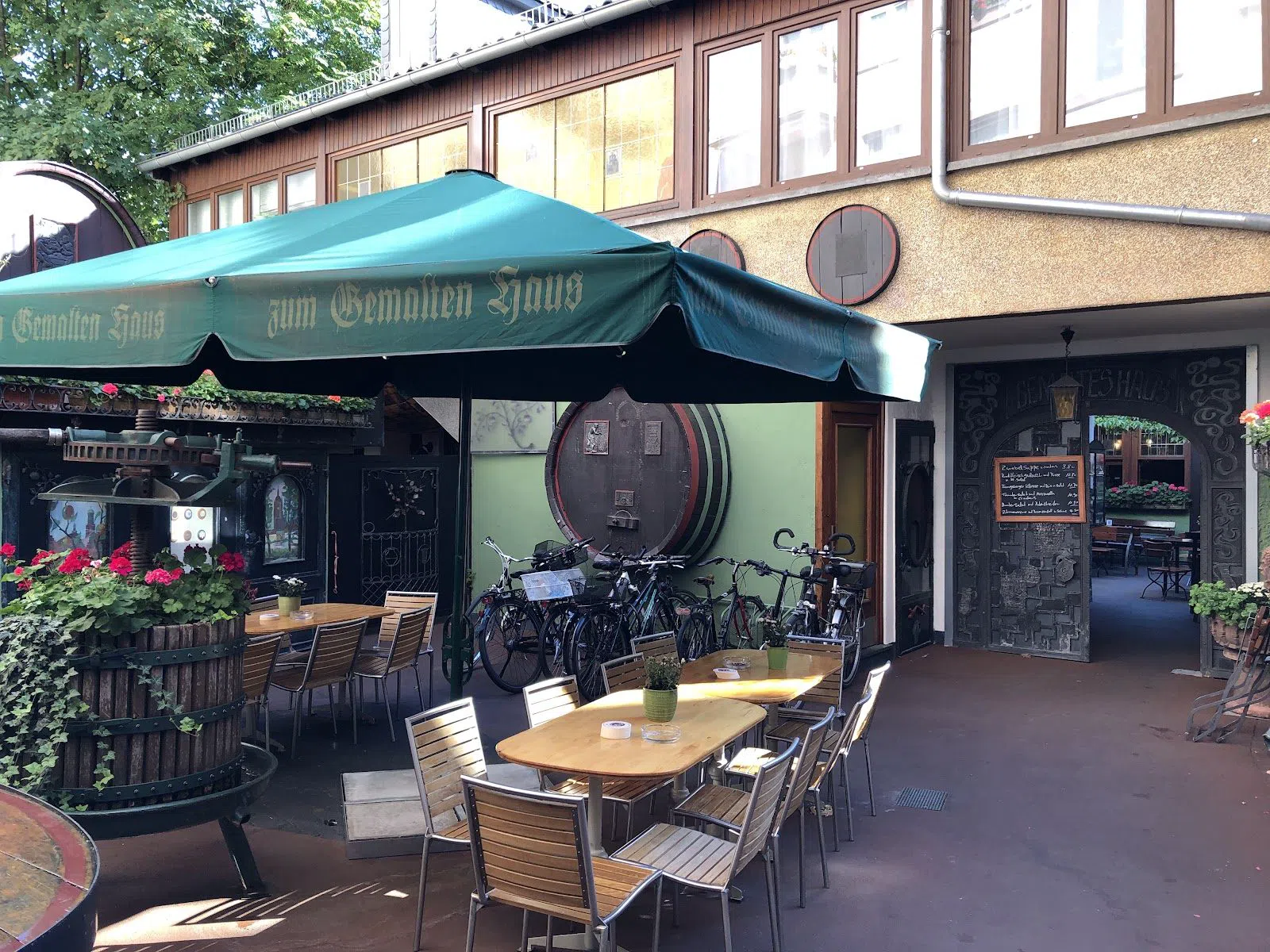
Zum Gemalten Haus (Schweizer Strasse, Sachsenhausen) is the prettier room: painted walls, close to ninety years old, better suited to two or four than to a party of twelve. Reservations are taken for four or more and smaller groups walk in. Check the day before you cross the river, because it is closed Mondays and Tuesdays, and it takes annual holidays in mid-January and late July. Prices sit level with Wagner's.
Two green afternoons
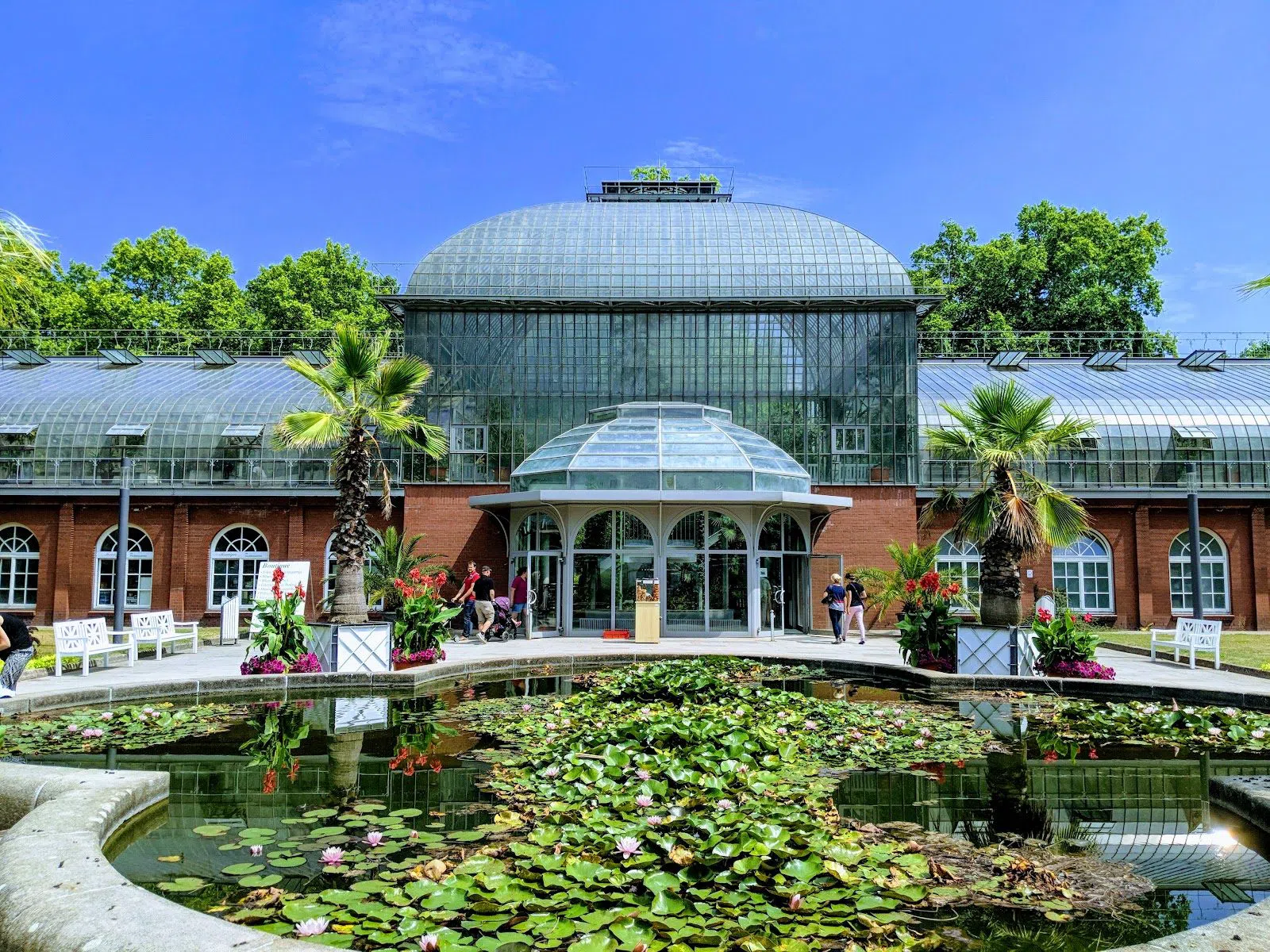
Palmengarten (Westend, Siesmayerstrasse) is the answer to a flat grey Frankfurt afternoon: €9 adult, €5 reduced, under-18s free, open daily 09:00-19:00 through October. The glasshouses do most of the work in autumn, running from desert to cloud forest in a few hundred metres. The show houses close an hour after the ticket office, so arrive by five if the glass is the reason you came. There is no door policy and the grounds swallow a group easily.
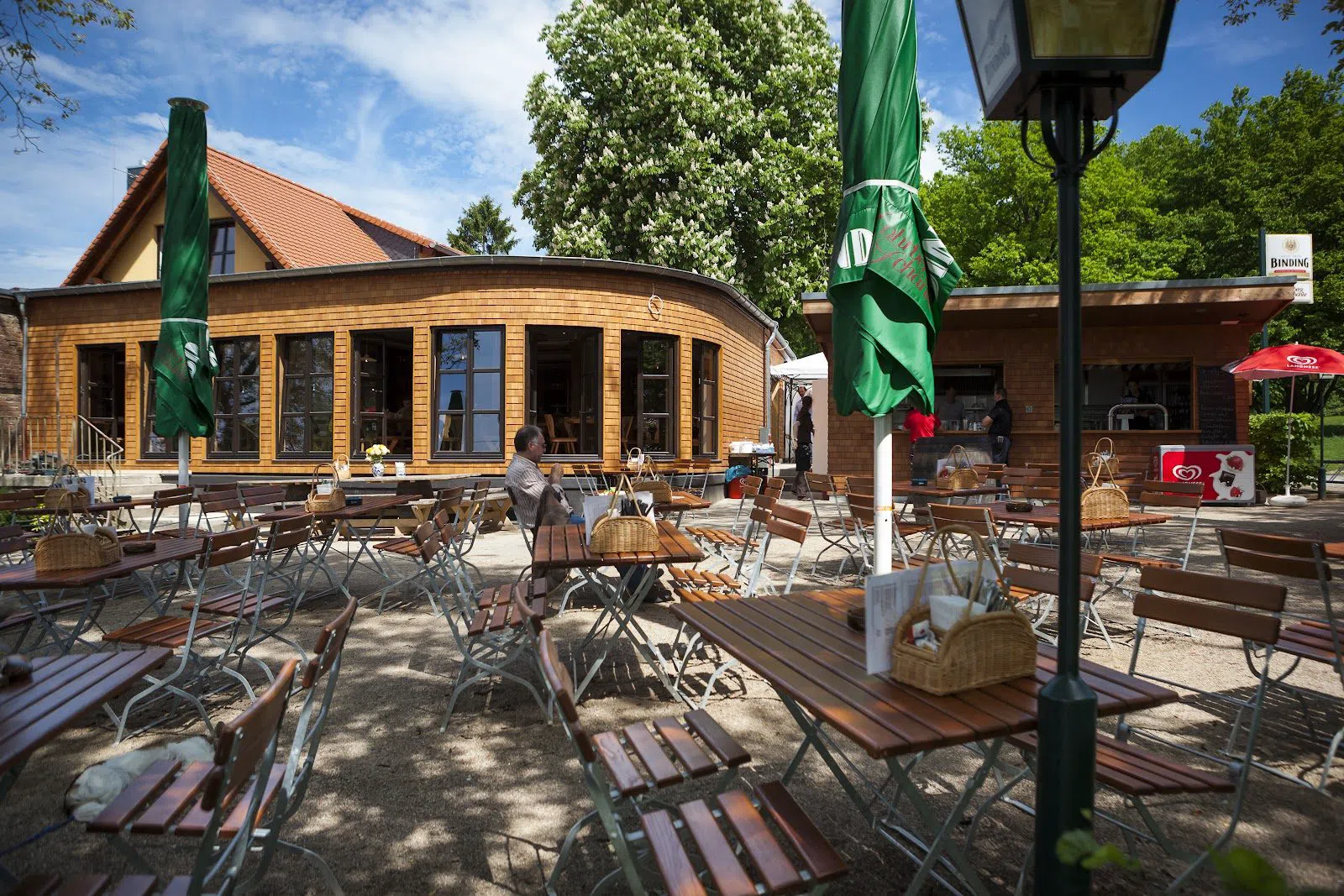
Lohrberg-Schänke (on the Lohrberg, Seckbach) is the better walk. Frankfurt's only vineyard sits on this hill on the north-eastern edge of the city, and the tavern at the top serves Hessian food and cider daily from 11:00 to 23:00, mains €14-24, with the skyline laid out in front of you beyond the vines. In early autumn, with fruit still on the wire and the slope catching the late sun, it is the best walk-and-eat inside the city limits. Private rooms are bookable for family and company parties, and on Sundays there is an umbrella bar outside. It is a tram or U-Bahn ride and then a climb, so allow the better part of an hour each way, and go up in daylight even if you come down in the dark.
Where the evening lands
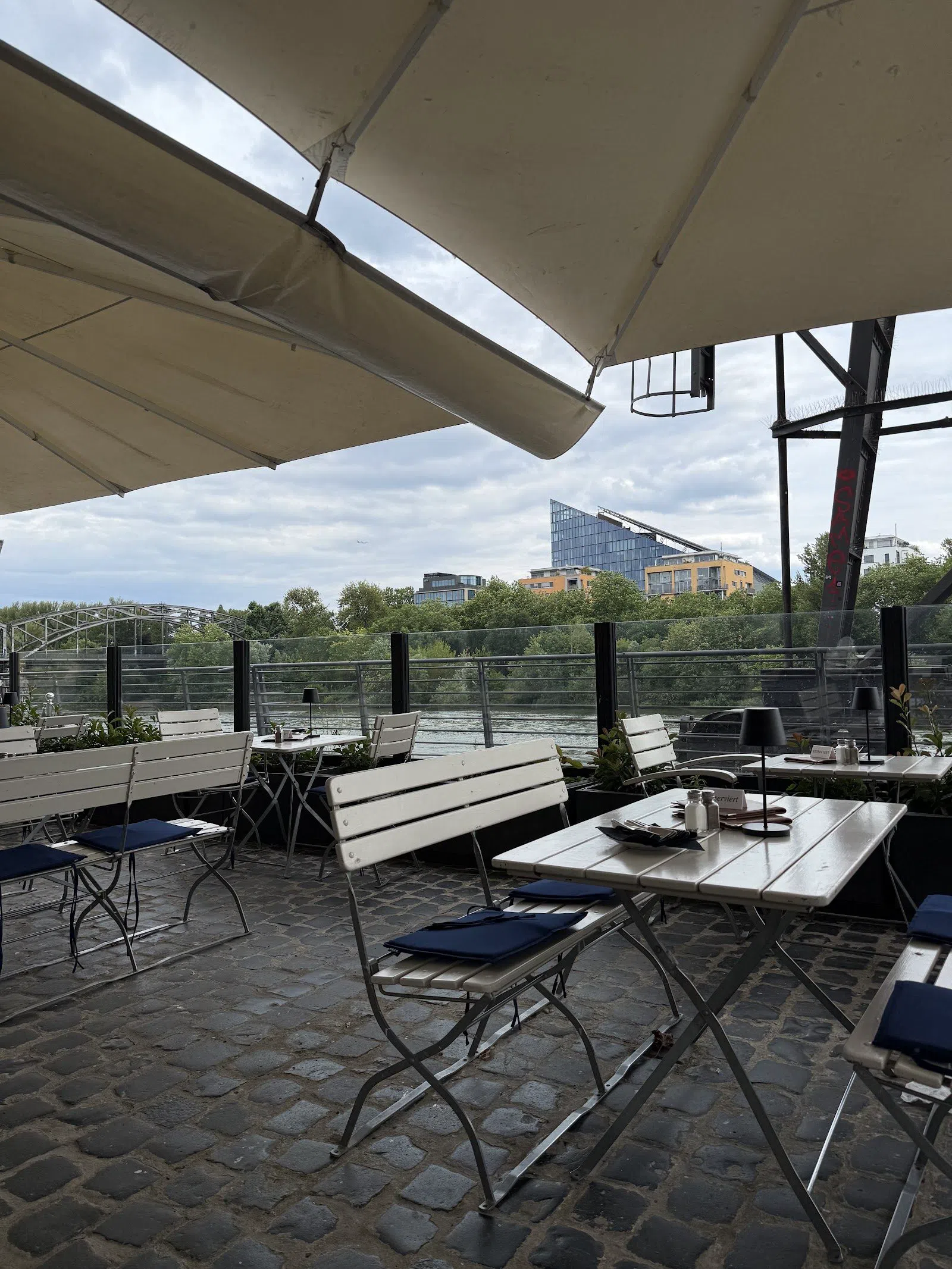
Oosten (Ostend, on the river by the harbour park) is the best modern evening room in the city, and the roof gives you a 270-degree turn of the skyline with no lift queue to stand in. Mains are €20-30 and cocktails €12-15, which sits in Frankfurt's upper-middle band, short of its ceiling. It opens at 17:00 on weekdays and at midday at weekends, so it works as the end of a walk east along the Main from the Altstadt: an hour on the water past the rowing clubs, then up onto the terrace as the towers start to light. The terrace is large and bookable for events and there is no restrictive door policy, which makes this one of the few rooms in the city that takes a group of ten without a negotiation at the door.
A day out in the Rheingau
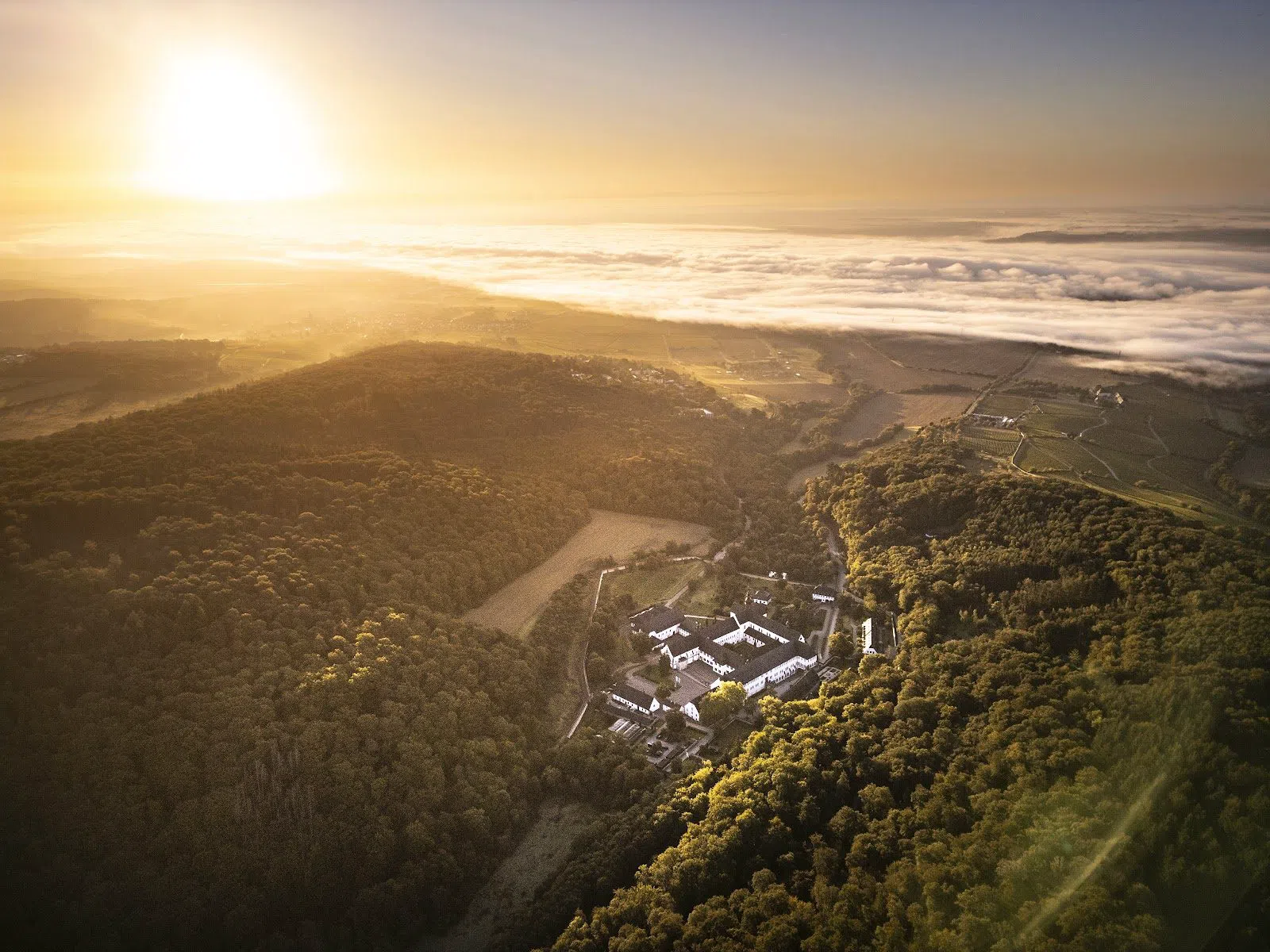
Give early autumn one day outside the city and spend it in the wine country downriver, around forty minutes by train, with the vines at their best in the weeks before the harvest finishes.
Kloster Eberbach (Rheingau, about forty minutes out) is a working state winery inside a 12th-century Cistercian abbey, open until 7pm daily, entry around €10-15 with tastings from roughly €20. It is built for groups: guided tours and tastings are bookable, and there is a restaurant and a hotel on site, so a party of a dozen is routine. Some areas are scaffolded for conservation work at present and the tours route around them. Book the tour in advance, because the cellar is the whole point and you will not talk your way into it on the day.
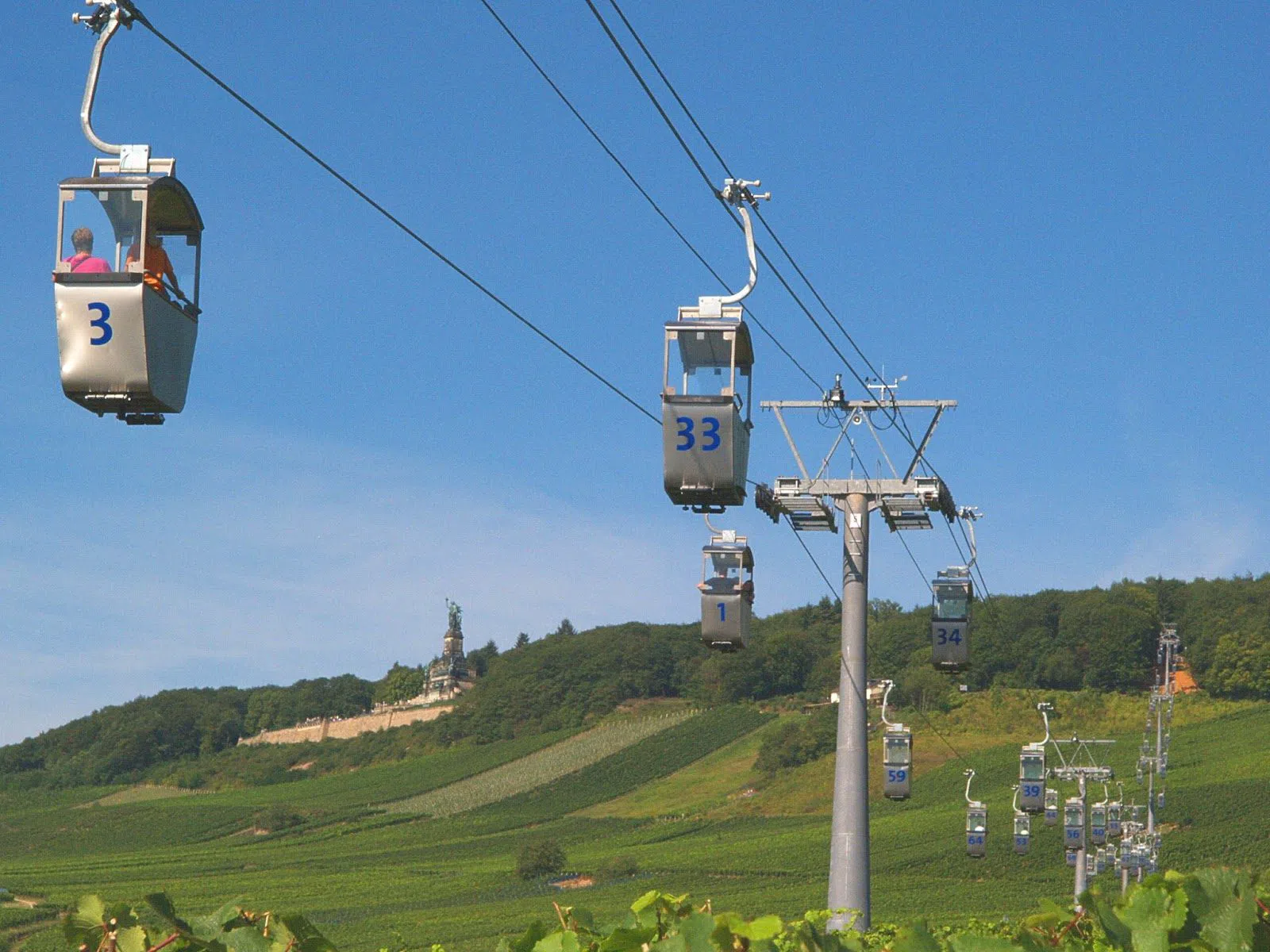
Seilbahn Rüdesheim (Rheingau) is the other half of that day, a small vineyard cable car running daily from 09:30 until 1 November 2026: roughly €6-10 one way, €10-16 return, more for ring-ticket combinations. Early autumn catches it over vines in full colour just before picking ends. The cabins are small, so a group of eight travels as three or four separate conversations. The classic ring trip (cable car up, chairlift down the far side, boat back along the river) runs on its own weather-dependent schedule, so check on the morning and not the week before. If the wind is up, take the return ticket and keep the day simple.
Practical notes
The airport is about fifteen minutes from the main station by S-Bahn, and the visitor centre (Altstadt, Museumsufer, Bankenviertel, Sachsenhausen) is walkable end to end. Buy a day ticket instead of singles; the U-Bahn, trams and S-Bahn share one regional fare system, and the same system carries you out towards the wine country as far as the zone you pay for. Trains for the Rheingau leave from Frankfurt Hauptbahnhof.
Cash matters here more than in the neighbouring countries, and Frankfurt is no exception. The Ebbelwei-Expreß conductor takes cash only, the wine market wants cash and a deposit on the glass, and the taverns vary: Apfelwein Wagner takes cards, plenty of smaller places do not. Carry €50 in notes and coins and you will never be stuck.
The first ten days of September carry the wine market; late September and early October give you emptier museums, colder evenings and better colour on the vines. Sunday closes the Kleinmarkthalle, and Monday and Tuesday close Zum Gemalten Haus, so build the eating days around those two facts. Museums here often rest on Mondays, so check the individual site before you commit an afternoon to one.
A full day of one museum, a market lunch, a rooftop and a tavern dinner with drinks lands between €70 and €90 a head. Cut it to about €40 by taking the €10 Tuesday evening slot at the Städel, eating standing up at the market and drinking Äppler. Push past €120 with dinner and cocktails on the roof. Accommodation swings hardest of all, because the trade-fair calendar can double rates without warning. Check your dates before anything else, start with the Frankfurt hotel search, and if a fair is running, look at Sachsenhausen and Ostend instead of the streets around the station.
Before you go
When is the Rheingauer Weinmarkt in 2026, and do I need a ticket?
It runs 2 to 11 September 2026 on Freßgass and Opernplatz, noon to 11pm daily. Entry is free and there is no door policy. Around 30 Rheingau growers pour roughly 600 wines at €4 to €7 a glass, plus a deposit on the glass. Arrive by five if you want space to read the lists.
Is the Schirn still next to the Römerberg?
No. The Altstadt building is closed for an energy retrofit and the whole programme runs from the former printing works in Bockenheim until 2028, as SCHIRN Kunsthalle Frankfurt Bockenheim. Navigate to the Bockenheim address, not the old one, or you will arrive at a building site. Exhibitions cost about €10 to €16.
What should I pack for Frankfurt in September and October?
Days typically run 17 to 22°C in early September and low teens by early October. Evenings cool fast after sunset. One waterproof layer, one warm layer and shoes for cobbles cover it. Rain comes in short bursts and the wind off the river ruins umbrellas.
Do I need cash, or will cards work?
Carry cash. The Ebbelwei-Expreß conductor takes cash only, and the wine market stands want cash plus a glass deposit. Taverns vary: Apfelwein Wagner takes cards, many smaller places do not. Around €50 in notes and coins is enough for a day.
If I only have time for one museum, which one?
The Städel Museum on the Museumsufer. Entry is €19 for an adult, €17 reduced or for groups, free for under-12s, and €10 on Tuesdays between 3 and 6pm. The in-house restaurant is shut for refurbishment, but the café is open, and there is another at the Liebieghaus nearby.