The Frankfurt issue
Two Days in Frankfurt Without Missing the City
A walkable two-day route through the old town, the museum bank, the market hall and the apple wine taverns, with the opening hours and door realities that decide whether it works.

By Robin van DijkThe city read on foot, one district at a time
The Main is narrow here. Standing in the middle of the Eiserner Steg you can see the banking towers stacked along the north bank and the row of museum villas facing them from the south, and the walk from one side to the other takes about four minutes. That compactness is why a two-day visit works at all. The old town, the market hall, the best viewpoints and half the museums sit inside roughly a square kilometre, and the things that don't are a tram ride away.
What follows is one route through it. Two days is enough to see this city honestly, but only if you plan around three things that regularly wreck a short visit: most museums close on Mondays, the market hall closes on Sundays and at 16:00 on Saturday, and the two best cheap viewpoints both shut in bad weather.
Standing in the Römerberg and knowing what you're looking at
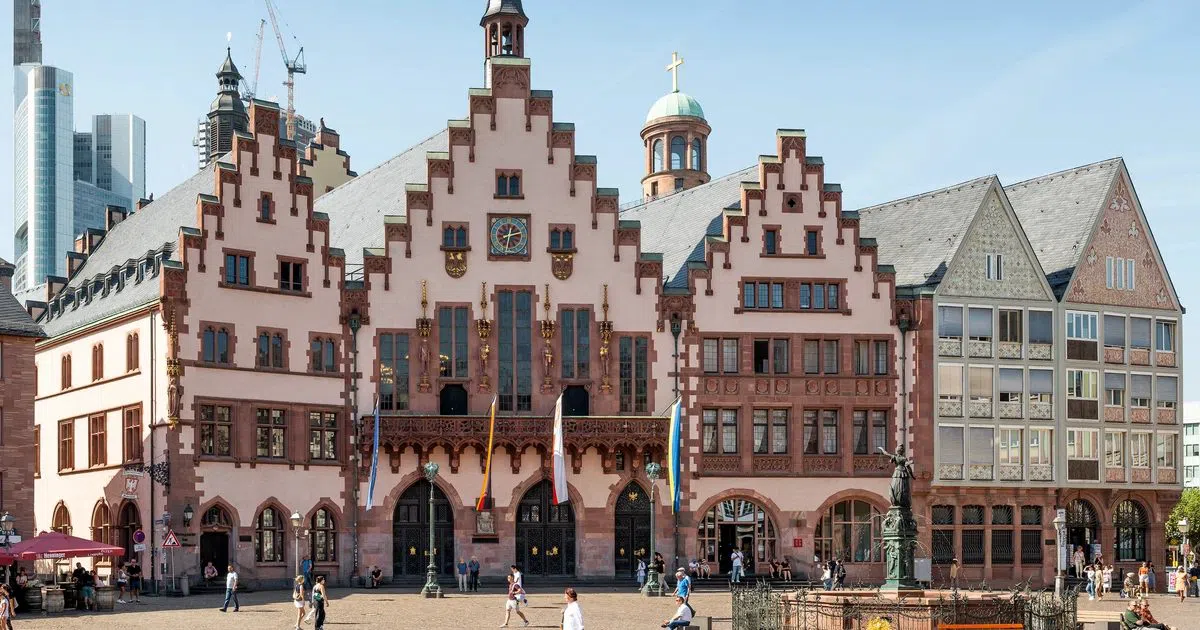
Start at Römerberg with the Ostzeile and the DomRömer Quarter (Altstadt), free, open at any hour, and busiest between 10:00 and 16:00. The row of timbered gables on the east side of the square, the Ostzeile, is a 1980s reconstruction, and the lanes of the quarter behind it were finished in 2018. Knowing that before you arrive changes what you see. Told as untouched medieval fabric it disappoints; understood as a city rebuilding a shape it lost, it becomes the most interesting fifteen minutes of the trip. The lanes are narrow and awkward for anyone moving in a group of more than four, so agree a meeting point at the fountain before you string out.
Give the explanation ten minutes of proper attention at Historisches Museum Frankfurt (Altstadt, with the Römer/Paulskirche tram stop at the door), €8–12 for adults and free for under-18s. It is walk-up, groups and tours are bookable, and it is the fastest way to understand why the old town looks new. It closes on Mondays and stays open until 21:00 on Thursdays, which makes it a good late option if your first afternoon runs long.
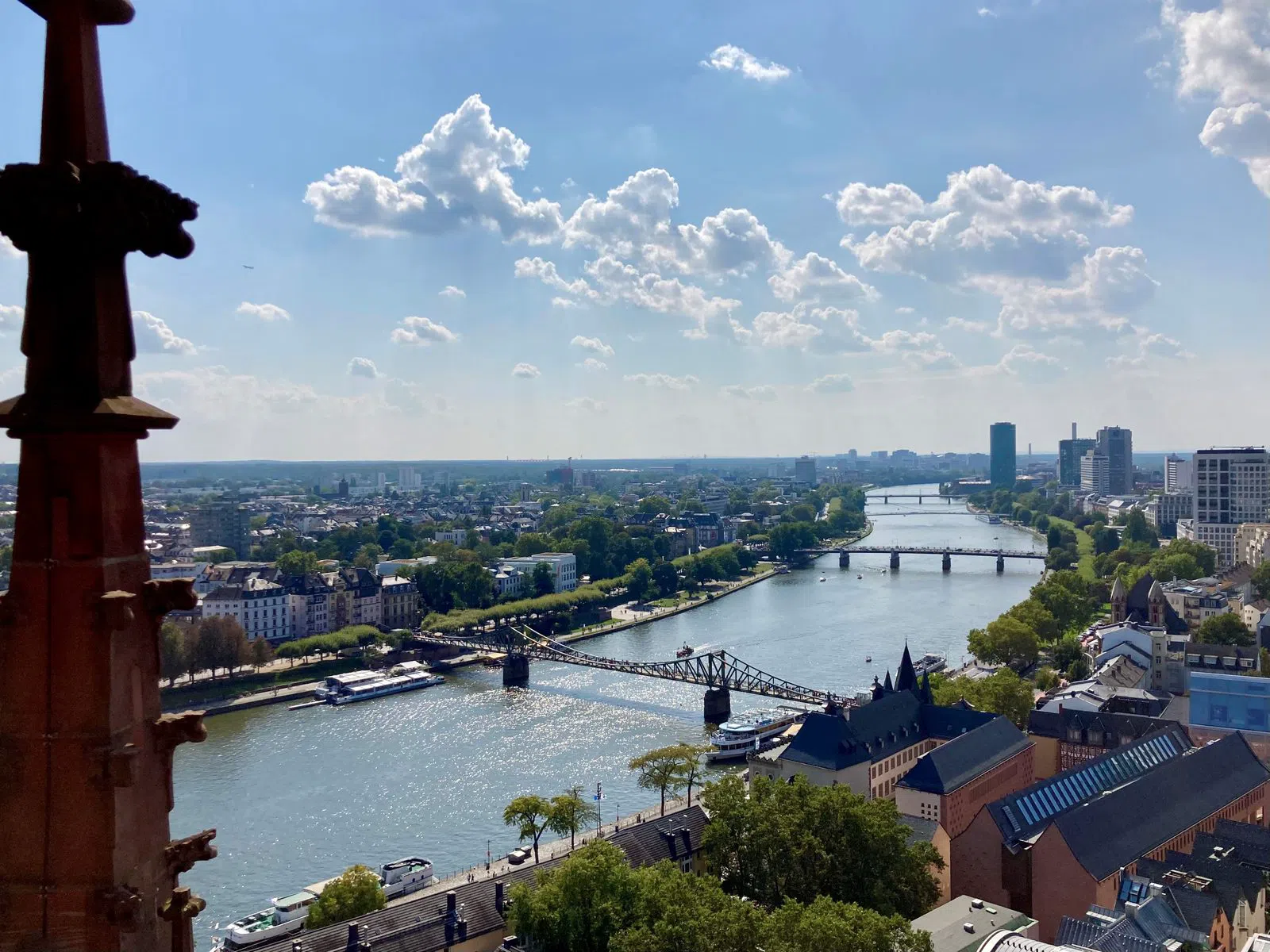
Then climb the Domturm — the tower of Kaiserdom St. Bartholomäus (Altstadt), €3 for adults, or €5 including the exhibition at weekends. There is no lift and the stair is a long single spiral, so entry is capacity-limited and anyone in a group goes up in waves. On a Saturday afternoon a 30-minute wait at the bottom is normal. It is the cheapest good view in the city and the only one that frames the old town roofs against the glass towers in a single sweep, which the skyline decks cannot do. It closes in bad weather, so treat it opportunistically. If the sky is clear when you walk past, go up then.
Plan your Frankfurt trip
Live prices from our booking partners.
Free cancellation on many rooms. We may earn a commission when you book.
Lunch in the Kleinmarkthalle before the shutters come down
Five minutes north of the Römer, Kleinmarkthalle (Innenstadt) is where the city eats standing up: cheese, sausage, fish, Italian and Turkish counters, and a wine bar upstairs that fills from midday. A proper snack costs €4–10, nothing is bookable, and the aisles are tight between 12:00 and 14:00. A pair moves easily, six people do not, so split and regroup outside.
The opening hours catch out more visitors here than anything else. The hall is closed on Sundays and public holidays and shuts at 16:00 on Saturday. If your 48 hours run Saturday to Sunday, the market is a Saturday-morning appointment or it does not happen. A phased refurbishment started in 2026, but the hall stays open throughout, so you may find a section hoarded off instead of the doors locked.
Art and Goethe within ten minutes of the Dom
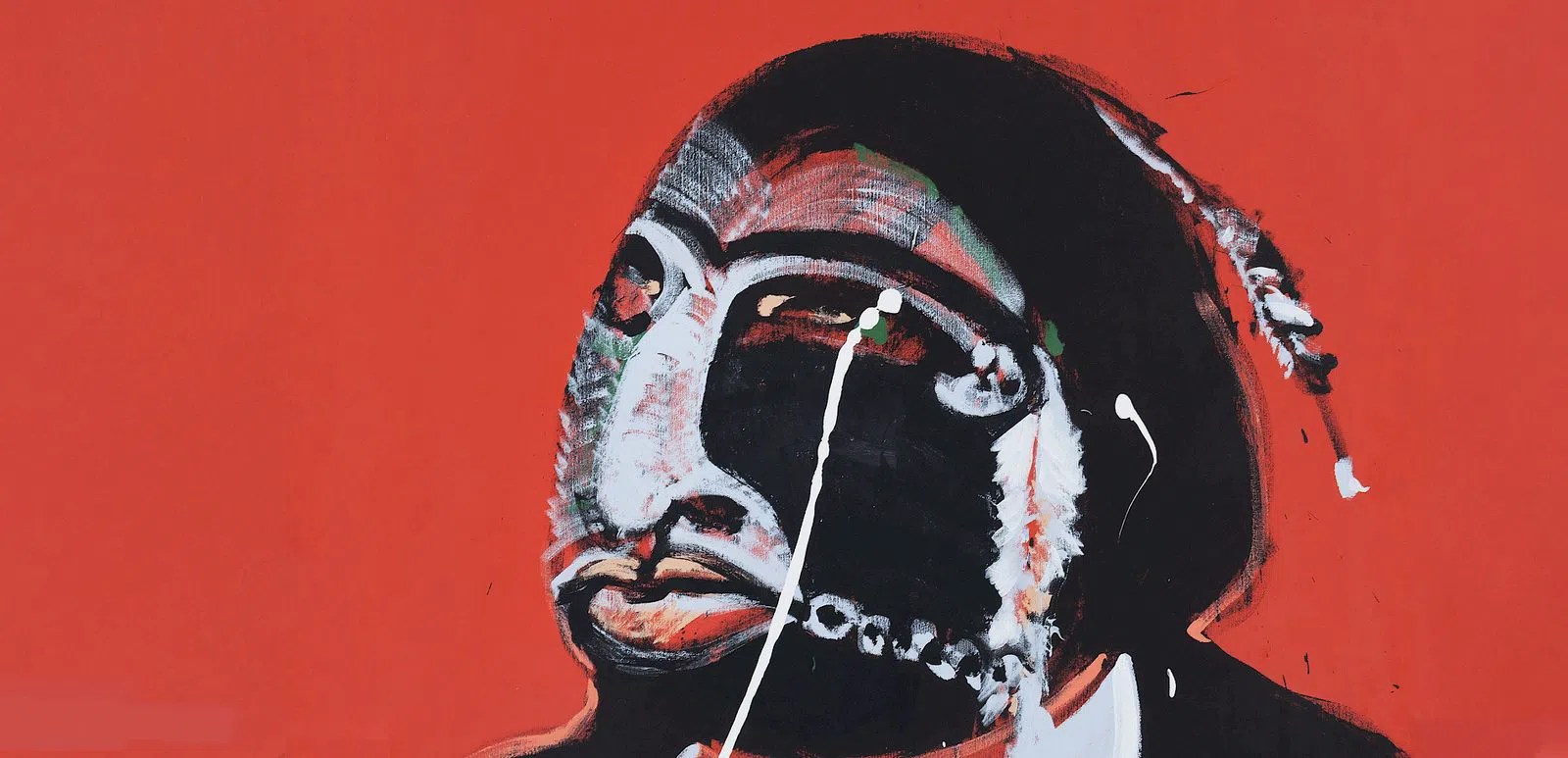
Behind the cathedral, MUSEUM MMK für Moderne Kunst (Altstadt) charges roughly €12–16 for a ticket that covers three sites (MUSEUM MMK, TOWER MMK and ZOLLAMT MMK) and is free on the last Saturday of the month. You can walk up or book. The Hans Hollein building, a wedge driven into an awkward corner plot, justifies the visit even on a day when the exhibition leaves you cold. Closed Mondays.
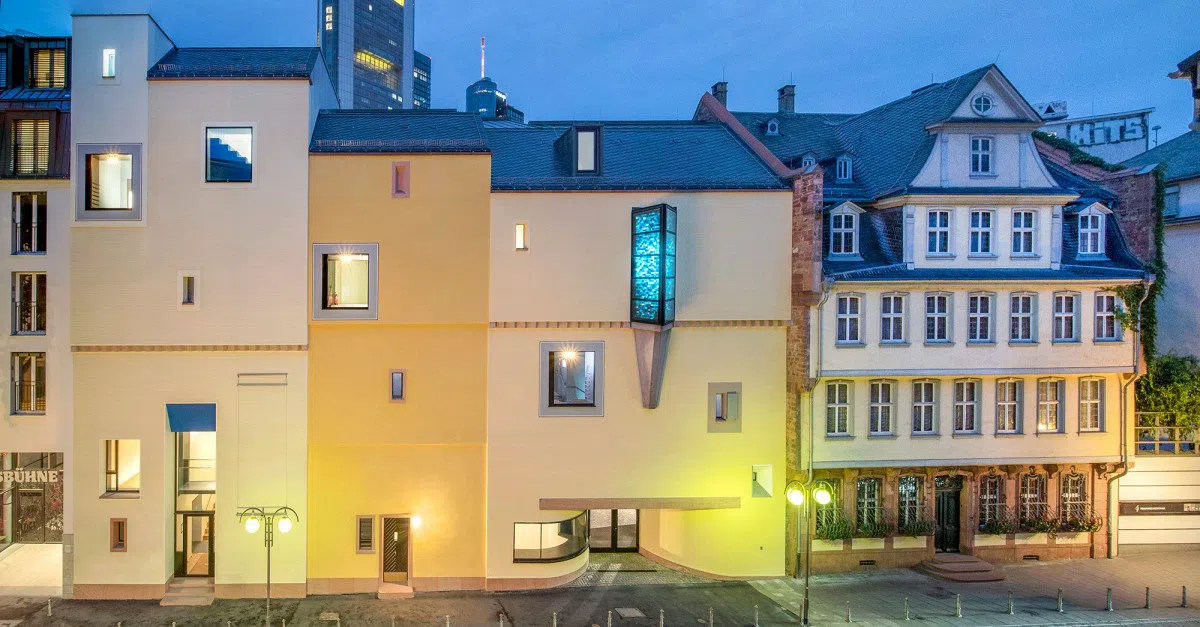
A few streets west, on Großer Hirschgraben, the Frankfurter Goethe-Haus & Deutsches Romantik-Museum (Innenstadt) sells one combined ticket for both houses at around €10–13. Goethe's birthplace is the quiet half; the Romanticism museum next door is inventive in how it stages ideas instead of objects. Guided tours are bookable, and it opens seven days a week, which is unusual here and makes it the obvious Monday fallback when the museum bank is dark.
Crossing the Eiserner Steg to the museum bank
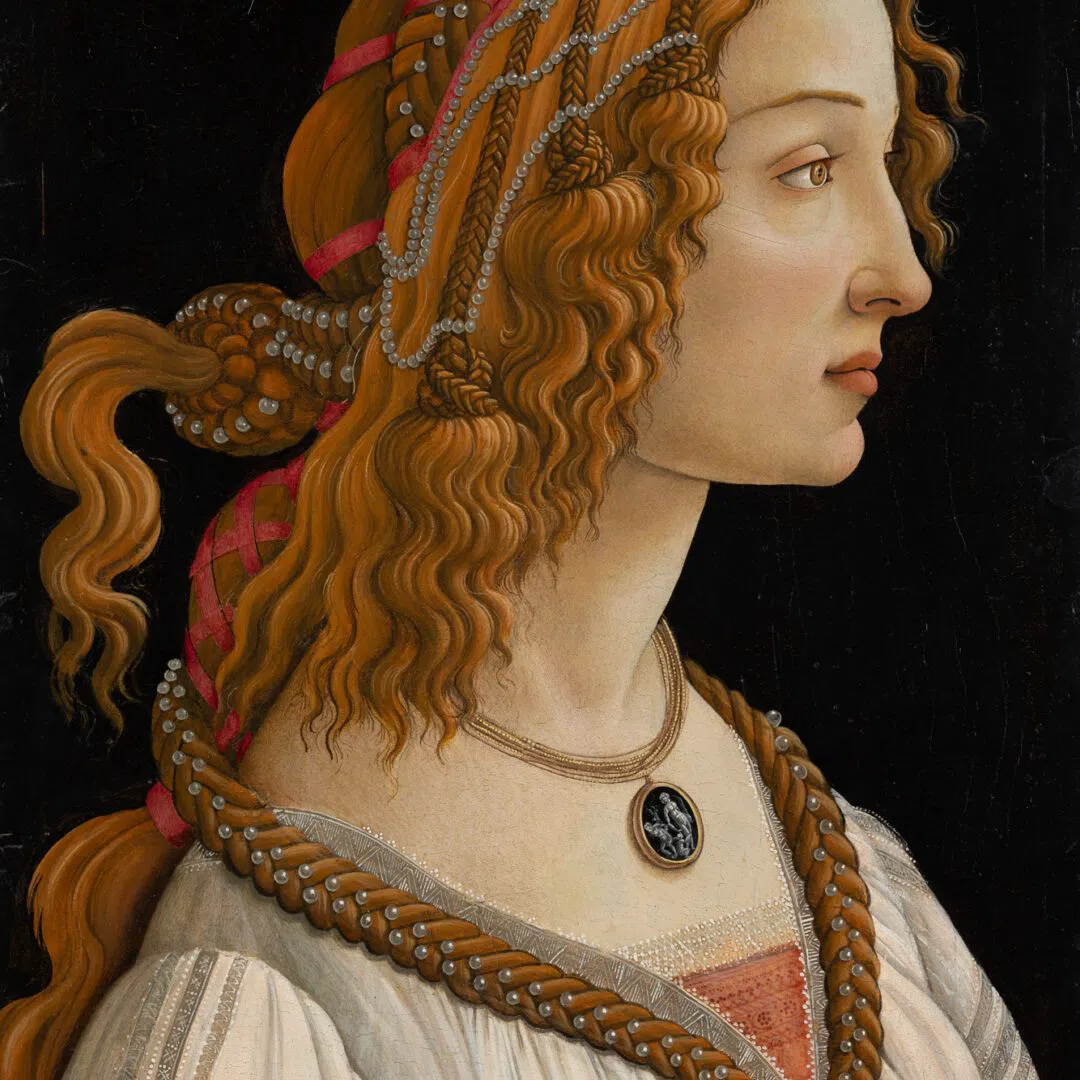
Walk south over the footbridge and turn right along the Schaumainkai. Städel Museum (Sachsenhausen) is €19 for adults, or €10 on Tuesdays between 15:00 and 18:00, with timed entry booked online and group and guided-tour bookings handled directly by the museum. If 48 hours compresses to one museum, keep this one. Allow two hours minimum, three if you are the kind of visitor who reads wall texts. Closed Mondays, open late to 21:00 on Thursdays.
A short walk along the same embankment, DFF — Deutsches Filminstitut & Filmmuseum (Sachsenhausen) costs around €6–10 and is the best of the smaller Museumsufer houses for a short visit. One hour covers the permanent floors. Its cinema screens films in their original language with subtitles, which beats most things on the north bank on a Tuesday evening. Walk-up entry; tours and school or group programmes need advance booking. Closed Mondays.
Back at the bridge, PRIMUS-LINIE (boarding at the Eiserner Steg landing stage) runs the river trips: €16 for 50 minutes, €19.50 for 100 minutes, family tickets from €39. Tickets are sold on board, and charters and group bookings are taken. Departures are hourly and daily from late March to late October with German and English commentary; in winter the service runs weekends only. Take the 50-minute trip. The extra 50 minutes buys you more industrial riverbank, not more city, and the short loop gives you the skyline from the water, the one angle you cannot walk to.

Two views worth the lift and the climb
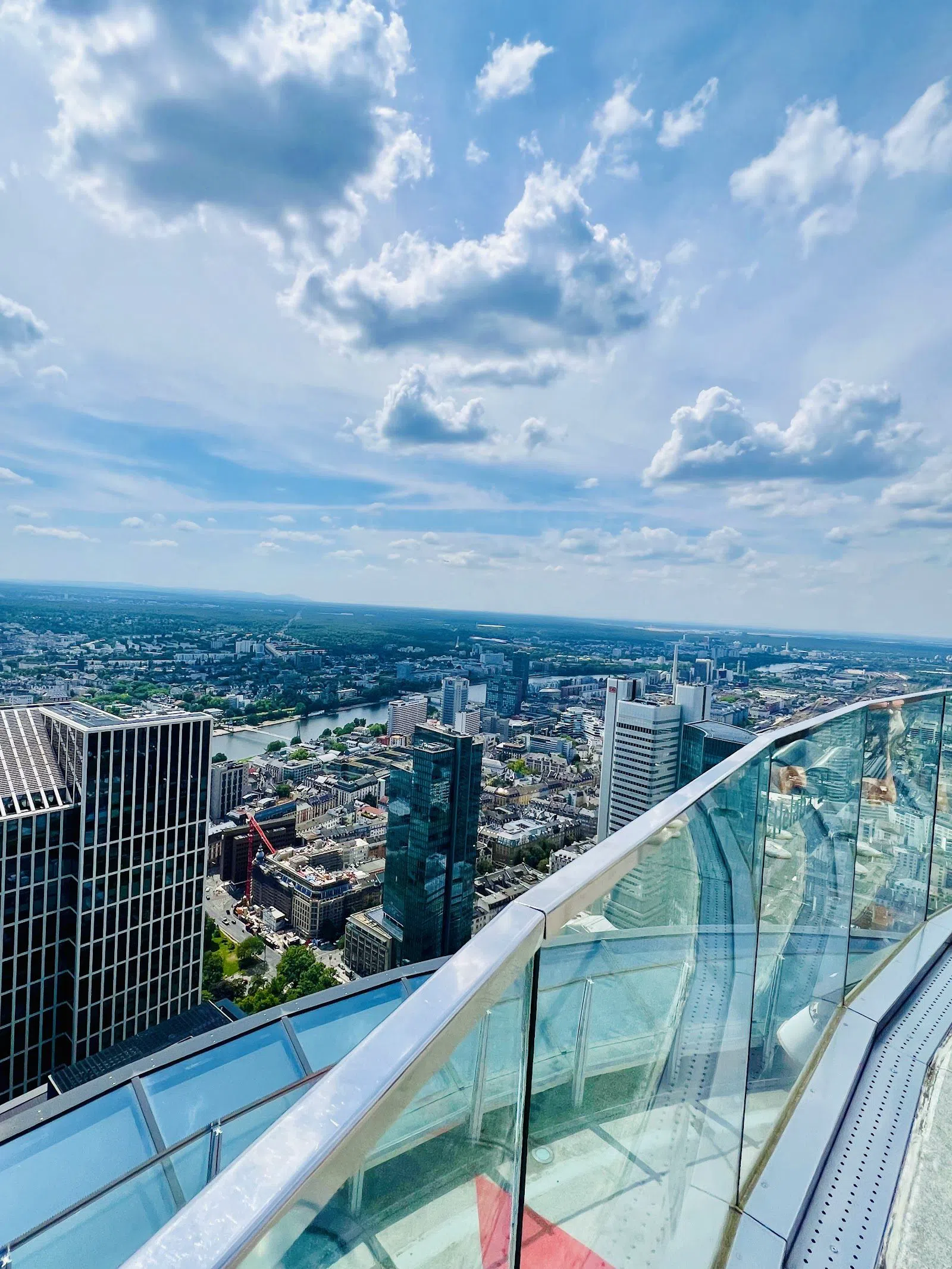
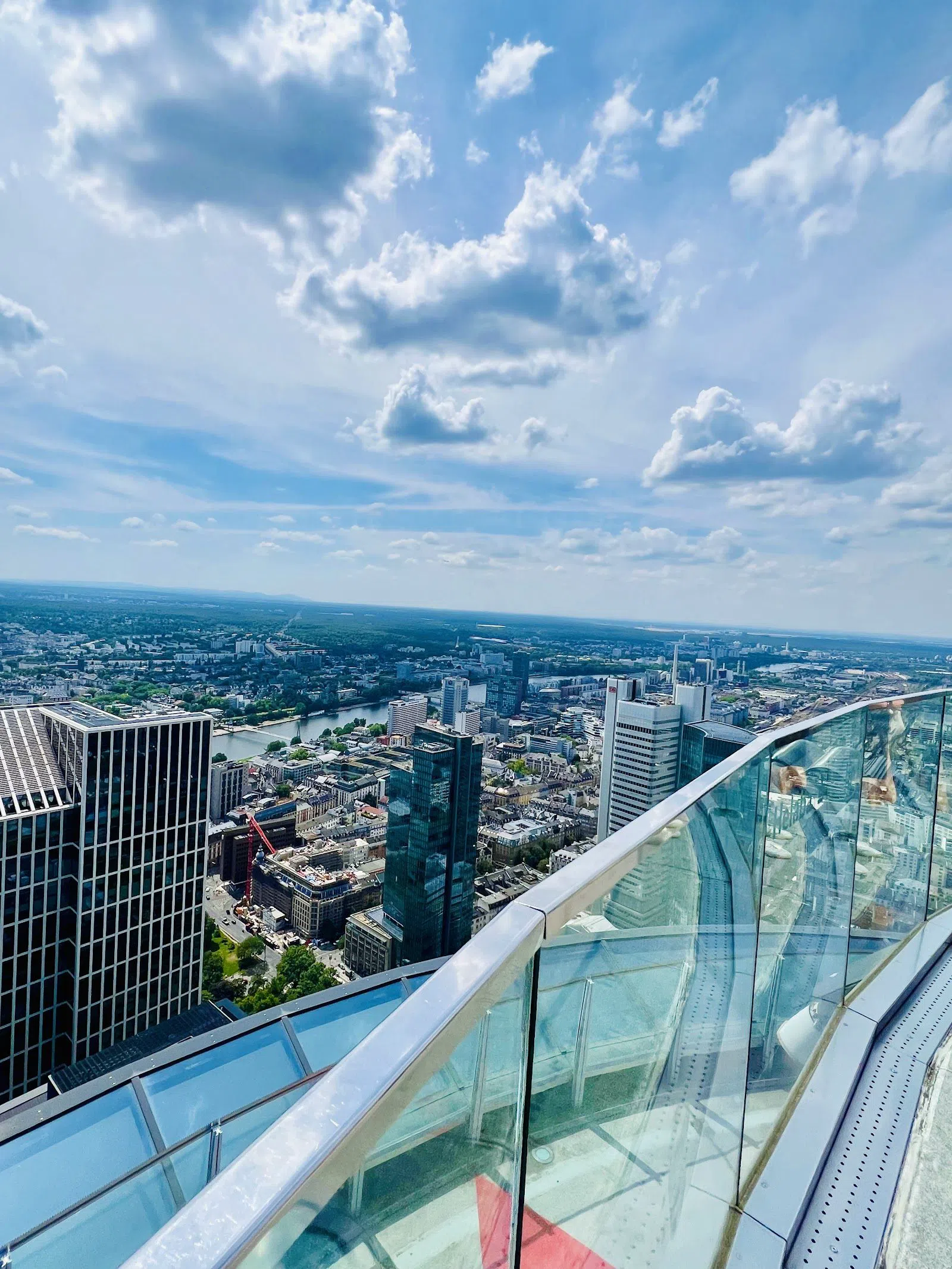
MAIN TOWER Observation Deck (Innenstadt, Neue Mainzer Straße) is the only true public open-air deck inside the banking cluster, around €9–11 for adults, walk-up with no booking. The lift cars are small, so groups get split across several and the queue builds through Saturday afternoon. Go at dusk, when the office floors light up below you and the city stops being grey. It closes in high wind or storms, and in that weather the staff at the desk will say so before you queue.
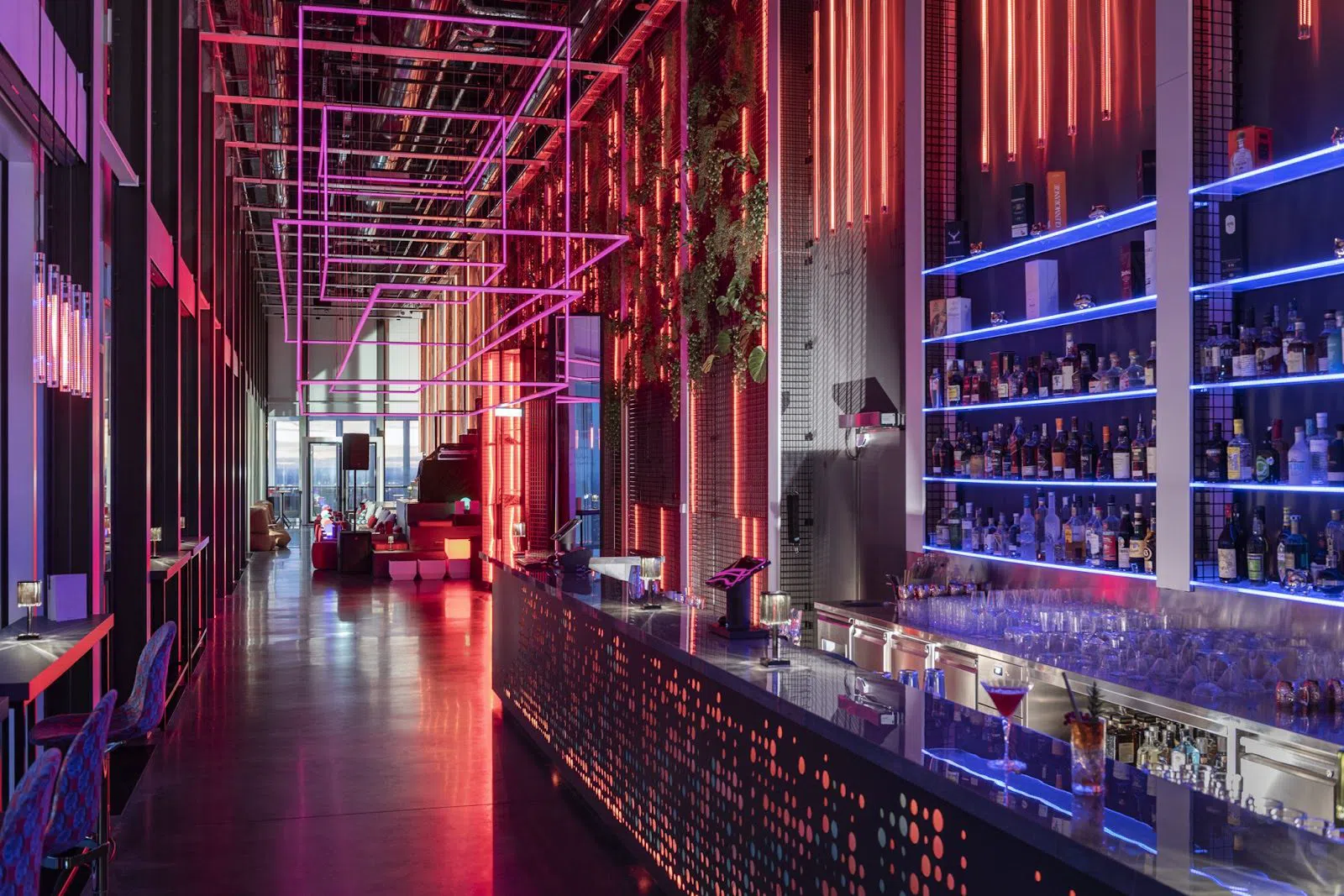
The after-dark counterpart is NFT Skybar (Europaviertel), billed as Germany's highest rooftop bar and sitting in the newer western district away from the old banking core. Cocktails run about €15–18. There are no reservations, and walk-up only matters here: a couple will nearly always get in, while a group of six arriving at 21:00 on a Saturday can be turned away at the lift when the bar is full. It is closed Mondays and Sundays, which catches out anyone saving it for a last night.
Apfelwein in Sachsenhausen and on the hill
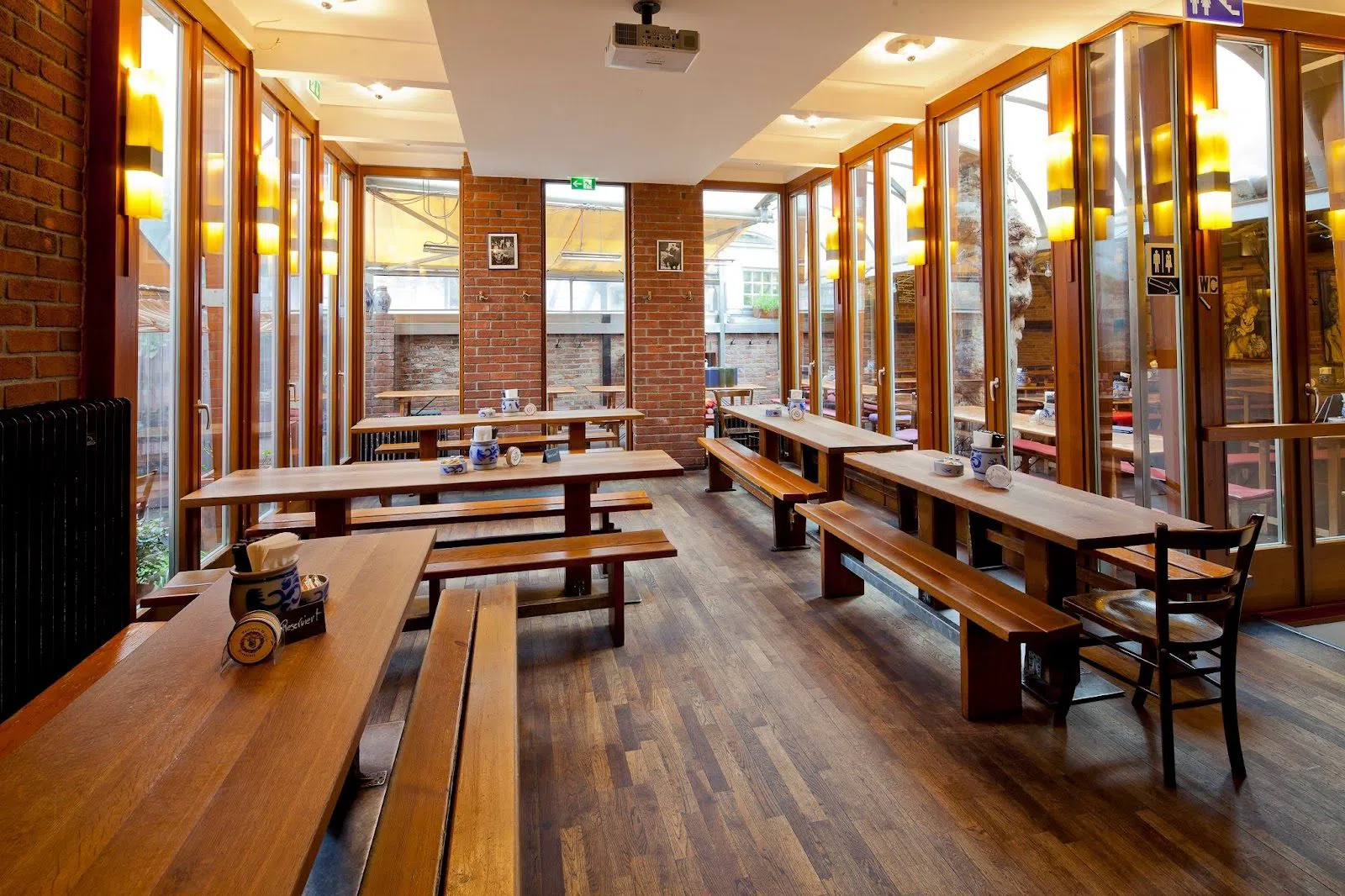
Apple wine is the local drink and it is sour: dry, cloudy, closer to cider vinegar than to anything sweet. Drink it at Apfelwein Wagner (Sachsenhausen, Schweizer Straße), family-run since 1931, open daily from 11:00 to midnight, with mains around €12–20 and a glass of cider at roughly €2.50. Tables are shared by default. You sit down beside strangers, and that is how the room works. Formal group bookings start at 21 people and carry a deposit policy, so anything smaller simply turns up and waits. It is the honest version of the ritual rather than a coach-party barn, and it stays busy for exactly that reason.
If you have half a day and want air, take the tram out to Lohrberg-Schänke (Seckbach), about 25 minutes from the centre plus a short walk uphill. It puts a skyline view, a working vineyard and Äppelwoi on one terrace, with mains in the same €12–20 range. The terrace is large enough for groups, but phone or email ahead for a bigger party instead of arriving hopefully on a sunny Sunday. It is the best escape that still counts as part of the city.

A kiosk hour in the Bahnhofsviertel
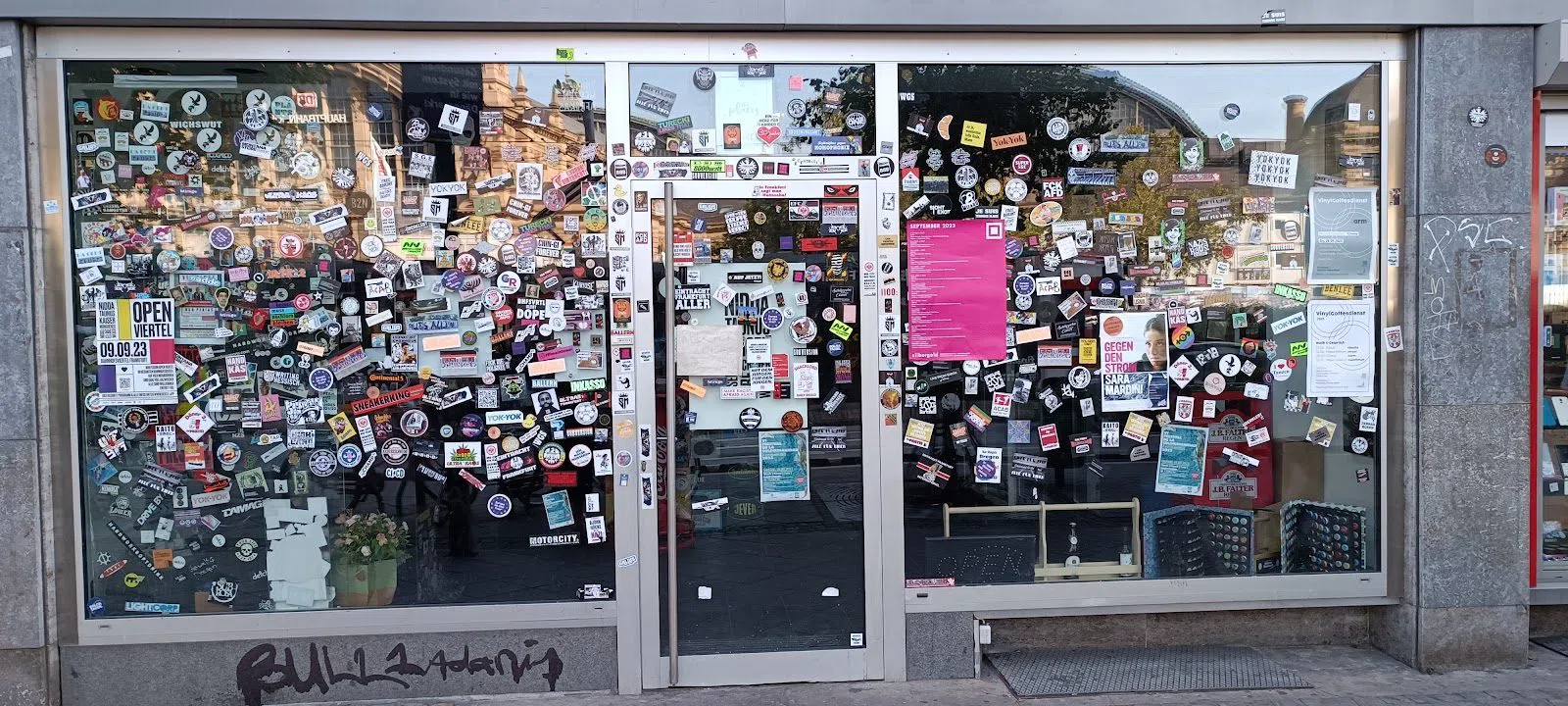
City Kiosk Yok Yok (Bahnhofsviertel) has anchored this district for over a decade: 120-plus beers sold to take away, no seating, no door policy, bottles at €3–6. You buy, you stand on the pavement, you talk. It is one of the more sociable half-hours available in the city and costs almost nothing.
The district itself is worth describing plainly. The Bahnhofsviertel is gritty at night, with visible drug use on some streets near the station and a mix of bars, restaurants and sex shops on others. It is also one of the most alive parts of the city, and thousands of people walk it every evening without incident. Walk with normal urban awareness, keep to the busier streets, and skip it late if crowds and street scenes make you uneasy. Nothing else in this itinerary depends on it.
Green ground in the Westend when the pace drops
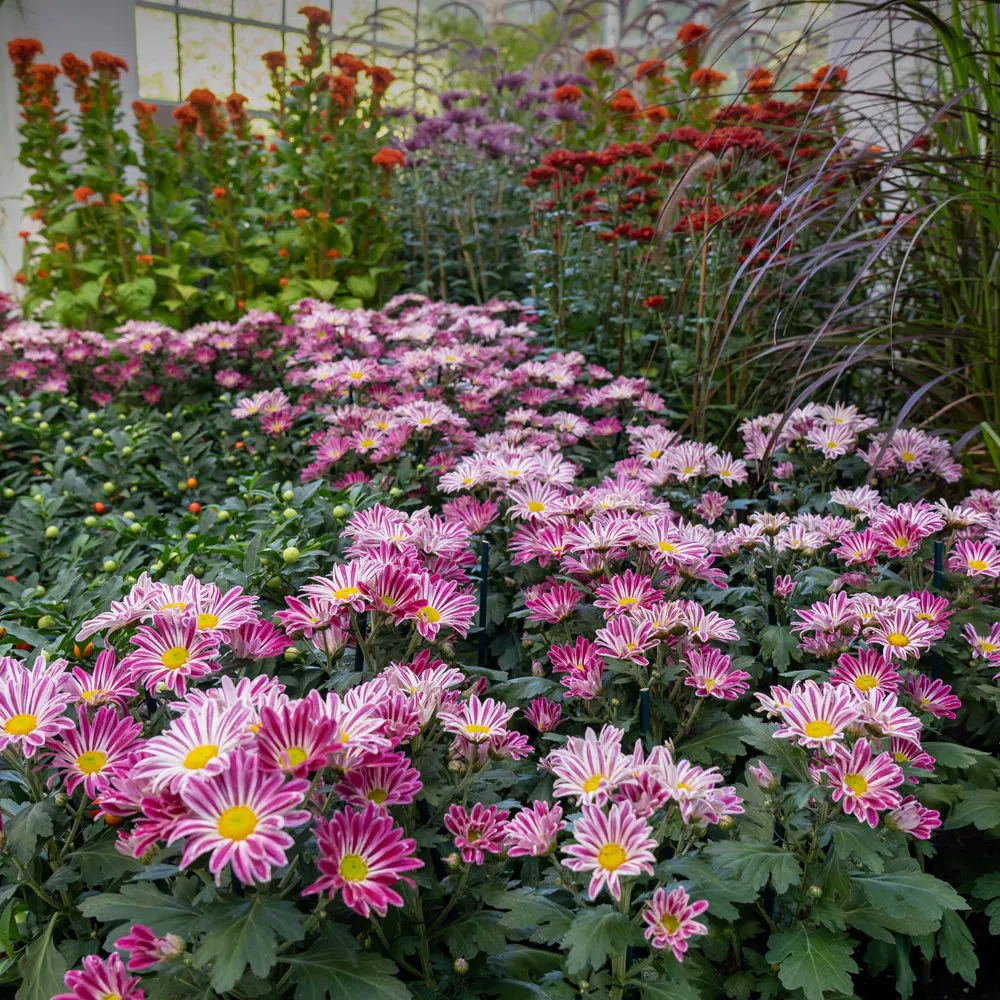
Palmengarten (Westend) covers 22 hectares and absorbs any number of visitors, opens daily from 09:00 year-round, and costs about €7–11. Guided tours are booked through the ticket office. It is a real break from concrete, and the sensible move is to pair it with a slow walk through the surrounding Westend streets instead of treating it as a separate outing.
A few minutes away, Senckenberg Naturmuseum (Westend, by the university campus) is around €12 and open every single day, with group rates and guided tours bookable. It holds Europe's biggest natural history collection of its kind and it is the dependable wet-weather answer, especially with children. A long-term rebuild is only at competition stage, so the museum is fully open and will be for this trip and several more.

How the two days fit together
Day one, north bank: Römerberg first thing, the Domturm while the sky is clear, Kleinmarkthalle for lunch, the Historisches Museum or MMK through the afternoon, Main Tower at dusk, then over the river to Apfelwein Wagner for dinner. Day two, south bank and out: the Städel on timed entry when it opens, DFF for an hour after it, the 50-minute PRIMUS-LINIE loop early afternoon, then either Lohrberg-Schänke for the hill and the vineyard or Palmengarten and Senckenberg if the weather turns. Yok Yok or NFT Skybar closes the evening, depending on whether you want a pavement or a parapet.
If you arrive on a Sunday or Monday, invert it: Goethe-Haus, Senckenberg and Palmengarten all open every day, and the market hall and most museums do not. Staying central saves you more time than any transport pass. Most of day one is walkable from the Altstadt or the Bahnhofsviertel, and a Frankfurt hotel search across those two areas is the difference between walking to breakfast and commuting to it.
Practical notes for the 48 hours
Transport is one ticketing system across trams, U-Bahn and S-Bahn, with machines at every stop and an app. If you expect three or more journeys in a day, a day ticket beats singles; for the itinerary above you will mostly be walking, with tram fares only for Lohrberg and the Westend. Validate before boarding where the machine asks you to, and keep the ticket until you leave the platform.
Carry €50 in notes and coins. The apple wine taverns and most market-hall counters take cash quickly and cards reluctantly or not at all, and the Domturm kiosk and the kiosk beers are cash-first too. Museums and the towers take cards without fuss.
Mondays close the Städel, DFF, MMK and the Historisches Museum. Sundays and public holidays close the Kleinmarkthalle; Saturday closes it at 16:00. NFT Skybar is dark on Sundays and Mondays. The Domturm and the Main Tower both shut in storms or high wind, so take the view when the weather offers it instead of slotting it into a plan.
Budget €55–75 a head for a realistic day: one major museum at €19 or the Domturm at €3, a €4–10 market lunch, a €10 deck ticket, a €12–20 dinner with a couple of €2.50 ciders, plus tram fares. Trim it to under €35 by climbing the Domturm instead of taking the lift up the Main Tower, eating in the market hall, and drinking on the pavement at the kiosk. For where to go once the 48 hours are up, the wider Frankfurt guide covers the districts this route only passes through.
Before you go
Is 48 hours actually enough for Frankfurt?
Yes, if you keep to the centre. The old town, the Kleinmarkthalle, the Main Tower and the Museumsufer sit within about a square kilometre, so two days covers them at a walking pace. What you sacrifice is depth: one major museum rather than four, and one trip out to Lohrberg-Schänke rather than several suburbs.
Main Tower or the Domturm for the better view?
They show different cities. The MAIN TOWER Observation Deck (about €9 to €11) puts you inside the banking cluster on an open-air deck and is the better dusk view. The Domturm (€3, €5 with the weekend exhibition) frames old town roofs against the towers, which is the more distinctive photograph, but it is a stair climb with no lift and often a 30-minute wait at weekends. Both close in high wind or storms.
When is the Kleinmarkthalle open?
Not on Sundays or public holidays, and it shuts at 16:00 on Saturday. That is the most common short-trip mistake in Frankfurt. If your weekend runs Saturday to Sunday, treat the market as a Saturday-morning fixture. The 2026 refurbishment is phased and the hall stays open throughout.
If I only have time for one museum, which one?
The Städel Museum in Sachsenhausen, at €19 adult or €10 on Tuesdays between 15:00 and 18:00. Book timed entry online and allow at least two hours. It is closed Mondays; if your visit falls on a Monday, the Goethe-Haus and Deutsches Romantik-Museum and the Senckenberg Naturmuseum are open every day.
Do I need to book anything in advance?
Only the Städel, which uses timed online entry. The Main Tower, Domturm, Kleinmarkthalle, MMK, DFF and NFT Skybar are all walk-up. That cuts both ways at the rooftop bar: with no reservations, a large group arriving on a busy Saturday night can simply be turned away, while a pair will usually get in. Apfelwein Wagner shares tables by default and only takes formal bookings from 21 people.